

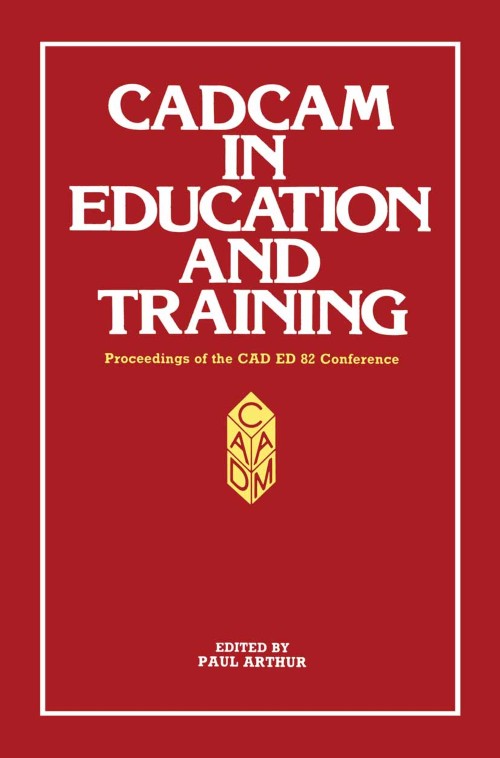
CADCAM in Education and Training [electronic resource] : Proceedings of the CAD ED 83 Conference / by Paul Arthur.
Erişim Adresi
ISBN
9781468485066
Dil Kodu
İngilizce
Yer Numarası
DK/10173
Yazar
Basım Bildirimi
1st ed. 1984.
Yayın Bilgisi
New York, NY : Springer US : Imprint: Springer, 1984.
Fiziksel Niteleme
427 p. 43 illus. online resource.
İçindekiler Notu
1 -- 1. Welcoming address -- 2. Integration and implementation of computer-aided engineering (CAE) — the strategy for innovative product design in the 1980s -- 3. Getting the CADCAM tool working -- 4. Encouraging new technology links between industrial and teaching institutions: Aston Science Park -- 2: Ergonomics -- 5. Education for human-centred systems -- 6. CAD and the human operator -- 3: Training — general -- 7. The training needs of CADCAM -- 8. New directions in training -- 9. Skills and knowledge requirements for CADCAM -- 10. The teaching of CAD — a review of the proceedings of a conference held at Newcastle upon Tyne Polytechnic, April 1982 -- 11. The integration of a commercial CAD package in the teaching of CAE on an undergraduate course -- 4: Training — curriculum and training equipment -- 12. The development of micro-based procedure for the teaching of three-dimensional geometric design -- 13. A comprehensive approach for CAD ED curriculum elaboration -- 14. New technology-based training and its role in CADCAM -- 15. A review of computer graphics equipment for engineering applications -- 16. Educational software for CAD teaching -- 17. Implementing graphics in design, process and manufacturing industries -- 18. PELICAM: An interactive educational software for training students to the finite element method -- 19. Computer-aided design for design and craft students -- 5: Training — the introduction of CADCAM into particular disciplines -- 20. Training requirements for architects: a view from an experienced user -- 21. Education and training in computer-aided building design -- 22. Introducing CAD into the design office -- 23. Training and learning during the introduction of an interactive computer-aided building design system into government design offices -- 24.Implications of CADCAM for training in the engineering industry -- 25. A practical approach to the training of engineers -- 26. Educating engineering designers: the introduction of desktop computers and software to the design environment -- 27. Computer-aided design for chemical engineers -- 28. A practical approach to training in the use of an integrated plant modelling system -- 29. Computer-aided design and development planning -- 30. A case history of introducing CAD into a large aerospace company -- 6: Training course experience -- 31. Teaching CAD for electronics at the Norwegian Institute of Technology — present status and future trends -- 32. Post-professional education in computers in architecture at the University of Sydney -- 33. CAD in the Cambridge Engineering Tripos 1977–82 -- 34. CAD in structural engineering at UMIST -- 35. CAD — the first year -- 36. Six years of teaching computer-aided design at the University of Stellenbosch -- 37. CADCAM education at Cranfield Institute of Technology -- 38. Teaching computer graphics to mechanical engineers in Britain and the United States -- 39. The teaching of CAE in a polytechnic engineering department — Huddersfield experience -- 40. Teaching CAD and CAM -- 41. A practical approach to CADCAM training -- 42. Promoting industrial awareness of CADCAM -- 7: International experience -- 43. International implementation of a CAAD project in schools of architecture -- 44. A cost-effective two-way computer-aided tertiary education network for industrially developing countries -- 45. Education and training for CAD — a comparative study of requirements for developing and developed nations -- 46. Chairman’s concluding remarks.
Konu
Social sciences.
Humanities.
Humanities and Social Sciences.
Humanities.
Humanities and Social Sciences.
Kurum Adı
Eseri Alıntıla
Referansları kullanmadan önce gözden geçirmeniz ve varsa gerekli düzeltmeleri yapmanız önerilir.
Dijital Kaynak
MARC Görünümü
LEADER 05861nam a22005175i 4500
001 808884
003 TR_AnAIT
005 20260131024903
007 cr nn 008mamaa
008 121227s1984 xxu| s |||| 0|eng d
020 |a9781468485066|9978-1-4684-8506-6
024 7 |a10.1007/978-1-4684-8506-6|2doi
041 |aeng
049 |aTürk Tarih Kurumu Kütüphanesi
050 4|aH1-99
050 4|aAZ19.2-999
072 7|aGT|2bicssc
072 7|aNON000000|2bisacsh
072 7|aGT|2thema
082 04|a300|223
082 04|a001.3|223
090 |aDK/10173
100 1 |aArthur, Paul.|eauthor.|4aut|4http://id.loc.gov/vocabulary/relators/aut
245 10|aCADCAM in Education and Training|h[electronic resource] :|bProceedings of the CAD ED 83 Conference /|cby Paul Arthur.
250 |a1st ed. 1984.
264 1|aNew York, NY :|bSpringer US :|bImprint: Springer,|c1984.
300 |a427 p. 43 illus.|bonline resource.
336 |atext|btxt|2rdacontent
337 |acomputer|bc|2rdamedia
338 |aonline resource|bcr|2rdacarrier
347 |atext file|bPDF|2rda
505 0 |a1 -- 1. Welcoming address -- 2. Integration and implementation of computer-aided engineering (CAE) — the strategy for innovative product design in the 1980s -- 3. Getting the CADCAM tool working -- 4. Encouraging new technology links between industrial and teaching institutions: Aston Science Park -- 2: Ergonomics -- 5. Education for human-centred systems -- 6. CAD and the human operator -- 3: Training — general -- 7. The training needs of CADCAM -- 8. New directions in training -- 9. Skills and knowledge requirements for CADCAM -- 10. The teaching of CAD — a review of the proceedings of a conference held at Newcastle upon Tyne Polytechnic, April 1982 -- 11. The integration of a commercial CAD package in the teaching of CAE on an undergraduate course -- 4: Training — curriculum and training equipment -- 12. The development of micro-based procedure for the teaching of three-dimensional geometric design -- 13. A comprehensive approach for CAD ED curriculum elaboration -- 14. New technology-based training and its role in CADCAM -- 15. A review of computer graphics equipment for engineering applications -- 16. Educational software for CAD teaching -- 17. Implementing graphics in design, process and manufacturing industries -- 18. PELICAM: An interactive educational software for training students to the finite element method -- 19. Computer-aided design for design and craft students -- 5: Training — the introduction of CADCAM into particular disciplines -- 20. Training requirements for architects: a view from an experienced user -- 21. Education and training in computer-aided building design -- 22. Introducing CAD into the design office -- 23. Training and learning during the introduction of an interactive computer-aided building design system into government design offices -- 24.Implications of CADCAM for training in the engineering industry -- 25. A practical approach to the training of engineers -- 26. Educating engineering designers: the introduction of desktop computers and software to the design environment -- 27. Computer-aided design for chemical engineers -- 28. A practical approach to training in the use of an integrated plant modelling system -- 29. Computer-aided design and development planning -- 30. A case history of introducing CAD into a large aerospace company -- 6: Training course experience -- 31. Teaching CAD for electronics at the Norwegian Institute of Technology — present status and future trends -- 32. Post-professional education in computers in architecture at the University of Sydney -- 33. CAD in the Cambridge Engineering Tripos 1977–82 -- 34. CAD in structural engineering at UMIST -- 35. CAD — the first year -- 36. Six years of teaching computer-aided design at the University of Stellenbosch -- 37. CADCAM education at Cranfield Institute of Technology -- 38. Teaching computer graphics to mechanical engineers in Britain and the United States -- 39. The teaching of CAE in a polytechnic engineering department — Huddersfield experience -- 40. Teaching CAD and CAM -- 41. A practical approach to CADCAM training -- 42. Promoting industrial awareness of CADCAM -- 7: International experience -- 43. International implementation of a CAAD project in schools of architecture -- 44. A cost-effective two-way computer-aided tertiary education network for industrially developing countries -- 45. Education and training for CAD — a comparative study of requirements for developing and developed nations -- 46. Chairman’s concluding remarks.
532 8 |aAccessibility summary: This PDF is not accessible. It is based on scanned pages and does not support features such as screen reader compatibility or described non-text content (images, graphs etc). However, it likely supports searchable and selectable text based on OCR (Optical Character Recognition). Users with accessibility needs may not be able to use this content effectively. Please contact us at accessibilitysupport@springernature.com if you require assistance or an alternative format.
532 8 |aInaccessible, or known limited accessibility
532 8 |aNo reading system accessibility options actively disabled
532 8 |aPublisher contact for further accessibility information: accessibilitysupport@springernature.com
650 0|aSocial sciences.
650 0|aHumanities.
650 14|aHumanities and Social Sciences.
710 2 |aSpringerLink (Online service)
773 0 |tSpringer Nature eBook
776 08|iPrinted edition:|z9780850387995
776 08|iPrinted edition:|z9781468485073
856 40|uhttps://doi.org/10.1007/978-1-4684-8506-6
912 |aZDB-2-SHU
912 |aZDB-2-SXH
912 |aZDB-2-BAE
950 |aHumanities, Social Sciences and Law (SpringerNature-11648)
950 |aHistory (R0) (SpringerNature-43722)
001 808884
003 TR_AnAIT
005 20260131024903
007 cr nn 008mamaa
008 121227s1984 xxu| s |||| 0|eng d
020 |a9781468485066|9978-1-4684-8506-6
024 7 |a10.1007/978-1-4684-8506-6|2doi
041 |aeng
049 |aTürk Tarih Kurumu Kütüphanesi
050 4|aH1-99
050 4|aAZ19.2-999
072 7|aGT|2bicssc
072 7|aNON000000|2bisacsh
072 7|aGT|2thema
082 04|a300|223
082 04|a001.3|223
090 |aDK/10173
100 1 |aArthur, Paul.|eauthor.|4aut|4http://id.loc.gov/vocabulary/relators/aut
245 10|aCADCAM in Education and Training|h[electronic resource] :|bProceedings of the CAD ED 83 Conference /|cby Paul Arthur.
250 |a1st ed. 1984.
264 1|aNew York, NY :|bSpringer US :|bImprint: Springer,|c1984.
300 |a427 p. 43 illus.|bonline resource.
336 |atext|btxt|2rdacontent
337 |acomputer|bc|2rdamedia
338 |aonline resource|bcr|2rdacarrier
347 |atext file|bPDF|2rda
505 0 |a1 -- 1. Welcoming address -- 2. Integration and implementation of computer-aided engineering (CAE) — the strategy for innovative product design in the 1980s -- 3. Getting the CADCAM tool working -- 4. Encouraging new technology links between industrial and teaching institutions: Aston Science Park -- 2: Ergonomics -- 5. Education for human-centred systems -- 6. CAD and the human operator -- 3: Training — general -- 7. The training needs of CADCAM -- 8. New directions in training -- 9. Skills and knowledge requirements for CADCAM -- 10. The teaching of CAD — a review of the proceedings of a conference held at Newcastle upon Tyne Polytechnic, April 1982 -- 11. The integration of a commercial CAD package in the teaching of CAE on an undergraduate course -- 4: Training — curriculum and training equipment -- 12. The development of micro-based procedure for the teaching of three-dimensional geometric design -- 13. A comprehensive approach for CAD ED curriculum elaboration -- 14. New technology-based training and its role in CADCAM -- 15. A review of computer graphics equipment for engineering applications -- 16. Educational software for CAD teaching -- 17. Implementing graphics in design, process and manufacturing industries -- 18. PELICAM: An interactive educational software for training students to the finite element method -- 19. Computer-aided design for design and craft students -- 5: Training — the introduction of CADCAM into particular disciplines -- 20. Training requirements for architects: a view from an experienced user -- 21. Education and training in computer-aided building design -- 22. Introducing CAD into the design office -- 23. Training and learning during the introduction of an interactive computer-aided building design system into government design offices -- 24.Implications of CADCAM for training in the engineering industry -- 25. A practical approach to the training of engineers -- 26. Educating engineering designers: the introduction of desktop computers and software to the design environment -- 27. Computer-aided design for chemical engineers -- 28. A practical approach to training in the use of an integrated plant modelling system -- 29. Computer-aided design and development planning -- 30. A case history of introducing CAD into a large aerospace company -- 6: Training course experience -- 31. Teaching CAD for electronics at the Norwegian Institute of Technology — present status and future trends -- 32. Post-professional education in computers in architecture at the University of Sydney -- 33. CAD in the Cambridge Engineering Tripos 1977–82 -- 34. CAD in structural engineering at UMIST -- 35. CAD — the first year -- 36. Six years of teaching computer-aided design at the University of Stellenbosch -- 37. CADCAM education at Cranfield Institute of Technology -- 38. Teaching computer graphics to mechanical engineers in Britain and the United States -- 39. The teaching of CAE in a polytechnic engineering department — Huddersfield experience -- 40. Teaching CAD and CAM -- 41. A practical approach to CADCAM training -- 42. Promoting industrial awareness of CADCAM -- 7: International experience -- 43. International implementation of a CAAD project in schools of architecture -- 44. A cost-effective two-way computer-aided tertiary education network for industrially developing countries -- 45. Education and training for CAD — a comparative study of requirements for developing and developed nations -- 46. Chairman’s concluding remarks.
532 8 |aAccessibility summary: This PDF is not accessible. It is based on scanned pages and does not support features such as screen reader compatibility or described non-text content (images, graphs etc). However, it likely supports searchable and selectable text based on OCR (Optical Character Recognition). Users with accessibility needs may not be able to use this content effectively. Please contact us at accessibilitysupport@springernature.com if you require assistance or an alternative format.
532 8 |aInaccessible, or known limited accessibility
532 8 |aNo reading system accessibility options actively disabled
532 8 |aPublisher contact for further accessibility information: accessibilitysupport@springernature.com
650 0|aSocial sciences.
650 0|aHumanities.
650 14|aHumanities and Social Sciences.
710 2 |aSpringerLink (Online service)
773 0 |tSpringer Nature eBook
776 08|iPrinted edition:|z9780850387995
776 08|iPrinted edition:|z9781468485073
856 40|uhttps://doi.org/10.1007/978-1-4684-8506-6
912 |aZDB-2-SHU
912 |aZDB-2-SXH
912 |aZDB-2-BAE
950 |aHumanities, Social Sciences and Law (SpringerNature-11648)
950 |aHistory (R0) (SpringerNature-43722)
Materyaller
Depodan talep edilen materyal sadece kütüphane içerisinde kullanılmaktadır.
Materyal dışarıya ödünç verilmemektedir.
Materyal dışarıya ödünç verilmemektedir.
