

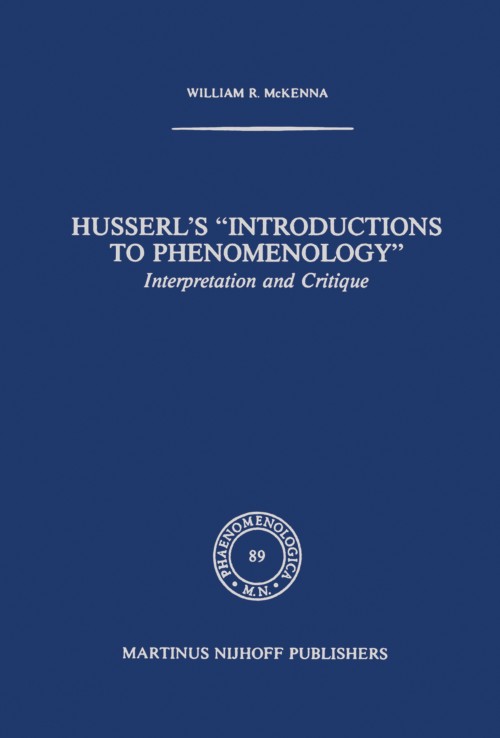
Husserl’s “Introductions to Phenomenology” [electronic resource] : Interpretation and Critique / by W. Mckenna.
Erişim Adresi
ISBN
9789400975736
Dil Kodu
İngilizce
Yer Numarası
DK/10183
Yazar
Basım Bildirimi
1st ed. 1982.
Yayın Bilgisi
Dordrecht : Springer Netherlands : Imprint: Springer, 1982.
Fiziksel Niteleme
X, 240 p. online resource.
Dizi
Phaenomenologica, Series Founded by H. L. Van Breda and Published Under the Auspices of the Husserl-Archives, 2215-0331 ; 89
İçindekiler Notu
1. Introduction -- 2. Husserl’s Thesis that Consciousness Is World-Constitutive and Its Demonstration -- A. Husserl’s Thesis -- B. The Idea of a Demonstration of the Thesis -- 3. The Motivating Problem -- 4. Acquiring the Idea of Pure Transcendental Consciousness -- A. The Thesis of the Natural Attitude -- B. The Psychological Investigation of Consciousness and the Argument that Consciousness Constitutes the World -- 5. The Entry into the Transcendental Realm -- A. The Phenomenological Epoche and Reduction -- B. Constitution and Constitutive Analysis -- C. Summary -- 6. Transcendental Illusion -- A. The Meaning of “Transcendental Illusion” -- B. Realism and Idealism in Husserl’s Philosophy -- C. Husserl’s Demonstration of the Existence of the Possibility of Transcendental Illusion -- 7. Conclusion: Toward a New Introduction to Phenomenology.
Özet, vb.
There is a remarkable unity to the work of Edmund Husserl, but there are also many difficulties in it. The unity is the result of a single personal and philo sophical quest working itself out in concrete phenomenological analyses; the difficulties are due to the inadequacy of initial conceptions which becomes felt as those analyses become progressively deeper and more extensive. ! Anyone who has followed the course of Husserl's work is struck by the constant reemergence of the same problems and by the insightfulness of the inquiries which press toward their solution. However one also becomes aware of Husserl's own dissatisfaction with his work, once so movingly expressed in a 2 personal note. It is the purpose of the present work to examine and revive one of the issues which gave Husserl difficulty, namely, the problem of an intro duction to phenomenology. Several of Husserl's writings published after Logical Investigations were either subtitled or referred to by him as "introductions to phenomenology. "3 These works serve to acquaint the reader with the specific character of Husserl's transcendental phenomenology and with the problems to which it is to provide the solution. They include discussions and analyses which pertain to what has come to be known as "ways" into transcendental phenomenology. 4 The issue here is the proper access to transcendental phenomenology.
Konu
Phenomenology .
Phenomenology.
Phenomenology.
Kurum Adı
Eseri Alıntıla
Referansları kullanmadan önce gözden geçirmeniz ve varsa gerekli düzeltmeleri yapmanız önerilir.
Dijital Kaynak
MARC Görünümü
LEADER 04875nam a22005295i 4500
001 808894
003 TR_AnAIT
005 20260131024843
007 cr nn 008mamaa
008 121227s1982 ne | s |||| 0|eng d
020 |a9789400975736|9978-94-009-7573-6
024 7 |a10.1007/978-94-009-7573-6|2doi
041 |aeng
049 |aTürk Tarih Kurumu Kütüphanesi
050 4|aB829.5.A-Z
072 7|aHPCF3|2bicssc
072 7|aPHI018000|2bisacsh
072 7|aQDHR5|2thema
082 04|a142.7|223
090 |aDK/10183
100 1 |aMckenna, W.|eauthor.|4aut|4http://id.loc.gov/vocabulary/relators/aut
245 10|aHusserl’s “Introductions to Phenomenology”|h[electronic resource] :|bInterpretation and Critique /|cby W. Mckenna.
250 |a1st ed. 1982.
264 1|aDordrecht :|bSpringer Netherlands :|bImprint: Springer,|c1982.
300 |aX, 240 p.|bonline resource.
336 |atext|btxt|2rdacontent
337 |acomputer|bc|2rdamedia
338 |aonline resource|bcr|2rdacarrier
347 |atext file|bPDF|2rda
490 1 |aPhaenomenologica, Series Founded by H. L. Van Breda and Published Under the Auspices of the Husserl-Archives,|x2215-0331 ;|v89
505 0 |a1. Introduction -- 2. Husserl’s Thesis that Consciousness Is World-Constitutive and Its Demonstration -- A. Husserl’s Thesis -- B. The Idea of a Demonstration of the Thesis -- 3. The Motivating Problem -- 4. Acquiring the Idea of Pure Transcendental Consciousness -- A. The Thesis of the Natural Attitude -- B. The Psychological Investigation of Consciousness and the Argument that Consciousness Constitutes the World -- 5. The Entry into the Transcendental Realm -- A. The Phenomenological Epoche and Reduction -- B. Constitution and Constitutive Analysis -- C. Summary -- 6. Transcendental Illusion -- A. The Meaning of “Transcendental Illusion” -- B. Realism and Idealism in Husserl’s Philosophy -- C. Husserl’s Demonstration of the Existence of the Possibility of Transcendental Illusion -- 7. Conclusion: Toward a New Introduction to Phenomenology.
520 |aThere is a remarkable unity to the work of Edmund Husserl, but there are also many difficulties in it. The unity is the result of a single personal and philo sophical quest working itself out in concrete phenomenological analyses; the difficulties are due to the inadequacy of initial conceptions which becomes felt as those analyses become progressively deeper and more extensive. ! Anyone who has followed the course of Husserl's work is struck by the constant reemergence of the same problems and by the insightfulness of the inquiries which press toward their solution. However one also becomes aware of Husserl's own dissatisfaction with his work, once so movingly expressed in a 2 personal note. It is the purpose of the present work to examine and revive one of the issues which gave Husserl difficulty, namely, the problem of an intro duction to phenomenology. Several of Husserl's writings published after Logical Investigations were either subtitled or referred to by him as "introductions to phenomenology. "3 These works serve to acquaint the reader with the specific character of Husserl's transcendental phenomenology and with the problems to which it is to provide the solution. They include discussions and analyses which pertain to what has come to be known as "ways" into transcendental phenomenology. 4 The issue here is the proper access to transcendental phenomenology.
532 8 |aAccessibility summary: This PDF is not accessible. It is based on scanned pages and does not support features such as screen reader compatibility or described non-text content (images, graphs etc). However, it likely supports searchable and selectable text based on OCR (Optical Character Recognition). Users with accessibility needs may not be able to use this content effectively. Please contact us at accessibilitysupport@springernature.com if you require assistance or an alternative format.
532 8 |aInaccessible, or known limited accessibility
532 8 |aNo reading system accessibility options actively disabled
532 8 |aPublisher contact for further accessibility information: accessibilitysupport@springernature.com
650 0|aPhenomenology .
650 14|aPhenomenology.
710 2 |aSpringerLink (Online service)
773 0 |tSpringer Nature eBook
776 08|iPrinted edition:|z9789024726653
776 08|iPrinted edition:|z9789400975743
776 08|iPrinted edition:|z9789400975750
830 0|aPhaenomenologica, Series Founded by H. L. Van Breda and Published Under the Auspices of the Husserl-Archives,|x2215-0331 ;|v89
856 40|uhttps://doi.org/10.1007/978-94-009-7573-6
912 |aZDB-2-SHU
912 |aZDB-2-SXPR
912 |aZDB-2-BAE
950 |aHumanities, Social Sciences and Law (SpringerNature-11648)
950 |aPhilosophy and Religion (R0) (SpringerNature-43725)
001 808894
003 TR_AnAIT
005 20260131024843
007 cr nn 008mamaa
008 121227s1982 ne | s |||| 0|eng d
020 |a9789400975736|9978-94-009-7573-6
024 7 |a10.1007/978-94-009-7573-6|2doi
041 |aeng
049 |aTürk Tarih Kurumu Kütüphanesi
050 4|aB829.5.A-Z
072 7|aHPCF3|2bicssc
072 7|aPHI018000|2bisacsh
072 7|aQDHR5|2thema
082 04|a142.7|223
090 |aDK/10183
100 1 |aMckenna, W.|eauthor.|4aut|4http://id.loc.gov/vocabulary/relators/aut
245 10|aHusserl’s “Introductions to Phenomenology”|h[electronic resource] :|bInterpretation and Critique /|cby W. Mckenna.
250 |a1st ed. 1982.
264 1|aDordrecht :|bSpringer Netherlands :|bImprint: Springer,|c1982.
300 |aX, 240 p.|bonline resource.
336 |atext|btxt|2rdacontent
337 |acomputer|bc|2rdamedia
338 |aonline resource|bcr|2rdacarrier
347 |atext file|bPDF|2rda
490 1 |aPhaenomenologica, Series Founded by H. L. Van Breda and Published Under the Auspices of the Husserl-Archives,|x2215-0331 ;|v89
505 0 |a1. Introduction -- 2. Husserl’s Thesis that Consciousness Is World-Constitutive and Its Demonstration -- A. Husserl’s Thesis -- B. The Idea of a Demonstration of the Thesis -- 3. The Motivating Problem -- 4. Acquiring the Idea of Pure Transcendental Consciousness -- A. The Thesis of the Natural Attitude -- B. The Psychological Investigation of Consciousness and the Argument that Consciousness Constitutes the World -- 5. The Entry into the Transcendental Realm -- A. The Phenomenological Epoche and Reduction -- B. Constitution and Constitutive Analysis -- C. Summary -- 6. Transcendental Illusion -- A. The Meaning of “Transcendental Illusion” -- B. Realism and Idealism in Husserl’s Philosophy -- C. Husserl’s Demonstration of the Existence of the Possibility of Transcendental Illusion -- 7. Conclusion: Toward a New Introduction to Phenomenology.
520 |aThere is a remarkable unity to the work of Edmund Husserl, but there are also many difficulties in it. The unity is the result of a single personal and philo sophical quest working itself out in concrete phenomenological analyses; the difficulties are due to the inadequacy of initial conceptions which becomes felt as those analyses become progressively deeper and more extensive. ! Anyone who has followed the course of Husserl's work is struck by the constant reemergence of the same problems and by the insightfulness of the inquiries which press toward their solution. However one also becomes aware of Husserl's own dissatisfaction with his work, once so movingly expressed in a 2 personal note. It is the purpose of the present work to examine and revive one of the issues which gave Husserl difficulty, namely, the problem of an intro duction to phenomenology. Several of Husserl's writings published after Logical Investigations were either subtitled or referred to by him as "introductions to phenomenology. "3 These works serve to acquaint the reader with the specific character of Husserl's transcendental phenomenology and with the problems to which it is to provide the solution. They include discussions and analyses which pertain to what has come to be known as "ways" into transcendental phenomenology. 4 The issue here is the proper access to transcendental phenomenology.
532 8 |aAccessibility summary: This PDF is not accessible. It is based on scanned pages and does not support features such as screen reader compatibility or described non-text content (images, graphs etc). However, it likely supports searchable and selectable text based on OCR (Optical Character Recognition). Users with accessibility needs may not be able to use this content effectively. Please contact us at accessibilitysupport@springernature.com if you require assistance or an alternative format.
532 8 |aInaccessible, or known limited accessibility
532 8 |aNo reading system accessibility options actively disabled
532 8 |aPublisher contact for further accessibility information: accessibilitysupport@springernature.com
650 0|aPhenomenology .
650 14|aPhenomenology.
710 2 |aSpringerLink (Online service)
773 0 |tSpringer Nature eBook
776 08|iPrinted edition:|z9789024726653
776 08|iPrinted edition:|z9789400975743
776 08|iPrinted edition:|z9789400975750
830 0|aPhaenomenologica, Series Founded by H. L. Van Breda and Published Under the Auspices of the Husserl-Archives,|x2215-0331 ;|v89
856 40|uhttps://doi.org/10.1007/978-94-009-7573-6
912 |aZDB-2-SHU
912 |aZDB-2-SXPR
912 |aZDB-2-BAE
950 |aHumanities, Social Sciences and Law (SpringerNature-11648)
950 |aPhilosophy and Religion (R0) (SpringerNature-43725)
Materyaller
Depodan talep edilen materyal sadece kütüphane içerisinde kullanılmaktadır.
Materyal dışarıya ödünç verilmemektedir.
Materyal dışarıya ödünç verilmemektedir.
