LEADER 03919nam a22005175i 4500
001 808936
003 TR_AnAIT
005 20260131024728
007 cr nn 008mamaa
008 121026s2013 ne | s |||| 0|eng d
020 |a9789400742079|9978-94-007-4207-9
024 7 |a10.1007/978-94-007-4207-9|2doi
041 |aeng
049 |aTürk Tarih Kurumu Kütüphanesi
050 4|aBD95-131
072 7|aHPJ|2bicssc
072 7|aPHI013000|2bisacsh
072 7|aQDTJ|2thema
082 04|a110|223
090 |aDK/10225
100 1 |aBerto, Francesco.|eauthor.|4aut|4http://id.loc.gov/vocabulary/relators/aut
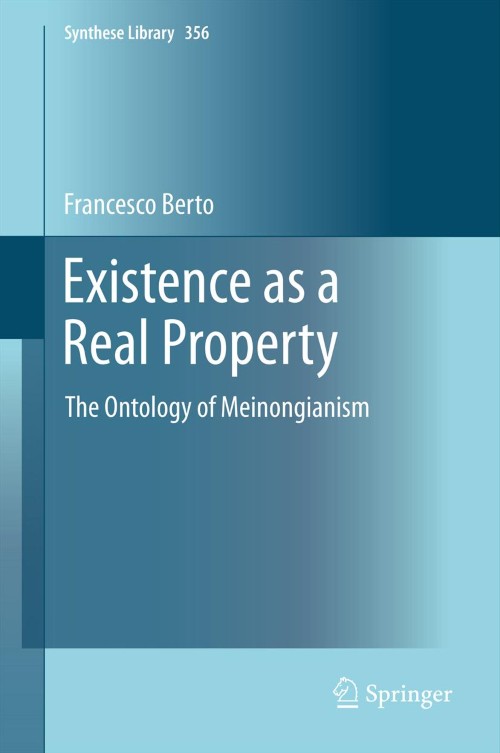
245 10|aExistence as a Real Property|h[electronic resource] :|bThe Ontology of Meinongianism /|cby Francesco Berto.
250 |a1st ed. 2013.
264 1|aDordrecht :|bSpringer Netherlands :|bImprint: Springer,|c2013.
300 |aXXII, 242 p.|bonline resource.
336 |atext|btxt|2rdacontent
337 |acomputer|bc|2rdamedia
338 |aonline resource|bcr|2rdacarrier
347 |atext file|bPDF|2rda
490 1 |aSynthese Library, Studies in Epistemology, Logic, Methodology, and Philosophy of Science,|x2542-8292 ;|v356
505 0 |aPrologue: Much Ado About Nothing -- Acknowledgments -- Existence as Logic -- Chapter 1. The Paradox of Non-Being -- Chapter 2. To Exist and to Count -- Chapter 3. Troubles for the Received View -- Nonexistence -- Chapter 4. Existence As a Real Property -- Chapter 5. Naïve Meinongianism -- Chapter 6. Meinongianisms of The First, Second, and Third Kind -- Close Encounters (with Nonexistents) of the Third Kind -- Chapter 7. Conceiving the Impossible -- Chapter 8. Nonexistents of The Third Kind at Work -- Chapter 9. Open Problems -- References -- Index.
520 |aThis profound exploration of one of the core notions of philosophy—the concept of existence itself—reviews, then counters (via Meinongian theory), the mainstream philosophical view running from Hume to Frege, Russell, and Quine, summarized thus by Kant: “Existence is not a predicate.” The initial section of the book presents a comprehensive introduction to, and critical evaluation of, this mainstream view. The author moves on to provide the first systematic survey of all the main Meinongian theories of existence, which, by contrast, reckon existence to be a real, full-fledged property of objects that some things possess, and others lack. As an influential addition to the research literature, the third part develops the most up-to-date neo-Meinongian theory called Modal Meinongianism, applies it to specific fields such as the ontology of fictional objects, and discusses its open problems, laying the groundwork for further research. In accordance with the latest trends in analytic ontology, the author prioritizes a meta-ontological viewpoint, adopting a dual definition of meta-ontology as the discourse on the meaning of being, and as the discourse on the tools and methods of ontological enquiry. This allows a balanced assessment of philosophical views on a cost-benefit basis, following multiple criteria for theory evaluation. Compelling and revealing, this new publication is a vital addition to contemporary philosophical ontology.
650 0|aMetaphysics.
650 0|aOntology.
650 0|aPhilosophy|xHistory.
650 14|aMetaphysics.
650 24|aOntology.
650 24|aHistory of Philosophy.
710 2 |aSpringerLink (Online service)
773 0 |tSpringer Nature eBook
776 08|iPrinted edition:|z9789400742062
776 08|iPrinted edition:|z9789400742086
776 08|iPrinted edition:|z9789400795884
830 0|aSynthese Library, Studies in Epistemology, Logic, Methodology, and Philosophy of Science,|x2542-8292 ;|v356
856 40|uhttps://doi.org/10.1007/978-94-007-4207-9
912 |aZDB-2-SHU
912 |aZDB-2-SXPR
950 |aHumanities, Social Sciences and Law (SpringerNature-11648)
950 |aPhilosophy and Religion (R0) (SpringerNature-43725)