LEADER 04188nam a22005775i 4500
001 808973
003 TR_AnAIT
005 20260131024557
007 cr nn 008mamaa
008 130930s2014 gw | s |||| 0|eng d
020 |a9783642339080|9978-3-642-33908-0
024 7 |a10.1007/978-3-642-33908-0|2doi
041 |aeng
049 |aTürk Tarih Kurumu Kütüphanesi
050 4|aK3236-3268.5
072 7|aJPVH|2bicssc
072 7|aLAW013000|2bisacsh
072 7|aJPVH|2thema
082 04|a341.48|223
090 |aDK/10262
100 1 |aThielbörger, Pierre.|eauthor.|4aut|4http://id.loc.gov/vocabulary/relators/aut
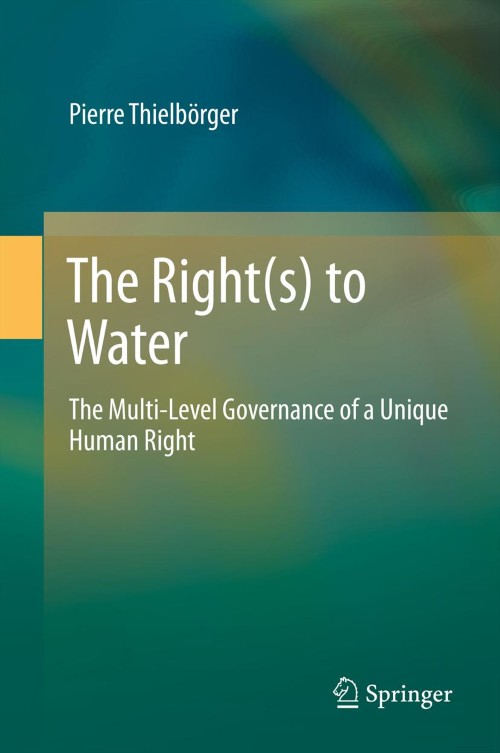
245 14|aThe Right(s) to Water|h[electronic resource] :|bThe Multi-Level Governance of a Unique Human Right /|cby Pierre Thielbörger.
250 |a1st ed. 2014.
264 1|aBerlin, Heidelberg :|bSpringer Berlin Heidelberg :|bImprint: Springer,|c2014.
300 |aXVII, 236 p.|bonline resource.
336 |atext|btxt|2rdacontent
337 |acomputer|bc|2rdamedia
338 |aonline resource|bcr|2rdacarrier
347 |atext file|bPDF|2rda
505 0 |aIntroduction -- The Current Legal Status of the Right to Water -- Philosophical and Conceptual Approaches to a Human Right to Water -- Implementation of the Right: Independent Monitoring, Enforcement against the Private Sector, and International Realization -- Conclusion.
520 |aPoliticians and diplomats have for many years proclaimed a human right to water as a solution to the global water crisis, most recently in the 2010 the UN General Assembly Resolution “The human right to water and sanitation”. To what extent, however, can a right to water legally and philosophically exist and what difference to international law and politics can it make? This question lies at the heart of this book. The book’s answer is to argue that a right to water exists under international law but in a more differentiated and multi-level manner than previously recognised. Rather than existing as a singular and comprehensive right, the right to water should be understood as a composite right of different layers, both deriving from separate rights to health, life and an adequate standard of living, and supported by an array of regional and national rights. The author also examines the right at a conceptual level. After disproving some of the theoretical objections to the category of socio-economic rights generally and the concept of a right to water more specifically, the manuscript develops an innovative approach towards the interplay of different rights to water among different legal orders. The book argues for an approach to human rights – including the right to water – as international minimum standards, using the right to water as a model case to demonstrate how multilevel human rights protection can function effectively. The book also addresses a crucial last question: how does one make an international right to water meaningful in practice? The manuscript identifies three crucial criteria in order to strengthen such a composite derived right in practice: independent monitoring; enforcement towards the private sector; and international realization. The author examines to what extent these criteria are currently adhered to, and suggests practical ways of how they could be better met in the future.
650 0|aHuman rights.
650 0|aWater.
650 0|aHydrology.
650 0|aEnvironmental law, International.
650 0|aEnvironmental Law.
650 0|aPolitical science.
650 0|aDevelopment economics.
650 14|aHuman Rights.
650 24|aWater.
650 24|aInternational Environmental Law.
650 24|aEnvironmental Law.
650 24|aPolitical Science.
650 24|aDevelopment Economics.
710 2 |aSpringerLink (Online service)
773 0 |tSpringer Nature eBook
776 08|iPrinted edition:|z9783642339073
776 08|iPrinted edition:|z9783642339097
776 08|iPrinted edition:|z9783662511435
856 40|uhttps://doi.org/10.1007/978-3-642-33908-0
912 |aZDB-2-SHU
912 |aZDB-2-SXLC
950 |aHumanities, Social Sciences and Law (SpringerNature-11648)
950 |aLaw and Criminology (R0) (SpringerNature-43727)