

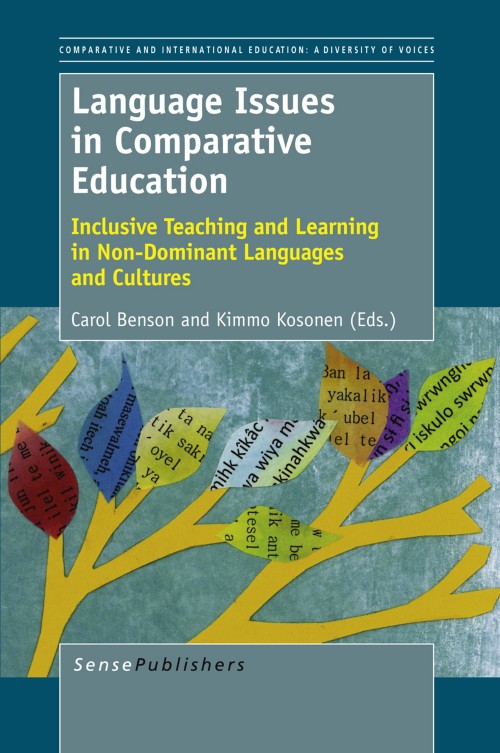
Language Issues in Comparative Education [electronic resource] : Inclusive Teaching and Learning in Non-Dominant Languages and Cultures / edited by Carol Benson, Kimmo Kosonen.
Erişim Adresi
ISBN
9789462092181
Dil Kodu
İngilizce
Yer Numarası
DK/10344
Basım Bildirimi
1st ed. 2013.
Yayın Bilgisi
Rotterdam : SensePublishers : Imprint: SensePublishers, 2013.
Fiziksel Niteleme
X, 304 p. online resource.
Dizi
Comparative and International Education: A Diversity of Voices, A Diversity of Voices, 2214-9899 ; 1
Özet, vb.
This volume compiles a unique yet complementary collection of chapters that take a strategic comparative perspective on education systems, regions of the world, and/or ethnolinguistic communities with a focus on non-dominant languages and cultures in education. Comparison and contrast within each article and across articles illustrates the potential for using home languages – which in many cases are in non-dominant positions relative to other languages in society – in inclusive multilingual and multicultural forms of education. The 22 authors demonstrate how bringing non-dominant languages and cultures into schooling has liberatory, transformative potential for learners from ethnolinguistic communities that have previously been excluded from access to quality basic education. The authors deal not only with educational development in specific low-income and emerging countries in Asia (Afghanistan, Bangladesh, Cambodia, the Philippines Thailand and Vietnam), Latin America (Guatemala and Mexico) and Africa (Mozambique, Senegal and Tanzania), but also with efforts to reach marginalized ethnolinguistic communities in high-income North American countries (Canada and the USA). In the introductory chapter the editors highlight common and cross-cutting themes and propose appropriate, sometimes new terminology for the discussion of linguistic and cultural issues in education, particularly in low-income multilingual countries. Likewise, using examples from additional countries and contexts, the three final chapters address cross-cutting issues related to language and culture in educational research and development. The authors and editors of this volume share a common commitment to comparativism in their methods and analysis, and aim to contribute to more inclusive and relevant education for all. “A richly textured collection which offers a powerful vision of the possible, now and in the future.” Alamin Mazrui, Rutgers State University of New Jersey,USA “This book takes the local perspective of non-dominant language communities in arguing for a multilingual habitus in educational development. Benson and Kosonen masterfully extend theories and clarify terminology that is inclusive of the non-dominant contexts described here.” Ofelia García, City University of New York, USA.
Konu
Education.
Education.
Education.
Diğer Yazarlar
Kurum Adı
Eseri Alıntıla
Referansları kullanmadan önce gözden geçirmeniz ve varsa gerekli düzeltmeleri yapmanız önerilir.
Dijital Kaynak
MARC Görünümü
LEADER 04803nam a22004575i 4500
001 809055
003 TR_AnAIT
005 20260131024252
007 cr nn 008mamaa
008 130609s2013 ne | s |||| 0|eng d
020 |a9789462092181|9978-94-6209-218-1
024 7 |a10.1007/978-94-6209-218-1|2doi
041 |aeng
049 |aTürk Tarih Kurumu Kütüphanesi
050 4|aL1-991
072 7|aJN|2bicssc
072 7|aEDU000000|2bisacsh
072 7|aJN|2thema
082 04|a370|223
090 |aDK/10344
245 10|aLanguage Issues in Comparative Education|h[electronic resource] :|bInclusive Teaching and Learning in Non-Dominant Languages and Cultures /|cedited by Carol Benson, Kimmo Kosonen.
250 |a1st ed. 2013.
264 1|aRotterdam :|bSensePublishers :|bImprint: SensePublishers,|c2013.
300 |aX, 304 p.|bonline resource.
336 |atext|btxt|2rdacontent
337 |acomputer|bc|2rdamedia
338 |aonline resource|bcr|2rdacarrier
347 |atext file|bPDF|2rda
490 1 |aComparative and International Education: A Diversity of Voices, A Diversity of Voices,|x2214-9899 ;|v1
520 |aThis volume compiles a unique yet complementary collection of chapters that take a strategic comparative perspective on education systems, regions of the world, and/or ethnolinguistic communities with a focus on non-dominant languages and cultures in education. Comparison and contrast within each article and across articles illustrates the potential for using home languages – which in many cases are in non-dominant positions relative to other languages in society – in inclusive multilingual and multicultural forms of education. The 22 authors demonstrate how bringing non-dominant languages and cultures into schooling has liberatory, transformative potential for learners from ethnolinguistic communities that have previously been excluded from access to quality basic education. The authors deal not only with educational development in specific low-income and emerging countries in Asia (Afghanistan, Bangladesh, Cambodia, the Philippines Thailand and Vietnam), Latin America (Guatemala and Mexico) and Africa (Mozambique, Senegal and Tanzania), but also with efforts to reach marginalized ethnolinguistic communities in high-income North American countries (Canada and the USA). In the introductory chapter the editors highlight common and cross-cutting themes and propose appropriate, sometimes new terminology for the discussion of linguistic and cultural issues in education, particularly in low-income multilingual countries. Likewise, using examples from additional countries and contexts, the three final chapters address cross-cutting issues related to language and culture in educational research and development. The authors and editors of this volume share a common commitment to comparativism in their methods and analysis, and aim to contribute to more inclusive and relevant education for all. “A richly textured collection which offers a powerful vision of the possible, now and in the future.” Alamin Mazrui, Rutgers State University of New Jersey,USA “This book takes the local perspective of non-dominant language communities in arguing for a multilingual habitus in educational development. Benson and Kosonen masterfully extend theories and clarify terminology that is inclusive of the non-dominant contexts described here.” Ofelia García, City University of New York, USA.
532 8 |aAccessibility summary: This PDF eBook is produced by a third-party. We have requested that the file be made accessible and compliant with the European Accessibility Act (EAA). However, we have not been able to fully verify its compliance with recognized accessibility standards (such as PDF/UA or WCAG). For detailed accessibility information, please refer to the original publisher’s website. If you require an accessible version of this content, please contact accessibilitysupport@springernature.com. We are committed to improving accessibility and will work with the publisher to meet your needs wherever possible.
532 8 |aPublisher contact for further accessibility information: accessibilitysupport@springernature.com
650 0|aEducation.
650 14|aEducation.
700 1 |aBenson, Carol.|eeditor.|4edt|4http://id.loc.gov/vocabulary/relators/edt
700 1 |aKosonen, Kimmo.|eeditor.|4edt|4http://id.loc.gov/vocabulary/relators/edt
710 2 |aSpringerLink (Online service)
773 0 |tSpringer Nature eBook
830 0|aComparative and International Education: A Diversity of Voices, A Diversity of Voices,|x2214-9899 ;|v1
856 40|uhttps://doi.org/10.1007/978-94-6209-218-1
912 |aZDB-2-SHU
912 |aZDB-2-SXED
950 |aHumanities, Social Sciences and Law (SpringerNature-11648)
950 |aEducation (R0) (SpringerNature-43721)
001 809055
003 TR_AnAIT
005 20260131024252
007 cr nn 008mamaa
008 130609s2013 ne | s |||| 0|eng d
020 |a9789462092181|9978-94-6209-218-1
024 7 |a10.1007/978-94-6209-218-1|2doi
041 |aeng
049 |aTürk Tarih Kurumu Kütüphanesi
050 4|aL1-991
072 7|aJN|2bicssc
072 7|aEDU000000|2bisacsh
072 7|aJN|2thema
082 04|a370|223
090 |aDK/10344
245 10|aLanguage Issues in Comparative Education|h[electronic resource] :|bInclusive Teaching and Learning in Non-Dominant Languages and Cultures /|cedited by Carol Benson, Kimmo Kosonen.
250 |a1st ed. 2013.
264 1|aRotterdam :|bSensePublishers :|bImprint: SensePublishers,|c2013.
300 |aX, 304 p.|bonline resource.
336 |atext|btxt|2rdacontent
337 |acomputer|bc|2rdamedia
338 |aonline resource|bcr|2rdacarrier
347 |atext file|bPDF|2rda
490 1 |aComparative and International Education: A Diversity of Voices, A Diversity of Voices,|x2214-9899 ;|v1
520 |aThis volume compiles a unique yet complementary collection of chapters that take a strategic comparative perspective on education systems, regions of the world, and/or ethnolinguistic communities with a focus on non-dominant languages and cultures in education. Comparison and contrast within each article and across articles illustrates the potential for using home languages – which in many cases are in non-dominant positions relative to other languages in society – in inclusive multilingual and multicultural forms of education. The 22 authors demonstrate how bringing non-dominant languages and cultures into schooling has liberatory, transformative potential for learners from ethnolinguistic communities that have previously been excluded from access to quality basic education. The authors deal not only with educational development in specific low-income and emerging countries in Asia (Afghanistan, Bangladesh, Cambodia, the Philippines Thailand and Vietnam), Latin America (Guatemala and Mexico) and Africa (Mozambique, Senegal and Tanzania), but also with efforts to reach marginalized ethnolinguistic communities in high-income North American countries (Canada and the USA). In the introductory chapter the editors highlight common and cross-cutting themes and propose appropriate, sometimes new terminology for the discussion of linguistic and cultural issues in education, particularly in low-income multilingual countries. Likewise, using examples from additional countries and contexts, the three final chapters address cross-cutting issues related to language and culture in educational research and development. The authors and editors of this volume share a common commitment to comparativism in their methods and analysis, and aim to contribute to more inclusive and relevant education for all. “A richly textured collection which offers a powerful vision of the possible, now and in the future.” Alamin Mazrui, Rutgers State University of New Jersey,USA “This book takes the local perspective of non-dominant language communities in arguing for a multilingual habitus in educational development. Benson and Kosonen masterfully extend theories and clarify terminology that is inclusive of the non-dominant contexts described here.” Ofelia García, City University of New York, USA.
532 8 |aAccessibility summary: This PDF eBook is produced by a third-party. We have requested that the file be made accessible and compliant with the European Accessibility Act (EAA). However, we have not been able to fully verify its compliance with recognized accessibility standards (such as PDF/UA or WCAG). For detailed accessibility information, please refer to the original publisher’s website. If you require an accessible version of this content, please contact accessibilitysupport@springernature.com. We are committed to improving accessibility and will work with the publisher to meet your needs wherever possible.
532 8 |aPublisher contact for further accessibility information: accessibilitysupport@springernature.com
650 0|aEducation.
650 14|aEducation.
700 1 |aBenson, Carol.|eeditor.|4edt|4http://id.loc.gov/vocabulary/relators/edt
700 1 |aKosonen, Kimmo.|eeditor.|4edt|4http://id.loc.gov/vocabulary/relators/edt
710 2 |aSpringerLink (Online service)
773 0 |tSpringer Nature eBook
830 0|aComparative and International Education: A Diversity of Voices, A Diversity of Voices,|x2214-9899 ;|v1
856 40|uhttps://doi.org/10.1007/978-94-6209-218-1
912 |aZDB-2-SHU
912 |aZDB-2-SXED
950 |aHumanities, Social Sciences and Law (SpringerNature-11648)
950 |aEducation (R0) (SpringerNature-43721)
Materyaller
Depodan talep edilen materyal sadece kütüphane içerisinde kullanılmaktadır.
Materyal dışarıya ödünç verilmemektedir.
Materyal dışarıya ödünç verilmemektedir.
