LEADER 03438nam a22005295i 4500
001 809074
003 TR_AnAIT
005 20260131024206
007 cr nn 008mamaa
008 100301s2000 xxu| s |||| 0|eng d
020 |a9780387217413|9978-0-387-21741-3
024 7 |a10.1007/b97567|2doi
041 |aeng
049 |aTürk Tarih Kurumu Kütüphanesi
050 4|aNX1-820
072 7|aAF|2bicssc
072 7|aART009000|2bisacsh
072 7|aAF|2thema
082 04|a700|223
090 |aDK/10363
100 1 |aTaft, W.Stanley Jr.|eauthor.|4aut|4http://id.loc.gov/vocabulary/relators/aut
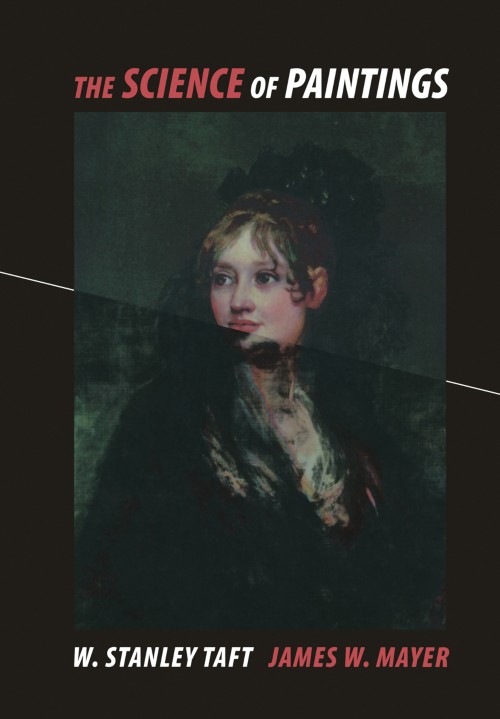
245 14|aThe Science of Paintings|h[electronic resource] /|cby W.Stanley Jr. Taft, James W. Mayer.
250 |a1st ed. 2000.
264 1|aNew York, NY :|bSpringer New York :|bImprint: Springer,|c2000.
300 |aXI, 236 p. 79 illus.|bonline resource.
336 |atext|btxt|2rdacontent
337 |acomputer|bc|2rdamedia
338 |aonline resource|bcr|2rdacarrier
347 |atext file|bPDF|2rda
505 0 |aThe Structure and Analysis of Paintings -- Paint -- Organic Binders -- The Painter’s Color and Light -- Color and Light -- Optics of Paint Films -- Beyond the Eye -- Detection of Fakes -- Object of Interaction.
520 |aThe beauty, mystery, joy, and inspired observation of the human spirit that paintings evoke result from a complex of intuitive and cognitive choices made by the artist. An understanding of the genesis of these choices can be as elusive as the resulting imagery, but great paintings seem to initiate in us a curiosity about the ideas, methods, and mate- als used by their creators. In the twentieth century connoisseurship has been enriched by the application of methods of scientific analysis. The results of these investigations into the physical properties of paintings have shed new light on their authenticity and individual histories as well as on the craft in general. Developments in the fields of physics and chemistry have allowed us to understand still more about how we p- ceive and interact with paintings. This book is intended for those both inside and outside the field of art who wish to gain insight into the making of paintings. It is directed toward students, teachers, and scientists in engineering, physics, and chemistry as well as those in art, art history, and art conservation. This book grew out of the interdisciplinary undergraduate-level course Art, Isotopes, and Ana- sis taught at Cornell University by the two authors and supported in l- tures and seminars by three of the contributing authors: Dr. Richard Newman, of the Museum of Fine Arts, Boston; Dr. Dusan Stulik, of the Getty Conservation Institute; and Prof.
650 0|aArts.
650 0|aPhysics.
650 0|aAstronomy.
650 0|aChemistry, Technical.
650 14|aFine Art.
650 24|aPhysics and Astronomy.
650 24|aIndustrial Chemistry.
700 1 |aMayer, James W.|eauthor.|4aut|4http://id.loc.gov/vocabulary/relators/aut
710 2 |aSpringerLink (Online service)
773 0 |tSpringer Nature eBook
776 08|iPrinted edition:|z9780387987224
776 08|iPrinted edition:|z9781475773873
776 08|iPrinted edition:|z9781475773880
856 40|uhttps://doi.org/10.1007/b97567
912 |aZDB-2-SHU
912 |aZDB-2-SXL
912 |aZDB-2-BAE
950 |aHumanities, Social Sciences and Law (SpringerNature-11648)
950 |aLiterature, Cultural and Media Studies (R0) (SpringerNature-43723)