

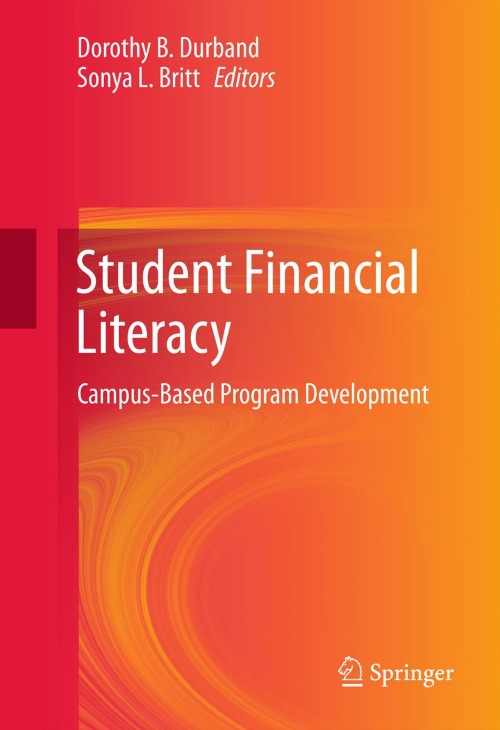
Student Financial Literacy [electronic resource] : Campus-Based Program Development / edited by Dorothy B. Durband, Sonya L. Britt.
Erişim Adresi
ISBN
9781461435051
Dil Kodu
İngilizce
Yer Numarası
DK/10517
Basım Bildirimi
1st ed. 2012.
Yayın Bilgisi
New York, NY : Springer New York : Imprint: Springer, 2012.
Fiziksel Niteleme
XVIII, 190 p. online resource.
Özet, vb.
Between the global economic crisis, rising tuition costs, and the shaky job market, financial literacy is fast becoming a necessary student skill regardless of major. And given the startling statistics on student loan and credit card debt following students long after graduation, the time for personal financial mastery is long overdue . The first full-length reference of its kind, Student Financial Literacy: Campus-Based Program Development is designed to guide professionals in implementing a new financial education program or enhancing an existing one. Its contributors are experts in personal finance and authorities on financial literacy education. The book sets out a real-world, evidence-based model complete with tools, resource lists, and websites, and covers ground-level basics as well as advanced innovations (employing and training student volunteers; research opportunities within programs; finding funding). Chapters cover all key aspects of program development, including: Staffing and recruiting considerations. Training and development of staff. Content and delivery issues. Marketing strategies. Assessment of financial literacy. Evaluating financial education programs. For college and university personnel tasked with improving students’ economic education, Student Financial Literacy: Campus-Based Program Development brings the steps into clear, realistic focus for successful long-term results.
Konu
Sociology.
Social groups.
Economics.
Education, Higher.
Sociology of Family, Youth and Aging.
Economics.
Higher Education.
Social groups.
Economics.
Education, Higher.
Sociology of Family, Youth and Aging.
Economics.
Higher Education.
Diğer Yazarlar
Kurum Adı
