

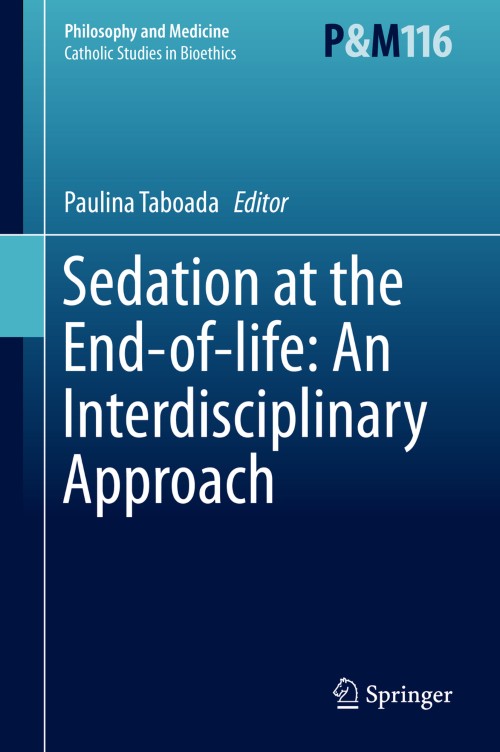
Sedation at the End-of-life: An Interdisciplinary Approach [electronic resource] / edited by Paulina Taboada.
Erişim Adresi
ISBN
9789401791069
Dil Kodu
İngilizce
Yer Numarası
DK/10545
Basım Bildirimi
1st ed. 2015.
Yayın Bilgisi
Dordrecht : Springer Netherlands : Imprint: Springer, 2015.
Fiziksel Niteleme
XVIII, 175 p. 5 illus. online resource.
Dizi
Philosophy and Medicine, 2215-0080 ; 116
İçindekiler Notu
1.Chapter: Sedation at the end of life. Clinical settings, trends and current debate; Paulina Taboada -- 2 Chapter: Palliative Sedation and the Goals of Care at the End of Life; William Sullivan -- 3 Chapter: Clinical Aspects of Palliative Sedation for Refractory Symptoms; Paul Walker -- 4. Chapter: The use of palliative sedation to treat existential suffering: a reconsideration; Aron Portnoy, Punam Rana, Camilla Zimmermann & Gary Rodin -- 5. Chapter: The Relevance of Double Effect to Decisions about Sedation at the End of Life; Joseph Boyle -- 6. Chapter: The field of application of the principle f double effect and the problem of palliative sedation; Alejandro Miranda -- 7. Chapter: The ‘sanctity of life’, ‘best interests’ and ‘autonomy’: An ethical and legal clarification; John Keown -- 8. Chapter: Palliative Sedation. Some juridical preventions for the Chilean case; Ángela Vivanco -- 9. Chapter: Clinical guidelines for the use of Palliative Sedation: moving from contentionto consensus; Blair Henry -- 10. Chapter: The case against clinical guidelines for Palliative Sedation; John Scott. 11. Chapter: Ethical analysis of selected clinical cases; Paulina Taboada -- Epilogue; Paulina Taboada -- Index.
Özet, vb.
The book’s main contribution is its interdisciplinary approach to the issue of sedation at the end-of-life. Because it occurs at the end of life, palliative sedation raises a number of important ethical and legal questions, including whether it is a covert form of euthanasia and for what purposes it may legally be used. Many of the book chapters address the first question and almost all deal with a specific form of the second: whether palliative sedation should be used for those experiencing “existential suffering”? This raises the question of what existential suffering is, a topic that is also discussed in the book. The different chapters address these issues from the perspectives of the relevant disciplines: Palliative Medicine, Bioethics, Law and Theology. Hence, helpful accounts of the clinical and historical background for this issue are provided and the importance of drawing accurate ethical and legal distinctions is stressed throughout the whole book. So the volume represents avaluable contribution to the emerging literature on this topic and should be helpful across a broad spectrum of readers: philosophers, theologians and physicians.
Konu
Ethics.
Public health.
Medical laws and legislation.
Moral Philosophy and Applied Ethics.
Public Health.
Medical Law.
Public health.
Medical laws and legislation.
Moral Philosophy and Applied Ethics.
Public Health.
Medical Law.
Diğer Yazarlar
Kurum Adı
Eseri Alıntıla
Referansları kullanmadan önce gözden geçirmeniz ve varsa gerekli düzeltmeleri yapmanız önerilir.
Dijital Kaynak
MARC Görünümü
LEADER 04214nam a22005175i 4500
001 809256
003 TR_AnAIT
005 20260131023650
007 cr nn 008mamaa
008 141021s2015 ne | s |||| 0|eng d
020 |a9789401791069|9978-94-017-9106-9
024 7 |a10.1007/978-94-017-9106-9|2doi
041 |aeng
049 |aTürk Tarih Kurumu Kütüphanesi
050 4|aBJ1-1725
072 7|aHPQ|2bicssc
072 7|aPHI005000|2bisacsh
072 7|aQDTQ|2thema
082 04|a170|223
090 |aDK/10545
245 10|aSedation at the End-of-life: An Interdisciplinary Approach|h[electronic resource] /|cedited by Paulina Taboada.
250 |a1st ed. 2015.
264 1|aDordrecht :|bSpringer Netherlands :|bImprint: Springer,|c2015.
300 |aXVIII, 175 p. 5 illus.|bonline resource.
336 |atext|btxt|2rdacontent
337 |acomputer|bc|2rdamedia
338 |aonline resource|bcr|2rdacarrier
347 |atext file|bPDF|2rda
490 1 |aPhilosophy and Medicine,|x2215-0080 ;|v116
505 0 |a1.Chapter: Sedation at the end of life. Clinical settings, trends and current debate; Paulina Taboada -- 2 Chapter: Palliative Sedation and the Goals of Care at the End of Life; William Sullivan -- 3 Chapter: Clinical Aspects of Palliative Sedation for Refractory Symptoms; Paul Walker -- 4. Chapter: The use of palliative sedation to treat existential suffering: a reconsideration; Aron Portnoy, Punam Rana, Camilla Zimmermann & Gary Rodin -- 5. Chapter: The Relevance of Double Effect to Decisions about Sedation at the End of Life; Joseph Boyle -- 6. Chapter: The field of application of the principle f double effect and the problem of palliative sedation; Alejandro Miranda -- 7. Chapter: The ‘sanctity of life’, ‘best interests’ and ‘autonomy’: An ethical and legal clarification; John Keown -- 8. Chapter: Palliative Sedation. Some juridical preventions for the Chilean case; Ángela Vivanco -- 9. Chapter: Clinical guidelines for the use of Palliative Sedation: moving from contentionto consensus; Blair Henry -- 10. Chapter: The case against clinical guidelines for Palliative Sedation; John Scott. 11. Chapter: Ethical analysis of selected clinical cases; Paulina Taboada -- Epilogue; Paulina Taboada -- Index.
520 |aThe book’s main contribution is its interdisciplinary approach to the issue of sedation at the end-of-life. Because it occurs at the end of life, palliative sedation raises a number of important ethical and legal questions, including whether it is a covert form of euthanasia and for what purposes it may legally be used. Many of the book chapters address the first question and almost all deal with a specific form of the second: whether palliative sedation should be used for those experiencing “existential suffering”? This raises the question of what existential suffering is, a topic that is also discussed in the book. The different chapters address these issues from the perspectives of the relevant disciplines: Palliative Medicine, Bioethics, Law and Theology. Hence, helpful accounts of the clinical and historical background for this issue are provided and the importance of drawing accurate ethical and legal distinctions is stressed throughout the whole book. So the volume represents avaluable contribution to the emerging literature on this topic and should be helpful across a broad spectrum of readers: philosophers, theologians and physicians.
650 0|aEthics.
650 0|aPublic health.
650 0|aMedical laws and legislation.
650 14|aMoral Philosophy and Applied Ethics.
650 24|aPublic Health.
650 24|aMedical Law.
700 1 |aTaboada, Paulina.|eeditor.|4edt|4http://id.loc.gov/vocabulary/relators/edt
710 2 |aSpringerLink (Online service)
773 0 |tSpringer Nature eBook
776 08|iPrinted edition:|z9789401791052
776 08|iPrinted edition:|z9789401791076
776 08|iPrinted edition:|z9789402407327
830 0|aPhilosophy and Medicine,|x2215-0080 ;|v116
856 40|uhttps://doi.org/10.1007/978-94-017-9106-9
912 |aZDB-2-SHU
912 |aZDB-2-SXPR
950 |aHumanities, Social Sciences and Law (SpringerNature-11648)
950 |aPhilosophy and Religion (R0) (SpringerNature-43725)
001 809256
003 TR_AnAIT
005 20260131023650
007 cr nn 008mamaa
008 141021s2015 ne | s |||| 0|eng d
020 |a9789401791069|9978-94-017-9106-9
024 7 |a10.1007/978-94-017-9106-9|2doi
041 |aeng
049 |aTürk Tarih Kurumu Kütüphanesi
050 4|aBJ1-1725
072 7|aHPQ|2bicssc
072 7|aPHI005000|2bisacsh
072 7|aQDTQ|2thema
082 04|a170|223
090 |aDK/10545
245 10|aSedation at the End-of-life: An Interdisciplinary Approach|h[electronic resource] /|cedited by Paulina Taboada.
250 |a1st ed. 2015.
264 1|aDordrecht :|bSpringer Netherlands :|bImprint: Springer,|c2015.
300 |aXVIII, 175 p. 5 illus.|bonline resource.
336 |atext|btxt|2rdacontent
337 |acomputer|bc|2rdamedia
338 |aonline resource|bcr|2rdacarrier
347 |atext file|bPDF|2rda
490 1 |aPhilosophy and Medicine,|x2215-0080 ;|v116
505 0 |a1.Chapter: Sedation at the end of life. Clinical settings, trends and current debate; Paulina Taboada -- 2 Chapter: Palliative Sedation and the Goals of Care at the End of Life; William Sullivan -- 3 Chapter: Clinical Aspects of Palliative Sedation for Refractory Symptoms; Paul Walker -- 4. Chapter: The use of palliative sedation to treat existential suffering: a reconsideration; Aron Portnoy, Punam Rana, Camilla Zimmermann & Gary Rodin -- 5. Chapter: The Relevance of Double Effect to Decisions about Sedation at the End of Life; Joseph Boyle -- 6. Chapter: The field of application of the principle f double effect and the problem of palliative sedation; Alejandro Miranda -- 7. Chapter: The ‘sanctity of life’, ‘best interests’ and ‘autonomy’: An ethical and legal clarification; John Keown -- 8. Chapter: Palliative Sedation. Some juridical preventions for the Chilean case; Ángela Vivanco -- 9. Chapter: Clinical guidelines for the use of Palliative Sedation: moving from contentionto consensus; Blair Henry -- 10. Chapter: The case against clinical guidelines for Palliative Sedation; John Scott. 11. Chapter: Ethical analysis of selected clinical cases; Paulina Taboada -- Epilogue; Paulina Taboada -- Index.
520 |aThe book’s main contribution is its interdisciplinary approach to the issue of sedation at the end-of-life. Because it occurs at the end of life, palliative sedation raises a number of important ethical and legal questions, including whether it is a covert form of euthanasia and for what purposes it may legally be used. Many of the book chapters address the first question and almost all deal with a specific form of the second: whether palliative sedation should be used for those experiencing “existential suffering”? This raises the question of what existential suffering is, a topic that is also discussed in the book. The different chapters address these issues from the perspectives of the relevant disciplines: Palliative Medicine, Bioethics, Law and Theology. Hence, helpful accounts of the clinical and historical background for this issue are provided and the importance of drawing accurate ethical and legal distinctions is stressed throughout the whole book. So the volume represents avaluable contribution to the emerging literature on this topic and should be helpful across a broad spectrum of readers: philosophers, theologians and physicians.
650 0|aEthics.
650 0|aPublic health.
650 0|aMedical laws and legislation.
650 14|aMoral Philosophy and Applied Ethics.
650 24|aPublic Health.
650 24|aMedical Law.
700 1 |aTaboada, Paulina.|eeditor.|4edt|4http://id.loc.gov/vocabulary/relators/edt
710 2 |aSpringerLink (Online service)
773 0 |tSpringer Nature eBook
776 08|iPrinted edition:|z9789401791052
776 08|iPrinted edition:|z9789401791076
776 08|iPrinted edition:|z9789402407327
830 0|aPhilosophy and Medicine,|x2215-0080 ;|v116
856 40|uhttps://doi.org/10.1007/978-94-017-9106-9
912 |aZDB-2-SHU
912 |aZDB-2-SXPR
950 |aHumanities, Social Sciences and Law (SpringerNature-11648)
950 |aPhilosophy and Religion (R0) (SpringerNature-43725)
Materyaller
Depodan talep edilen materyal sadece kütüphane içerisinde kullanılmaktadır.
Materyal dışarıya ödünç verilmemektedir.
Materyal dışarıya ödünç verilmemektedir.
