

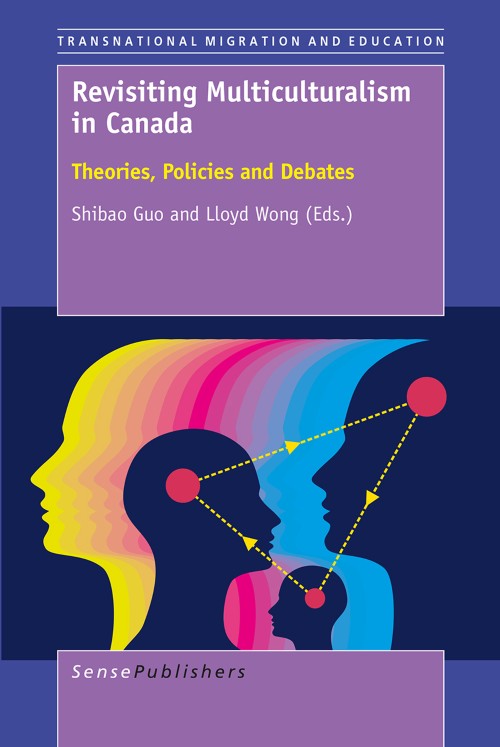
Revisiting Multiculturalism in Canada [electronic resource] : Theories, Policies and Debates / edited by Shibao Guo, Lloyd Wong.
Erişim Adresi
ISBN
9789463002080
Dil Kodu
İngilizce
Yer Numarası
DK/10742
Basım Bildirimi
1st ed. 2015.
Yayın Bilgisi
Rotterdam : SensePublishers : Imprint: SensePublishers, 2015.
Fiziksel Niteleme
VI, 346 p. online resource.
Dizi
Transnational Migration and Education
İçindekiler Notu
Theorizing and Debating Multiculturalism -- The Three Lives of Multiculturalism -- Intercultural Relations in Plural Societies: Research Derived from Canadian Multiculturalism Policy -- A Canadian Anomaly? The Social Construction of Multicultural National Identity -- Multiculturalism and Ethnic Pluralism in Sociology: An Analysis of the Fragmentation Position Discourse -- Multiculturalism and Egalitarianism -- Canadian Multiculturalism in the 21st Century: Emerging Challenges and Debates -- Section II: Multiculturalism, Ethnicity and Belonging -- Rethinking Multiculturalism in Canada: Tensions between Immigration, Ethnicity and Minority Rights -- Canadian Jews, Dual/Divided Loyalties, and the Tebbit “Cricket” Test -- Yiddish and Multiculturalism: A Marriage Made in Heaven? -- Canadians under Suspicion: Sri Lankan Tamil Diasporic Community as a Suspect Minority Group -- Section III: Youth, Identity and Racialization -- Multiculturalism and the Forging of Identities by Lebanese-Origin Youth in Halifax -- Multiculturalism as an Integrational Policy: Lessons from Second Generation Racialized Minorities -- “And He Was Dancing Like No Tomorrow”: Police and Youth “Getting to Know” Each Other -- Section IV: Multicultural Education -- Critical and Emerging Discourses in Multicultural Education Literature: An (Updated) Review -- Multiculturalism and Minority Religion in Public Schools: Perspectives of Immigrant Parents -- From Integration to Empowerment: Multicultural Education in the Board of Education of the City of Toronto, from 1960 to 1975 -- Further Unpacking Multiculturalism in the Classroom: Continuing to Explore the Politics of Difference through Current Events -- Section V: Future of Multiculturalism -- Beyond Multiculturalism: Managing Complex Diversities in a Postmulticultural Canada -- Notes on Contributors -- Index.
Özet, vb.
In 1971 Canada was the first nation in the world to establish an official multiculturalism policy with an objective to assist cultural groups to overcome barriers to integrate into Canadian society while maintaining their heritage language and culture. Since then Canada’s practice and policy of multiculturalism have endured and been deemed as successful by many Canadians. As well, Canada’s multiculturalism policy has also enjoyed international recognition as being pioneering and effectual. Recent public opinion suggests that an increasing majority of Canadians identify multiculturalism as one of the most important symbols of Canada’s national identity. On the other hand, this apparent successful record has not gone unchallenged. Debates, critiques, and challenges to Canadian multiculturalism by academics and politicians have always existed to some degree since its policy inception over four decades ago. In the current international context there has been a growing assault on, and subsequent retreat from, multiculturalism in many countries. In Canada debates about multiculturalism continue to emerge and percolate particularly over the past decade or so. In this context, we are grappling with the following questions: • What is the future of multiculturalism and is it sustainable in Canada? • How is multiculturalism related to egalitarianism, interculturalism, racism, national identity, belonging and loyalties? • What role does multiculturalism play for youth in terms of their identities including racialization? • How does multiculturalism play out in educational policy and the classroom in Canada? These central questions are addressed by contributions from some of Canada’s leading scholars and researchers in philosophy, psychology, sociology, history, education, religious studies, youth studies, and Canadian studies. The authors theorize and discuss the debates and critiques surrounding multiculturalism in Canada and include some very important case studi.
Konu
Education.
Education.
Education.
Diğer Yazarlar
Kurum Adı
Eseri Alıntıla
Referansları kullanmadan önce gözden geçirmeniz ve varsa gerekli düzeltmeleri yapmanız önerilir.
Dijital Kaynak
MARC Görünümü
LEADER 06190nam a22004695i 4500
001 809453
003 TR_AnAIT
005 20260131023159
007 cr nn 008mamaa
008 151201s2015 ne | s |||| 0|eng d
020 |a9789463002080|9978-94-6300-208-0
024 7 |a10.1007/978-94-6300-208-0|2doi
041 |aeng
049 |aTürk Tarih Kurumu Kütüphanesi
050 4|aL1-991
072 7|aJN|2bicssc
072 7|aEDU000000|2bisacsh
072 7|aJN|2thema
082 04|a370|223
090 |aDK/10742
245 10|aRevisiting Multiculturalism in Canada|h[electronic resource] :|bTheories, Policies and Debates /|cedited by Shibao Guo, Lloyd Wong.
250 |a1st ed. 2015.
264 1|aRotterdam :|bSensePublishers :|bImprint: SensePublishers,|c2015.
300 |aVI, 346 p.|bonline resource.
336 |atext|btxt|2rdacontent
337 |acomputer|bc|2rdamedia
338 |aonline resource|bcr|2rdacarrier
347 |atext file|bPDF|2rda
490 1 |aTransnational Migration and Education
505 0 |aTheorizing and Debating Multiculturalism -- The Three Lives of Multiculturalism -- Intercultural Relations in Plural Societies: Research Derived from Canadian Multiculturalism Policy -- A Canadian Anomaly? The Social Construction of Multicultural National Identity -- Multiculturalism and Ethnic Pluralism in Sociology: An Analysis of the Fragmentation Position Discourse -- Multiculturalism and Egalitarianism -- Canadian Multiculturalism in the 21st Century: Emerging Challenges and Debates -- Section II: Multiculturalism, Ethnicity and Belonging -- Rethinking Multiculturalism in Canada: Tensions between Immigration, Ethnicity and Minority Rights -- Canadian Jews, Dual/Divided Loyalties, and the Tebbit “Cricket” Test -- Yiddish and Multiculturalism: A Marriage Made in Heaven? -- Canadians under Suspicion: Sri Lankan Tamil Diasporic Community as a Suspect Minority Group -- Section III: Youth, Identity and Racialization -- Multiculturalism and the Forging of Identities by Lebanese-Origin Youth in Halifax -- Multiculturalism as an Integrational Policy: Lessons from Second Generation Racialized Minorities -- “And He Was Dancing Like No Tomorrow”: Police and Youth “Getting to Know” Each Other -- Section IV: Multicultural Education -- Critical and Emerging Discourses in Multicultural Education Literature: An (Updated) Review -- Multiculturalism and Minority Religion in Public Schools: Perspectives of Immigrant Parents -- From Integration to Empowerment: Multicultural Education in the Board of Education of the City of Toronto, from 1960 to 1975 -- Further Unpacking Multiculturalism in the Classroom: Continuing to Explore the Politics of Difference through Current Events -- Section V: Future of Multiculturalism -- Beyond Multiculturalism: Managing Complex Diversities in a Postmulticultural Canada -- Notes on Contributors -- Index.
520 |aIn 1971 Canada was the first nation in the world to establish an official multiculturalism policy with an objective to assist cultural groups to overcome barriers to integrate into Canadian society while maintaining their heritage language and culture. Since then Canada’s practice and policy of multiculturalism have endured and been deemed as successful by many Canadians. As well, Canada’s multiculturalism policy has also enjoyed international recognition as being pioneering and effectual. Recent public opinion suggests that an increasing majority of Canadians identify multiculturalism as one of the most important symbols of Canada’s national identity. On the other hand, this apparent successful record has not gone unchallenged. Debates, critiques, and challenges to Canadian multiculturalism by academics and politicians have always existed to some degree since its policy inception over four decades ago. In the current international context there has been a growing assault on, and subsequent retreat from, multiculturalism in many countries. In Canada debates about multiculturalism continue to emerge and percolate particularly over the past decade or so. In this context, we are grappling with the following questions: • What is the future of multiculturalism and is it sustainable in Canada? • How is multiculturalism related to egalitarianism, interculturalism, racism, national identity, belonging and loyalties? • What role does multiculturalism play for youth in terms of their identities including racialization? • How does multiculturalism play out in educational policy and the classroom in Canada? These central questions are addressed by contributions from some of Canada’s leading scholars and researchers in philosophy, psychology, sociology, history, education, religious studies, youth studies, and Canadian studies. The authors theorize and discuss the debates and critiques surrounding multiculturalism in Canada and include some very important case studi.
532 8 |aAccessibility summary: This PDF eBook is produced by a third-party. We have requested that the file be made accessible and compliant with the European Accessibility Act (EAA). However, we have not been able to fully verify its compliance with recognized accessibility standards (such as PDF/UA or WCAG). For detailed accessibility information, please refer to the original publisher’s website. If you require an accessible version of this content, please contact accessibilitysupport@springernature.com. We are committed to improving accessibility and will work with the publisher to meet your needs wherever possible.
532 8 |aPublisher contact for further accessibility information: accessibilitysupport@springernature.com
650 0|aEducation.
650 14|aEducation.
700 1 |aGuo, Shibao.|eeditor.|4edt|4http://id.loc.gov/vocabulary/relators/edt
700 1 |aWong, Lloyd.|eeditor.|4edt|4http://id.loc.gov/vocabulary/relators/edt
710 2 |aSpringerLink (Online service)
773 0 |tSpringer Nature eBook
830 0|aTransnational Migration and Education
856 40|uhttps://doi.org/10.1007/978-94-6300-208-0
912 |aZDB-2-SHU
912 |aZDB-2-SXED
950 |aHumanities, Social Sciences and Law (SpringerNature-11648)
950 |aEducation (R0) (SpringerNature-43721)
001 809453
003 TR_AnAIT
005 20260131023159
007 cr nn 008mamaa
008 151201s2015 ne | s |||| 0|eng d
020 |a9789463002080|9978-94-6300-208-0
024 7 |a10.1007/978-94-6300-208-0|2doi
041 |aeng
049 |aTürk Tarih Kurumu Kütüphanesi
050 4|aL1-991
072 7|aJN|2bicssc
072 7|aEDU000000|2bisacsh
072 7|aJN|2thema
082 04|a370|223
090 |aDK/10742
245 10|aRevisiting Multiculturalism in Canada|h[electronic resource] :|bTheories, Policies and Debates /|cedited by Shibao Guo, Lloyd Wong.
250 |a1st ed. 2015.
264 1|aRotterdam :|bSensePublishers :|bImprint: SensePublishers,|c2015.
300 |aVI, 346 p.|bonline resource.
336 |atext|btxt|2rdacontent
337 |acomputer|bc|2rdamedia
338 |aonline resource|bcr|2rdacarrier
347 |atext file|bPDF|2rda
490 1 |aTransnational Migration and Education
505 0 |aTheorizing and Debating Multiculturalism -- The Three Lives of Multiculturalism -- Intercultural Relations in Plural Societies: Research Derived from Canadian Multiculturalism Policy -- A Canadian Anomaly? The Social Construction of Multicultural National Identity -- Multiculturalism and Ethnic Pluralism in Sociology: An Analysis of the Fragmentation Position Discourse -- Multiculturalism and Egalitarianism -- Canadian Multiculturalism in the 21st Century: Emerging Challenges and Debates -- Section II: Multiculturalism, Ethnicity and Belonging -- Rethinking Multiculturalism in Canada: Tensions between Immigration, Ethnicity and Minority Rights -- Canadian Jews, Dual/Divided Loyalties, and the Tebbit “Cricket” Test -- Yiddish and Multiculturalism: A Marriage Made in Heaven? -- Canadians under Suspicion: Sri Lankan Tamil Diasporic Community as a Suspect Minority Group -- Section III: Youth, Identity and Racialization -- Multiculturalism and the Forging of Identities by Lebanese-Origin Youth in Halifax -- Multiculturalism as an Integrational Policy: Lessons from Second Generation Racialized Minorities -- “And He Was Dancing Like No Tomorrow”: Police and Youth “Getting to Know” Each Other -- Section IV: Multicultural Education -- Critical and Emerging Discourses in Multicultural Education Literature: An (Updated) Review -- Multiculturalism and Minority Religion in Public Schools: Perspectives of Immigrant Parents -- From Integration to Empowerment: Multicultural Education in the Board of Education of the City of Toronto, from 1960 to 1975 -- Further Unpacking Multiculturalism in the Classroom: Continuing to Explore the Politics of Difference through Current Events -- Section V: Future of Multiculturalism -- Beyond Multiculturalism: Managing Complex Diversities in a Postmulticultural Canada -- Notes on Contributors -- Index.
520 |aIn 1971 Canada was the first nation in the world to establish an official multiculturalism policy with an objective to assist cultural groups to overcome barriers to integrate into Canadian society while maintaining their heritage language and culture. Since then Canada’s practice and policy of multiculturalism have endured and been deemed as successful by many Canadians. As well, Canada’s multiculturalism policy has also enjoyed international recognition as being pioneering and effectual. Recent public opinion suggests that an increasing majority of Canadians identify multiculturalism as one of the most important symbols of Canada’s national identity. On the other hand, this apparent successful record has not gone unchallenged. Debates, critiques, and challenges to Canadian multiculturalism by academics and politicians have always existed to some degree since its policy inception over four decades ago. In the current international context there has been a growing assault on, and subsequent retreat from, multiculturalism in many countries. In Canada debates about multiculturalism continue to emerge and percolate particularly over the past decade or so. In this context, we are grappling with the following questions: • What is the future of multiculturalism and is it sustainable in Canada? • How is multiculturalism related to egalitarianism, interculturalism, racism, national identity, belonging and loyalties? • What role does multiculturalism play for youth in terms of their identities including racialization? • How does multiculturalism play out in educational policy and the classroom in Canada? These central questions are addressed by contributions from some of Canada’s leading scholars and researchers in philosophy, psychology, sociology, history, education, religious studies, youth studies, and Canadian studies. The authors theorize and discuss the debates and critiques surrounding multiculturalism in Canada and include some very important case studi.
532 8 |aAccessibility summary: This PDF eBook is produced by a third-party. We have requested that the file be made accessible and compliant with the European Accessibility Act (EAA). However, we have not been able to fully verify its compliance with recognized accessibility standards (such as PDF/UA or WCAG). For detailed accessibility information, please refer to the original publisher’s website. If you require an accessible version of this content, please contact accessibilitysupport@springernature.com. We are committed to improving accessibility and will work with the publisher to meet your needs wherever possible.
532 8 |aPublisher contact for further accessibility information: accessibilitysupport@springernature.com
650 0|aEducation.
650 14|aEducation.
700 1 |aGuo, Shibao.|eeditor.|4edt|4http://id.loc.gov/vocabulary/relators/edt
700 1 |aWong, Lloyd.|eeditor.|4edt|4http://id.loc.gov/vocabulary/relators/edt
710 2 |aSpringerLink (Online service)
773 0 |tSpringer Nature eBook
830 0|aTransnational Migration and Education
856 40|uhttps://doi.org/10.1007/978-94-6300-208-0
912 |aZDB-2-SHU
912 |aZDB-2-SXED
950 |aHumanities, Social Sciences and Law (SpringerNature-11648)
950 |aEducation (R0) (SpringerNature-43721)
Materyaller
Depodan talep edilen materyal sadece kütüphane içerisinde kullanılmaktadır.
Materyal dışarıya ödünç verilmemektedir.
Materyal dışarıya ödünç verilmemektedir.
