

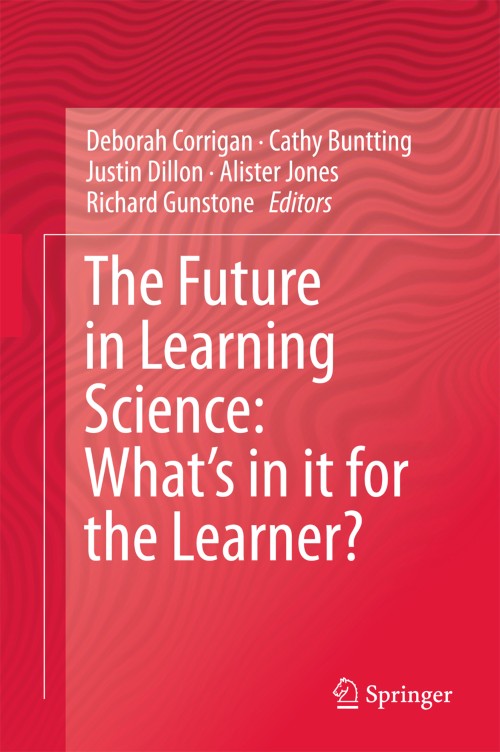
The Future in Learning Science: What’s in it for the Learner? [electronic resource] / edited by Deborah Corrigan, Cathy Buntting, Justin Dillon, Alister Jones, Richard Gunstone.
Erişim Adresi
ISBN
9783319165431
Dil Kodu
İngilizce
Yer Numarası
DK/10824
Basım Bildirimi
1st ed. 2015.
Yayın Bilgisi
Cham : Springer International Publishing : Imprint: Springer, 2015.
Fiziksel Niteleme
XV, 299 p. 11 illus. online resource.
İçindekiler Notu
The Future in Learning Science: Themes, Issues and Big Ideas. Cathy Buntting, Richard Gunstone, Deborah Corrigan, Justin Dillon and Alister Jones -- Learning for a Better World: Futures in Science Education, Michael Reiss -- Connoisseurs of Science: A Next Goal for Science Education? Peter Fensham -- When Science Changes: The Impact of ICTs on Preparing Students for Science Outside of School , Marie-Claire Shanahan -- Forms of learning in senior secondary science as represented through an integrated curriculum, May Cheng -- Pursuing different forms of science learning through innovative curriculum implementation, Greg Lancaster, Debra Panizzon and Deborah Corrigan -- Reconceptualising the Learning and Teaching of Scientific Concepts, Colette Murphy -- Making Science beyond the Classroom Accessible to Students, Léonie Rennie -- Children Learning Science in and for a Participatory Culture, Bronwen Cowie and Elaine Khoo -- The Elephant in the Room: Emotional Literacy/Intelligence, Science Education, and Gender, Brian Matthews -- Initiatives to Prepare New Science Teachers for Promoting Student Engagement, Shirley Simon and Paul Davies -- Futures Thinking in the Future of Science Education, Cathy Buntting and Alister Jones -- Revealing Questions: What are Learners Asking About? Amy Seakins -- The Potential of Digital Technology for Science Learning and Teaching—The Learners’ Perspective, Neil Selwyn and Rebecca Cooper -- Facilitating Change in Science Teachers’ Perceptions about Learning and Teaching, John Loughran and Kathy Smith.
Özet, vb.
This volume considers the future of science learning - what is being learned and how it is being learned - in formal and informal contexts for science education. To do this, the book explores major contemporary shifts in the forms of science that could or should be learned in the next 20 years, what forms of learning of that science should occur, and how that learning happens, including from the perspective of learners. In particular, this volume addresses shifts in the forms of science that are researched and taught post-school – emerging sciences, new sciences that are new integrations, “futures science”, and increases in the complexity and multidisciplinarity of science, including a multidisciplinarity that embraces ways of knowing beyond science. A central aspect of this in terms of the future of learning science is the urgent need to engage students, including their non-cognitive, affective dimensions, both for an educated citizenry and for a productive response to the ubiquitous concerns about future demand for science-based professionals. Another central issue is the actual impact of ICT on science learning and teaching, including shifts in how students use mobile technology to learn science.
Konu
Science __ Study and teaching.
Learning, Psychology of.
Science Education.
Instructional Psychology.
Learning, Psychology of.
Science Education.
Instructional Psychology.
Diğer Yazarlar
Kurum Adı
Eseri Alıntıla
Referansları kullanmadan önce gözden geçirmeniz ve varsa gerekli düzeltmeleri yapmanız önerilir.
Dijital Kaynak
MARC Görünümü
LEADER 04978nam a22005415i 4500
001 809535
003 TR_AnAIT
005 20260131022942
007 cr nn 008mamaa
008 150901s2015 sz | s |||| 0|eng d
020 |a9783319165431|9978-3-319-16543-1
024 7 |a10.1007/978-3-319-16543-1|2doi
041 |aeng
049 |aTürk Tarih Kurumu Kütüphanesi
050 4|aQ181-183.4
072 7|aJNU|2bicssc
072 7|aPD|2bicssc
072 7|aSCI063000|2bisacsh
072 7|aJNU|2thema
072 7|aPD|2thema
082 04|a507.1|223
090 |aDK/10824
245 14|aThe Future in Learning Science: What’s in it for the Learner?|h[electronic resource] /|cedited by Deborah Corrigan, Cathy Buntting, Justin Dillon, Alister Jones, Richard Gunstone.
250 |a1st ed. 2015.
264 1|aCham :|bSpringer International Publishing :|bImprint: Springer,|c2015.
300 |aXV, 299 p. 11 illus.|bonline resource.
336 |atext|btxt|2rdacontent
337 |acomputer|bc|2rdamedia
338 |aonline resource|bcr|2rdacarrier
347 |atext file|bPDF|2rda
505 0 |aThe Future in Learning Science: Themes, Issues and Big Ideas. Cathy Buntting, Richard Gunstone, Deborah Corrigan, Justin Dillon and Alister Jones -- Learning for a Better World: Futures in Science Education, Michael Reiss -- Connoisseurs of Science: A Next Goal for Science Education? Peter Fensham -- When Science Changes: The Impact of ICTs on Preparing Students for Science Outside of School , Marie-Claire Shanahan -- Forms of learning in senior secondary science as represented through an integrated curriculum, May Cheng -- Pursuing different forms of science learning through innovative curriculum implementation, Greg Lancaster, Debra Panizzon and Deborah Corrigan -- Reconceptualising the Learning and Teaching of Scientific Concepts, Colette Murphy -- Making Science beyond the Classroom Accessible to Students, Léonie Rennie -- Children Learning Science in and for a Participatory Culture, Bronwen Cowie and Elaine Khoo -- The Elephant in the Room: Emotional Literacy/Intelligence, Science Education, and Gender, Brian Matthews -- Initiatives to Prepare New Science Teachers for Promoting Student Engagement, Shirley Simon and Paul Davies -- Futures Thinking in the Future of Science Education, Cathy Buntting and Alister Jones -- Revealing Questions: What are Learners Asking About? Amy Seakins -- The Potential of Digital Technology for Science Learning and Teaching—The Learners’ Perspective, Neil Selwyn and Rebecca Cooper -- Facilitating Change in Science Teachers’ Perceptions about Learning and Teaching, John Loughran and Kathy Smith.
520 |aThis volume considers the future of science learning - what is being learned and how it is being learned - in formal and informal contexts for science education. To do this, the book explores major contemporary shifts in the forms of science that could or should be learned in the next 20 years, what forms of learning of that science should occur, and how that learning happens, including from the perspective of learners. In particular, this volume addresses shifts in the forms of science that are researched and taught post-school – emerging sciences, new sciences that are new integrations, “futures science”, and increases in the complexity and multidisciplinarity of science, including a multidisciplinarity that embraces ways of knowing beyond science. A central aspect of this in terms of the future of learning science is the urgent need to engage students, including their non-cognitive, affective dimensions, both for an educated citizenry and for a productive response to the ubiquitous concerns about future demand for science-based professionals. Another central issue is the actual impact of ICT on science learning and teaching, including shifts in how students use mobile technology to learn science.
650 0|aScience|xStudy and teaching.
650 0|aLearning, Psychology of.
650 14|aScience Education.
650 24|aInstructional Psychology.
700 1 |aCorrigan, Deborah.|eeditor.|4edt|4http://id.loc.gov/vocabulary/relators/edt
700 1 |aBuntting, Cathy.|eeditor.|4edt|4http://id.loc.gov/vocabulary/relators/edt
700 1 |aDillon, Justin.|eeditor.|4edt|4http://id.loc.gov/vocabulary/relators/edt
700 1 |aJones, Alister.|eeditor.|4edt|4http://id.loc.gov/vocabulary/relators/edt
700 1 |aGunstone, Richard.|eeditor.|0(orcid)0000-0002-0827-2663|1https://orcid.org/0000-0002-0827-2663|4edt|4http://id.loc.gov/vocabulary/relators/edt
710 2 |aSpringerLink (Online service)
773 0 |tSpringer Nature eBook
776 08|iPrinted edition:|z9783319165424
776 08|iPrinted edition:|z9783319165448
776 08|iPrinted edition:|z9783319352084
856 40|uhttps://doi.org/10.1007/978-3-319-16543-1
912 |aZDB-2-SHU
912 |aZDB-2-SXED
950 |aHumanities, Social Sciences and Law (SpringerNature-11648)
950 |aEducation (R0) (SpringerNature-43721)
001 809535
003 TR_AnAIT
005 20260131022942
007 cr nn 008mamaa
008 150901s2015 sz | s |||| 0|eng d
020 |a9783319165431|9978-3-319-16543-1
024 7 |a10.1007/978-3-319-16543-1|2doi
041 |aeng
049 |aTürk Tarih Kurumu Kütüphanesi
050 4|aQ181-183.4
072 7|aJNU|2bicssc
072 7|aPD|2bicssc
072 7|aSCI063000|2bisacsh
072 7|aJNU|2thema
072 7|aPD|2thema
082 04|a507.1|223
090 |aDK/10824
245 14|aThe Future in Learning Science: What’s in it for the Learner?|h[electronic resource] /|cedited by Deborah Corrigan, Cathy Buntting, Justin Dillon, Alister Jones, Richard Gunstone.
250 |a1st ed. 2015.
264 1|aCham :|bSpringer International Publishing :|bImprint: Springer,|c2015.
300 |aXV, 299 p. 11 illus.|bonline resource.
336 |atext|btxt|2rdacontent
337 |acomputer|bc|2rdamedia
338 |aonline resource|bcr|2rdacarrier
347 |atext file|bPDF|2rda
505 0 |aThe Future in Learning Science: Themes, Issues and Big Ideas. Cathy Buntting, Richard Gunstone, Deborah Corrigan, Justin Dillon and Alister Jones -- Learning for a Better World: Futures in Science Education, Michael Reiss -- Connoisseurs of Science: A Next Goal for Science Education? Peter Fensham -- When Science Changes: The Impact of ICTs on Preparing Students for Science Outside of School , Marie-Claire Shanahan -- Forms of learning in senior secondary science as represented through an integrated curriculum, May Cheng -- Pursuing different forms of science learning through innovative curriculum implementation, Greg Lancaster, Debra Panizzon and Deborah Corrigan -- Reconceptualising the Learning and Teaching of Scientific Concepts, Colette Murphy -- Making Science beyond the Classroom Accessible to Students, Léonie Rennie -- Children Learning Science in and for a Participatory Culture, Bronwen Cowie and Elaine Khoo -- The Elephant in the Room: Emotional Literacy/Intelligence, Science Education, and Gender, Brian Matthews -- Initiatives to Prepare New Science Teachers for Promoting Student Engagement, Shirley Simon and Paul Davies -- Futures Thinking in the Future of Science Education, Cathy Buntting and Alister Jones -- Revealing Questions: What are Learners Asking About? Amy Seakins -- The Potential of Digital Technology for Science Learning and Teaching—The Learners’ Perspective, Neil Selwyn and Rebecca Cooper -- Facilitating Change in Science Teachers’ Perceptions about Learning and Teaching, John Loughran and Kathy Smith.
520 |aThis volume considers the future of science learning - what is being learned and how it is being learned - in formal and informal contexts for science education. To do this, the book explores major contemporary shifts in the forms of science that could or should be learned in the next 20 years, what forms of learning of that science should occur, and how that learning happens, including from the perspective of learners. In particular, this volume addresses shifts in the forms of science that are researched and taught post-school – emerging sciences, new sciences that are new integrations, “futures science”, and increases in the complexity and multidisciplinarity of science, including a multidisciplinarity that embraces ways of knowing beyond science. A central aspect of this in terms of the future of learning science is the urgent need to engage students, including their non-cognitive, affective dimensions, both for an educated citizenry and for a productive response to the ubiquitous concerns about future demand for science-based professionals. Another central issue is the actual impact of ICT on science learning and teaching, including shifts in how students use mobile technology to learn science.
650 0|aScience|xStudy and teaching.
650 0|aLearning, Psychology of.
650 14|aScience Education.
650 24|aInstructional Psychology.
700 1 |aCorrigan, Deborah.|eeditor.|4edt|4http://id.loc.gov/vocabulary/relators/edt
700 1 |aBuntting, Cathy.|eeditor.|4edt|4http://id.loc.gov/vocabulary/relators/edt
700 1 |aDillon, Justin.|eeditor.|4edt|4http://id.loc.gov/vocabulary/relators/edt
700 1 |aJones, Alister.|eeditor.|4edt|4http://id.loc.gov/vocabulary/relators/edt
700 1 |aGunstone, Richard.|eeditor.|0(orcid)0000-0002-0827-2663|1https://orcid.org/0000-0002-0827-2663|4edt|4http://id.loc.gov/vocabulary/relators/edt
710 2 |aSpringerLink (Online service)
773 0 |tSpringer Nature eBook
776 08|iPrinted edition:|z9783319165424
776 08|iPrinted edition:|z9783319165448
776 08|iPrinted edition:|z9783319352084
856 40|uhttps://doi.org/10.1007/978-3-319-16543-1
912 |aZDB-2-SHU
912 |aZDB-2-SXED
950 |aHumanities, Social Sciences and Law (SpringerNature-11648)
950 |aEducation (R0) (SpringerNature-43721)
Materyaller
Depodan talep edilen materyal sadece kütüphane içerisinde kullanılmaktadır.
Materyal dışarıya ödünç verilmemektedir.
Materyal dışarıya ödünç verilmemektedir.
