LEADER 04286nam a22006375i 4500
001 809575
003 TR_AnAIT
005 20260131022849
007 cr nn 008mamaa
008 100301s1999 xxu| s |||| 0|eng d
020 |a9780585274454|9978-0-585-27445-4
024 7 |a10.1007/b102291|2doi
041 |aeng
049 |aTürk Tarih Kurumu Kütüphanesi
050 4|aH1-970.9
072 7|aJ|2bicssc
072 7|aJHB|2bicssc
072 7|aSOC000000|2bisacsh
072 7|aJ|2thema
072 7|aJHB|2thema
082 04|a300|223
090 |aDK/10864
100 1 |aMumford, E.|eauthor.|4aut|4http://id.loc.gov/vocabulary/relators/aut
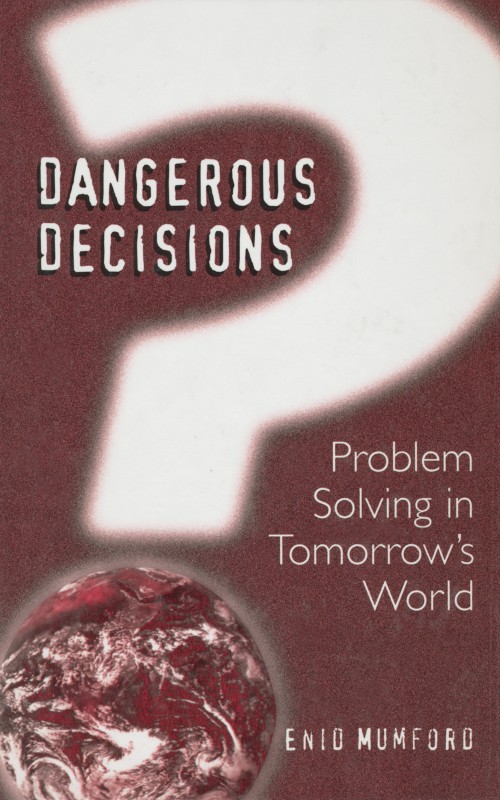
245 10|aDangerous Decisions|h[electronic resource] :|bProblem Solving in Tomorrow's World /|cby E. Mumford.
250 |a1st ed. 1999.
264 1|aNew York, NY :|bSpringer US :|bImprint: Springer,|c1999.
300 |aXI, 233 p.|bonline resource.
336 |atext|btxt|2rdacontent
337 |acomputer|bc|2rdamedia
338 |aonline resource|bcr|2rdacarrier
347 |atext file|bPDF|2rda
505 0 |aThe Problems of Problem Solving -- Choosing Problem-Solving Methods -- Problem Solving by Specialist Groups -- Problem Solving and the Police -- Drug Dealers and Drug Barons as Problem Solvers -- Understanding the Drug Problem -- Tackling the Drug Problem -- Operational Guidelines for Problem Solving -- Different Groups with Different Problems -- Cyber Crime -- Addressing Cyber Crime Problems -- Money Laundering -- The Challenges of Problem Solving.
520 |aIn a world where technology is continually advancing, and problems are becoming more and more complex, established practices for decision making and problem solving are no longer effective. In this new book, however, Enid Mumford draws on her wealth of experience in management, business schools, and working with the police and other professional problem solvers to show us how to tackle complex problems efficiently. With drugs and cyber-crime as her main examples Professor Mumford shows how these topical, yet apparently permanent problems, could be approached. She does this by looking at how the criminals themselves have overcome legal obstacles, and other problems to make the drug trafficking industry the second largest in the world today, and the relative newcomer, electronic fraud, a multi-billion dollar problem already. These crimes, which in themselves lead to more crime from petty theft to support a drug habit, to international money laundering, are incredibly complex, and yet the book shows us that there is not only a way forward with these issues, but a way to approach all complex problems with efficiency and competency, wherever they occur in our lives.
532 8 |aAccessibility summary: This PDF is not accessible. It is based on scanned pages and does not support features such as screen reader compatibility or described non-text content (images, graphs etc). However, it likely supports searchable and selectable text based on OCR (Optical Character Recognition). Users with accessibility needs may not be able to use this content effectively. Please contact us at accessibilitysupport@springernature.com if you require assistance or an alternative format.
532 8 |aInaccessible, or known limited accessibility
532 8 |aNo reading system accessibility options actively disabled
532 8 |aPublisher contact for further accessibility information: accessibilitysupport@springernature.com
650 0|aSocial sciences.
650 0|aElectronic data processing|xManagement.
650 0|aOperations research.
650 0|aCriminology.
650 0|aBusiness.
650 0|aManagement science.
650 14|aSociety.
650 24|aIT Operations.
650 24|aOperations Research and Decision Theory.
650 24|aCriminology.
650 24|aBusiness and Management.
710 2 |aSpringerLink (Online service)
773 0 |tSpringer Nature eBook
776 08|iPrinted edition:|z9780306461422
776 08|iPrinted edition:|z9780306461439
776 08|iPrinted edition:|z9781475781779
856 40|uhttps://doi.org/10.1007/b102291
912 |aZDB-2-SHU
912 |aZDB-2-SXS
912 |aZDB-2-BAE
950 |aHumanities, Social Sciences and Law (SpringerNature-11648)
950 |aSocial Sciences (R0) (SpringerNature-43726)