

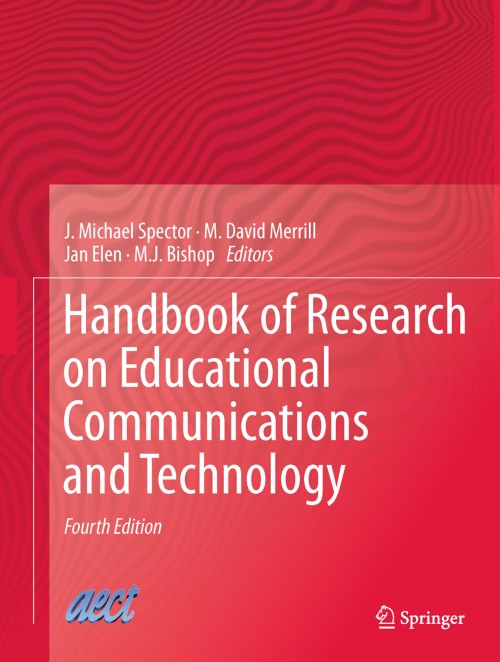
Handbook of Research on Educational Communications and Technology [electronic resource] / edited by J. Michael Spector, M. David Merrill, Jan Elen, M. J. Bishop.
Erişim Adresi
ISBN
9781461431855
Dil Kodu
İngilizce
Yer Numarası
DK/10957
Basım Bildirimi
4th ed. 2014.
Yayın Bilgisi
New York, NY : Springer New York : Imprint: Springer, 2014.
Fiziksel Niteleme
XXXV, 1005 p. 146 illus., 57 illus. in color. online resource.
İçindekiler Notu
Foundations of educational communications and technology -- Historical overview -- Research-based perspectives -- Examples -- Research methods -- Research approaches.-Design research.-Developmental research -- Activity research -- Classroom action research -- Quantitative methods -- Qualitative methods -- Strategies and models -- Formal learning -- Informal learning -- Adult learners -- Instructional design and development models -- Model-based learning and performance -- Motivational models -- Models for personalized learning -- Planning and implementation of educational technology -- Change agency in learning -- Cultural considerations -- Distributed educational practice -- Policies governing educational technology implementation, participatory planning and implementation of educational technology -- Emerging technologies -- Mobile technologies -- Tools and technologies for learning in complex domains -- Adaptive technologies -- Virtual/synthetic learning -- Emerging representation technologies -- Web 2.0 communications tools and technologies -- Technology integration -- TPACK -- Technology integration in schools -- Technology integration in work settings -- Technology integration in health care -- Technology integration in public service contexts -- Technology integration in multi-cultural settings -- Technology integration for problem solving and decision making -- Technology integration and generational differences -- Assessment and evaluation -- Collecting and analyzing data -- Program evaluation and research -- Assessing educational technologies in various domains -- Model-centered assessment -- Formative assessments -- Looking forward: Innovative educational technology around the globe -- Educational technology, funding opportunities and programs -- The learning sciences and instructional design technologies -- Costs and benefits of educational technology -- Educational technology and developing countries -- The philosophy of science and educational technologies -- The future of educational technology research. .
Özet, vb.
Now in its fourth edition, the Handbook has become synonymous with excellence in providing cutting edge research on educational communications and technology to the information and communication technology community. This Handbook is written for researchers in educational communication and technology, professors of instructional design and instructional technology as well as professionals working in the fields of ICT, Learning Sciences, Educational Technology, IT, and ID. In addition, it has been and will continue to be an invaluable reference for academic and professional libraries. Under the sponsorship of the Association for Educational Communications and Technology (AECT), an international cadre of authors has been assembled representing the absolute best in the field. Expanded from 56 to 74 chapters, topics covered range from methodology, instructional strategies, assessment, design models, implementation and technology integration. A full 15 chapters are devoted to examining the future of the field, including robust discussions of new and emerging technologies and the fostering of ICT research in the developing world. This completely expanded and updated Handbook will become an indispensible addition to the field; anyone with an interest in the field of educational communications and technology will find their library enriched for including it.
Konu
Educational technology.
Education __ Data processing.
Learning, Psychology of.
Digital Education and Educational Technology.
Computers and Education.
Instructional Psychology.
Education __ Data processing.
Learning, Psychology of.
Digital Education and Educational Technology.
Computers and Education.
Instructional Psychology.
Diğer Yazarlar
Kurum Adı
Eseri Alıntıla
Referansları kullanmadan önce gözden geçirmeniz ve varsa gerekli düzeltmeleri yapmanız önerilir.
Dijital Kaynak
MARC Görünümü
LEADER 05646nam a22005295i 4500
001 809668
003 TR_AnAIT
005 20260131022634
007 cr nn 008mamaa
008 130703s2014 xxu| s |||| 0|eng d
020 |a9781461431855|9978-1-4614-3185-5
024 7 |a10.1007/978-1-4614-3185-5|2doi
041 |aeng
049 |aTürk Tarih Kurumu Kütüphanesi
050 4|aLB1028.3
072 7|aJNV|2bicssc
072 7|aEDU000000|2bisacsh
072 7|aJNV|2thema
082 04|a371.33|223
090 |aDK/10957
245 10|aHandbook of Research on Educational Communications and Technology|h[electronic resource] /|cedited by J. Michael Spector, M. David Merrill, Jan Elen, M. J. Bishop.
250 |a4th ed. 2014.
264 1|aNew York, NY :|bSpringer New York :|bImprint: Springer,|c2014.
300 |aXXXV, 1005 p. 146 illus., 57 illus. in color.|bonline resource.
336 |atext|btxt|2rdacontent
337 |acomputer|bc|2rdamedia
338 |aonline resource|bcr|2rdacarrier
347 |atext file|bPDF|2rda
505 0 |a Foundations of educational communications and technology -- Historical overview -- Research-based perspectives -- Examples -- Research methods -- Research approaches.-Design research.-Developmental research -- Activity research -- Classroom action research -- Quantitative methods -- Qualitative methods -- Strategies and models -- Formal learning -- Informal learning -- Adult learners -- Instructional design and development models -- Model-based learning and performance -- Motivational models -- Models for personalized learning -- Planning and implementation of educational technology -- Change agency in learning -- Cultural considerations -- Distributed educational practice -- Policies governing educational technology implementation, participatory planning and implementation of educational technology -- Emerging technologies -- Mobile technologies -- Tools and technologies for learning in complex domains -- Adaptive technologies -- Virtual/synthetic learning -- Emerging representation technologies -- Web 2.0 communications tools and technologies -- Technology integration -- TPACK -- Technology integration in schools -- Technology integration in work settings -- Technology integration in health care -- Technology integration in public service contexts -- Technology integration in multi-cultural settings -- Technology integration for problem solving and decision making -- Technology integration and generational differences -- Assessment and evaluation -- Collecting and analyzing data -- Program evaluation and research -- Assessing educational technologies in various domains -- Model-centered assessment -- Formative assessments -- Looking forward: Innovative educational technology around the globe -- Educational technology, funding opportunities and programs -- The learning sciences and instructional design technologies -- Costs and benefits of educational technology -- Educational technology and developing countries -- The philosophy of science and educational technologies -- The future of educational technology research. .
520 |a Now in its fourth edition, the Handbook has become synonymous with excellence in providing cutting edge research on educational communications and technology to the information and communication technology community. This Handbook is written for researchers in educational communication and technology, professors of instructional design and instructional technology as well as professionals working in the fields of ICT, Learning Sciences, Educational Technology, IT, and ID. In addition, it has been and will continue to be an invaluable reference for academic and professional libraries. Under the sponsorship of the Association for Educational Communications and Technology (AECT), an international cadre of authors has been assembled representing the absolute best in the field. Expanded from 56 to 74 chapters, topics covered range from methodology, instructional strategies, assessment, design models, implementation and technology integration. A full 15 chapters are devoted to examining the future of the field, including robust discussions of new and emerging technologies and the fostering of ICT research in the developing world. This completely expanded and updated Handbook will become an indispensible addition to the field; anyone with an interest in the field of educational communications and technology will find their library enriched for including it.
650 0|aEducational technology.
650 0|aEducation|xData processing.
650 0|aLearning, Psychology of.
650 14|aDigital Education and Educational Technology.
650 24|aComputers and Education.
650 24|aInstructional Psychology.
700 1 |aSpector, J. Michael.|eeditor.|0(orcid)0000-0002-6270-3073|1https://orcid.org/0000-0002-6270-3073|4edt|4http://id.loc.gov/vocabulary/relators/edt
700 1 |aMerrill, M. David.|eeditor.|4edt|4http://id.loc.gov/vocabulary/relators/edt
700 1 |aElen, Jan.|eeditor.|0(orcid)0000-0003-1611-5075|1https://orcid.org/0000-0003-1611-5075|4edt|4http://id.loc.gov/vocabulary/relators/edt
700 1 |aBishop, M. J.|eeditor.|4edt|4http://id.loc.gov/vocabulary/relators/edt
710 2 |aSpringerLink (Online service)
773 0 |tSpringer Nature eBook
776 08|iPrinted edition:|z9781461431848
776 08|iPrinted edition:|z9781461431862
776 08|iPrinted edition:|z9781493952878
856 40|uhttps://doi.org/10.1007/978-1-4614-3185-5
912 |aZDB-2-SHU
912 |aZDB-2-SXED
950 |aHumanities, Social Sciences and Law (SpringerNature-11648)
950 |aEducation (R0) (SpringerNature-43721)
001 809668
003 TR_AnAIT
005 20260131022634
007 cr nn 008mamaa
008 130703s2014 xxu| s |||| 0|eng d
020 |a9781461431855|9978-1-4614-3185-5
024 7 |a10.1007/978-1-4614-3185-5|2doi
041 |aeng
049 |aTürk Tarih Kurumu Kütüphanesi
050 4|aLB1028.3
072 7|aJNV|2bicssc
072 7|aEDU000000|2bisacsh
072 7|aJNV|2thema
082 04|a371.33|223
090 |aDK/10957
245 10|aHandbook of Research on Educational Communications and Technology|h[electronic resource] /|cedited by J. Michael Spector, M. David Merrill, Jan Elen, M. J. Bishop.
250 |a4th ed. 2014.
264 1|aNew York, NY :|bSpringer New York :|bImprint: Springer,|c2014.
300 |aXXXV, 1005 p. 146 illus., 57 illus. in color.|bonline resource.
336 |atext|btxt|2rdacontent
337 |acomputer|bc|2rdamedia
338 |aonline resource|bcr|2rdacarrier
347 |atext file|bPDF|2rda
505 0 |a Foundations of educational communications and technology -- Historical overview -- Research-based perspectives -- Examples -- Research methods -- Research approaches.-Design research.-Developmental research -- Activity research -- Classroom action research -- Quantitative methods -- Qualitative methods -- Strategies and models -- Formal learning -- Informal learning -- Adult learners -- Instructional design and development models -- Model-based learning and performance -- Motivational models -- Models for personalized learning -- Planning and implementation of educational technology -- Change agency in learning -- Cultural considerations -- Distributed educational practice -- Policies governing educational technology implementation, participatory planning and implementation of educational technology -- Emerging technologies -- Mobile technologies -- Tools and technologies for learning in complex domains -- Adaptive technologies -- Virtual/synthetic learning -- Emerging representation technologies -- Web 2.0 communications tools and technologies -- Technology integration -- TPACK -- Technology integration in schools -- Technology integration in work settings -- Technology integration in health care -- Technology integration in public service contexts -- Technology integration in multi-cultural settings -- Technology integration for problem solving and decision making -- Technology integration and generational differences -- Assessment and evaluation -- Collecting and analyzing data -- Program evaluation and research -- Assessing educational technologies in various domains -- Model-centered assessment -- Formative assessments -- Looking forward: Innovative educational technology around the globe -- Educational technology, funding opportunities and programs -- The learning sciences and instructional design technologies -- Costs and benefits of educational technology -- Educational technology and developing countries -- The philosophy of science and educational technologies -- The future of educational technology research. .
520 |a Now in its fourth edition, the Handbook has become synonymous with excellence in providing cutting edge research on educational communications and technology to the information and communication technology community. This Handbook is written for researchers in educational communication and technology, professors of instructional design and instructional technology as well as professionals working in the fields of ICT, Learning Sciences, Educational Technology, IT, and ID. In addition, it has been and will continue to be an invaluable reference for academic and professional libraries. Under the sponsorship of the Association for Educational Communications and Technology (AECT), an international cadre of authors has been assembled representing the absolute best in the field. Expanded from 56 to 74 chapters, topics covered range from methodology, instructional strategies, assessment, design models, implementation and technology integration. A full 15 chapters are devoted to examining the future of the field, including robust discussions of new and emerging technologies and the fostering of ICT research in the developing world. This completely expanded and updated Handbook will become an indispensible addition to the field; anyone with an interest in the field of educational communications and technology will find their library enriched for including it.
650 0|aEducational technology.
650 0|aEducation|xData processing.
650 0|aLearning, Psychology of.
650 14|aDigital Education and Educational Technology.
650 24|aComputers and Education.
650 24|aInstructional Psychology.
700 1 |aSpector, J. Michael.|eeditor.|0(orcid)0000-0002-6270-3073|1https://orcid.org/0000-0002-6270-3073|4edt|4http://id.loc.gov/vocabulary/relators/edt
700 1 |aMerrill, M. David.|eeditor.|4edt|4http://id.loc.gov/vocabulary/relators/edt
700 1 |aElen, Jan.|eeditor.|0(orcid)0000-0003-1611-5075|1https://orcid.org/0000-0003-1611-5075|4edt|4http://id.loc.gov/vocabulary/relators/edt
700 1 |aBishop, M. J.|eeditor.|4edt|4http://id.loc.gov/vocabulary/relators/edt
710 2 |aSpringerLink (Online service)
773 0 |tSpringer Nature eBook
776 08|iPrinted edition:|z9781461431848
776 08|iPrinted edition:|z9781461431862
776 08|iPrinted edition:|z9781493952878
856 40|uhttps://doi.org/10.1007/978-1-4614-3185-5
912 |aZDB-2-SHU
912 |aZDB-2-SXED
950 |aHumanities, Social Sciences and Law (SpringerNature-11648)
950 |aEducation (R0) (SpringerNature-43721)
Materyaller
Depodan talep edilen materyal sadece kütüphane içerisinde kullanılmaktadır.
Materyal dışarıya ödünç verilmemektedir.
Materyal dışarıya ödünç verilmemektedir.
