

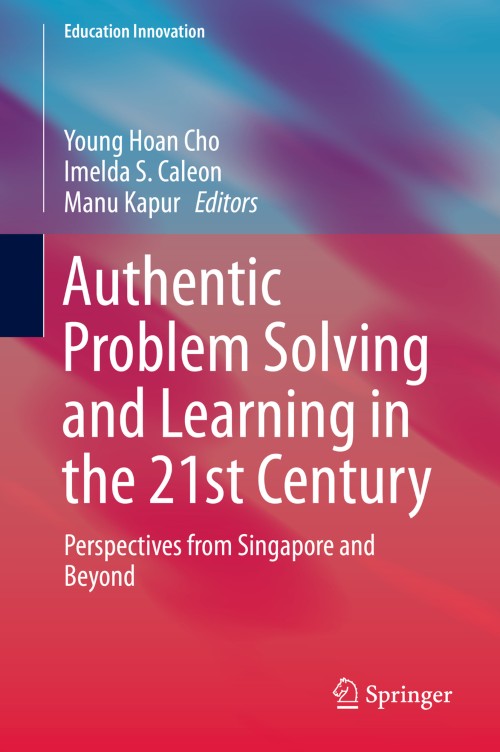
Authentic Problem Solving and Learning in the 21st Century [electronic resource] : Perspectives from Singapore and Beyond / edited by Young Hoan Cho, Imelda S. Caleon, Manu Kapur.
Erişim Adresi
ISBN
9789812875211
Dil Kodu
İngilizce
Yer Numarası
DK/10995
Basım Bildirimi
1st ed. 2015.
Yayın Bilgisi
Singapore : Springer Nature Singapore : Imprint: Springer, 2015.
Fiziksel Niteleme
XI, 368 p. 36 illus., 27 illus. in color. online resource.
Dizi
Education Innovation Series, 2211-4882
İçindekiler Notu
A. Introduction and Overview -- Chapter 1 Authentic Problem Solving and Learning for 21st Century Learners -- B. Authentic Problems and Tasks -- Chapter 2 The Roles of Authentic Tasks in Promoting 21st Century Learning Dispositions -- Chapter 3 A Design Model for Problem-based Learning -- Chapter 4 Mathematical Problem Solving Using Real-World Problems -- C. Problem-Based Learning Environments -- Chapter 5 Problem-based Learning: Conception , Practice, and Future -- Chapter 6 Using Problems to Learn in a Polytechnic Context -- Chapter 7 Pedagogical Interfaces in a Problem-based Learning Environment: Cognitive Functioning at PBL stages -- Chapter 8 Finding Common Ground during Collaborative Problem Solving: Pupils' Engagement in Scenario-based Inquiry -- D. Authentic Practice in School -- Chapter 9 Cultivating a Remix Movement in an East Asian Culture -- Chapter 10 Authentic Thinking with Argumentation: Putting on the Thinking Caps of Scientists and Designers -- Chapter 11 Using an Immersive Environment to Address Problems Associated with the Learning of Geography -- E. Authentic Practice through Productive Failure -- Chapter 12 Learning from Productive Failure -- Chapter 13 Discussing Student Solutions is Germane for Learning when Providing or Delaying Instruction -- Chapter 14 Mathematical Skills and Learning-By-Invention in Small Group -- F. Authentic Participation in Real-World Communities -- Chapter 15. The Retail Experience for Active Learning (REAL) Experience -- Chapter 16 Authentic Learning Experiences in Informal Science Learning: A Case Study of Singapore's Prospective Teachers -- Chapter 17 Exploring the Process of Problem Finding in Professional Learning Communities through a Learning Study Approach -- Chapter 18 Problem Solving of Teacher-generated Classroom Management Cases in Wiki-based Environment: An Analysis of Peers' Influences -- G. Conclusions and Future Direction -- Chapter 19 Authentic Problem Solving and Learning: Lessons Learned and Moving Forward -- Chapter 20Authentic Learning Research and Practice: Issues, Challenges, and Future Directions.
Özet, vb.
With the rapid changes in the social, political, economic and technological landscape around the world, today’s learners face a more globally competitive job market after leaving school. The 21st century, which is characterized by the emergence of knowledge-based societies, expects learners to be comfortable in dealing with ambiguities and complexities in the real world and to be able to use knowledge as a tool at their workplace. This book will help readers develop an in-depth understanding of authentic problem solving and learning, and how it can be used to make a difference in their school or learning communities for the development of 21st century competencies. Comprising 20 chapters written by Singapore-based and international authors, the book is organized into three themes: authentic problems, authentic practices, and authentic participation. It details innovative school practices (e.g. productive failure) concerning the design of problems, learning activities, learning environments, and ICT tools for authentic problem solving and learning. Along with theoretical explanations of authentic learning processes and outcomes, the book also elucidates how students learn by generating and exploring solutions to complex problems and which cognitive functions are needed at different stages of problem-based learning. Presenting coherent descriptions of instructional design principles, successful cases and challenges encountered in K-12 schools and learning communities, the book provides useful information, new insights, and practical guidance for school directors, parents, teachers and researchers seeking to develop authentic learning environments for 21st century learners.
Konu
Educational technology.
Teachers __ Training of.
Digital Education and Educational Technology.
Teaching and Teacher Education.
Teachers __ Training of.
Digital Education and Educational Technology.
Teaching and Teacher Education.
Diğer Yazarlar
Kurum Adı
Eseri Alıntıla
Referansları kullanmadan önce gözden geçirmeniz ve varsa gerekli düzeltmeleri yapmanız önerilir.
Dijital Kaynak
MARC Görünümü
LEADER 05848nam a22005175i 4500
001 809706
003 TR_AnAIT
005 20260131022515
007 cr nn 008mamaa
008 150812s2015 si | s |||| 0|eng d
020 |a9789812875211|9978-981-287-521-1
024 7 |a10.1007/978-981-287-521-1|2doi
041 |aeng
049 |aTürk Tarih Kurumu Kütüphanesi
050 4|aLB1028.3
072 7|aJNV|2bicssc
072 7|aEDU000000|2bisacsh
072 7|aJNV|2thema
082 04|a371.33|223
090 |aDK/10995
245 10|aAuthentic Problem Solving and Learning in the 21st Century|h[electronic resource] :|bPerspectives from Singapore and Beyond /|cedited by Young Hoan Cho, Imelda S. Caleon, Manu Kapur.
250 |a1st ed. 2015.
264 1|aSingapore :|bSpringer Nature Singapore :|bImprint: Springer,|c2015.
300 |aXI, 368 p. 36 illus., 27 illus. in color.|bonline resource.
336 |atext|btxt|2rdacontent
337 |acomputer|bc|2rdamedia
338 |aonline resource|bcr|2rdacarrier
347 |atext file|bPDF|2rda
490 1 |aEducation Innovation Series,|x2211-4882
505 0 |aA. Introduction and Overview -- Chapter 1 Authentic Problem Solving and Learning for 21st Century Learners -- B. Authentic Problems and Tasks -- Chapter 2 The Roles of Authentic Tasks in Promoting 21st Century Learning Dispositions -- Chapter 3 A Design Model for Problem-based Learning -- Chapter 4 Mathematical Problem Solving Using Real-World Problems -- C. Problem-Based Learning Environments -- Chapter 5 Problem-based Learning: Conception , Practice, and Future -- Chapter 6 Using Problems to Learn in a Polytechnic Context -- Chapter 7 Pedagogical Interfaces in a Problem-based Learning Environment: Cognitive Functioning at PBL stages -- Chapter 8 Finding Common Ground during Collaborative Problem Solving: Pupils' Engagement in Scenario-based Inquiry -- D. Authentic Practice in School -- Chapter 9 Cultivating a Remix Movement in an East Asian Culture -- Chapter 10 Authentic Thinking with Argumentation: Putting on the Thinking Caps of Scientists and Designers -- Chapter 11 Using an Immersive Environment to Address Problems Associated with the Learning of Geography -- E. Authentic Practice through Productive Failure -- Chapter 12 Learning from Productive Failure -- Chapter 13 Discussing Student Solutions is Germane for Learning when Providing or Delaying Instruction -- Chapter 14 Mathematical Skills and Learning-By-Invention in Small Group -- F. Authentic Participation in Real-World Communities -- Chapter 15. The Retail Experience for Active Learning (REAL) Experience -- Chapter 16 Authentic Learning Experiences in Informal Science Learning: A Case Study of Singapore's Prospective Teachers -- Chapter 17 Exploring the Process of Problem Finding in Professional Learning Communities through a Learning Study Approach -- Chapter 18 Problem Solving of Teacher-generated Classroom Management Cases in Wiki-based Environment: An Analysis of Peers' Influences -- G. Conclusions and Future Direction -- Chapter 19 Authentic Problem Solving and Learning: Lessons Learned and Moving Forward -- Chapter 20Authentic Learning Research and Practice: Issues, Challenges, and Future Directions.
520 |aWith the rapid changes in the social, political, economic and technological landscape around the world, today’s learners face a more globally competitive job market after leaving school. The 21st century, which is characterized by the emergence of knowledge-based societies, expects learners to be comfortable in dealing with ambiguities and complexities in the real world and to be able to use knowledge as a tool at their workplace. This book will help readers develop an in-depth understanding of authentic problem solving and learning, and how it can be used to make a difference in their school or learning communities for the development of 21st century competencies. Comprising 20 chapters written by Singapore-based and international authors, the book is organized into three themes: authentic problems, authentic practices, and authentic participation. It details innovative school practices (e.g. productive failure) concerning the design of problems, learning activities, learning environments, and ICT tools for authentic problem solving and learning. Along with theoretical explanations of authentic learning processes and outcomes, the book also elucidates how students learn by generating and exploring solutions to complex problems and which cognitive functions are needed at different stages of problem-based learning. Presenting coherent descriptions of instructional design principles, successful cases and challenges encountered in K-12 schools and learning communities, the book provides useful information, new insights, and practical guidance for school directors, parents, teachers and researchers seeking to develop authentic learning environments for 21st century learners.
650 0|aEducational technology.
650 0|aTeachers|xTraining of.
650 14|aDigital Education and Educational Technology.
650 24|aTeaching and Teacher Education.
700 1 |aCho, Young Hoan.|eeditor.|4edt|4http://id.loc.gov/vocabulary/relators/edt
700 1 |aCaleon, Imelda S.|eeditor.|4edt|4http://id.loc.gov/vocabulary/relators/edt
700 1 |aKapur, Manu.|eeditor.|4edt|4http://id.loc.gov/vocabulary/relators/edt
710 2 |aSpringerLink (Online service)
773 0 |tSpringer Nature eBook
776 08|iPrinted edition:|z9789812875204
776 08|iPrinted edition:|z9789812875228
776 08|iPrinted edition:|z9789811011788
830 0|aEducation Innovation Series,|x2211-4882
856 40|uhttps://doi.org/10.1007/978-981-287-521-1
912 |aZDB-2-SHU
912 |aZDB-2-SXED
950 |aHumanities, Social Sciences and Law (SpringerNature-11648)
950 |aEducation (R0) (SpringerNature-43721)
001 809706
003 TR_AnAIT
005 20260131022515
007 cr nn 008mamaa
008 150812s2015 si | s |||| 0|eng d
020 |a9789812875211|9978-981-287-521-1
024 7 |a10.1007/978-981-287-521-1|2doi
041 |aeng
049 |aTürk Tarih Kurumu Kütüphanesi
050 4|aLB1028.3
072 7|aJNV|2bicssc
072 7|aEDU000000|2bisacsh
072 7|aJNV|2thema
082 04|a371.33|223
090 |aDK/10995
245 10|aAuthentic Problem Solving and Learning in the 21st Century|h[electronic resource] :|bPerspectives from Singapore and Beyond /|cedited by Young Hoan Cho, Imelda S. Caleon, Manu Kapur.
250 |a1st ed. 2015.
264 1|aSingapore :|bSpringer Nature Singapore :|bImprint: Springer,|c2015.
300 |aXI, 368 p. 36 illus., 27 illus. in color.|bonline resource.
336 |atext|btxt|2rdacontent
337 |acomputer|bc|2rdamedia
338 |aonline resource|bcr|2rdacarrier
347 |atext file|bPDF|2rda
490 1 |aEducation Innovation Series,|x2211-4882
505 0 |aA. Introduction and Overview -- Chapter 1 Authentic Problem Solving and Learning for 21st Century Learners -- B. Authentic Problems and Tasks -- Chapter 2 The Roles of Authentic Tasks in Promoting 21st Century Learning Dispositions -- Chapter 3 A Design Model for Problem-based Learning -- Chapter 4 Mathematical Problem Solving Using Real-World Problems -- C. Problem-Based Learning Environments -- Chapter 5 Problem-based Learning: Conception , Practice, and Future -- Chapter 6 Using Problems to Learn in a Polytechnic Context -- Chapter 7 Pedagogical Interfaces in a Problem-based Learning Environment: Cognitive Functioning at PBL stages -- Chapter 8 Finding Common Ground during Collaborative Problem Solving: Pupils' Engagement in Scenario-based Inquiry -- D. Authentic Practice in School -- Chapter 9 Cultivating a Remix Movement in an East Asian Culture -- Chapter 10 Authentic Thinking with Argumentation: Putting on the Thinking Caps of Scientists and Designers -- Chapter 11 Using an Immersive Environment to Address Problems Associated with the Learning of Geography -- E. Authentic Practice through Productive Failure -- Chapter 12 Learning from Productive Failure -- Chapter 13 Discussing Student Solutions is Germane for Learning when Providing or Delaying Instruction -- Chapter 14 Mathematical Skills and Learning-By-Invention in Small Group -- F. Authentic Participation in Real-World Communities -- Chapter 15. The Retail Experience for Active Learning (REAL) Experience -- Chapter 16 Authentic Learning Experiences in Informal Science Learning: A Case Study of Singapore's Prospective Teachers -- Chapter 17 Exploring the Process of Problem Finding in Professional Learning Communities through a Learning Study Approach -- Chapter 18 Problem Solving of Teacher-generated Classroom Management Cases in Wiki-based Environment: An Analysis of Peers' Influences -- G. Conclusions and Future Direction -- Chapter 19 Authentic Problem Solving and Learning: Lessons Learned and Moving Forward -- Chapter 20Authentic Learning Research and Practice: Issues, Challenges, and Future Directions.
520 |aWith the rapid changes in the social, political, economic and technological landscape around the world, today’s learners face a more globally competitive job market after leaving school. The 21st century, which is characterized by the emergence of knowledge-based societies, expects learners to be comfortable in dealing with ambiguities and complexities in the real world and to be able to use knowledge as a tool at their workplace. This book will help readers develop an in-depth understanding of authentic problem solving and learning, and how it can be used to make a difference in their school or learning communities for the development of 21st century competencies. Comprising 20 chapters written by Singapore-based and international authors, the book is organized into three themes: authentic problems, authentic practices, and authentic participation. It details innovative school practices (e.g. productive failure) concerning the design of problems, learning activities, learning environments, and ICT tools for authentic problem solving and learning. Along with theoretical explanations of authentic learning processes and outcomes, the book also elucidates how students learn by generating and exploring solutions to complex problems and which cognitive functions are needed at different stages of problem-based learning. Presenting coherent descriptions of instructional design principles, successful cases and challenges encountered in K-12 schools and learning communities, the book provides useful information, new insights, and practical guidance for school directors, parents, teachers and researchers seeking to develop authentic learning environments for 21st century learners.
650 0|aEducational technology.
650 0|aTeachers|xTraining of.
650 14|aDigital Education and Educational Technology.
650 24|aTeaching and Teacher Education.
700 1 |aCho, Young Hoan.|eeditor.|4edt|4http://id.loc.gov/vocabulary/relators/edt
700 1 |aCaleon, Imelda S.|eeditor.|4edt|4http://id.loc.gov/vocabulary/relators/edt
700 1 |aKapur, Manu.|eeditor.|4edt|4http://id.loc.gov/vocabulary/relators/edt
710 2 |aSpringerLink (Online service)
773 0 |tSpringer Nature eBook
776 08|iPrinted edition:|z9789812875204
776 08|iPrinted edition:|z9789812875228
776 08|iPrinted edition:|z9789811011788
830 0|aEducation Innovation Series,|x2211-4882
856 40|uhttps://doi.org/10.1007/978-981-287-521-1
912 |aZDB-2-SHU
912 |aZDB-2-SXED
950 |aHumanities, Social Sciences and Law (SpringerNature-11648)
950 |aEducation (R0) (SpringerNature-43721)
Materyaller
Depodan talep edilen materyal sadece kütüphane içerisinde kullanılmaktadır.
Materyal dışarıya ödünç verilmemektedir.
Materyal dışarıya ödünç verilmemektedir.
