

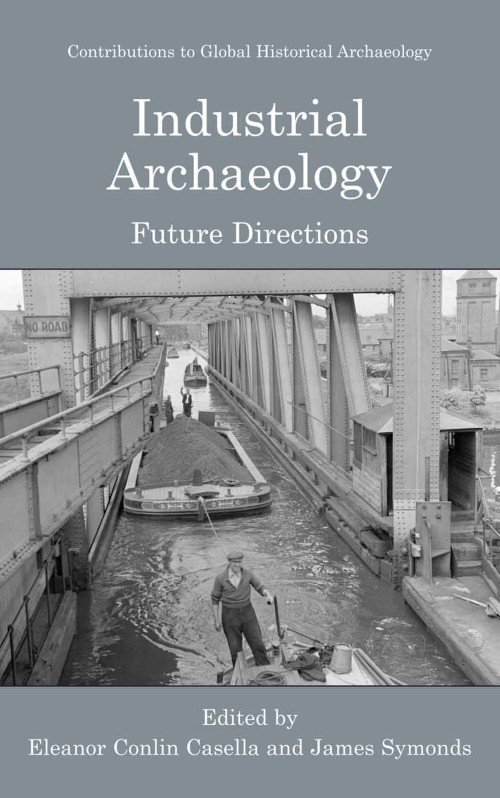
Industrial Archaeology [electronic resource] : Future Directions / edited by Eleanor Casella, James Symonds.
Erişim Adresi
ISBN
9780387228310
Dil Kodu
İngilizce
Yer Numarası
DK/11067
Basım Bildirimi
1st ed. 2005.
Yayın Bilgisi
New York, NY : Springer US : Imprint: Springer, 2005.
Fiziksel Niteleme
XIII, 321 p. online resource.
Dizi
Contributions To Global Historical Archaeology
İçindekiler Notu
Re-Thinking Industrial Archaeology -- “Social Workers” -- Experiencing Industry -- Industrial Archaeology -- After Industrial Archaeology? -- The Conservation of Industrial Monuments and Landscapes -- From Valves to Values -- Publishing and Priority in Industrial Archaeology -- Gas and Grain -- Exploring Mrs. Gaskell’s Legacy -- Archaeologies of the Factory and Mine -- The Social Archaeology of Industrialisation -- Technological Innovation in the Early 19th Century Irish Cotton Industry -- Building a Working Class Archaeology -- Cultural Identity and the Consumption of Industry -- The Industrial Archaeology of Entertainment -- Colonisation in the Industrial Age -- Commentary -- Concluding Comments.
Özet, vb.
The essays in this book are adapted from papers presented at the 24th Annual Conference of the Theoretical Archaeology Group, held at the University of Manchester, in December 2002. The conference session "An Industrial Revolution? Future Directions for Industrial Archaeology," was jointly devised by the editors, and sponsored by English Heritage, with the intention of gathering together leading industrial and historical archaeologists from around the world. However, just as Manchester is being transformed by regeneration, shaking off many of the negative connotations associated with factory-based industrial production, and remaking itself as a 21st century city, then so too, is the archaeological study of industrialisation being transformed. Over the past decade, industrial archaeology has emerged as a theoretically driven subfield. Research has begun to meaningfully engage with such weighty issues as globalisation; post/modernity; power; innovation and invention; slavery and captivity; class, ethnic, and gender identities; social relations of technology and labour; and the spread and diversification of western capitalism. With contributions from an international group of authors, this volume highlights the current thought in industrial archaeology, as well as explores future theoretical and methodological directions. Together, these chapters further the process of meaningful engagement with such weighty issues as globalization; post/modernity; power; production and consumption; innovation and invention; class, ethnic, and gender identities; social relations of technology and labour; and the spread and diversification of western capitalism. Industrial Archaeology: Future Directions will be of interest to historical and urban archaeologists, architectural historians, preservation agencies, archaeological consulting organizations, cultural resource managers, and students of these disciplines.
Konu
Archaeology.
Anthropology.
Social sciences.
Archaeology.
Anthropology.
Society.
Anthropology.
Social sciences.
Archaeology.
Anthropology.
Society.
Diğer Yazarlar
Kurum Adı
Eseri Alıntıla
Referansları kullanmadan önce gözden geçirmeniz ve varsa gerekli düzeltmeleri yapmanız önerilir.
Dijital Kaynak
MARC Görünümü
LEADER 04462nam a22005295i 4500
001 809778
003 TR_AnAIT
005 20260131022322
007 cr nn 008mamaa
008 100301s2005 xxu| s |||| 0|eng d
020 |a9780387228310|9978-0-387-22831-0
024 7 |a10.1007/b99735|2doi
041 |aeng
049 |aTürk Tarih Kurumu Kütüphanesi
050 4|aCC1-960
072 7|aHD|2bicssc
072 7|aSOC003000|2bisacsh
072 7|aNK|2thema
082 04|a930.1|223
090 |aDK/11067
245 10|aIndustrial Archaeology|h[electronic resource] :|bFuture Directions /|cedited by Eleanor Casella, James Symonds.
250 |a1st ed. 2005.
264 1|aNew York, NY :|bSpringer US :|bImprint: Springer,|c2005.
300 |aXIII, 321 p.|bonline resource.
336 |atext|btxt|2rdacontent
337 |acomputer|bc|2rdamedia
338 |aonline resource|bcr|2rdacarrier
347 |atext file|bPDF|2rda
490 1 |aContributions To Global Historical Archaeology
505 0 |aRe-Thinking Industrial Archaeology -- “Social Workers” -- Experiencing Industry -- Industrial Archaeology -- After Industrial Archaeology? -- The Conservation of Industrial Monuments and Landscapes -- From Valves to Values -- Publishing and Priority in Industrial Archaeology -- Gas and Grain -- Exploring Mrs. Gaskell’s Legacy -- Archaeologies of the Factory and Mine -- The Social Archaeology of Industrialisation -- Technological Innovation in the Early 19th Century Irish Cotton Industry -- Building a Working Class Archaeology -- Cultural Identity and the Consumption of Industry -- The Industrial Archaeology of Entertainment -- Colonisation in the Industrial Age -- Commentary -- Concluding Comments.
520 |aThe essays in this book are adapted from papers presented at the 24th Annual Conference of the Theoretical Archaeology Group, held at the University of Manchester, in December 2002. The conference session "An Industrial Revolution? Future Directions for Industrial Archaeology," was jointly devised by the editors, and sponsored by English Heritage, with the intention of gathering together leading industrial and historical archaeologists from around the world. However, just as Manchester is being transformed by regeneration, shaking off many of the negative connotations associated with factory-based industrial production, and remaking itself as a 21st century city, then so too, is the archaeological study of industrialisation being transformed. Over the past decade, industrial archaeology has emerged as a theoretically driven subfield. Research has begun to meaningfully engage with such weighty issues as globalisation; post/modernity; power; innovation and invention; slavery and captivity; class, ethnic, and gender identities; social relations of technology and labour; and the spread and diversification of western capitalism. With contributions from an international group of authors, this volume highlights the current thought in industrial archaeology, as well as explores future theoretical and methodological directions. Together, these chapters further the process of meaningful engagement with such weighty issues as globalization; post/modernity; power; production and consumption; innovation and invention; class, ethnic, and gender identities; social relations of technology and labour; and the spread and diversification of western capitalism. Industrial Archaeology: Future Directions will be of interest to historical and urban archaeologists, architectural historians, preservation agencies, archaeological consulting organizations, cultural resource managers, and students of these disciplines.
650 0|aArchaeology.
650 0|aAnthropology.
650 0|aSocial sciences.
650 14|aArchaeology.
650 24|aAnthropology.
650 24|aSociety.
700 1 |aCasella, Eleanor.|eeditor.|4edt|4http://id.loc.gov/vocabulary/relators/edt
700 1 |aSymonds, James.|eeditor.|4edt|4http://id.loc.gov/vocabulary/relators/edt
710 2 |aSpringerLink (Online service)
773 0 |tSpringer Nature eBook
776 08|iPrinted edition:|z9780387226088
776 08|iPrinted edition:|z9780387228082
776 08|iPrinted edition:|z9780387501765
830 0|aContributions To Global Historical Archaeology
856 40|uhttps://doi.org/10.1007/b99735
912 |aZDB-2-SHU
912 |aZDB-2-SXS
950 |aHumanities, Social Sciences and Law (SpringerNature-11648)
950 |aSocial Sciences (R0) (SpringerNature-43726)
001 809778
003 TR_AnAIT
005 20260131022322
007 cr nn 008mamaa
008 100301s2005 xxu| s |||| 0|eng d
020 |a9780387228310|9978-0-387-22831-0
024 7 |a10.1007/b99735|2doi
041 |aeng
049 |aTürk Tarih Kurumu Kütüphanesi
050 4|aCC1-960
072 7|aHD|2bicssc
072 7|aSOC003000|2bisacsh
072 7|aNK|2thema
082 04|a930.1|223
090 |aDK/11067
245 10|aIndustrial Archaeology|h[electronic resource] :|bFuture Directions /|cedited by Eleanor Casella, James Symonds.
250 |a1st ed. 2005.
264 1|aNew York, NY :|bSpringer US :|bImprint: Springer,|c2005.
300 |aXIII, 321 p.|bonline resource.
336 |atext|btxt|2rdacontent
337 |acomputer|bc|2rdamedia
338 |aonline resource|bcr|2rdacarrier
347 |atext file|bPDF|2rda
490 1 |aContributions To Global Historical Archaeology
505 0 |aRe-Thinking Industrial Archaeology -- “Social Workers” -- Experiencing Industry -- Industrial Archaeology -- After Industrial Archaeology? -- The Conservation of Industrial Monuments and Landscapes -- From Valves to Values -- Publishing and Priority in Industrial Archaeology -- Gas and Grain -- Exploring Mrs. Gaskell’s Legacy -- Archaeologies of the Factory and Mine -- The Social Archaeology of Industrialisation -- Technological Innovation in the Early 19th Century Irish Cotton Industry -- Building a Working Class Archaeology -- Cultural Identity and the Consumption of Industry -- The Industrial Archaeology of Entertainment -- Colonisation in the Industrial Age -- Commentary -- Concluding Comments.
520 |aThe essays in this book are adapted from papers presented at the 24th Annual Conference of the Theoretical Archaeology Group, held at the University of Manchester, in December 2002. The conference session "An Industrial Revolution? Future Directions for Industrial Archaeology," was jointly devised by the editors, and sponsored by English Heritage, with the intention of gathering together leading industrial and historical archaeologists from around the world. However, just as Manchester is being transformed by regeneration, shaking off many of the negative connotations associated with factory-based industrial production, and remaking itself as a 21st century city, then so too, is the archaeological study of industrialisation being transformed. Over the past decade, industrial archaeology has emerged as a theoretically driven subfield. Research has begun to meaningfully engage with such weighty issues as globalisation; post/modernity; power; innovation and invention; slavery and captivity; class, ethnic, and gender identities; social relations of technology and labour; and the spread and diversification of western capitalism. With contributions from an international group of authors, this volume highlights the current thought in industrial archaeology, as well as explores future theoretical and methodological directions. Together, these chapters further the process of meaningful engagement with such weighty issues as globalization; post/modernity; power; production and consumption; innovation and invention; class, ethnic, and gender identities; social relations of technology and labour; and the spread and diversification of western capitalism. Industrial Archaeology: Future Directions will be of interest to historical and urban archaeologists, architectural historians, preservation agencies, archaeological consulting organizations, cultural resource managers, and students of these disciplines.
650 0|aArchaeology.
650 0|aAnthropology.
650 0|aSocial sciences.
650 14|aArchaeology.
650 24|aAnthropology.
650 24|aSociety.
700 1 |aCasella, Eleanor.|eeditor.|4edt|4http://id.loc.gov/vocabulary/relators/edt
700 1 |aSymonds, James.|eeditor.|4edt|4http://id.loc.gov/vocabulary/relators/edt
710 2 |aSpringerLink (Online service)
773 0 |tSpringer Nature eBook
776 08|iPrinted edition:|z9780387226088
776 08|iPrinted edition:|z9780387228082
776 08|iPrinted edition:|z9780387501765
830 0|aContributions To Global Historical Archaeology
856 40|uhttps://doi.org/10.1007/b99735
912 |aZDB-2-SHU
912 |aZDB-2-SXS
950 |aHumanities, Social Sciences and Law (SpringerNature-11648)
950 |aSocial Sciences (R0) (SpringerNature-43726)
Materyaller
Depodan talep edilen materyal sadece kütüphane içerisinde kullanılmaktadır.
Materyal dışarıya ödünç verilmemektedir.
Materyal dışarıya ödünç verilmemektedir.
