

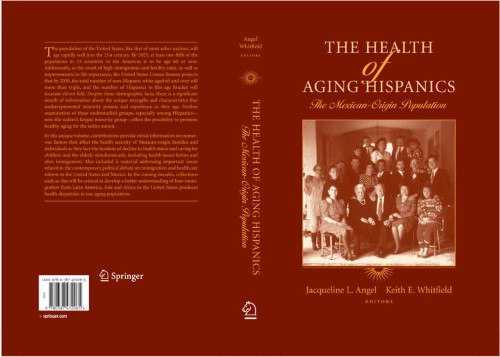
The Health of Aging Hispanics [electronic resource] : The Mexican-Origin Population / edited by Jacqueline L. Angel, Keith E. Whitfield.
Erişim Adresi
ISBN
9780387472089
Dil Kodu
İngilizce
Yer Numarası
DK/11088
Basım Bildirimi
1st ed. 2007.
Yayın Bilgisi
New York, NY : Springer New York : Imprint: Springer, 2007.
Fiziksel Niteleme
XIV, 290 p. online resource.
İçindekiler Notu
Setting the Stage: Hispanic Health and Aging in the Americas -- Setting the Stage: Hispanic Health and Aging in the Americas -- Exploring the Health Consequences of Hispanic Mortality -- Health Status of Elderly Hispanics in the United States -- Census Disability Rates Among Older People by Race/Ethnicity and Type of Hispanic Origin -- Disability and Active Life Expectancy of Older U.S.-and Foreign-Born Mexican Americans -- Predictors of Decline in Cognitive Status, Incidence of Dementia/CIND and All-Cause Mortality in Older Latinos: The Role of Nativity and Cultural Orientation in the Sacramento Area Latino Study on Aging -- Education and Mortality Risk Among Hispanic Adults in the United States -- Does Longer Life Mean Better Health? Not for Native-Born Mexican Americans in the Health and Retirement Survey -- Contextualizing Support and Mexican-Origin Health in Old Age: Issues of Family, Migration, and Income -- Dynamics of Intergenerational Assistance in Middle- and Old-Age in Mexico -- Aging, Health and Migration: The Voices of the Elderly Poor in Mexico -- Aging and Health Interrelations at the United States-Mexico Border -- Colonias, Informal Homestead Subdivisions, and Self-Help Care for the Elderly Among Mexican Populations in the United States -- Access to Health Care Services Among Elderly Hispanics with Special Reference to Mexican Americans -- Disparities and Access Barriers to Health Care Among Mexican American Elders -- Lack of Health Insurance Coverage and Mortality Among Latino Elderly in the United States -- Access Issues in the Care of Mexican-Origin Elders: A Clinical Perspective -- Cross Border Health Insurance and Aging Mexicans and Mexican Americans -- Cultural Myths and Other Fables About Promoting Health in Mexican Americans: Lessons Learned from Starr County Border Health Intervention Research -- Health Insurance Coverage and Health Care Utilization along the U.S.–Mexico Border: Evidence from the Border Epidemiologic Study on Aging -- Options for Health Care Reform -- Impoverishing and Catastrophic Household Health Spending Among Families with Older Adults in Mexico: A Health Reform Priority -- The Health Care Safety Net for Hispanics -- Afterword Globalization and Health: Risks and Opportunities for the Mexico—U.S. Border.
Özet, vb.
The Health of Aging Hispanics: The Mexican-Origin Population edited by Jacqueline L. Angel University of Texas at Austin, Austin, Texas and Keith W. Whitfield Pennsylvania State University, University Park, Pennsylvania The population of the United States, like that of most other nations, will age rapidly well into the 21st century. By 2025, at least one-fifth of the population in 15 countries in the Americas is to be age 60 or over. Additionally, as the result of high immigration and fertility rates, as well as improvements in life expectancy, the United States Census Bureau projects that by 2050, the total number of non-Hispanic white aged 65 and over will more than triple, and the number of Hispanics in this age bracket will increase eleven fold. Despite these demographic facts, there is a significant dearth of information about the unique strengths and characteristics that underrepresented minority possess and experience as they age. Further examination of these understudied groups, especially among Hispanics – now the nation’s largest minority group – offers the possibility to promote healthy aging for the entire nation. In this unique volume, contributions provide initial information on numerous factors that affect the health security of Mexican-origin families and individuals as they face the burdens of decline in health status and caring for children and the elderly simultaneously, including health issues before and after immigration. Also included is material addressing important issues related to the contemporary political debate on immigration and healthcare reform in the United States and Mexico. In the coming decades, collections such as this will be critical to develop a better understanding of how immigration from Latin America, Asia and Africa to the United States produces health disparities in our aging population.
Konu
Aging.
Sociology.
Public health.
Demography.
Population.
Ageing.
Sociology.
Public Health.
Population and Demography.
Sociology.
Public health.
Demography.
Population.
Ageing.
Sociology.
Public Health.
Population and Demography.
Diğer Yazarlar
Kurum Adı
Eseri Alıntıla
Referansları kullanmadan önce gözden geçirmeniz ve varsa gerekli düzeltmeleri yapmanız önerilir.
Dijital Kaynak
MARC Görünümü
LEADER 06009nam a22005415i 4500
001 809799
003 TR_AnAIT
005 20260131022223
007 cr nn 008mamaa
008 100301s2007 xxu| s |||| 0|eng d
020 |a9780387472089|9978-0-387-47208-9
024 7 |a10.1007/978-0-387-47208-9|2doi
041 |aeng
049 |aTürk Tarih Kurumu Kütüphanesi
050 4|aQP86
072 7|aPSA|2bicssc
072 7|aSCI072000|2bisacsh
072 7|aPSA|2thema
082 04|a571.878|223
090 |aDK/11088
245 14|aThe Health of Aging Hispanics|h[electronic resource] :|bThe Mexican-Origin Population /|cedited by Jacqueline L. Angel, Keith E. Whitfield.
250 |a1st ed. 2007.
264 1|aNew York, NY :|bSpringer New York :|bImprint: Springer,|c2007.
300 |aXIV, 290 p.|bonline resource.
336 |atext|btxt|2rdacontent
337 |acomputer|bc|2rdamedia
338 |aonline resource|bcr|2rdacarrier
347 |atext file|bPDF|2rda
505 0 |aSetting the Stage: Hispanic Health and Aging in the Americas -- Setting the Stage: Hispanic Health and Aging in the Americas -- Exploring the Health Consequences of Hispanic Mortality -- Health Status of Elderly Hispanics in the United States -- Census Disability Rates Among Older People by Race/Ethnicity and Type of Hispanic Origin -- Disability and Active Life Expectancy of Older U.S.-and Foreign-Born Mexican Americans -- Predictors of Decline in Cognitive Status, Incidence of Dementia/CIND and All-Cause Mortality in Older Latinos: The Role of Nativity and Cultural Orientation in the Sacramento Area Latino Study on Aging -- Education and Mortality Risk Among Hispanic Adults in the United States -- Does Longer Life Mean Better Health? Not for Native-Born Mexican Americans in the Health and Retirement Survey -- Contextualizing Support and Mexican-Origin Health in Old Age: Issues of Family, Migration, and Income -- Dynamics of Intergenerational Assistance in Middle- and Old-Age in Mexico -- Aging, Health and Migration: The Voices of the Elderly Poor in Mexico -- Aging and Health Interrelations at the United States-Mexico Border -- Colonias, Informal Homestead Subdivisions, and Self-Help Care for the Elderly Among Mexican Populations in the United States -- Access to Health Care Services Among Elderly Hispanics with Special Reference to Mexican Americans -- Disparities and Access Barriers to Health Care Among Mexican American Elders -- Lack of Health Insurance Coverage and Mortality Among Latino Elderly in the United States -- Access Issues in the Care of Mexican-Origin Elders: A Clinical Perspective -- Cross Border Health Insurance and Aging Mexicans and Mexican Americans -- Cultural Myths and Other Fables About Promoting Health in Mexican Americans: Lessons Learned from Starr County Border Health Intervention Research -- Health Insurance Coverage and Health Care Utilization along the U.S.–Mexico Border: Evidence from the Border Epidemiologic Study on Aging -- Options for Health Care Reform -- Impoverishing and Catastrophic Household Health Spending Among Families with Older Adults in Mexico: A Health Reform Priority -- The Health Care Safety Net for Hispanics -- Afterword Globalization and Health: Risks and Opportunities for the Mexico—U.S. Border.
520 |aThe Health of Aging Hispanics: The Mexican-Origin Population edited by Jacqueline L. Angel University of Texas at Austin, Austin, Texas and Keith W. Whitfield Pennsylvania State University, University Park, Pennsylvania The population of the United States, like that of most other nations, will age rapidly well into the 21st century. By 2025, at least one-fifth of the population in 15 countries in the Americas is to be age 60 or over. Additionally, as the result of high immigration and fertility rates, as well as improvements in life expectancy, the United States Census Bureau projects that by 2050, the total number of non-Hispanic white aged 65 and over will more than triple, and the number of Hispanics in this age bracket will increase eleven fold. Despite these demographic facts, there is a significant dearth of information about the unique strengths and characteristics that underrepresented minority possess and experience as they age. Further examination of these understudied groups, especially among Hispanics – now the nation’s largest minority group – offers the possibility to promote healthy aging for the entire nation. In this unique volume, contributions provide initial information on numerous factors that affect the health security of Mexican-origin families and individuals as they face the burdens of decline in health status and caring for children and the elderly simultaneously, including health issues before and after immigration. Also included is material addressing important issues related to the contemporary political debate on immigration and healthcare reform in the United States and Mexico. In the coming decades, collections such as this will be critical to develop a better understanding of how immigration from Latin America, Asia and Africa to the United States produces health disparities in our aging population.
650 0|aAging.
650 0|aSociology.
650 0|aPublic health.
650 0|aDemography.
650 0|aPopulation.
650 14|aAgeing.
650 24|aSociology.
650 24|aPublic Health.
650 24|aPopulation and Demography.
700 1 |aAngel, Jacqueline L.|eeditor.|4edt|4http://id.loc.gov/vocabulary/relators/edt
700 1 |aWhitfield, Keith E.|eeditor.|4edt|4http://id.loc.gov/vocabulary/relators/edt
710 2 |aSpringerLink (Online service)
773 0 |tSpringer Nature eBook
776 08|iPrinted edition:|z9780387472065
776 08|iPrinted edition:|z9780387516578
776 08|iPrinted edition:|z9781441923677
856 40|uhttps://doi.org/10.1007/978-0-387-47208-9
912 |aZDB-2-SHU
912 |aZDB-2-SXS
950 |aHumanities, Social Sciences and Law (SpringerNature-11648)
950 |aSocial Sciences (R0) (SpringerNature-43726)
001 809799
003 TR_AnAIT
005 20260131022223
007 cr nn 008mamaa
008 100301s2007 xxu| s |||| 0|eng d
020 |a9780387472089|9978-0-387-47208-9
024 7 |a10.1007/978-0-387-47208-9|2doi
041 |aeng
049 |aTürk Tarih Kurumu Kütüphanesi
050 4|aQP86
072 7|aPSA|2bicssc
072 7|aSCI072000|2bisacsh
072 7|aPSA|2thema
082 04|a571.878|223
090 |aDK/11088
245 14|aThe Health of Aging Hispanics|h[electronic resource] :|bThe Mexican-Origin Population /|cedited by Jacqueline L. Angel, Keith E. Whitfield.
250 |a1st ed. 2007.
264 1|aNew York, NY :|bSpringer New York :|bImprint: Springer,|c2007.
300 |aXIV, 290 p.|bonline resource.
336 |atext|btxt|2rdacontent
337 |acomputer|bc|2rdamedia
338 |aonline resource|bcr|2rdacarrier
347 |atext file|bPDF|2rda
505 0 |aSetting the Stage: Hispanic Health and Aging in the Americas -- Setting the Stage: Hispanic Health and Aging in the Americas -- Exploring the Health Consequences of Hispanic Mortality -- Health Status of Elderly Hispanics in the United States -- Census Disability Rates Among Older People by Race/Ethnicity and Type of Hispanic Origin -- Disability and Active Life Expectancy of Older U.S.-and Foreign-Born Mexican Americans -- Predictors of Decline in Cognitive Status, Incidence of Dementia/CIND and All-Cause Mortality in Older Latinos: The Role of Nativity and Cultural Orientation in the Sacramento Area Latino Study on Aging -- Education and Mortality Risk Among Hispanic Adults in the United States -- Does Longer Life Mean Better Health? Not for Native-Born Mexican Americans in the Health and Retirement Survey -- Contextualizing Support and Mexican-Origin Health in Old Age: Issues of Family, Migration, and Income -- Dynamics of Intergenerational Assistance in Middle- and Old-Age in Mexico -- Aging, Health and Migration: The Voices of the Elderly Poor in Mexico -- Aging and Health Interrelations at the United States-Mexico Border -- Colonias, Informal Homestead Subdivisions, and Self-Help Care for the Elderly Among Mexican Populations in the United States -- Access to Health Care Services Among Elderly Hispanics with Special Reference to Mexican Americans -- Disparities and Access Barriers to Health Care Among Mexican American Elders -- Lack of Health Insurance Coverage and Mortality Among Latino Elderly in the United States -- Access Issues in the Care of Mexican-Origin Elders: A Clinical Perspective -- Cross Border Health Insurance and Aging Mexicans and Mexican Americans -- Cultural Myths and Other Fables About Promoting Health in Mexican Americans: Lessons Learned from Starr County Border Health Intervention Research -- Health Insurance Coverage and Health Care Utilization along the U.S.–Mexico Border: Evidence from the Border Epidemiologic Study on Aging -- Options for Health Care Reform -- Impoverishing and Catastrophic Household Health Spending Among Families with Older Adults in Mexico: A Health Reform Priority -- The Health Care Safety Net for Hispanics -- Afterword Globalization and Health: Risks and Opportunities for the Mexico—U.S. Border.
520 |aThe Health of Aging Hispanics: The Mexican-Origin Population edited by Jacqueline L. Angel University of Texas at Austin, Austin, Texas and Keith W. Whitfield Pennsylvania State University, University Park, Pennsylvania The population of the United States, like that of most other nations, will age rapidly well into the 21st century. By 2025, at least one-fifth of the population in 15 countries in the Americas is to be age 60 or over. Additionally, as the result of high immigration and fertility rates, as well as improvements in life expectancy, the United States Census Bureau projects that by 2050, the total number of non-Hispanic white aged 65 and over will more than triple, and the number of Hispanics in this age bracket will increase eleven fold. Despite these demographic facts, there is a significant dearth of information about the unique strengths and characteristics that underrepresented minority possess and experience as they age. Further examination of these understudied groups, especially among Hispanics – now the nation’s largest minority group – offers the possibility to promote healthy aging for the entire nation. In this unique volume, contributions provide initial information on numerous factors that affect the health security of Mexican-origin families and individuals as they face the burdens of decline in health status and caring for children and the elderly simultaneously, including health issues before and after immigration. Also included is material addressing important issues related to the contemporary political debate on immigration and healthcare reform in the United States and Mexico. In the coming decades, collections such as this will be critical to develop a better understanding of how immigration from Latin America, Asia and Africa to the United States produces health disparities in our aging population.
650 0|aAging.
650 0|aSociology.
650 0|aPublic health.
650 0|aDemography.
650 0|aPopulation.
650 14|aAgeing.
650 24|aSociology.
650 24|aPublic Health.
650 24|aPopulation and Demography.
700 1 |aAngel, Jacqueline L.|eeditor.|4edt|4http://id.loc.gov/vocabulary/relators/edt
700 1 |aWhitfield, Keith E.|eeditor.|4edt|4http://id.loc.gov/vocabulary/relators/edt
710 2 |aSpringerLink (Online service)
773 0 |tSpringer Nature eBook
776 08|iPrinted edition:|z9780387472065
776 08|iPrinted edition:|z9780387516578
776 08|iPrinted edition:|z9781441923677
856 40|uhttps://doi.org/10.1007/978-0-387-47208-9
912 |aZDB-2-SHU
912 |aZDB-2-SXS
950 |aHumanities, Social Sciences and Law (SpringerNature-11648)
950 |aSocial Sciences (R0) (SpringerNature-43726)
Materyaller
Depodan talep edilen materyal sadece kütüphane içerisinde kullanılmaktadır.
Materyal dışarıya ödünç verilmemektedir.
Materyal dışarıya ödünç verilmemektedir.
