LEADER 03340nam a22005055i 4500
001 809853
003 TR_AnAIT
005 20260131022048
007 cr nn 008mamaa
008 120305s2012 xxu| s |||| 0|eng d
020 |a9781461423386|9978-1-4614-2338-6
024 7 |a10.1007/978-1-4614-2338-6|2doi
041 |aeng
049 |aTürk Tarih Kurumu Kütüphanesi
050 4|aCC1-960
072 7|aHD|2bicssc
072 7|aSOC003000|2bisacsh
072 7|aNK|2thema
082 04|a930.1|223
090 |aDK/11142
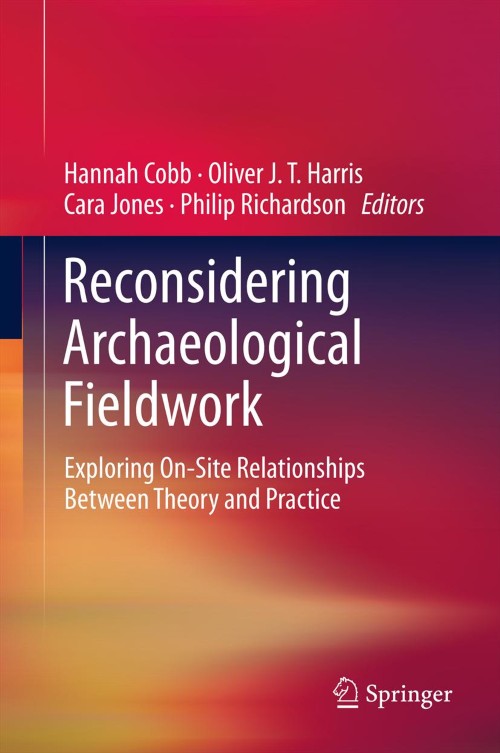
245 10|aReconsidering Archaeological Fieldwork|h[electronic resource] :|bExploring On-Site Relationships Between Theory and Practice /|cedited by Hannah Cobb, Oliver J. T. Harris, Cara Jones, Philip Richardson.
250 |a1st ed. 2012.
264 1|aNew York, NY :|bSpringer New York :|bImprint: Springer,|c2012.
300 |aX, 186 p.|bonline resource.
336 |atext|btxt|2rdacontent
337 |acomputer|bc|2rdamedia
338 |aonline resource|bcr|2rdacarrier
347 |atext file|bPDF|2rda
505 0 |a1 Introduction -- Part One. Exploring Fieldwork Theory and Practice -- An Archaeology of Many Steps -- The case of Glasinac -- Fiel.
520 |a Digging, recording, and writing are the three main processes that archaeologists undertake to analyze a site, yet the relationships between these processes is rarely considered critically. Reconsidering Archaeological Fieldwork asserts that each of these processes involve active interpretation. When a group of archaeologists works together to reconstruct the past, at a particular time, at a particular site, their field methods and interpretations affect the final analysis and constantly test the boundaries of what is subjective and what is objective. This volume explores the important nature of the relationship between fieldwork, analysis, and interpretation. Containing contributions from a diverse group of archaeologists, both academic and professional, from Europe and the Americas, it critically assesses accepted practices in field archaeology, and provides thoughtful and innovative analysis of these procedures. By combining the experiences of both academic and professional archaeologists, Reconsidering Archaeological Fieldwork highlights key differences and key similarities in their concerns, theories, and techniques. This volume will incite discussion on fundamental questions for all archaeologists, both old and new to the field.
650 0|aArchaeology.
650 0|aCultural property.
650 14|aArchaeology.
650 24|aCultural Heritage.
700 1 |aCobb, Hannah.|eeditor.|4edt|4http://id.loc.gov/vocabulary/relators/edt
700 1 |aHarris, Oliver J. T.|eeditor.|4edt|4http://id.loc.gov/vocabulary/relators/edt
700 1 |aJones, Cara.|eeditor.|4edt|4http://id.loc.gov/vocabulary/relators/edt
700 1 |aRichardson, Philip.|eeditor.|4edt|4http://id.loc.gov/vocabulary/relators/edt
710 2 |aSpringerLink (Online service)
773 0 |tSpringer Nature eBook
776 08|iPrinted edition:|z9781461423379
776 08|iPrinted edition:|z9781461423393
776 08|iPrinted edition:|z9781489995391
856 40|uhttps://doi.org/10.1007/978-1-4614-2338-6
912 |aZDB-2-SHU
912 |aZDB-2-SXS
950 |aHumanities, Social Sciences and Law (SpringerNature-11648)
950 |aSocial Sciences (R0) (SpringerNature-43726)