

The Many Faces of Youth Crime [electronic resource] : Contrasting Theoretical Perspectives on Juvenile Delinquency across Countries and Cultures / by Josine Junger-Tas, Ineke Haen Marshall, Dirk Enzmann, Martin Killias, Majone Steketee, Beata Gruszczynska.
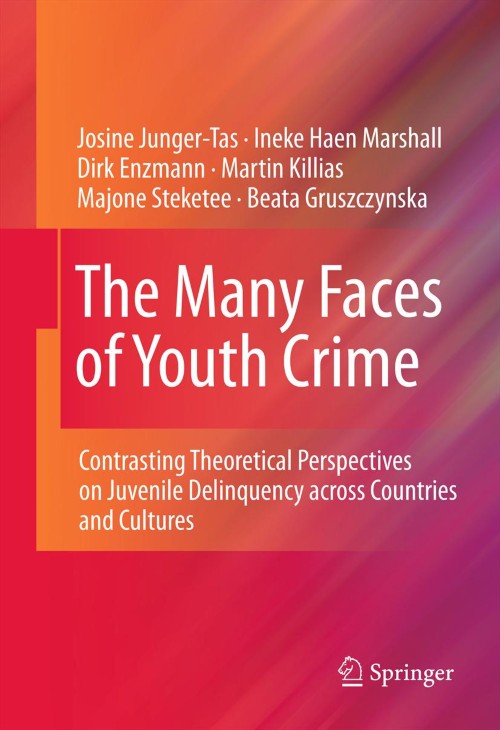
Erişim Adresi
ISBN
9781441994554
Dil Kodu
İngilizce
Yer Numarası
DK/11153
Yazar
Basım Bildirimi
1st ed. 2012.
Yayın Bilgisi
New York, NY : Springer New York : Imprint: Springer, 2012.
Fiziksel Niteleme
VIII, 367 p. 63 illus. online resource.
İçindekiler Notu
Introduction -- Substance Use -- Delinquency -- Victimization Experiences -- Social Response and Reporting -- Family -- Schools and the Education System -- Lifestyle -- Self Control and Attitudes Towards Violence -- Neighborhood -- Macro-Sociological Perspectives on Individual Problem Behavior -- Theoretical and Policy Implications.
Özet, vb.
This book presents the first comprehensive analysis of the second International Self-Report Delinquency study (ISRD-2). An earlier volume, Juvenile Delinquency in Europe and Beyond (Springer, 2010) focused mainly on the findings with regard to delinquency, victimization and substance use in each of the individual participating ISRD-2 countries. The Many Faces of Youth Crime is based on analysis of the merged data set and has a number of unique features: The analyses are based on an unusually large number of respondents (about 67,000 7th, 8th and 9th graders) collected by researchers from 31 countries; It includes reports on the characteristics, experiences and behaviour of first and second generation migrant youth from a variety of cultures; It is one of the first large-scale international studies asking 12-16 year olds about their victimization experiences (bullying, assault, robbery, theft); It describes both intriguing differences between young people from different countries and country clusters in the nature and extent of delinquency, victimization and substance use, as well as remarkable cross-national uniformities in delinquency, victimization, and substance use patterns; A careful comparative analysis of the social responses to offending and victimization adds to our limited knowledge on this important issue; Detailed chapters on the family, school, neighbourhood, lifestyle and peers provide a rich comparative description of these institutions and their impact on delinquency; It tests a number of theoretical perspectives (social control, self-control, social disorganization, routine activities/opportunity theory) on a large international sample from a variety of national contexts; It combines a theoretical focus with a thoughtful consideration of the policy implications of the findings; An extensive discussion of the ISRD methodology of ‘flexible standardization’ details the challenges of comparative research.The book consists of 12 chapters, which also may be read individually by those interested in particular special topics (for instance, the last chapter should be of special interest to policy makers). The material is presented in such a way that it is accessible to more advanced students, researchers and scholars in a variety of fields, such as criminology, sociology, deviance, social work, comparative methodology, youth studies, substance use studies, and victimology.
Konu
Criminology.
School Psychology.
Sociology.
Criminology.
School Psychology.
Sociology.
School Psychology.
Sociology.
Criminology.
School Psychology.
Sociology.
Diğer Yazarlar
Kurum Adı
Eseri Alıntıla
Referansları kullanmadan önce gözden geçirmeniz ve varsa gerekli düzeltmeleri yapmanız önerilir.
Dijital Kaynak
MARC Görünümü
LEADER 05065nam a22005535i 4500
001 809864
003 TR_AnAIT
005 20260131022028
007 cr nn 008mamaa
008 110916s2012 xxu| s |||| 0|eng d
020 |a9781441994554|9978-1-4419-9455-4
024 7 |a10.1007/978-1-4419-9455-4|2doi
041 |aeng
049 |aTürk Tarih Kurumu Kütüphanesi
050 4|aHV6001-7220.5
072 7|aJKV|2bicssc
072 7|aSOC004000|2bisacsh
072 7|aJKV|2thema
082 04|a364|223
090 |aDK/11153
100 1 |aJunger-Tas, Josine.|eauthor.|4aut|4http://id.loc.gov/vocabulary/relators/aut
245 14|aThe Many Faces of Youth Crime|h[electronic resource] :|bContrasting Theoretical Perspectives on Juvenile Delinquency across Countries and Cultures /|cby Josine Junger-Tas, Ineke Haen Marshall, Dirk Enzmann, Martin Killias, Majone Steketee, Beata Gruszczynska.
250 |a1st ed. 2012.
264 1|aNew York, NY :|bSpringer New York :|bImprint: Springer,|c2012.
300 |aVIII, 367 p. 63 illus.|bonline resource.
336 |atext|btxt|2rdacontent
337 |acomputer|bc|2rdamedia
338 |aonline resource|bcr|2rdacarrier
347 |atext file|bPDF|2rda
505 0 |aIntroduction -- Substance Use -- Delinquency -- Victimization Experiences -- Social Response and Reporting -- Family -- Schools and the Education System -- Lifestyle -- Self Control and Attitudes Towards Violence -- Neighborhood -- Macro-Sociological Perspectives on Individual Problem Behavior -- Theoretical and Policy Implications.
520 |aThis book presents the first comprehensive analysis of the second International Self-Report Delinquency study (ISRD-2). An earlier volume, Juvenile Delinquency in Europe and Beyond (Springer, 2010) focused mainly on the findings with regard to delinquency, victimization and substance use in each of the individual participating ISRD-2 countries. The Many Faces of Youth Crime is based on analysis of the merged data set and has a number of unique features: The analyses are based on an unusually large number of respondents (about 67,000 7th, 8th and 9th graders) collected by researchers from 31 countries; It includes reports on the characteristics, experiences and behaviour of first and second generation migrant youth from a variety of cultures; It is one of the first large-scale international studies asking 12-16 year olds about their victimization experiences (bullying, assault, robbery, theft); It describes both intriguing differences between young people from different countries and country clusters in the nature and extent of delinquency, victimization and substance use, as well as remarkable cross-national uniformities in delinquency, victimization, and substance use patterns; A careful comparative analysis of the social responses to offending and victimization adds to our limited knowledge on this important issue; Detailed chapters on the family, school, neighbourhood, lifestyle and peers provide a rich comparative description of these institutions and their impact on delinquency; It tests a number of theoretical perspectives (social control, self-control, social disorganization, routine activities/opportunity theory) on a large international sample from a variety of national contexts; It combines a theoretical focus with a thoughtful consideration of the policy implications of the findings; An extensive discussion of the ISRD methodology of ‘flexible standardization’ details the challenges of comparative research.The book consists of 12 chapters, which also may be read individually by those interested in particular special topics (for instance, the last chapter should be of special interest to policy makers). The material is presented in such a way that it is accessible to more advanced students, researchers and scholars in a variety of fields, such as criminology, sociology, deviance, social work, comparative methodology, youth studies, substance use studies, and victimology.
650 0|aCriminology.
650 0|aSchool Psychology.
650 0|aSociology.
650 14|aCriminology.
650 24|aSchool Psychology.
650 24|aSociology.
700 1 |aMarshall, Ineke Haen.|eauthor.|4aut|4http://id.loc.gov/vocabulary/relators/aut
700 1 |aEnzmann, Dirk.|eauthor.|4aut|4http://id.loc.gov/vocabulary/relators/aut
700 1 |aKillias, Martin.|eauthor.|4aut|4http://id.loc.gov/vocabulary/relators/aut
700 1 |aSteketee, Majone.|eauthor.|4aut|4http://id.loc.gov/vocabulary/relators/aut
700 1 |aGruszczynska, Beata.|eauthor.|4aut|4http://id.loc.gov/vocabulary/relators/aut
710 2 |aSpringerLink (Online service)
773 0 |tSpringer Nature eBook
776 08|iPrinted edition:|z9781441994547
776 08|iPrinted edition:|z9781441994561
776 08|iPrinted edition:|z9781461458401
856 40|uhttps://doi.org/10.1007/978-1-4419-9455-4
912 |aZDB-2-SHU
912 |aZDB-2-SXS
950 |aHumanities, Social Sciences and Law (SpringerNature-11648)
950 |aSocial Sciences (R0) (SpringerNature-43726)
001 809864
003 TR_AnAIT
005 20260131022028
007 cr nn 008mamaa
008 110916s2012 xxu| s |||| 0|eng d
020 |a9781441994554|9978-1-4419-9455-4
024 7 |a10.1007/978-1-4419-9455-4|2doi
041 |aeng
049 |aTürk Tarih Kurumu Kütüphanesi
050 4|aHV6001-7220.5
072 7|aJKV|2bicssc
072 7|aSOC004000|2bisacsh
072 7|aJKV|2thema
082 04|a364|223
090 |aDK/11153
100 1 |aJunger-Tas, Josine.|eauthor.|4aut|4http://id.loc.gov/vocabulary/relators/aut
245 14|aThe Many Faces of Youth Crime|h[electronic resource] :|bContrasting Theoretical Perspectives on Juvenile Delinquency across Countries and Cultures /|cby Josine Junger-Tas, Ineke Haen Marshall, Dirk Enzmann, Martin Killias, Majone Steketee, Beata Gruszczynska.
250 |a1st ed. 2012.
264 1|aNew York, NY :|bSpringer New York :|bImprint: Springer,|c2012.
300 |aVIII, 367 p. 63 illus.|bonline resource.
336 |atext|btxt|2rdacontent
337 |acomputer|bc|2rdamedia
338 |aonline resource|bcr|2rdacarrier
347 |atext file|bPDF|2rda
505 0 |aIntroduction -- Substance Use -- Delinquency -- Victimization Experiences -- Social Response and Reporting -- Family -- Schools and the Education System -- Lifestyle -- Self Control and Attitudes Towards Violence -- Neighborhood -- Macro-Sociological Perspectives on Individual Problem Behavior -- Theoretical and Policy Implications.
520 |aThis book presents the first comprehensive analysis of the second International Self-Report Delinquency study (ISRD-2). An earlier volume, Juvenile Delinquency in Europe and Beyond (Springer, 2010) focused mainly on the findings with regard to delinquency, victimization and substance use in each of the individual participating ISRD-2 countries. The Many Faces of Youth Crime is based on analysis of the merged data set and has a number of unique features: The analyses are based on an unusually large number of respondents (about 67,000 7th, 8th and 9th graders) collected by researchers from 31 countries; It includes reports on the characteristics, experiences and behaviour of first and second generation migrant youth from a variety of cultures; It is one of the first large-scale international studies asking 12-16 year olds about their victimization experiences (bullying, assault, robbery, theft); It describes both intriguing differences between young people from different countries and country clusters in the nature and extent of delinquency, victimization and substance use, as well as remarkable cross-national uniformities in delinquency, victimization, and substance use patterns; A careful comparative analysis of the social responses to offending and victimization adds to our limited knowledge on this important issue; Detailed chapters on the family, school, neighbourhood, lifestyle and peers provide a rich comparative description of these institutions and their impact on delinquency; It tests a number of theoretical perspectives (social control, self-control, social disorganization, routine activities/opportunity theory) on a large international sample from a variety of national contexts; It combines a theoretical focus with a thoughtful consideration of the policy implications of the findings; An extensive discussion of the ISRD methodology of ‘flexible standardization’ details the challenges of comparative research.The book consists of 12 chapters, which also may be read individually by those interested in particular special topics (for instance, the last chapter should be of special interest to policy makers). The material is presented in such a way that it is accessible to more advanced students, researchers and scholars in a variety of fields, such as criminology, sociology, deviance, social work, comparative methodology, youth studies, substance use studies, and victimology.
650 0|aCriminology.
650 0|aSchool Psychology.
650 0|aSociology.
650 14|aCriminology.
650 24|aSchool Psychology.
650 24|aSociology.
700 1 |aMarshall, Ineke Haen.|eauthor.|4aut|4http://id.loc.gov/vocabulary/relators/aut
700 1 |aEnzmann, Dirk.|eauthor.|4aut|4http://id.loc.gov/vocabulary/relators/aut
700 1 |aKillias, Martin.|eauthor.|4aut|4http://id.loc.gov/vocabulary/relators/aut
700 1 |aSteketee, Majone.|eauthor.|4aut|4http://id.loc.gov/vocabulary/relators/aut
700 1 |aGruszczynska, Beata.|eauthor.|4aut|4http://id.loc.gov/vocabulary/relators/aut
710 2 |aSpringerLink (Online service)
773 0 |tSpringer Nature eBook
776 08|iPrinted edition:|z9781441994547
776 08|iPrinted edition:|z9781441994561
776 08|iPrinted edition:|z9781461458401
856 40|uhttps://doi.org/10.1007/978-1-4419-9455-4
912 |aZDB-2-SHU
912 |aZDB-2-SXS
950 |aHumanities, Social Sciences and Law (SpringerNature-11648)
950 |aSocial Sciences (R0) (SpringerNature-43726)
Materyaller
Depodan talep edilen materyal sadece kütüphane içerisinde kullanılmaktadır.
Materyal dışarıya ödünç verilmemektedir.
Materyal dışarıya ödünç verilmemektedir.
