

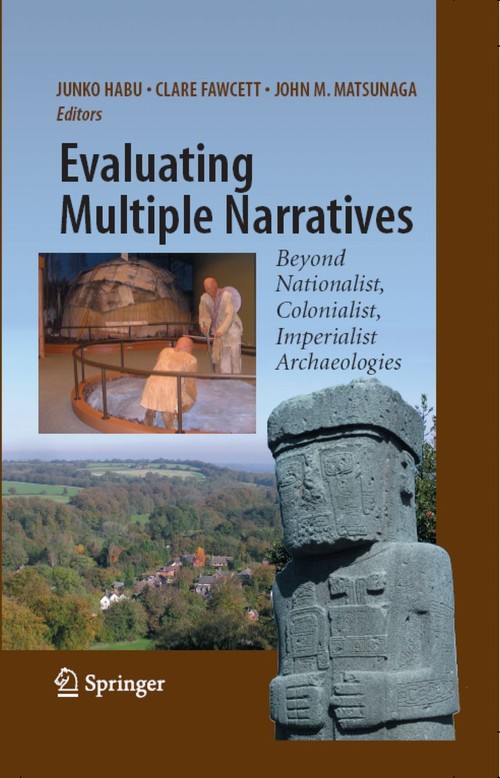
Evaluating Multiple Narratives [electronic resource] : Beyond Nationalist, Colonialist, Imperialist Archaeologies / edited by Junko Habu, Clare Fawcett, John M. Matsunaga.
Erişim Adresi
ISBN
9780387718255
Dil Kodu
İngilizce
Yer Numarası
DK/11159
Basım Bildirimi
1st ed. 2008.
Yayın Bilgisi
New York, NY : Springer New York : Imprint: Springer, 2008.
Fiziksel Niteleme
XII, 218 p. online resource.
İçindekiler Notu
Operationalizing Multivocality -- Introduction: Evaluating Multiple Narratives: Beyond Nationalist, Colonialist, Imperialist Archaeologies -- An Ethical Epistemology of Publicly Engaged Biocultural Research -- Multivocality and Indigenous Archaeologies -- Making a Home: Archaeologies of the Medieval English Village -- Critical Histories of Archaeological Practice: Latin American and North American Interpretations in a Honduran Context -- Paths of Power and Politics: Historical Narratives at the Bolivian Site of Tiwanaku -- Evaluating Multiple Narratives in Various Regional and Historical Settings -- Science or Narratives? Multiple Interpretations of the Sannai Maruyama Site, Japan -- Multivocality, Multifaceted Voices, and Korean Archaeology -- Virtual Viewpoints: Multivocality in the Marketed Past? -- Alternative States -- Irish Archaeology and the Recognition of Ethnic Difference in Viking Dublin -- Discussion -- “Alternative Archaeologies” in Historical Perspective -- Multivocality and Social Archaeology -- The Integrity of Narratives: Deliberative Practice, Pluralism, and Multivocality.
Özet, vb.
Evaluating Multiple Narratives: Beyond Nationalist, Colonialist, Imperialist Archaeologies Edited by Junko Habu, Clare Fawcett, and John M. Matsunaga This volume uses Bruce Trigger's 1984 article, "Alternative Archaeologies: Nationalist, Colonialist, Imperialist" as a starting point to examine the complex interaction between contemporary society and archaeological practice today. It deals with the evaluation of multiple interpretations of the past, with a focus on the concept of multivocality. According to its practitioners and adherents, archaeological multivocality gives voice to underrepresented groups and individuals by providing alternative interpretations of the past. This book uses case studies from Asia, Latin America, Europe and North America to explore the interplay between the sociopolitical context of specific national, regional or local archaeological traditions and the variety of interpretations of the past made by archaeologists and others. A key question asked throughout the book is whether multivocality, a concept derived from postmodern theory and embedded in the political, social and intellectual traditions of Britain and North America, is welcome or applicable in other parts of the world. The diversity of topics and geographical areas covered in the chapters allows readers to understand the dynamic nature of the relationship between archaeology, sociopolitical conditions, and peoples' identities in regional and historical settings. The volume concludes with discussions by Alison Wylie, Ian Hodder, and Bruce Trigger who revisit past research but also look forward to the future of alternate archaeologies, multivocality and multiple narratives.
Konu
Archaeology.
History.
Anthropology.
Archaeology.
History.
Anthropology.
History.
Anthropology.
Archaeology.
History.
Anthropology.
Diğer Yazarlar
Kurum Adı
Eseri Alıntıla
Referansları kullanmadan önce gözden geçirmeniz ve varsa gerekli düzeltmeleri yapmanız önerilir.
Dijital Kaynak
MARC Görünümü
LEADER 04668nam a22005175i 4500
001 809876
003 TR_AnAIT
005 20260131022019
007 cr nn 008mamaa
008 100301s2008 xxu| s |||| 0|eng d
020 |a9780387718255|9978-0-387-71825-5
024 7 |a10.1007/978-0-387-71825-5|2doi
041 |aeng
049 |aTürk Tarih Kurumu Kütüphanesi
050 4|aCC1-960
072 7|aHD|2bicssc
072 7|aSOC003000|2bisacsh
072 7|aNK|2thema
082 04|a930.1|223
090 |aDK/11159
245 10|aEvaluating Multiple Narratives|h[electronic resource] :|bBeyond Nationalist, Colonialist, Imperialist Archaeologies /|cedited by Junko Habu, Clare Fawcett, John M. Matsunaga.
250 |a1st ed. 2008.
264 1|aNew York, NY :|bSpringer New York :|bImprint: Springer,|c2008.
300 |aXII, 218 p.|bonline resource.
336 |atext|btxt|2rdacontent
337 |acomputer|bc|2rdamedia
338 |aonline resource|bcr|2rdacarrier
347 |atext file|bPDF|2rda
505 0 |aOperationalizing Multivocality -- Introduction: Evaluating Multiple Narratives: Beyond Nationalist, Colonialist, Imperialist Archaeologies -- An Ethical Epistemology of Publicly Engaged Biocultural Research -- Multivocality and Indigenous Archaeologies -- Making a Home: Archaeologies of the Medieval English Village -- Critical Histories of Archaeological Practice: Latin American and North American Interpretations in a Honduran Context -- Paths of Power and Politics: Historical Narratives at the Bolivian Site of Tiwanaku -- Evaluating Multiple Narratives in Various Regional and Historical Settings -- Science or Narratives? Multiple Interpretations of the Sannai Maruyama Site, Japan -- Multivocality, Multifaceted Voices, and Korean Archaeology -- Virtual Viewpoints: Multivocality in the Marketed Past? -- Alternative States -- Irish Archaeology and the Recognition of Ethnic Difference in Viking Dublin -- Discussion -- “Alternative Archaeologies” in Historical Perspective -- Multivocality and Social Archaeology -- The Integrity of Narratives: Deliberative Practice, Pluralism, and Multivocality.
520 |aEvaluating Multiple Narratives: Beyond Nationalist, Colonialist, Imperialist Archaeologies Edited by Junko Habu, Clare Fawcett, and John M. Matsunaga This volume uses Bruce Trigger's 1984 article, "Alternative Archaeologies: Nationalist, Colonialist, Imperialist" as a starting point to examine the complex interaction between contemporary society and archaeological practice today. It deals with the evaluation of multiple interpretations of the past, with a focus on the concept of multivocality. According to its practitioners and adherents, archaeological multivocality gives voice to underrepresented groups and individuals by providing alternative interpretations of the past. This book uses case studies from Asia, Latin America, Europe and North America to explore the interplay between the sociopolitical context of specific national, regional or local archaeological traditions and the variety of interpretations of the past made by archaeologists and others. A key question asked throughout the book is whether multivocality, a concept derived from postmodern theory and embedded in the political, social and intellectual traditions of Britain and North America, is welcome or applicable in other parts of the world. The diversity of topics and geographical areas covered in the chapters allows readers to understand the dynamic nature of the relationship between archaeology, sociopolitical conditions, and peoples' identities in regional and historical settings. The volume concludes with discussions by Alison Wylie, Ian Hodder, and Bruce Trigger who revisit past research but also look forward to the future of alternate archaeologies, multivocality and multiple narratives.
650 0|aArchaeology.
650 0|aHistory.
650 0|aAnthropology.
650 14|aArchaeology.
650 24|aHistory.
650 24|aAnthropology.
700 1 |aHabu, Junko.|eeditor.|4edt|4http://id.loc.gov/vocabulary/relators/edt
700 1 |aFawcett, Clare.|eeditor.|4edt|4http://id.loc.gov/vocabulary/relators/edt
700 1 |aMatsunaga, John M.|eeditor.|4edt|4http://id.loc.gov/vocabulary/relators/edt
710 2 |aSpringerLink (Online service)
773 0 |tSpringer Nature eBook
776 08|iPrinted edition:|z9780387718248
776 08|iPrinted edition:|z9780387764597
776 08|iPrinted edition:|z9780387518947
856 40|uhttps://doi.org/10.1007/978-0-387-71825-5
912 |aZDB-2-SHU
912 |aZDB-2-SXS
950 |aHumanities, Social Sciences and Law (SpringerNature-11648)
950 |aSocial Sciences (R0) (SpringerNature-43726)
001 809876
003 TR_AnAIT
005 20260131022019
007 cr nn 008mamaa
008 100301s2008 xxu| s |||| 0|eng d
020 |a9780387718255|9978-0-387-71825-5
024 7 |a10.1007/978-0-387-71825-5|2doi
041 |aeng
049 |aTürk Tarih Kurumu Kütüphanesi
050 4|aCC1-960
072 7|aHD|2bicssc
072 7|aSOC003000|2bisacsh
072 7|aNK|2thema
082 04|a930.1|223
090 |aDK/11159
245 10|aEvaluating Multiple Narratives|h[electronic resource] :|bBeyond Nationalist, Colonialist, Imperialist Archaeologies /|cedited by Junko Habu, Clare Fawcett, John M. Matsunaga.
250 |a1st ed. 2008.
264 1|aNew York, NY :|bSpringer New York :|bImprint: Springer,|c2008.
300 |aXII, 218 p.|bonline resource.
336 |atext|btxt|2rdacontent
337 |acomputer|bc|2rdamedia
338 |aonline resource|bcr|2rdacarrier
347 |atext file|bPDF|2rda
505 0 |aOperationalizing Multivocality -- Introduction: Evaluating Multiple Narratives: Beyond Nationalist, Colonialist, Imperialist Archaeologies -- An Ethical Epistemology of Publicly Engaged Biocultural Research -- Multivocality and Indigenous Archaeologies -- Making a Home: Archaeologies of the Medieval English Village -- Critical Histories of Archaeological Practice: Latin American and North American Interpretations in a Honduran Context -- Paths of Power and Politics: Historical Narratives at the Bolivian Site of Tiwanaku -- Evaluating Multiple Narratives in Various Regional and Historical Settings -- Science or Narratives? Multiple Interpretations of the Sannai Maruyama Site, Japan -- Multivocality, Multifaceted Voices, and Korean Archaeology -- Virtual Viewpoints: Multivocality in the Marketed Past? -- Alternative States -- Irish Archaeology and the Recognition of Ethnic Difference in Viking Dublin -- Discussion -- “Alternative Archaeologies” in Historical Perspective -- Multivocality and Social Archaeology -- The Integrity of Narratives: Deliberative Practice, Pluralism, and Multivocality.
520 |aEvaluating Multiple Narratives: Beyond Nationalist, Colonialist, Imperialist Archaeologies Edited by Junko Habu, Clare Fawcett, and John M. Matsunaga This volume uses Bruce Trigger's 1984 article, "Alternative Archaeologies: Nationalist, Colonialist, Imperialist" as a starting point to examine the complex interaction between contemporary society and archaeological practice today. It deals with the evaluation of multiple interpretations of the past, with a focus on the concept of multivocality. According to its practitioners and adherents, archaeological multivocality gives voice to underrepresented groups and individuals by providing alternative interpretations of the past. This book uses case studies from Asia, Latin America, Europe and North America to explore the interplay between the sociopolitical context of specific national, regional or local archaeological traditions and the variety of interpretations of the past made by archaeologists and others. A key question asked throughout the book is whether multivocality, a concept derived from postmodern theory and embedded in the political, social and intellectual traditions of Britain and North America, is welcome or applicable in other parts of the world. The diversity of topics and geographical areas covered in the chapters allows readers to understand the dynamic nature of the relationship between archaeology, sociopolitical conditions, and peoples' identities in regional and historical settings. The volume concludes with discussions by Alison Wylie, Ian Hodder, and Bruce Trigger who revisit past research but also look forward to the future of alternate archaeologies, multivocality and multiple narratives.
650 0|aArchaeology.
650 0|aHistory.
650 0|aAnthropology.
650 14|aArchaeology.
650 24|aHistory.
650 24|aAnthropology.
700 1 |aHabu, Junko.|eeditor.|4edt|4http://id.loc.gov/vocabulary/relators/edt
700 1 |aFawcett, Clare.|eeditor.|4edt|4http://id.loc.gov/vocabulary/relators/edt
700 1 |aMatsunaga, John M.|eeditor.|4edt|4http://id.loc.gov/vocabulary/relators/edt
710 2 |aSpringerLink (Online service)
773 0 |tSpringer Nature eBook
776 08|iPrinted edition:|z9780387718248
776 08|iPrinted edition:|z9780387764597
776 08|iPrinted edition:|z9780387518947
856 40|uhttps://doi.org/10.1007/978-0-387-71825-5
912 |aZDB-2-SHU
912 |aZDB-2-SXS
950 |aHumanities, Social Sciences and Law (SpringerNature-11648)
950 |aSocial Sciences (R0) (SpringerNature-43726)
Materyaller
Depodan talep edilen materyal sadece kütüphane içerisinde kullanılmaktadır.
Materyal dışarıya ödünç verilmemektedir.
Materyal dışarıya ödünç verilmemektedir.
