LEADER 03583nam a22005295i 4500
001 810082
003 TR_AnAIT
005 20260131021336
007 cr nn 008mamaa
008 150305s2015 ii | s |||| 0|eng d
020 |a9788132223047|9978-81-322-2304-7
024 7 |a10.1007/978-81-322-2304-7|2doi
041 |aeng
049 |aTürk Tarih Kurumu Kütüphanesi
050 4|aB829.5.A-Z
072 7|aHPCF3|2bicssc
072 7|aPHI018000|2bisacsh
072 7|aQDHR5|2thema
082 04|a142.7|223
090 |aDK/11365
100 1 |aGeorge, Siby K.|eauthor.|4aut|4http://id.loc.gov/vocabulary/relators/aut
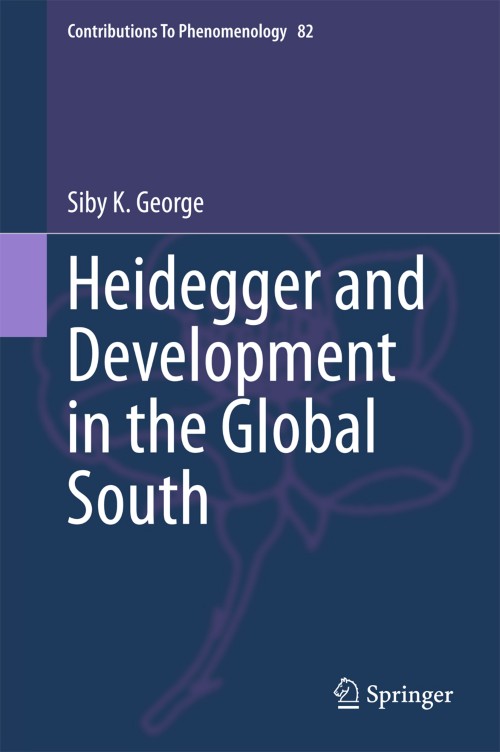
245 10|aHeidegger and Development in the Global South|h[electronic resource] /|cby Siby K. George.
250 |a1st ed. 2015.
264 1|aNew Delhi :|bSpringer India :|bImprint: Springer,|c2015.
300 |aXIX, 309 p.|bonline resource.
336 |atext|btxt|2rdacontent
337 |acomputer|bc|2rdamedia
338 |aonline resource|bcr|2rdacarrier
347 |atext file|bPDF|2rda
490 1 |aContributions to Phenomenology, In Cooperation with The Center for Advanced Research in Phenomenology,|x2215-1915 ;|v82
505 0 |aChapter 1. Heidegger and Development: An Introduction -- Chapter 2. Historicizing the Development Narrative -- Chapter 3. War and Development.- Chapter 4. Capital, Individual and Development.- Chapter 5. Justice, Ethics, Development.- Chapter 6. The Idea of Development.- Chapter 7. Development and Distress: Concluding Remarks.
520 |aTaking the Heideggerian critical ontology of technology as its base, this volume looks at postcolonial modernization and development in the global south as the worldwide expansion of the western metaphysical understanding of reality. We live today in an increasingly globalizing technological society that Martin Heidegger described in the middle of the last century as ‘the planetary imperialism of technologically organized man.’ Consequent upon this cultural-intellectual globalization, the ahistorical, violent, individualistic, calculative and capitalistic logic of the metaphysics of technology is permeating the life-world, even of the world’s poorest peoples, in ways they could neither choose nor control. This volume questions the political ethics and justice of post-war development discourse in the light of the egalitarian aims of modern societies, cultural freedom of communities and nations, and the ecological limits of the planet. The final chapters discuss the alternative proposal of development as various conceptions of good life and equitable human flourishing amidst equally flourishing non-human life and non-living beings. This unique volume is the first book-length treatment of the ontology of modernization and development in the global south from a Heideggerian stance.
650 0|aPhenomenology .
650 0|aSociology.
650 0|aEthnology.
650 0|aCulture.
650 14|aPhenomenology.
650 24|aSociological Theory.
650 24|aRegional Cultural Studies.
710 2 |aSpringerLink (Online service)
773 0 |tSpringer Nature eBook
776 08|iPrinted edition:|z9788132223030
776 08|iPrinted edition:|z9788132223054
776 08|iPrinted edition:|z9788132235255
830 0|aContributions to Phenomenology, In Cooperation with The Center for Advanced Research in Phenomenology,|x2215-1915 ;|v82
856 40|uhttps://doi.org/10.1007/978-81-322-2304-7
912 |aZDB-2-SHU
912 |aZDB-2-SXPR
950 |aHumanities, Social Sciences and Law (SpringerNature-11648)
950 |aPhilosophy and Religion (R0) (SpringerNature-43725)