

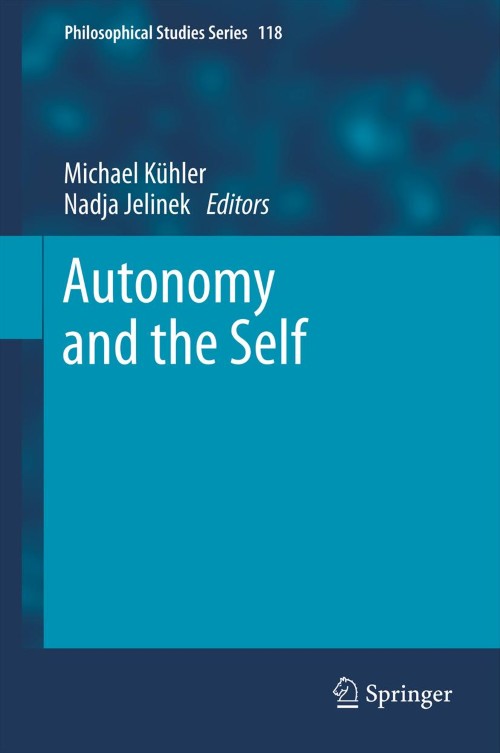
Autonomy and the Self [electronic resource] / edited by Michael Kühler, Nadja Jelinek.
Erişim Adresi
ISBN
9789400747890
Dil Kodu
İngilizce
Yer Numarası
DK/11631
Basım Bildirimi
1st ed. 2013.
Yayın Bilgisi
Dordrecht : Springer Netherlands : Imprint: Springer, 2013.
Fiziksel Niteleme
XXXVI, 328 p. online resource.
Dizi
Philosophical Studies Series, 2542-8349 ; 118
İçindekiler Notu
Foreword -- Introduction; Michael Kühler, Nadja Jelinek -- Section I: Autonomy and Free Will -- 1. Freedom Without Choice?; Gottfried Seebaß -- 2. Freedom and Normativity – Varieties of Free Will; Barbara Merker -- Section II: Autonomy, the Self, and the Role of Personal Traits -- 3. Norm-Guided Formation of Cares without Volitional Necessity – A Response to Frankfurt; John Davenport -- 4. Dynamics in Autonomy; Nadja Jelinek -- 5. The Normative Significance of Personal Projects; Monika Betzler -- 6. Normative Self-Constitution and Individual Autonomy; John Christman -- 7. Psychocorporeal Selfhood, Practical Intelligence, and Adaptive Autonomy; Diana Tietjens Meyers -- 8. Emotion, Autonomy, and Weakness of Will; Sabine Döring -- 9. Who Am I to Uphold Unrealizable Normative Claims?; Michael Kühler -- Section III: Autonomy and the Self Within Society's Grip -- 10. Paternalistic Love and Reasons for Caring; Bennett W. Helm -- 11. Self-Identity and Moral Agency; Marina Oshana -- 12. Being Identical by Being (Treated as) Responsible; Michael Quante -- 13. Integrity Endangered by Hypocrisy; Nora Hangel -- 14. Who Can I Blame?; Kasper Lippert-Rasmussen -- About the Authors -- Index.
Özet, vb.
This volume addresses the complex interplay between the conditions of an agent’s personal autonomy and the constitution of her self in light of two influential background assumptions: a libertarian thesis according to which it is essential for personal autonomy to be able to choose freely how one’s self is shaped, on the one hand, and a line of thought following especially the seminal work of Harry Frankfurt according to which personal autonomy necessarily rests on an already sufficiently shaped self, on the other hand. Given this conceptual framework, a number of influential aspects within current debate can be addressed in a new and illuminating light: accordingly, the volume’s contributions range from 1) discussing fundamental conceptual interconnections between personal autonomy and freedom of the will, 2) addressing the exact role and understanding of different personal traits, e.g. Frankfurt’s notion of volitional necessities, commitments to norms and ideals, emotions, the phenomenon of weakness of will, and psychocorporeal aspects, 3) and finally taking into account social influences, which are discussed in terms of their ability to buttress, to weaken, or even to serve as necessary preconditions of personal autonomy and the forming of one’s self. The volume thus provides readers with an extensive and most up-to-date discussion of various influential strands of current philosophical debate on the topic. It is of equal interest to all those already engaged in the debate as well as to readers trying to get an up-to-date overview or looking for a textbook to use in courses.
Konu
Philosophy of mind.
Ethics.
Philosophy of Mind.
Moral Philosophy and Applied Ethics.
Ethics.
Philosophy of Mind.
Moral Philosophy and Applied Ethics.
Diğer Yazarlar
Kurum Adı
Eseri Alıntıla
Referansları kullanmadan önce gözden geçirmeniz ve varsa gerekli düzeltmeleri yapmanız önerilir.
Dijital Kaynak
MARC Görünümü
LEADER 04642nam a22005055i 4500
001 810353
003 TR_AnAIT
005 20260131020201
007 cr nn 008mamaa
008 121204s2013 ne | s |||| 0|eng d
020 |a9789400747890|9978-94-007-4789-0
024 7 |a10.1007/978-94-007-4789-0|2doi
041 |aeng
049 |aTürk Tarih Kurumu Kütüphanesi
050 4|aBD418-418.84
072 7|aHPM|2bicssc
072 7|aPHI015000|2bisacsh
072 7|aQDTM|2thema
082 04|a128.2|223
090 |aDK/11631
245 10|aAutonomy and the Self|h[electronic resource] /|cedited by Michael Kühler, Nadja Jelinek.
250 |a1st ed. 2013.
264 1|aDordrecht :|bSpringer Netherlands :|bImprint: Springer,|c2013.
300 |aXXXVI, 328 p.|bonline resource.
336 |atext|btxt|2rdacontent
337 |acomputer|bc|2rdamedia
338 |aonline resource|bcr|2rdacarrier
347 |atext file|bPDF|2rda
490 1 |aPhilosophical Studies Series,|x2542-8349 ;|v118
505 0 |aForeword -- Introduction; Michael Kühler, Nadja Jelinek -- Section I: Autonomy and Free Will -- 1. Freedom Without Choice?; Gottfried Seebaß -- 2. Freedom and Normativity – Varieties of Free Will; Barbara Merker -- Section II: Autonomy, the Self, and the Role of Personal Traits -- 3. Norm-Guided Formation of Cares without Volitional Necessity – A Response to Frankfurt; John Davenport -- 4. Dynamics in Autonomy; Nadja Jelinek -- 5. The Normative Significance of Personal Projects; Monika Betzler -- 6. Normative Self-Constitution and Individual Autonomy; John Christman -- 7. Psychocorporeal Selfhood, Practical Intelligence, and Adaptive Autonomy; Diana Tietjens Meyers -- 8. Emotion, Autonomy, and Weakness of Will; Sabine Döring -- 9. Who Am I to Uphold Unrealizable Normative Claims?; Michael Kühler -- Section III: Autonomy and the Self Within Society's Grip -- 10. Paternalistic Love and Reasons for Caring; Bennett W. Helm -- 11. Self-Identity and Moral Agency; Marina Oshana -- 12. Being Identical by Being (Treated as) Responsible; Michael Quante -- 13. Integrity Endangered by Hypocrisy; Nora Hangel -- 14. Who Can I Blame?; Kasper Lippert-Rasmussen -- About the Authors -- Index.
520 |aThis volume addresses the complex interplay between the conditions of an agent’s personal autonomy and the constitution of her self in light of two influential background assumptions: a libertarian thesis according to which it is essential for personal autonomy to be able to choose freely how one’s self is shaped, on the one hand, and a line of thought following especially the seminal work of Harry Frankfurt according to which personal autonomy necessarily rests on an already sufficiently shaped self, on the other hand. Given this conceptual framework, a number of influential aspects within current debate can be addressed in a new and illuminating light: accordingly, the volume’s contributions range from 1) discussing fundamental conceptual interconnections between personal autonomy and freedom of the will, 2) addressing the exact role and understanding of different personal traits, e.g. Frankfurt’s notion of volitional necessities, commitments to norms and ideals, emotions, the phenomenon of weakness of will, and psychocorporeal aspects, 3) and finally taking into account social influences, which are discussed in terms of their ability to buttress, to weaken, or even to serve as necessary preconditions of personal autonomy and the forming of one’s self. The volume thus provides readers with an extensive and most up-to-date discussion of various influential strands of current philosophical debate on the topic. It is of equal interest to all those already engaged in the debate as well as to readers trying to get an up-to-date overview or looking for a textbook to use in courses.
650 0|aPhilosophy of mind.
650 0|aEthics.
650 14|aPhilosophy of Mind.
650 24|aMoral Philosophy and Applied Ethics.
700 1 |aKühler, Michael.|eeditor.|4edt|4http://id.loc.gov/vocabulary/relators/edt
700 1 |aJelinek, Nadja.|eeditor.|4edt|4http://id.loc.gov/vocabulary/relators/edt
710 2 |aSpringerLink (Online service)
773 0 |tSpringer Nature eBook
776 08|iPrinted edition:|z9789400747883
776 08|iPrinted edition:|z9789400747906
776 08|iPrinted edition:|z9789400797307
830 0|aPhilosophical Studies Series,|x2542-8349 ;|v118
856 40|uhttps://doi.org/10.1007/978-94-007-4789-0
912 |aZDB-2-SHU
912 |aZDB-2-SXPR
950 |aHumanities, Social Sciences and Law (SpringerNature-11648)
950 |aPhilosophy and Religion (R0) (SpringerNature-43725)
001 810353
003 TR_AnAIT
005 20260131020201
007 cr nn 008mamaa
008 121204s2013 ne | s |||| 0|eng d
020 |a9789400747890|9978-94-007-4789-0
024 7 |a10.1007/978-94-007-4789-0|2doi
041 |aeng
049 |aTürk Tarih Kurumu Kütüphanesi
050 4|aBD418-418.84
072 7|aHPM|2bicssc
072 7|aPHI015000|2bisacsh
072 7|aQDTM|2thema
082 04|a128.2|223
090 |aDK/11631
245 10|aAutonomy and the Self|h[electronic resource] /|cedited by Michael Kühler, Nadja Jelinek.
250 |a1st ed. 2013.
264 1|aDordrecht :|bSpringer Netherlands :|bImprint: Springer,|c2013.
300 |aXXXVI, 328 p.|bonline resource.
336 |atext|btxt|2rdacontent
337 |acomputer|bc|2rdamedia
338 |aonline resource|bcr|2rdacarrier
347 |atext file|bPDF|2rda
490 1 |aPhilosophical Studies Series,|x2542-8349 ;|v118
505 0 |aForeword -- Introduction; Michael Kühler, Nadja Jelinek -- Section I: Autonomy and Free Will -- 1. Freedom Without Choice?; Gottfried Seebaß -- 2. Freedom and Normativity – Varieties of Free Will; Barbara Merker -- Section II: Autonomy, the Self, and the Role of Personal Traits -- 3. Norm-Guided Formation of Cares without Volitional Necessity – A Response to Frankfurt; John Davenport -- 4. Dynamics in Autonomy; Nadja Jelinek -- 5. The Normative Significance of Personal Projects; Monika Betzler -- 6. Normative Self-Constitution and Individual Autonomy; John Christman -- 7. Psychocorporeal Selfhood, Practical Intelligence, and Adaptive Autonomy; Diana Tietjens Meyers -- 8. Emotion, Autonomy, and Weakness of Will; Sabine Döring -- 9. Who Am I to Uphold Unrealizable Normative Claims?; Michael Kühler -- Section III: Autonomy and the Self Within Society's Grip -- 10. Paternalistic Love and Reasons for Caring; Bennett W. Helm -- 11. Self-Identity and Moral Agency; Marina Oshana -- 12. Being Identical by Being (Treated as) Responsible; Michael Quante -- 13. Integrity Endangered by Hypocrisy; Nora Hangel -- 14. Who Can I Blame?; Kasper Lippert-Rasmussen -- About the Authors -- Index.
520 |aThis volume addresses the complex interplay between the conditions of an agent’s personal autonomy and the constitution of her self in light of two influential background assumptions: a libertarian thesis according to which it is essential for personal autonomy to be able to choose freely how one’s self is shaped, on the one hand, and a line of thought following especially the seminal work of Harry Frankfurt according to which personal autonomy necessarily rests on an already sufficiently shaped self, on the other hand. Given this conceptual framework, a number of influential aspects within current debate can be addressed in a new and illuminating light: accordingly, the volume’s contributions range from 1) discussing fundamental conceptual interconnections between personal autonomy and freedom of the will, 2) addressing the exact role and understanding of different personal traits, e.g. Frankfurt’s notion of volitional necessities, commitments to norms and ideals, emotions, the phenomenon of weakness of will, and psychocorporeal aspects, 3) and finally taking into account social influences, which are discussed in terms of their ability to buttress, to weaken, or even to serve as necessary preconditions of personal autonomy and the forming of one’s self. The volume thus provides readers with an extensive and most up-to-date discussion of various influential strands of current philosophical debate on the topic. It is of equal interest to all those already engaged in the debate as well as to readers trying to get an up-to-date overview or looking for a textbook to use in courses.
650 0|aPhilosophy of mind.
650 0|aEthics.
650 14|aPhilosophy of Mind.
650 24|aMoral Philosophy and Applied Ethics.
700 1 |aKühler, Michael.|eeditor.|4edt|4http://id.loc.gov/vocabulary/relators/edt
700 1 |aJelinek, Nadja.|eeditor.|4edt|4http://id.loc.gov/vocabulary/relators/edt
710 2 |aSpringerLink (Online service)
773 0 |tSpringer Nature eBook
776 08|iPrinted edition:|z9789400747883
776 08|iPrinted edition:|z9789400747906
776 08|iPrinted edition:|z9789400797307
830 0|aPhilosophical Studies Series,|x2542-8349 ;|v118
856 40|uhttps://doi.org/10.1007/978-94-007-4789-0
912 |aZDB-2-SHU
912 |aZDB-2-SXPR
950 |aHumanities, Social Sciences and Law (SpringerNature-11648)
950 |aPhilosophy and Religion (R0) (SpringerNature-43725)
Materyaller
Depodan talep edilen materyal sadece kütüphane içerisinde kullanılmaktadır.
Materyal dışarıya ödünç verilmemektedir.
Materyal dışarıya ödünç verilmemektedir.
