LEADER 03816nam a22004935i 4500
001 810378
003 TR_AnAIT
005 20260131020008
007 cr nn 008mamaa
008 121227s1990 ne | s |||| 0|eng d
020 |a9789401023719|9978-94-010-2371-9
024 7 |a10.1007/978-94-010-2371-9|2doi
041 |aeng
049 |aTürk Tarih Kurumu Kütüphanesi
050 4|aB829.5.A-Z
072 7|aHPCF3|2bicssc
072 7|aPHI018000|2bisacsh
072 7|aQDHR5|2thema
082 04|a142.7|223
090 |aDK/11656
100 1 |aHusserl, Edmund.|eauthor.|4aut|4http://id.loc.gov/vocabulary/relators/aut
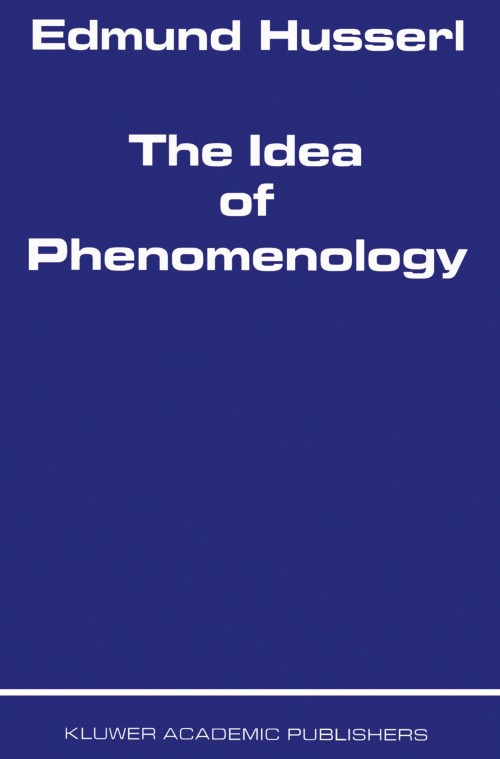
245 14|aThe Idea of Phenomenology|h[electronic resource] /|cby Edmund Husserl.
250 |a1st ed. 1990.
264 1|aDordrecht :|bSpringer Netherlands :|bImprint: Springer,|c1990.
300 |aXXIV, 60 p.|bonline resource.
336 |atext|btxt|2rdacontent
337 |acomputer|bc|2rdamedia
338 |aonline resource|bcr|2rdacarrier
347 |atext file|bPDF|2rda
505 0 |aThe train of thoughts in the lectures -- Lecture I -- Lecture II -- Lecture III -- Lecture IV -- Lecture V.
520 |aThis translation is concluded in our Readings in Twentieth Century Philosophy, (N. Y. , The Free Press of Glencoe, Inc. , 1963). We owe thanks to Professors W. D. Falk and William Hughes for helping us with the translation. We also owe thanks to Professor Herbert Spiegelberg, Dr. Walter Biemel and the Husser! Archives at Louvain for checking it and we are especially indebted to Professor Dorion Cairns, many of whose suggestions we incorporated in the final draft. WILLIAM P. ALSTON GEORGE NAKHNIKIAN January 1964 CONTENTS V Preface Introduction IX The train of thoughts in the lectures I Lecture I 13 Lecture II 22 Lecture III 33 Lecture IV 43 Lecture V 52 INTRODUCTION From April 26 to May 2, 1907, Husserl delivered five lectures in Gottingen. They introduce the main ideas of his later pheno menology, the one that goes beyond the phenomenology of the Logische Untersuchungen. These lectures and Husserl's summary of them entitled "The Train of Thoughts in the Lectures" were edited by Dr. Walter Biemel and first published in 1950 under the 1 title Die Idee der Phiinomenologie. Husserl wrote the summary on the night of the last lecture, not for formal delivery but for his own use. This accounts for the fact that the summary contains incomplete sentences. There are some discrepancies between Lecture V and the corresponding passages in the summary. We may suppose that the passages in the summary are a closer approximation to what Husserl wanted to say.
532 8 |aAccessibility summary: This PDF is not accessible. It is based on scanned pages and does not support features such as screen reader compatibility or described non-text content (images, graphs etc). However, it likely supports searchable and selectable text based on OCR (Optical Character Recognition). Users with accessibility needs may not be able to use this content effectively. Please contact us at accessibilitysupport@springernature.com if you require assistance or an alternative format.
532 8 |aInaccessible, or known limited accessibility
532 8 |aNo reading system accessibility options actively disabled
532 8 |aPublisher contact for further accessibility information: accessibilitysupport@springernature.com
650 0|aPhenomenology .
650 14|aPhenomenology.
710 2 |aSpringerLink (Online service)
773 0 |tSpringer Nature eBook
776 08|iPrinted edition:|z9789024701148
776 08|iPrinted edition:|z9789401023726
856 40|uhttps://doi.org/10.1007/978-94-010-2371-9
912 |aZDB-2-SHU
912 |aZDB-2-SXPR
912 |aZDB-2-BAE
950 |aHumanities, Social Sciences and Law (SpringerNature-11648)
950 |aPhilosophy and Religion (R0) (SpringerNature-43725)