

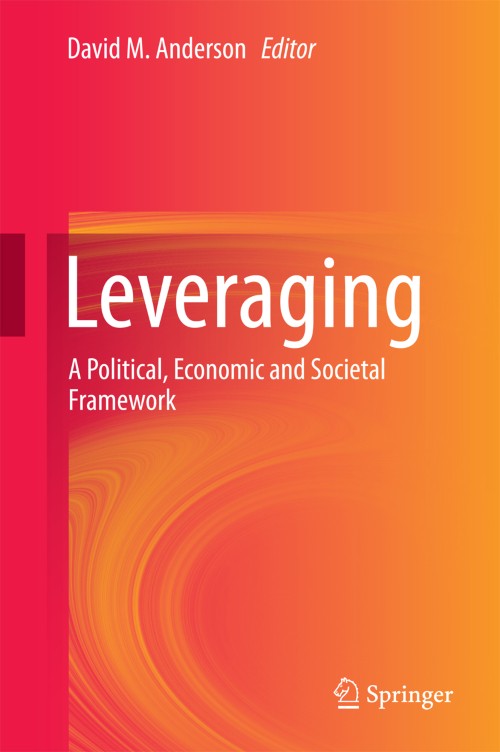
Leveraging [electronic resource] : A Political, Economic and Societal Framework / edited by David M. Anderson.
Erişim Adresi
ISBN
9783319060941
Dil Kodu
İngilizce
Yer Numarası
DK/11778
Basım Bildirimi
1st ed. 2014.
Yayın Bilgisi
Cham : Springer International Publishing : Imprint: Springer, 2014.
Fiziksel Niteleme
XXIII, 197 p. 3 illus. in color. online resource.
İçindekiler Notu
Part One: A Leverage Framework -- Introduction.- Part Two: Leverage and the Economy -- The Evolution of Real Estate Leverage.- The "Overleveraged" Crisis of 2008 from the Standpoint of Keynes's Monetary Theory of Capitalism -- China Leveraged the West to Grow Its Economy and Its Comprehensive National Power -- Part Three: Leverage and Politics: Domestic, State, and International.- The Morality of Leverage and the Leverage of Morality -- Leveraging Public Judgment -- Leverage in a Labor Management Relationship: Maximizing the Use of Leverage by Finding a Constructive Leverage Mean -- Leverage and the Regulatory Process -- The Advantages and Pitfalls of Leveraging Hunitarian Development and Diplomacy Towards National Security -- Part Four: Leverage and Social Relations -- Leveraging in Modern and Contemporary Families -- From the Leverage Ethic and Leverage Mean to a National Paid Parental Leave Policy -- Part Five: Next Steps -- Next Steps.
Özet, vb.
Leveraging, according to David M. Anderson and his colleagues, is both a basic principle of human conduct and the most dominant strategy in recent years that individuals, organizations and countries use to pursue their ends. Although many scholars agree that a crisis of “over-leveraging” caused the financial crisis of 2008-2010, it has not been appreciated that an “over-leveraging” crisis has existed in American politics and the American family system as well. This book addresses the need for a “Leverage Mean” (falling between the extremes of too much leverage and too little leverage) in the economy, politics, family life, and international relations. It identifies three different kinds of leveraging—bargaining, resource, and investment and provides an explanatory and normative theory which draws on the fields of economics, political science, sociology, history, psychology, international relations, law, and philosophy. Moreover, it shows how the dissolution of the Cold War, the dismantling of the modern family, and the rise of the Internet along with the deregulation of the financial services industry led to the diffusion of power which has made leveraging of the first importance for everyone. This book should be of interest to social scientists, philosophers, political theorists, public policy makers and politicians. David Anderson and his colleagues are the first to characterize and assess one of the major instruments of power of the contemporary era. This volume represents the best work on leverage since Archimedes and will be widely read and discussed. Benjamin Ginsberg, David Bernstein Professor of Political Science and Chair, Center for Advanced Governmental Studies, Johns Hopkins University Leverage might literally be the operative word of the 21st century. Anderson‘s volume is a wide-ranging and illuminating study of this fundamental and dynamic concept. Parag Khanna, Senior Fellow, New Amer ica Foundation, author of The Second World: How Emerging Powers Are Redefining Global Competition in the Twenty-first Century .
Konu
Political science.
Econometrics.
Political science __ Philosophy.
Political Theory.
Quantitative Economics.
Political Philosophy.
Econometrics.
Political science __ Philosophy.
Political Theory.
Quantitative Economics.
Political Philosophy.
Diğer Yazarlar
Kurum Adı
Eseri Alıntıla
Referansları kullanmadan önce gözden geçirmeniz ve varsa gerekli düzeltmeleri yapmanız önerilir.
Dijital Kaynak
MARC Görünümü
LEADER 04787nam a22004935i 4500
001 810502
003 TR_AnAIT
005 20260131015333
007 cr nn 008mamaa
008 140604s2014 sz | s |||| 0|eng d
020 |a9783319060941|9978-3-319-06094-1
024 7 |a10.1007/978-3-319-06094-1|2doi
041 |aeng
049 |aTürk Tarih Kurumu Kütüphanesi
050 4|aJC11-607
072 7|aJPA|2bicssc
072 7|aPOL010000|2bisacsh
072 7|aJPA|2thema
082 04|a320.01|223
090 |aDK/11778
245 10|aLeveraging|h[electronic resource] :|bA Political, Economic and Societal Framework /|cedited by David M. Anderson.
250 |a1st ed. 2014.
264 1|aCham :|bSpringer International Publishing :|bImprint: Springer,|c2014.
300 |aXXIII, 197 p. 3 illus. in color.|bonline resource.
336 |atext|btxt|2rdacontent
337 |acomputer|bc|2rdamedia
338 |aonline resource|bcr|2rdacarrier
347 |atext file|bPDF|2rda
505 0 |aPart One: A Leverage Framework -- Introduction.- Part Two: Leverage and the Economy -- The Evolution of Real Estate Leverage.- The "Overleveraged" Crisis of 2008 from the Standpoint of Keynes's Monetary Theory of Capitalism -- China Leveraged the West to Grow Its Economy and Its Comprehensive National Power -- Part Three: Leverage and Politics: Domestic, State, and International.- The Morality of Leverage and the Leverage of Morality -- Leveraging Public Judgment -- Leverage in a Labor Management Relationship: Maximizing the Use of Leverage by Finding a Constructive Leverage Mean -- Leverage and the Regulatory Process -- The Advantages and Pitfalls of Leveraging Hunitarian Development and Diplomacy Towards National Security -- Part Four: Leverage and Social Relations -- Leveraging in Modern and Contemporary Families -- From the Leverage Ethic and Leverage Mean to a National Paid Parental Leave Policy -- Part Five: Next Steps -- Next Steps.
520 |aLeveraging, according to David M. Anderson and his colleagues, is both a basic principle of human conduct and the most dominant strategy in recent years that individuals, organizations and countries use to pursue their ends. Although many scholars agree that a crisis of “over-leveraging” caused the financial crisis of 2008-2010, it has not been appreciated that an “over-leveraging” crisis has existed in American politics and the American family system as well. This book addresses the need for a “Leverage Mean” (falling between the extremes of too much leverage and too little leverage) in the economy, politics, family life, and international relations. It identifies three different kinds of leveraging—bargaining, resource, and investment and provides an explanatory and normative theory which draws on the fields of economics, political science, sociology, history, psychology, international relations, law, and philosophy. Moreover, it shows how the dissolution of the Cold War, the dismantling of the modern family, and the rise of the Internet along with the deregulation of the financial services industry led to the diffusion of power which has made leveraging of the first importance for everyone. This book should be of interest to social scientists, philosophers, political theorists, public policy makers and politicians. David Anderson and his colleagues are the first to characterize and assess one of the major instruments of power of the contemporary era. This volume represents the best work on leverage since Archimedes and will be widely read and discussed. Benjamin Ginsberg, David Bernstein Professor of Political Science and Chair, Center for Advanced Governmental Studies, Johns Hopkins University Leverage might literally be the operative word of the 21st century. Anderson‘s volume is a wide-ranging and illuminating study of this fundamental and dynamic concept. Parag Khanna, Senior Fellow, New Amer ica Foundation, author of The Second World: How Emerging Powers Are Redefining Global Competition in the Twenty-first Century .
650 0|aPolitical science.
650 0|aEconometrics.
650 0|aPolitical science|xPhilosophy.
650 14|aPolitical Theory.
650 24|aQuantitative Economics.
650 24|aPolitical Philosophy.
700 1 |aAnderson, David M.|eeditor.|4edt|4http://id.loc.gov/vocabulary/relators/edt
710 2 |aSpringerLink (Online service)
773 0 |tSpringer Nature eBook
776 08|iPrinted edition:|z9783319060934
776 08|iPrinted edition:|z9783319060958
776 08|iPrinted edition:|z9783319379357
856 40|uhttps://doi.org/10.1007/978-3-319-06094-1
912 |aZDB-2-SHU
912 |aZDB-2-SXPI
950 |aHumanities, Social Sciences and Law (SpringerNature-11648)
950 |aPolitical Science and International Studies (R0) (SpringerNature-43724)
001 810502
003 TR_AnAIT
005 20260131015333
007 cr nn 008mamaa
008 140604s2014 sz | s |||| 0|eng d
020 |a9783319060941|9978-3-319-06094-1
024 7 |a10.1007/978-3-319-06094-1|2doi
041 |aeng
049 |aTürk Tarih Kurumu Kütüphanesi
050 4|aJC11-607
072 7|aJPA|2bicssc
072 7|aPOL010000|2bisacsh
072 7|aJPA|2thema
082 04|a320.01|223
090 |aDK/11778
245 10|aLeveraging|h[electronic resource] :|bA Political, Economic and Societal Framework /|cedited by David M. Anderson.
250 |a1st ed. 2014.
264 1|aCham :|bSpringer International Publishing :|bImprint: Springer,|c2014.
300 |aXXIII, 197 p. 3 illus. in color.|bonline resource.
336 |atext|btxt|2rdacontent
337 |acomputer|bc|2rdamedia
338 |aonline resource|bcr|2rdacarrier
347 |atext file|bPDF|2rda
505 0 |aPart One: A Leverage Framework -- Introduction.- Part Two: Leverage and the Economy -- The Evolution of Real Estate Leverage.- The "Overleveraged" Crisis of 2008 from the Standpoint of Keynes's Monetary Theory of Capitalism -- China Leveraged the West to Grow Its Economy and Its Comprehensive National Power -- Part Three: Leverage and Politics: Domestic, State, and International.- The Morality of Leverage and the Leverage of Morality -- Leveraging Public Judgment -- Leverage in a Labor Management Relationship: Maximizing the Use of Leverage by Finding a Constructive Leverage Mean -- Leverage and the Regulatory Process -- The Advantages and Pitfalls of Leveraging Hunitarian Development and Diplomacy Towards National Security -- Part Four: Leverage and Social Relations -- Leveraging in Modern and Contemporary Families -- From the Leverage Ethic and Leverage Mean to a National Paid Parental Leave Policy -- Part Five: Next Steps -- Next Steps.
520 |aLeveraging, according to David M. Anderson and his colleagues, is both a basic principle of human conduct and the most dominant strategy in recent years that individuals, organizations and countries use to pursue their ends. Although many scholars agree that a crisis of “over-leveraging” caused the financial crisis of 2008-2010, it has not been appreciated that an “over-leveraging” crisis has existed in American politics and the American family system as well. This book addresses the need for a “Leverage Mean” (falling between the extremes of too much leverage and too little leverage) in the economy, politics, family life, and international relations. It identifies three different kinds of leveraging—bargaining, resource, and investment and provides an explanatory and normative theory which draws on the fields of economics, political science, sociology, history, psychology, international relations, law, and philosophy. Moreover, it shows how the dissolution of the Cold War, the dismantling of the modern family, and the rise of the Internet along with the deregulation of the financial services industry led to the diffusion of power which has made leveraging of the first importance for everyone. This book should be of interest to social scientists, philosophers, political theorists, public policy makers and politicians. David Anderson and his colleagues are the first to characterize and assess one of the major instruments of power of the contemporary era. This volume represents the best work on leverage since Archimedes and will be widely read and discussed. Benjamin Ginsberg, David Bernstein Professor of Political Science and Chair, Center for Advanced Governmental Studies, Johns Hopkins University Leverage might literally be the operative word of the 21st century. Anderson‘s volume is a wide-ranging and illuminating study of this fundamental and dynamic concept. Parag Khanna, Senior Fellow, New Amer ica Foundation, author of The Second World: How Emerging Powers Are Redefining Global Competition in the Twenty-first Century .
650 0|aPolitical science.
650 0|aEconometrics.
650 0|aPolitical science|xPhilosophy.
650 14|aPolitical Theory.
650 24|aQuantitative Economics.
650 24|aPolitical Philosophy.
700 1 |aAnderson, David M.|eeditor.|4edt|4http://id.loc.gov/vocabulary/relators/edt
710 2 |aSpringerLink (Online service)
773 0 |tSpringer Nature eBook
776 08|iPrinted edition:|z9783319060934
776 08|iPrinted edition:|z9783319060958
776 08|iPrinted edition:|z9783319379357
856 40|uhttps://doi.org/10.1007/978-3-319-06094-1
912 |aZDB-2-SHU
912 |aZDB-2-SXPI
950 |aHumanities, Social Sciences and Law (SpringerNature-11648)
950 |aPolitical Science and International Studies (R0) (SpringerNature-43724)
Materyaller
Depodan talep edilen materyal sadece kütüphane içerisinde kullanılmaktadır.
Materyal dışarıya ödünç verilmemektedir.
Materyal dışarıya ödünç verilmemektedir.
