LEADER 04339nam a22005655i 4500
001 810515
003 TR_AnAIT
005 20260131015228
007 cr nn 008mamaa
008 121227s1974 ne | s |||| 0|eng d
020 |a9789401099202|9978-94-010-9920-2
024 7 |a10.1007/978-94-010-9920-2|2doi
041 |aeng
049 |aTürk Tarih Kurumu Kütüphanesi
050 4|aQ174-175.3
050 4|aB67
072 7|aPDA|2bicssc
072 7|aSCI075000|2bisacsh
072 7|aPDA|2thema
082 04|a501|223
090 |aDK/11791
100 1 |aBunge, M.|eauthor.|4aut|4http://id.loc.gov/vocabulary/relators/aut
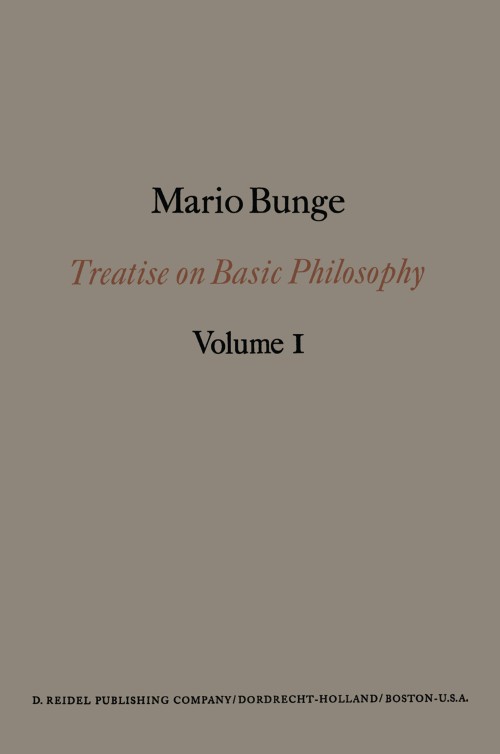
245 10|aTreatise on Basic Philosophy|h[electronic resource] :|bSemantics I: Sense and Reference /|cby M. Bunge.
250 |a1st ed. 1974.
264 1|aDordrecht :|bSpringer Netherlands :|bImprint: Springer,|c1974.
300 |aXVI, 186 p.|bonline resource.
336 |atext|btxt|2rdacontent
337 |acomputer|bc|2rdamedia
338 |aonline resource|bcr|2rdacarrier
347 |atext file|bPDF|2rda
490 1 |aTreatise on Basic Philosophy ;|v1
505 0 |aof Semantics I -- 1. Goal -- 2. Method -- 1. Designation -- 1. Symbol and Idea -- 2. Designation -- 3. Metaphysical Concomitants -- 2. Reference -- 1. Motivation -- 2. The Reference Relation -- 3. The Reference Functions -- 4. Factual Reference -- 5. Relevance -- 6. Conclusion -- 3. Representation -- 1. Conceptual Representation -- 2. The Representation Relation -- 3. Modeling -- 4. Semantic Components of a Scientific Theory -- 5. Conclusion -- 4. Intension -- 1. Form is not Everything -- 2. A Calculus of Intensions -- 3. Some Relatives — Kindred and in Law -- 4. Concluding Remarks -- 5. Gist and Content -- 1. Closed Contexts -- 2. Sense as Purport or Logical Ancestry -- 3. Sense as Import or Logical Progeny -- 4. Full Sense -- 5. Conclusion -- Index of Names -- Index of Subjects.
520 |aIn this Introduction we shall sketch a profile of our field of inquiry. This is necessary because semantics is too often mistaken for lexicography and therefore dismissed as trivial, while at other times it is disparaged for being concerned with reputedly shady characters such as meaning and allegedly defunct ones like truth. Moreover our special concern, the semantics of science, is a newcomer - at least as a systematic body - and therefore in need of an introduction. l. GOAL Semantics is the field of inquiry centrally concerned with meaning and truth. It can be empirical or nonempirical. When brought to bear on concrete objects, such as a community of speakers, semantics seeks to answer problems concerning certain linguistic facts - such as disclosing the interpretation code inherent in the language or explaning the speakers' ability or inability to utter and understand new sentences ofthe language. This kind of semantics will then be both theoretical and experimental: it will be a branch of what used to be called 'behavioral science'.
532 8 |aAccessibility summary: This PDF is not accessible. It is based on scanned pages and does not support features such as screen reader compatibility or described non-text content (images, graphs etc). However, it likely supports searchable and selectable text based on OCR (Optical Character Recognition). Users with accessibility needs may not be able to use this content effectively. Please contact us at accessibilitysupport@springernature.com if you require assistance or an alternative format.
532 8 |aInaccessible, or known limited accessibility
532 8 |aNo reading system accessibility options actively disabled
532 8 |aPublisher contact for further accessibility information: accessibilitysupport@springernature.com
650 0|aScience|xPhilosophy.
650 0|aSemiotics.
650 14|aPhilosophy of Science.
650 24|aSemiotics.
710 2 |aSpringerLink (Online service)
773 0 |tSpringer Nature eBook
776 08|iPrinted edition:|z9789027705341
776 08|iPrinted edition:|z9789027705723
776 08|iPrinted edition:|z9789401099219
830 0|aTreatise on Basic Philosophy ;|v1
856 40|uhttps://doi.org/10.1007/978-94-010-9920-2
912 |aZDB-2-SHU
912 |aZDB-2-SXPR
912 |aZDB-2-BAE
950 |aHumanities, Social Sciences and Law (SpringerNature-11648)
950 |aPhilosophy and Religion (R0) (SpringerNature-43725)