

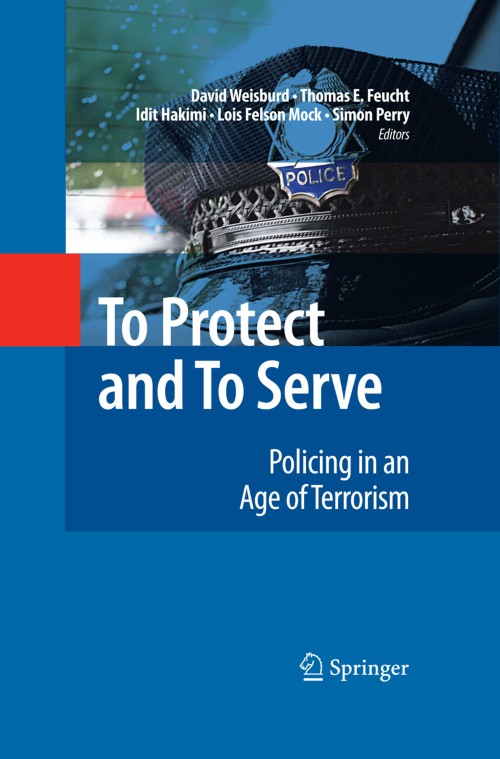
To Protect and To Serve [electronic resource] : Policing in an Age of Terrorism / edited by David Weisburd, Thomas Feucht, Idit Hakimi, Lois Mock, Simon Perry.
Erişim Adresi
ISBN
9780387736853
Dil Kodu
İngilizce
Yer Numarası
DK/11836
Basım Bildirimi
1st ed. 2011.
Yayın Bilgisi
New York, NY : Springer New York : Imprint: Springer, 2011.
Fiziksel Niteleme
X, 230 p. 22 illus. online resource.
Özet, vb.
Since 9/11, the threat of terrorism has become a key issue in police agencies throughout the world. How should the police change to counter terrorism threats? What implications do such changes have for traditional responsibilities of the police like combating crime, or in the resources or focus of modern police agencies? To Protect and To Serve: Policing in an Age of Terrorism brings together distinguished American and Israeli policing scholars, who pool their knowledge and experience to shed light on what has happened to policing since the turn of the century, and what trends can be expect over the next few decades. To Protect and To Serve begins by asking what terrorism is and what forms it takes, and discusses how it raises new questions for democratic societies and democratic policing. While many scholars and lay people take for granted the fact that the police should play a central role in the fight against terrorism, the volume also examines critically the rationale for the police role. Accordingly a chapter also examines the role that the police should play in the complex task of preventing, and responding to terror, and responding to the outcomes of terror? Another chapter begins with a description of the specific strategies and tactics that police agencies have developed to deal with terrorism (and the outcomes of terrorism), and assesses what works both in preventing terrorism and in dealing with its consequences. A critical issue that has received comparatively little attention is addressed in another chapter, which examines how police agencies responded organizationally to the added responsibilities of fighting terrorism. Finally, the book also examines the impact of fighting terrorism on minority and majority communities, and the questions of legitimacy that are raised by new roles that police take on.
Konu
Criminology.
Sociology.
Criminology.
Sociology.
Sociology.
Criminology.
Sociology.
Kurum Adı
