

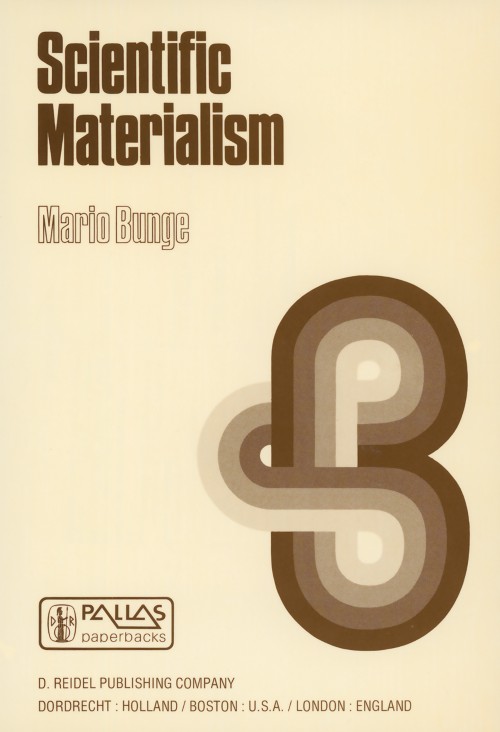
Scientific Materialism [electronic resource] / by M. Bunge.
Erişim Adresi
ISBN
9789400985179
Dil Kodu
İngilizce
Yer Numarası
DK/11938
Yazar
Basım Bildirimi
1st ed. 1981.
Yayın Bilgisi
Dordrecht : Springer Netherlands : Imprint: Springer, 1981.
Fiziksel Niteleme
XIV, 223 p. online resource.
Dizi
Episteme, A Series in the Foundational, Methodological, Philosophical, Psychological, Sociological, and Political Aspects of the Sciences, Pure and Applied ; 9
İçindekiler Notu
I: Being -- 1. Matter Today -- 2. Materialism Today -- II: Becoming -- 3. Modes of Becoming -- 4. A Critique of Dialectics -- III: Mind -- 5. A Materialist Theory of Mind -- 6. Mind Evolving -- IV: Culture -- 7. A Materialist Concept of Culture -- 8. Popper’s Unworldly World 3 -- V: Concept -- 9. The Status of Concepts -- 10. Logic, Semantics, and Ontology -- New Dialogues between Hylas and Philonous -- Sources -- Index of Names -- Index of Subjects.
Özet, vb.
The word 'materialism' is ambiguous: it designates a moral doc trine as well as a philosophy and, indeed, an entire world view. Moral materialism is identical with hedonism, or the doctrine that humans should pursue only their own pleasure. Philosophical ma terialismis the view that the real worId is composed exclusively of material things. The two doctrines are logically independent: hedonism is consistent with immaterialism, and materialism is compatible with high minded morals. We shall be concerned ex c1usively with philosophical materialism. And we shall not confuse it with realism, or the epistemological doctrine that knowIedge, or at any rate scientific knowledge, attempts to represent reality. Philosophical materialism is not a recent fad and it is not a solid block: it is as old as philosophy and it has gone through six quite different stages. The first was ancient materialism, centered around Greek and Indian atomism. The second was the revival of the first during the 17th century. The third was 18th century ma terialism, partly derived from one side of Descartes' ambiguous legacy. The fourth was the mid-19th century "scientific" material ism, which flourished mainly in Germany and England, and was tied to the upsurge of chemistry and biology. The fifth was dialec tical and historical materialism, which accompanied the consolida tion of the socialist ideology. And the sixth or current stage, evolved mainly by Australian and American philosophers, is aca demic and nonpartisan but otherwise very heterogeneous. Ancient materialism was thoroughly mechanistic.
Konu
Science __ Philosophy.
Philosophy of Science.
Philosophy of Science.
Kurum Adı
Eseri Alıntıla
Referansları kullanmadan önce gözden geçirmeniz ve varsa gerekli düzeltmeleri yapmanız önerilir.
Dijital Kaynak
MARC Görünümü
LEADER 04714nam a22005415i 4500
001 810664
003 TR_AnAIT
005 20260131014433
007 cr nn 008mamaa
008 121227s1981 ne | s |||| 0|eng d
020 |a9789400985179|9978-94-009-8517-9
024 7 |a10.1007/978-94-009-8517-9|2doi
041 |aeng
049 |aTürk Tarih Kurumu Kütüphanesi
050 4|aQ174-175.3
050 4|aB67
072 7|aPDA|2bicssc
072 7|aSCI075000|2bisacsh
072 7|aPDA|2thema
082 04|a501|223
090 |aDK/11938
100 1 |aBunge, M.|eauthor.|4aut|4http://id.loc.gov/vocabulary/relators/aut
245 10|aScientific Materialism|h[electronic resource] /|cby M. Bunge.
250 |a1st ed. 1981.
264 1|aDordrecht :|bSpringer Netherlands :|bImprint: Springer,|c1981.
300 |aXIV, 223 p.|bonline resource.
336 |atext|btxt|2rdacontent
337 |acomputer|bc|2rdamedia
338 |aonline resource|bcr|2rdacarrier
347 |atext file|bPDF|2rda
490 1 |aEpisteme, A Series in the Foundational, Methodological, Philosophical, Psychological, Sociological, and Political Aspects of the Sciences, Pure and Applied ;|v9
505 0 |aI: Being -- 1. Matter Today -- 2. Materialism Today -- II: Becoming -- 3. Modes of Becoming -- 4. A Critique of Dialectics -- III: Mind -- 5. A Materialist Theory of Mind -- 6. Mind Evolving -- IV: Culture -- 7. A Materialist Concept of Culture -- 8. Popper’s Unworldly World 3 -- V: Concept -- 9. The Status of Concepts -- 10. Logic, Semantics, and Ontology -- New Dialogues between Hylas and Philonous -- Sources -- Index of Names -- Index of Subjects.
520 |aThe word 'materialism' is ambiguous: it designates a moral doc trine as well as a philosophy and, indeed, an entire world view. Moral materialism is identical with hedonism, or the doctrine that humans should pursue only their own pleasure. Philosophical ma terialismis the view that the real worId is composed exclusively of material things. The two doctrines are logically independent: hedonism is consistent with immaterialism, and materialism is compatible with high minded morals. We shall be concerned ex c1usively with philosophical materialism. And we shall not confuse it with realism, or the epistemological doctrine that knowIedge, or at any rate scientific knowledge, attempts to represent reality. Philosophical materialism is not a recent fad and it is not a solid block: it is as old as philosophy and it has gone through six quite different stages. The first was ancient materialism, centered around Greek and Indian atomism. The second was the revival of the first during the 17th century. The third was 18th century ma terialism, partly derived from one side of Descartes' ambiguous legacy. The fourth was the mid-19th century "scientific" material ism, which flourished mainly in Germany and England, and was tied to the upsurge of chemistry and biology. The fifth was dialec tical and historical materialism, which accompanied the consolida tion of the socialist ideology. And the sixth or current stage, evolved mainly by Australian and American philosophers, is aca demic and nonpartisan but otherwise very heterogeneous. Ancient materialism was thoroughly mechanistic.
532 8 |aAccessibility summary: This PDF is not accessible. It is based on scanned pages and does not support features such as screen reader compatibility or described non-text content (images, graphs etc). However, it likely supports searchable and selectable text based on OCR (Optical Character Recognition). Users with accessibility needs may not be able to use this content effectively. Please contact us at accessibilitysupport@springernature.com if you require assistance or an alternative format.
532 8 |aInaccessible, or known limited accessibility
532 8 |aNo reading system accessibility options actively disabled
532 8 |aPublisher contact for further accessibility information: accessibilitysupport@springernature.com
650 0|aScience|xPhilosophy.
650 14|aPhilosophy of Science.
710 2 |aSpringerLink (Online service)
773 0 |tSpringer Nature eBook
776 08|iPrinted edition:|z9789027713049
776 08|iPrinted edition:|z9789400985186
776 08|iPrinted edition:|z9789400985193
830 0|aEpisteme, A Series in the Foundational, Methodological, Philosophical, Psychological, Sociological, and Political Aspects of the Sciences, Pure and Applied ;|v9
856 40|uhttps://doi.org/10.1007/978-94-009-8517-9
912 |aZDB-2-SHU
912 |aZDB-2-SXPR
912 |aZDB-2-BAE
950 |aHumanities, Social Sciences and Law (SpringerNature-11648)
950 |aPhilosophy and Religion (R0) (SpringerNature-43725)
001 810664
003 TR_AnAIT
005 20260131014433
007 cr nn 008mamaa
008 121227s1981 ne | s |||| 0|eng d
020 |a9789400985179|9978-94-009-8517-9
024 7 |a10.1007/978-94-009-8517-9|2doi
041 |aeng
049 |aTürk Tarih Kurumu Kütüphanesi
050 4|aQ174-175.3
050 4|aB67
072 7|aPDA|2bicssc
072 7|aSCI075000|2bisacsh
072 7|aPDA|2thema
082 04|a501|223
090 |aDK/11938
100 1 |aBunge, M.|eauthor.|4aut|4http://id.loc.gov/vocabulary/relators/aut
245 10|aScientific Materialism|h[electronic resource] /|cby M. Bunge.
250 |a1st ed. 1981.
264 1|aDordrecht :|bSpringer Netherlands :|bImprint: Springer,|c1981.
300 |aXIV, 223 p.|bonline resource.
336 |atext|btxt|2rdacontent
337 |acomputer|bc|2rdamedia
338 |aonline resource|bcr|2rdacarrier
347 |atext file|bPDF|2rda
490 1 |aEpisteme, A Series in the Foundational, Methodological, Philosophical, Psychological, Sociological, and Political Aspects of the Sciences, Pure and Applied ;|v9
505 0 |aI: Being -- 1. Matter Today -- 2. Materialism Today -- II: Becoming -- 3. Modes of Becoming -- 4. A Critique of Dialectics -- III: Mind -- 5. A Materialist Theory of Mind -- 6. Mind Evolving -- IV: Culture -- 7. A Materialist Concept of Culture -- 8. Popper’s Unworldly World 3 -- V: Concept -- 9. The Status of Concepts -- 10. Logic, Semantics, and Ontology -- New Dialogues between Hylas and Philonous -- Sources -- Index of Names -- Index of Subjects.
520 |aThe word 'materialism' is ambiguous: it designates a moral doc trine as well as a philosophy and, indeed, an entire world view. Moral materialism is identical with hedonism, or the doctrine that humans should pursue only their own pleasure. Philosophical ma terialismis the view that the real worId is composed exclusively of material things. The two doctrines are logically independent: hedonism is consistent with immaterialism, and materialism is compatible with high minded morals. We shall be concerned ex c1usively with philosophical materialism. And we shall not confuse it with realism, or the epistemological doctrine that knowIedge, or at any rate scientific knowledge, attempts to represent reality. Philosophical materialism is not a recent fad and it is not a solid block: it is as old as philosophy and it has gone through six quite different stages. The first was ancient materialism, centered around Greek and Indian atomism. The second was the revival of the first during the 17th century. The third was 18th century ma terialism, partly derived from one side of Descartes' ambiguous legacy. The fourth was the mid-19th century "scientific" material ism, which flourished mainly in Germany and England, and was tied to the upsurge of chemistry and biology. The fifth was dialec tical and historical materialism, which accompanied the consolida tion of the socialist ideology. And the sixth or current stage, evolved mainly by Australian and American philosophers, is aca demic and nonpartisan but otherwise very heterogeneous. Ancient materialism was thoroughly mechanistic.
532 8 |aAccessibility summary: This PDF is not accessible. It is based on scanned pages and does not support features such as screen reader compatibility or described non-text content (images, graphs etc). However, it likely supports searchable and selectable text based on OCR (Optical Character Recognition). Users with accessibility needs may not be able to use this content effectively. Please contact us at accessibilitysupport@springernature.com if you require assistance or an alternative format.
532 8 |aInaccessible, or known limited accessibility
532 8 |aNo reading system accessibility options actively disabled
532 8 |aPublisher contact for further accessibility information: accessibilitysupport@springernature.com
650 0|aScience|xPhilosophy.
650 14|aPhilosophy of Science.
710 2 |aSpringerLink (Online service)
773 0 |tSpringer Nature eBook
776 08|iPrinted edition:|z9789027713049
776 08|iPrinted edition:|z9789400985186
776 08|iPrinted edition:|z9789400985193
830 0|aEpisteme, A Series in the Foundational, Methodological, Philosophical, Psychological, Sociological, and Political Aspects of the Sciences, Pure and Applied ;|v9
856 40|uhttps://doi.org/10.1007/978-94-009-8517-9
912 |aZDB-2-SHU
912 |aZDB-2-SXPR
912 |aZDB-2-BAE
950 |aHumanities, Social Sciences and Law (SpringerNature-11648)
950 |aPhilosophy and Religion (R0) (SpringerNature-43725)
Materyaller
Depodan talep edilen materyal sadece kütüphane içerisinde kullanılmaktadır.
Materyal dışarıya ödünç verilmemektedir.
Materyal dışarıya ödünç verilmemektedir.
