

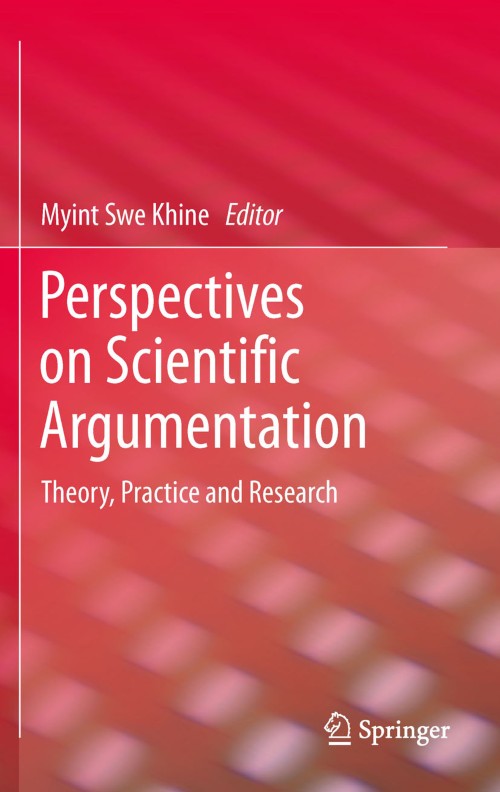
Perspectives on Scientific Argumentation [electronic resource] : Theory, Practice and Research / edited by Myint Swe Khine.
Erişim Adresi
ISBN
9789400724709
Dil Kodu
İngilizce
Yer Numarası
DK/11955
Basım Bildirimi
1st ed. 2012.
Yayın Bilgisi
Dordrecht : Springer Netherlands : Imprint: Springer, 2012.
Fiziksel Niteleme
XII, 292 p. online resource.
İçindekiler Notu
Foreword, Deanna Kuhn -- PART I: Theoretical Premises of the Study of Argumentation -- Chapter 1 Introduction, Jonathan Osborne, Anna MacPherson, Alexis Patterson, Evan Szu -- Chapter 2 The Two Faces of Scientific Argumentation: Applications to Global Climate Change, E. Michael Nussbaum, Gale M. Sinatra, Marissa C. Owens -- Chapter 3 The Importance of Embedding Argument within Science Classrooms, Andy Cavagnetto, Brian Hand -- Chapter 4 Scientific Reasoning and Argumentation from a Bayesian Perspective, Evan Szu, Jonathan Osborne -- Chapter 5 Students’ Framings and Their Participation in Scientific Argumentation, Leema Kuhn Berland, David Hammer -- PART II: Practice Perspectives in Argumentation, Chapter 6 The Design and Enactment of Argumentation Activities, Shirley Simon, Katherine Richardson, Ruth Amos -- Chapter 7 Argumentation and Reasoning in Life and in School: Implications for the Design of School Science Learning Environments, Leah Bricker, Philip Bell -- Chapter 8 Argumentation and Evaluation Intervention in Science Classes: Teaching and Learning with Toulmin, Janis A. Bulgren, James D. Ellis -- PART III: Researching Argumentation in Science Education -- Chapter 9 Research on Critique and Argumentation from the Technology Enhanced Learning in Science Center, Douglas Clark, Jennifer Chiu, Hsin-Yi Chang, Victor Sampson, Beat Schwendimann, Erika Tate, Helen Zhang -- Chapter 10 Evaluating Arguments about Climate Change, Adam Corner -- Chapter 11 The Effects of University Students’ Argumentation on Socio-scientific Issues via On-line Discussion in Their Informal Reasoning Regarding this Issue, Ying-Tien Wu, JhongLi, Taiwan, Chin-Chung Tsai -- Chapter 12 The Development and Validation of the Assessment of Scientific Argumentation in the Classroom (ASAC) Observation Protocol: A Tool for Evaluating How Students Participate in Scientific Argumentation, Victor Sampson, Patrick J. Enderle, Joi P. Walker -- Chapter 13 Beyond Argumentation: The Rich Complexity of Discoursein Science Classroom, Scott McDonald, Gregory Kelly -- Chapter 14 Development of Augmentative Knowledge in Science Education, Myint Swe Khine.
Özet, vb.
Argumentation—arriving at conclusions on a topic through a process of logical reasoning that includes debate and persuasion— has in recent years emerged as a central topic of discussion among science educators and researchers. There is now a firm and general belief that fostering argumentation in learning activities can develop students’ critical thinking and reasoning skills, and that dialogic and collaborative inquiries are key precursors to an engagement in scientific argumentation. It is also reckoned that argumentation helps students assimilate knowledge and generate complex meaning. The consensus among educators is that involving students in scientific argumentation must play a critical role in the education process itself. Recent analysis of research trends in science education indicates that argumentation is now the most prevalent research topic in the literature. This book attempts to consolidate contemporary thinking and research on the role of scientific argumentation in education. Perspectives on Scientific Argumentation brings together prominent scholars in the field to share the sum of their knowledge about the place of scientific argumentation in teaching and learning. Chapters explore scientific argumentation as a means of addressing and solving problems in conceptual change, reasoning, knowledge-building and the promotion of scientific literacy. Others interrogate topics such as the importance of language, discursive practice, social interactions and culture in the classroom. The material in this book, which features intervention studies, discourse analyses, classroom-based experiments, anthropological observations, and design-based research, will inform theoretical frameworks and changing pedagogical practices as well as encourage new avenues of research. “This book critically examines argumentation in science classrooms both in terms of underlying theories and practical application.It describes the most recent research into a topic that has already become one of the most important in science education this decade. I commend it to researchers, teachers and policy-makers alike.” Justin Dillon Professor of Science and Environmental Education, King’s College London President, European Science Education Research Association (ESERA) Justin Dillon Professor of Science and Environmental Education, King’s College London President, European Science Education Research Association (ESERA).
Konu
Science __ Study and teaching.
Teachers __ Training of.
Learning, Psychology of.
Education __ Curricula.
Science Education.
Teaching and Teacher Education.
Instructional Psychology.
Curriculum Studies.
Teachers __ Training of.
Learning, Psychology of.
Education __ Curricula.
Science Education.
Teaching and Teacher Education.
Instructional Psychology.
Curriculum Studies.
Diğer Yazarlar
Kurum Adı
Eseri Alıntıla
Referansları kullanmadan önce gözden geçirmeniz ve varsa gerekli düzeltmeleri yapmanız önerilir.
Dijital Kaynak
MARC Görünümü
LEADER 06458nam a22005415i 4500
001 810681
003 TR_AnAIT
005 20260131014256
007 cr nn 008mamaa
008 110928s2012 ne | s |||| 0|eng d
020 |a9789400724709|9978-94-007-2470-9
024 7 |a10.1007/978-94-007-2470-9|2doi
041 |aeng
049 |aTürk Tarih Kurumu Kütüphanesi
050 4|aQ181-183.4
072 7|aJNU|2bicssc
072 7|aPD|2bicssc
072 7|aSCI063000|2bisacsh
072 7|aJNU|2thema
072 7|aPD|2thema
082 04|a507.1|223
090 |aDK/11955
245 10|aPerspectives on Scientific Argumentation|h[electronic resource] :|bTheory, Practice and Research /|cedited by Myint Swe Khine.
250 |a1st ed. 2012.
264 1|aDordrecht :|bSpringer Netherlands :|bImprint: Springer,|c2012.
300 |aXII, 292 p.|bonline resource.
336 |atext|btxt|2rdacontent
337 |acomputer|bc|2rdamedia
338 |aonline resource|bcr|2rdacarrier
347 |atext file|bPDF|2rda
505 0 |aForeword, Deanna Kuhn -- PART I: Theoretical Premises of the Study of Argumentation -- Chapter 1 Introduction, Jonathan Osborne, Anna MacPherson, Alexis Patterson, Evan Szu -- Chapter 2 The Two Faces of Scientific Argumentation: Applications to Global Climate Change, E. Michael Nussbaum, Gale M. Sinatra, Marissa C. Owens -- Chapter 3 The Importance of Embedding Argument within Science Classrooms, Andy Cavagnetto, Brian Hand -- Chapter 4 Scientific Reasoning and Argumentation from a Bayesian Perspective, Evan Szu, Jonathan Osborne -- Chapter 5 Students’ Framings and Their Participation in Scientific Argumentation, Leema Kuhn Berland, David Hammer -- PART II: Practice Perspectives in Argumentation, Chapter 6 The Design and Enactment of Argumentation Activities, Shirley Simon, Katherine Richardson, Ruth Amos -- Chapter 7 Argumentation and Reasoning in Life and in School: Implications for the Design of School Science Learning Environments, Leah Bricker, Philip Bell -- Chapter 8 Argumentation and Evaluation Intervention in Science Classes: Teaching and Learning with Toulmin, Janis A. Bulgren, James D. Ellis -- PART III: Researching Argumentation in Science Education -- Chapter 9 Research on Critique and Argumentation from the Technology Enhanced Learning in Science Center, Douglas Clark, Jennifer Chiu, Hsin-Yi Chang, Victor Sampson, Beat Schwendimann, Erika Tate, Helen Zhang -- Chapter 10 Evaluating Arguments about Climate Change, Adam Corner -- Chapter 11 The Effects of University Students’ Argumentation on Socio-scientific Issues via On-line Discussion in Their Informal Reasoning Regarding this Issue, Ying-Tien Wu, JhongLi, Taiwan, Chin-Chung Tsai -- Chapter 12 The Development and Validation of the Assessment of Scientific Argumentation in the Classroom (ASAC) Observation Protocol: A Tool for Evaluating How Students Participate in Scientific Argumentation, Victor Sampson, Patrick J. Enderle, Joi P. Walker -- Chapter 13 Beyond Argumentation: The Rich Complexity of Discoursein Science Classroom, Scott McDonald, Gregory Kelly -- Chapter 14 Development of Augmentative Knowledge in Science Education, Myint Swe Khine.
520 |aArgumentation—arriving at conclusions on a topic through a process of logical reasoning that includes debate and persuasion— has in recent years emerged as a central topic of discussion among science educators and researchers. There is now a firm and general belief that fostering argumentation in learning activities can develop students’ critical thinking and reasoning skills, and that dialogic and collaborative inquiries are key precursors to an engagement in scientific argumentation. It is also reckoned that argumentation helps students assimilate knowledge and generate complex meaning. The consensus among educators is that involving students in scientific argumentation must play a critical role in the education process itself. Recent analysis of research trends in science education indicates that argumentation is now the most prevalent research topic in the literature. This book attempts to consolidate contemporary thinking and research on the role of scientific argumentation in education. Perspectives on Scientific Argumentation brings together prominent scholars in the field to share the sum of their knowledge about the place of scientific argumentation in teaching and learning. Chapters explore scientific argumentation as a means of addressing and solving problems in conceptual change, reasoning, knowledge-building and the promotion of scientific literacy. Others interrogate topics such as the importance of language, discursive practice, social interactions and culture in the classroom. The material in this book, which features intervention studies, discourse analyses, classroom-based experiments, anthropological observations, and design-based research, will inform theoretical frameworks and changing pedagogical practices as well as encourage new avenues of research. “This book critically examines argumentation in science classrooms both in terms of underlying theories and practical application.It describes the most recent research into a topic that has already become one of the most important in science education this decade. I commend it to researchers, teachers and policy-makers alike.” Justin Dillon Professor of Science and Environmental Education, King’s College London President, European Science Education Research Association (ESERA) Justin Dillon Professor of Science and Environmental Education, King’s College London President, European Science Education Research Association (ESERA).
650 0|aScience|xStudy and teaching.
650 0|aTeachers|xTraining of.
650 0|aLearning, Psychology of.
650 0|aEducation|xCurricula.
650 14|aScience Education.
650 24|aTeaching and Teacher Education.
650 24|aInstructional Psychology.
650 24|aCurriculum Studies.
700 1 |aKhine, Myint Swe.|eeditor.|4edt|4http://id.loc.gov/vocabulary/relators/edt
710 2 |aSpringerLink (Online service)
773 0 |tSpringer Nature eBook
776 08|iPrinted edition:|z9789400724693
776 08|iPrinted edition:|z9789400724716
776 08|iPrinted edition:|z9789400793217
856 40|uhttps://doi.org/10.1007/978-94-007-2470-9
912 |aZDB-2-SHU
912 |aZDB-2-SXED
950 |aHumanities, Social Sciences and Law (SpringerNature-11648)
950 |aEducation (R0) (SpringerNature-43721)
001 810681
003 TR_AnAIT
005 20260131014256
007 cr nn 008mamaa
008 110928s2012 ne | s |||| 0|eng d
020 |a9789400724709|9978-94-007-2470-9
024 7 |a10.1007/978-94-007-2470-9|2doi
041 |aeng
049 |aTürk Tarih Kurumu Kütüphanesi
050 4|aQ181-183.4
072 7|aJNU|2bicssc
072 7|aPD|2bicssc
072 7|aSCI063000|2bisacsh
072 7|aJNU|2thema
072 7|aPD|2thema
082 04|a507.1|223
090 |aDK/11955
245 10|aPerspectives on Scientific Argumentation|h[electronic resource] :|bTheory, Practice and Research /|cedited by Myint Swe Khine.
250 |a1st ed. 2012.
264 1|aDordrecht :|bSpringer Netherlands :|bImprint: Springer,|c2012.
300 |aXII, 292 p.|bonline resource.
336 |atext|btxt|2rdacontent
337 |acomputer|bc|2rdamedia
338 |aonline resource|bcr|2rdacarrier
347 |atext file|bPDF|2rda
505 0 |aForeword, Deanna Kuhn -- PART I: Theoretical Premises of the Study of Argumentation -- Chapter 1 Introduction, Jonathan Osborne, Anna MacPherson, Alexis Patterson, Evan Szu -- Chapter 2 The Two Faces of Scientific Argumentation: Applications to Global Climate Change, E. Michael Nussbaum, Gale M. Sinatra, Marissa C. Owens -- Chapter 3 The Importance of Embedding Argument within Science Classrooms, Andy Cavagnetto, Brian Hand -- Chapter 4 Scientific Reasoning and Argumentation from a Bayesian Perspective, Evan Szu, Jonathan Osborne -- Chapter 5 Students’ Framings and Their Participation in Scientific Argumentation, Leema Kuhn Berland, David Hammer -- PART II: Practice Perspectives in Argumentation, Chapter 6 The Design and Enactment of Argumentation Activities, Shirley Simon, Katherine Richardson, Ruth Amos -- Chapter 7 Argumentation and Reasoning in Life and in School: Implications for the Design of School Science Learning Environments, Leah Bricker, Philip Bell -- Chapter 8 Argumentation and Evaluation Intervention in Science Classes: Teaching and Learning with Toulmin, Janis A. Bulgren, James D. Ellis -- PART III: Researching Argumentation in Science Education -- Chapter 9 Research on Critique and Argumentation from the Technology Enhanced Learning in Science Center, Douglas Clark, Jennifer Chiu, Hsin-Yi Chang, Victor Sampson, Beat Schwendimann, Erika Tate, Helen Zhang -- Chapter 10 Evaluating Arguments about Climate Change, Adam Corner -- Chapter 11 The Effects of University Students’ Argumentation on Socio-scientific Issues via On-line Discussion in Their Informal Reasoning Regarding this Issue, Ying-Tien Wu, JhongLi, Taiwan, Chin-Chung Tsai -- Chapter 12 The Development and Validation of the Assessment of Scientific Argumentation in the Classroom (ASAC) Observation Protocol: A Tool for Evaluating How Students Participate in Scientific Argumentation, Victor Sampson, Patrick J. Enderle, Joi P. Walker -- Chapter 13 Beyond Argumentation: The Rich Complexity of Discoursein Science Classroom, Scott McDonald, Gregory Kelly -- Chapter 14 Development of Augmentative Knowledge in Science Education, Myint Swe Khine.
520 |aArgumentation—arriving at conclusions on a topic through a process of logical reasoning that includes debate and persuasion— has in recent years emerged as a central topic of discussion among science educators and researchers. There is now a firm and general belief that fostering argumentation in learning activities can develop students’ critical thinking and reasoning skills, and that dialogic and collaborative inquiries are key precursors to an engagement in scientific argumentation. It is also reckoned that argumentation helps students assimilate knowledge and generate complex meaning. The consensus among educators is that involving students in scientific argumentation must play a critical role in the education process itself. Recent analysis of research trends in science education indicates that argumentation is now the most prevalent research topic in the literature. This book attempts to consolidate contemporary thinking and research on the role of scientific argumentation in education. Perspectives on Scientific Argumentation brings together prominent scholars in the field to share the sum of their knowledge about the place of scientific argumentation in teaching and learning. Chapters explore scientific argumentation as a means of addressing and solving problems in conceptual change, reasoning, knowledge-building and the promotion of scientific literacy. Others interrogate topics such as the importance of language, discursive practice, social interactions and culture in the classroom. The material in this book, which features intervention studies, discourse analyses, classroom-based experiments, anthropological observations, and design-based research, will inform theoretical frameworks and changing pedagogical practices as well as encourage new avenues of research. “This book critically examines argumentation in science classrooms both in terms of underlying theories and practical application.It describes the most recent research into a topic that has already become one of the most important in science education this decade. I commend it to researchers, teachers and policy-makers alike.” Justin Dillon Professor of Science and Environmental Education, King’s College London President, European Science Education Research Association (ESERA) Justin Dillon Professor of Science and Environmental Education, King’s College London President, European Science Education Research Association (ESERA).
650 0|aScience|xStudy and teaching.
650 0|aTeachers|xTraining of.
650 0|aLearning, Psychology of.
650 0|aEducation|xCurricula.
650 14|aScience Education.
650 24|aTeaching and Teacher Education.
650 24|aInstructional Psychology.
650 24|aCurriculum Studies.
700 1 |aKhine, Myint Swe.|eeditor.|4edt|4http://id.loc.gov/vocabulary/relators/edt
710 2 |aSpringerLink (Online service)
773 0 |tSpringer Nature eBook
776 08|iPrinted edition:|z9789400724693
776 08|iPrinted edition:|z9789400724716
776 08|iPrinted edition:|z9789400793217
856 40|uhttps://doi.org/10.1007/978-94-007-2470-9
912 |aZDB-2-SHU
912 |aZDB-2-SXED
950 |aHumanities, Social Sciences and Law (SpringerNature-11648)
950 |aEducation (R0) (SpringerNature-43721)
Materyaller
Depodan talep edilen materyal sadece kütüphane içerisinde kullanılmaktadır.
Materyal dışarıya ödünç verilmemektedir.
Materyal dışarıya ödünç verilmemektedir.
