LEADER 03721nam a22004935i 4500
001 810719
003 TR_AnAIT
005 20260131014121
007 cr nn 008mamaa
008 111111s2011 ne | s |||| 0|eng d
020 |a9789460913709|9978-94-6091-370-9
024 7 |a10.1007/978-94-6091-370-9|2doi
041 |aeng
049 |aTürk Tarih Kurumu Kütüphanesi
050 4|aQ181-183.4
072 7|aJNU|2bicssc
072 7|aPD|2bicssc
072 7|aSCI063000|2bisacsh
072 7|aJNU|2thema
072 7|aPD|2thema
082 04|a507.1|223
090 |aDK/11992
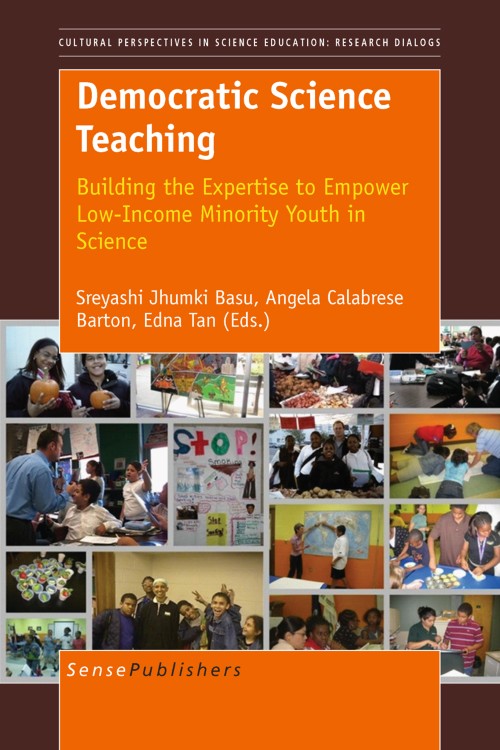
245 10|aDemocratic Science Teaching: Building the Expertise to Empower Low-Income Minority Youth in Science|h[electronic resource] /|cedited by Sreyashi Jhumki Basu, Angela Calabrese Barton, Edna Tan.
250 |a1st ed. 2011.
264 1|aRotterdam :|bSensePublishers :|bImprint: SensePublishers,|c2011.
300 |aVI, 127 p.|bonline resource.
336 |atext|btxt|2rdacontent
337 |acomputer|bc|2rdamedia
338 |aonline resource|bcr|2rdacarrier
347 |atext file|bPDF|2rda
490 1 |aCultural Perspectives in Science Education ;|v3
520 |aDemocratic science pedagogy has the potential to shape learning outcomes and science engagement by taking on directly issues of pedagogy, learning, and social justice. In this text we provide a framework for democratic science teaching in order to interrogate the purposes and goals of science education in classrooms globally, as well as to call attention to ways of being in the classroom that position teachers and students as important and powerful participants in their own learning and as change-agents of a larger global society. We develop three core conceptual tools for democratic science teaching, that together frame ways of thinking and being in classrooms that work towards a more just world: Voice, Authority, and Critical Science Literacy. Each conceptual tool is developed in the introductory chapters then taken up in different pedagogical and analytic ways in the chapters that span the text. The chapters present researcher, teacher, and student centered lenses for investigating democratic science education and reflect elementary through high school education, both in school and out of school, in the US and globally.
532 8 |aAccessibility summary: This PDF eBook is produced by a third-party. We have requested that the file be made accessible and compliant with the European Accessibility Act (EAA). However, we have not been able to fully verify its compliance with recognized accessibility standards (such as PDF/UA or WCAG). For detailed accessibility information, please refer to the original publisher’s website. If you require an accessible version of this content, please contact accessibilitysupport@springernature.com. We are committed to improving accessibility and will work with the publisher to meet your needs wherever possible.
532 8 |aPublisher contact for further accessibility information: accessibilitysupport@springernature.com
650 0|aScience|xStudy and teaching.
650 14|aScience Education.
700 1 |aJhumki Basu, Sreyashi.|eeditor.|4edt|4http://id.loc.gov/vocabulary/relators/edt
700 1 |aCalabrese Barton, Angela.|eeditor.|4edt|4http://id.loc.gov/vocabulary/relators/edt
700 1 |aTan, Edna.|eeditor.|4edt|4http://id.loc.gov/vocabulary/relators/edt
710 2 |aSpringerLink (Online service)
773 0 |tSpringer Nature eBook
830 0|aCultural Perspectives in Science Education ;|v3
856 40|uhttps://doi.org/10.1007/978-94-6091-370-9
912 |aZDB-2-SHU
912 |aZDB-2-SXED
950 |aHumanities, Social Sciences and Law (SpringerNature-11648)
950 |aEducation (R0) (SpringerNature-43721)