

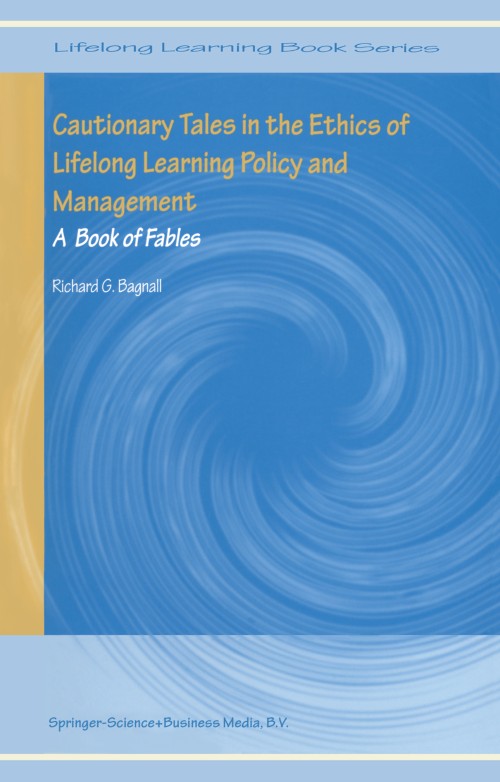
Cautionary Tales in the Ethics of Lifelong Learning Policy and Management [electronic resource] : A Book of Fables / by Richard G. Bagnall.
Erişim Adresi
ISBN
9781402022159
Dil Kodu
İngilizce
Yer Numarası
DK/12027
Yazar
Basım Bildirimi
1st ed. 2004.
Yayın Bilgisi
Dordrecht : Springer Netherlands : Imprint: Springer, 2004.
Fiziksel Niteleme
XVI, 193 p. online resource.
Dizi
Lifelong Learning Book Series, 2730-5325 ; 1
İçindekiler Notu
1 The Cultural Context -- 2 The Ethical Perspective -- 3 The Fable of Learning -- 4 The Fable of the Individual -- 5 The Fable of Outcomes -- 6 The Fable of Context -- 7 The Fable of Vocation -- 8 The Fable of Education and Training -- 9 The Fable of Education as Literacy -- 10 The Fable of Accountability -- 11 The Fable of Standards -- 12 The Fable of Technique -- 13 The Fable of Flexibility -- 14 The Fable of the Educational Market -- 15 The Fable of the Educational Contract -- 16 The Fable of the Educational Project -- 17 The Fable of the Educational Manager -- 18 The Fable of the International Provider -- 19 The Fable of the Educational Requirement -- 20 The Fable of the Present Moment -- 21 The Fable of the Educational Partisan -- 22 The Fable of Education as a Commodity -- 23 The Fable of Discriminative Injustice -- 24 In Closing -- References.
Özet, vb.
This work is concerned with appraising the contemporary ethical impact of lifelong learning ideology and advocacy on education, through focusing on trends in educational policy and management that flow from the ideology. It has its origins in the author's concern that many of those trends are being defmed and promoted, or opposed, without an adequate understanding of their ethical dimensions. The 21 trends examined in this work are seen as defming important dimensions of the quite radical changes in educational policy and management that are flowing from the practical realisation of lifelong learning ideology and advocacy. In here evaluating those trends from an ethical perspective, the thesis is developed that they lead inevitably to distinctive ethical dilemmas or tensions in the lived experience of educational participants. The dilemmas, though, are not seen as realities that can intelligently be either avoided or resolved. They are, rather, inescapable features of the trends, although they and the experience of them may be managed intelligently to a greater or lesser extent. This analysis is premised on the belief that an understanding of the dilemmas may be of practical value in assisting educators, and policy makers and managers, to live and work more intelligently with them and to better manage the educational changes that are defmed by the trends. It may thereby contribute to moderating the excesses, sillinesses, and inanities so often evident in the directing and managing of refonns associated with the trends and to reduce the anguish and pain associated with them.
Konu
Education.
School management and organization.
School administration.
Education __ Philosophy.
Ethics.
Education.
Organization and Leadership.
Philosophy of Education.
Moral Philosophy and Applied Ethics.
School management and organization.
School administration.
Education __ Philosophy.
Ethics.
Education.
Organization and Leadership.
Philosophy of Education.
Moral Philosophy and Applied Ethics.
Kurum Adı
Eseri Alıntıla
Referansları kullanmadan önce gözden geçirmeniz ve varsa gerekli düzeltmeleri yapmanız önerilir.
Dijital Kaynak
MARC Görünümü
LEADER 05207nam a22006135i 4500
001 810754
003 TR_AnAIT
005 20260131013941
007 cr nn 008mamaa
008 130107s2004 ne | s |||| 0|eng d
020 |a9781402022159|9978-1-4020-2215-9
024 7 |a10.1007/978-1-4020-2215-9|2doi
041 |aeng
049 |aTürk Tarih Kurumu Kütüphanesi
050 4|aL1-991
072 7|aJN|2bicssc
072 7|aEDU000000|2bisacsh
072 7|aJN|2thema
082 04|a370|223
090 |aDK/12027
100 1 |aBagnall, Richard G.|eauthor.|4aut|4http://id.loc.gov/vocabulary/relators/aut
245 10|aCautionary Tales in the Ethics of Lifelong Learning Policy and Management|h[electronic resource] :|bA Book of Fables /|cby Richard G. Bagnall.
250 |a1st ed. 2004.
264 1|aDordrecht :|bSpringer Netherlands :|bImprint: Springer,|c2004.
300 |aXVI, 193 p.|bonline resource.
336 |atext|btxt|2rdacontent
337 |acomputer|bc|2rdamedia
338 |aonline resource|bcr|2rdacarrier
347 |atext file|bPDF|2rda
490 1 |aLifelong Learning Book Series,|x2730-5325 ;|v1
505 0 |a1 The Cultural Context -- 2 The Ethical Perspective -- 3 The Fable of Learning -- 4 The Fable of the Individual -- 5 The Fable of Outcomes -- 6 The Fable of Context -- 7 The Fable of Vocation -- 8 The Fable of Education and Training -- 9 The Fable of Education as Literacy -- 10 The Fable of Accountability -- 11 The Fable of Standards -- 12 The Fable of Technique -- 13 The Fable of Flexibility -- 14 The Fable of the Educational Market -- 15 The Fable of the Educational Contract -- 16 The Fable of the Educational Project -- 17 The Fable of the Educational Manager -- 18 The Fable of the International Provider -- 19 The Fable of the Educational Requirement -- 20 The Fable of the Present Moment -- 21 The Fable of the Educational Partisan -- 22 The Fable of Education as a Commodity -- 23 The Fable of Discriminative Injustice -- 24 In Closing -- References.
520 |aThis work is concerned with appraising the contemporary ethical impact of lifelong learning ideology and advocacy on education, through focusing on trends in educational policy and management that flow from the ideology. It has its origins in the author's concern that many of those trends are being defmed and promoted, or opposed, without an adequate understanding of their ethical dimensions. The 21 trends examined in this work are seen as defming important dimensions of the quite radical changes in educational policy and management that are flowing from the practical realisation of lifelong learning ideology and advocacy. In here evaluating those trends from an ethical perspective, the thesis is developed that they lead inevitably to distinctive ethical dilemmas or tensions in the lived experience of educational participants. The dilemmas, though, are not seen as realities that can intelligently be either avoided or resolved. They are, rather, inescapable features of the trends, although they and the experience of them may be managed intelligently to a greater or lesser extent. This analysis is premised on the belief that an understanding of the dilemmas may be of practical value in assisting educators, and policy makers and managers, to live and work more intelligently with them and to better manage the educational changes that are defmed by the trends. It may thereby contribute to moderating the excesses, sillinesses, and inanities so often evident in the directing and managing of refonns associated with the trends and to reduce the anguish and pain associated with them.
532 8 |aAccessibility summary: This PDF is not accessible. It is based on scanned pages and does not support features such as screen reader compatibility or described non-text content (images, graphs etc). However, it likely supports searchable and selectable text based on OCR (Optical Character Recognition). Users with accessibility needs may not be able to use this content effectively. Please contact us at accessibilitysupport@springernature.com if you require assistance or an alternative format.
532 8 |aInaccessible, or known limited accessibility
532 8 |aNo reading system accessibility options actively disabled
532 8 |aPublisher contact for further accessibility information: accessibilitysupport@springernature.com
650 0|aEducation.
650 0|aSchool management and organization.
650 0|aSchool administration.
650 0|aEducation|xPhilosophy.
650 0|aEthics.
650 14|aEducation.
650 24|aOrganization and Leadership.
650 24|aPhilosophy of Education.
650 24|aMoral Philosophy and Applied Ethics.
710 2 |aSpringerLink (Online service)
773 0 |tSpringer Nature eBook
776 08|iPrinted edition:|z9781402022135
776 08|iPrinted edition:|z9781402022142
776 08|iPrinted edition:|z9789401570046
830 0|aLifelong Learning Book Series,|x2730-5325 ;|v1
856 40|uhttps://doi.org/10.1007/978-1-4020-2215-9
912 |aZDB-2-SHU
912 |aZDB-2-SXED
912 |aZDB-2-BAE
950 |aHumanities, Social Sciences and Law (SpringerNature-11648)
950 |aEducation (R0) (SpringerNature-43721)
001 810754
003 TR_AnAIT
005 20260131013941
007 cr nn 008mamaa
008 130107s2004 ne | s |||| 0|eng d
020 |a9781402022159|9978-1-4020-2215-9
024 7 |a10.1007/978-1-4020-2215-9|2doi
041 |aeng
049 |aTürk Tarih Kurumu Kütüphanesi
050 4|aL1-991
072 7|aJN|2bicssc
072 7|aEDU000000|2bisacsh
072 7|aJN|2thema
082 04|a370|223
090 |aDK/12027
100 1 |aBagnall, Richard G.|eauthor.|4aut|4http://id.loc.gov/vocabulary/relators/aut
245 10|aCautionary Tales in the Ethics of Lifelong Learning Policy and Management|h[electronic resource] :|bA Book of Fables /|cby Richard G. Bagnall.
250 |a1st ed. 2004.
264 1|aDordrecht :|bSpringer Netherlands :|bImprint: Springer,|c2004.
300 |aXVI, 193 p.|bonline resource.
336 |atext|btxt|2rdacontent
337 |acomputer|bc|2rdamedia
338 |aonline resource|bcr|2rdacarrier
347 |atext file|bPDF|2rda
490 1 |aLifelong Learning Book Series,|x2730-5325 ;|v1
505 0 |a1 The Cultural Context -- 2 The Ethical Perspective -- 3 The Fable of Learning -- 4 The Fable of the Individual -- 5 The Fable of Outcomes -- 6 The Fable of Context -- 7 The Fable of Vocation -- 8 The Fable of Education and Training -- 9 The Fable of Education as Literacy -- 10 The Fable of Accountability -- 11 The Fable of Standards -- 12 The Fable of Technique -- 13 The Fable of Flexibility -- 14 The Fable of the Educational Market -- 15 The Fable of the Educational Contract -- 16 The Fable of the Educational Project -- 17 The Fable of the Educational Manager -- 18 The Fable of the International Provider -- 19 The Fable of the Educational Requirement -- 20 The Fable of the Present Moment -- 21 The Fable of the Educational Partisan -- 22 The Fable of Education as a Commodity -- 23 The Fable of Discriminative Injustice -- 24 In Closing -- References.
520 |aThis work is concerned with appraising the contemporary ethical impact of lifelong learning ideology and advocacy on education, through focusing on trends in educational policy and management that flow from the ideology. It has its origins in the author's concern that many of those trends are being defmed and promoted, or opposed, without an adequate understanding of their ethical dimensions. The 21 trends examined in this work are seen as defming important dimensions of the quite radical changes in educational policy and management that are flowing from the practical realisation of lifelong learning ideology and advocacy. In here evaluating those trends from an ethical perspective, the thesis is developed that they lead inevitably to distinctive ethical dilemmas or tensions in the lived experience of educational participants. The dilemmas, though, are not seen as realities that can intelligently be either avoided or resolved. They are, rather, inescapable features of the trends, although they and the experience of them may be managed intelligently to a greater or lesser extent. This analysis is premised on the belief that an understanding of the dilemmas may be of practical value in assisting educators, and policy makers and managers, to live and work more intelligently with them and to better manage the educational changes that are defmed by the trends. It may thereby contribute to moderating the excesses, sillinesses, and inanities so often evident in the directing and managing of refonns associated with the trends and to reduce the anguish and pain associated with them.
532 8 |aAccessibility summary: This PDF is not accessible. It is based on scanned pages and does not support features such as screen reader compatibility or described non-text content (images, graphs etc). However, it likely supports searchable and selectable text based on OCR (Optical Character Recognition). Users with accessibility needs may not be able to use this content effectively. Please contact us at accessibilitysupport@springernature.com if you require assistance or an alternative format.
532 8 |aInaccessible, or known limited accessibility
532 8 |aNo reading system accessibility options actively disabled
532 8 |aPublisher contact for further accessibility information: accessibilitysupport@springernature.com
650 0|aEducation.
650 0|aSchool management and organization.
650 0|aSchool administration.
650 0|aEducation|xPhilosophy.
650 0|aEthics.
650 14|aEducation.
650 24|aOrganization and Leadership.
650 24|aPhilosophy of Education.
650 24|aMoral Philosophy and Applied Ethics.
710 2 |aSpringerLink (Online service)
773 0 |tSpringer Nature eBook
776 08|iPrinted edition:|z9781402022135
776 08|iPrinted edition:|z9781402022142
776 08|iPrinted edition:|z9789401570046
830 0|aLifelong Learning Book Series,|x2730-5325 ;|v1
856 40|uhttps://doi.org/10.1007/978-1-4020-2215-9
912 |aZDB-2-SHU
912 |aZDB-2-SXED
912 |aZDB-2-BAE
950 |aHumanities, Social Sciences and Law (SpringerNature-11648)
950 |aEducation (R0) (SpringerNature-43721)
Materyaller
Depodan talep edilen materyal sadece kütüphane içerisinde kullanılmaktadır.
Materyal dışarıya ödünç verilmemektedir.
Materyal dışarıya ödünç verilmemektedir.
