LEADER 03775nam a22005055i 4500
001 810772
003 TR_AnAIT
005 20260131013827
007 cr nn 008mamaa
008 100301s2002 xxu| s |||| 0|eng d
020 |a9780306471964|9978-0-306-47196-4
024 7 |a10.1007/b110676|2doi
041 |aeng
049 |aTürk Tarih Kurumu Kütüphanesi
050 4|aCC1-960
072 7|aHD|2bicssc
072 7|aSOC003000|2bisacsh
072 7|aNK|2thema
082 04|a930.1|223
090 |aDK/12045
100 1 |aO'Brien, Michael J.|eauthor.|4aut|4http://id.loc.gov/vocabulary/relators/aut
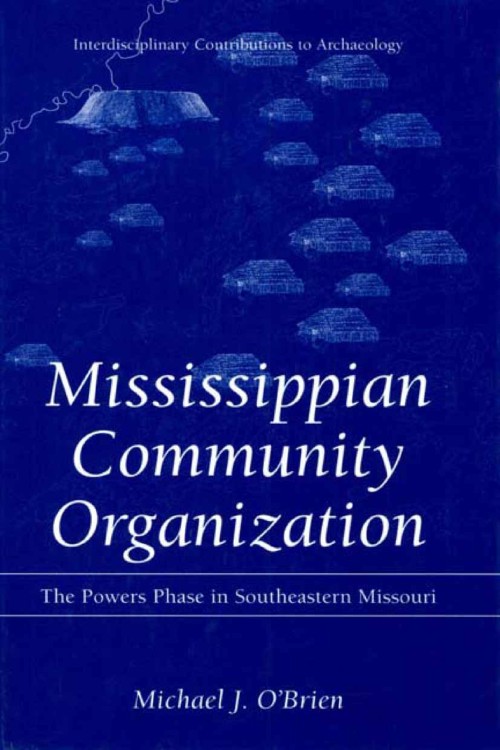
245 10|aMississippian Community Organization|h[electronic resource] :|bThe Powers Phase in Southeastern Missouri /|cby Michael J. O'Brien.
250 |a1st ed. 2002.
264 1|aNew York, NY :|bSpringer US :|bImprint: Springer,|c2002.
300 |aXXIII, 327 p.|bonline resource.
336 |atext|btxt|2rdacontent
337 |acomputer|bc|2rdamedia
338 |aonline resource|bcr|2rdacarrier
347 |atext file|bPDF|2rda
490 1 |aInterdisciplinary Contributions to Archaeology,|x2730-6984
505 0 |aThe Powers Phase: An Introduction -- The General Physical and Cultural Environment -- The Physical-Environmental Context of Powers Phase Settlements -- Powers Phase Settlement in the Western Lowlands -- Community Organization and Dates of Occupation -- The Construction and Abandonment of Powers Phase Structures -- The Artifactual Content of Selected House Floors at Turner and Snodgrass -- Stone Artifacts from Turner and Snodgrass -- Pottery from Turner and Snodgrass -- Concluding Remarks.
520 |aThe Powers Phase Project was a multiyear archaeological program undertaken in southeastern Missouri by the University of Michigan in the late 1960s and early 1970s. The project focused on the occupation of a large Pleistocene-age terrace in the Little Black River Lowland—a large expanse of lowlying land just east of the Ozark Highland—between roughly A. D. 1250 and A. D. 1400. The largest site in the region is Powers Fort—a palisaded mound center that - ceived archaeological attention as early as the late nineteenth century. Archa- logical surveys conducted south of Powers Fort in the 1960s revealed the pr- ence of numerous smaller sites of varying size that contained artifact assemblages similar to those from the larger center. Collectively the settlement aggregation became known as the Powers phase. Test excavations indicated that at least some of the smaller sites contained burned structures and that the burning had sealed household items on the floors below the collapsed architectural e- ments. Thus there appeared to be an opportunity to examine a late prehistoric settlement system to a degree not possible previously. Not only could the s- tial relation of communities in the system be ascertained, but the fact that str- tures within the communities had burned appeared to provide a unique opp- tunity to examine such things as differences in household items between and among structures and where various activities had occurred within a house. With these ideas in mind, James B. Griffin and James E.
650 0|aArchaeology.
650 0|aAnthropology.
650 14|aArchaeology.
650 24|aAnthropology.
710 2 |aSpringerLink (Online service)
773 0 |tSpringer Nature eBook
776 08|iPrinted edition:|z9780306464805
776 08|iPrinted edition:|z9781475775419
776 08|iPrinted edition:|z9781475775426
830 0|aInterdisciplinary Contributions to Archaeology,|x2730-6984
856 40|uhttps://doi.org/10.1007/b110676
912 |aZDB-2-SHU
912 |aZDB-2-SXS
912 |aZDB-2-BAE
950 |aHumanities, Social Sciences and Law (SpringerNature-11648)
950 |aSocial Sciences (R0) (SpringerNature-43726)