LEADER 04245nam a22005895i 4500
001 810837
003 TR_AnAIT
005 20260131013423
007 cr nn 008mamaa
008 100301s2003 ne | s |||| 0|eng d
020 |a9780306481574|9978-0-306-48157-4
024 7 |a10.1007/0-306-48157-X|2doi
041 |aeng
049 |aTürk Tarih Kurumu Kütüphanesi
050 4|aLC1051-1072
050 4|aLC1041-1048
072 7|aJNRV|2bicssc
072 7|aEDU046000|2bisacsh
072 7|aJNRV|2thema
082 04|a370.113|223
090 |aDK/12109
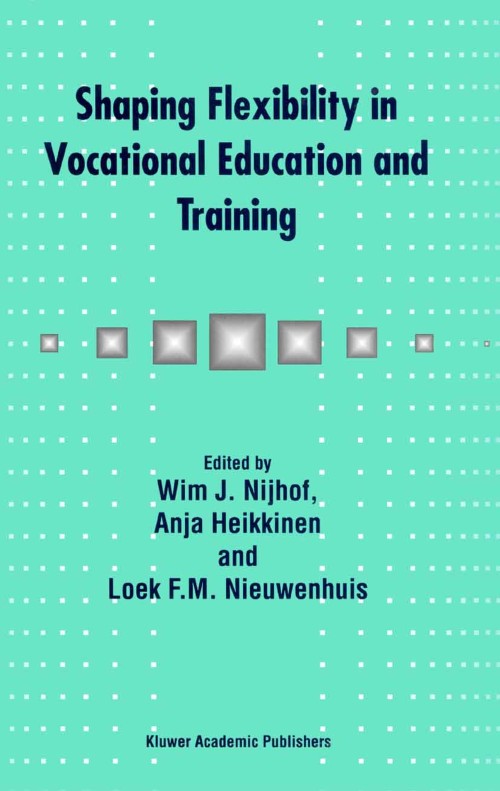
245 10|aShaping Flexibility in Vocational Education and Training|h[electronic resource] :|bInstitutional, Curricular and Professional Conditions /|cedited by W.J. Nijhof, Anja Heikkinen, Loek F.M. Nieuwenhuis.
250 |a1st ed. 2003.
264 1|aDordrecht :|bSpringer Netherlands :|bImprint: Springer,|c2003.
300 |aXXII, 274 p.|bonline resource.
336 |atext|btxt|2rdacontent
337 |acomputer|bc|2rdamedia
338 |aonline resource|bcr|2rdacarrier
347 |atext file|bPDF|2rda
505 0 |aShaping conditions for a flexible VET -- Institutional And Organisational Aspects Of Flexibility -- Vocational education and training in transition: From Fordism to a learning economy -- Learning organisations for VET -- Perspectives on institutional and organisational flexibility in VET -- Educational Tools and Resources for Flexibility -- Institutional responses to a flexible unified system -- Demand and supply of qualifications: systems’ change towards flexibility -- Developments in vocational education in Ireland -- From a unified to a flexible vocational system: the Hungarian transition case -- Design and effects of a flexible VET system: a case study in Dutch agricultural education -- Valuing learning outcomes acquired in non-formal settings -- Resources for flexibility: critical comments -- Professional Conditions -- Professionalism as a path for the reform of VET systems -- Transforming VET policies and professionalism: a view from Finland -- HRD as a professional career? Perspectives from Finland, The Netherlands, and the United Kingdom -- Challenges of supporting learning of newly qualified professionals in health care -- The practices of a new VET profession.
520 |aFlexibility seems to be the core concept of economic and educational change in our time. The promise of solutions to many problems at the individual, institutional, and national level evokes as much controversy as acclaim. This might be related to the different perspectives of actors and researchers involved in problem-solving in Vocational Education and Training (VET), where, on the one hand, solutions should be sought in key qualifications and transferability, in changing teaching and learning processes, while, on the other, political, institutional, organisational, and professional conditions are seen as the key interventions to build a responsive workforce on the basis of a re-engineered VET system. Consequently, flexibility in connection with vocational education and training and the labour market has several divergent connotations.
650 0|aProfessional education.
650 0|aVocational education.
650 0|aInternational education .
650 0|aComparative education.
650 0|aEconomic development.
650 0|aEducational sociology.
650 14|aProfessional and Vocational Education.
650 24|aInternational and Comparative Education.
650 24|aEconomic Growth.
650 24|aSociology of Education.
700 1 |aNijhof, W.J.|eeditor.|4edt|4http://id.loc.gov/vocabulary/relators/edt
700 1 |aHeikkinen, Anja.|eeditor.|4edt|4http://id.loc.gov/vocabulary/relators/edt
700 1 |aNieuwenhuis, Loek F.M.|eeditor.|4edt|4http://id.loc.gov/vocabulary/relators/edt
710 2 |aSpringerLink (Online service)
773 0 |tSpringer Nature eBook
776 08|iPrinted edition:|z9781402011450
776 08|iPrinted edition:|z9781402011467
776 08|iPrinted edition:|z9789401742603
856 40|uhttps://doi.org/10.1007/0-306-48157-X
912 |aZDB-2-SHU
912 |aZDB-2-SXED
912 |aZDB-2-BAE
950 |aHumanities, Social Sciences and Law (SpringerNature-11648)
950 |aEducation (R0) (SpringerNature-43721)