

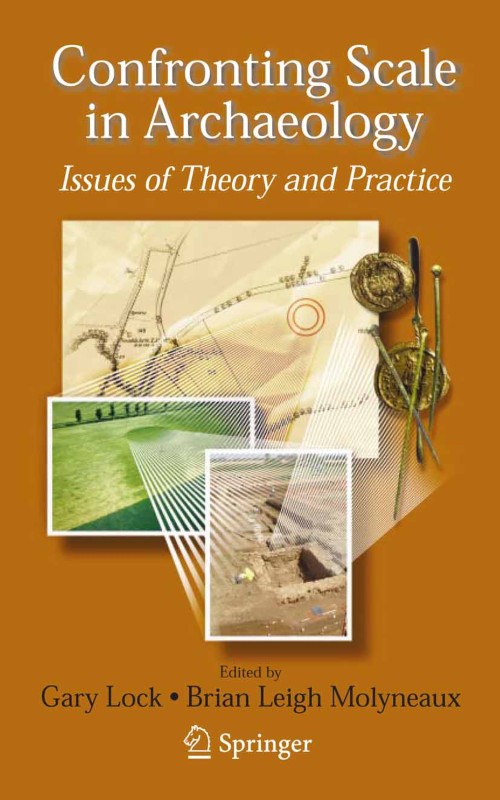
Confronting Scale in Archaeology [electronic resource] : Issues of Theory and Practice / edited by Gary Lock, Brian Molyneaux.
Erişim Adresi
ISBN
9780387327730
Dil Kodu
İngilizce
Yer Numarası
DK/12126
Basım Bildirimi
1st ed. 2006.
Yayın Bilgisi
New York, NY : Springer US : Imprint: Springer, 2006.
Fiziksel Niteleme
XIV, 280 p. online resource.
İçindekiler Notu
Introduction: Confronting Scale -- Introduction: Confronting Scale -- Introducing Scale: Space, Time and Size in The Past and the Present -- On Being the Right Size: Affordances and the Meaning of Scale -- Timescales -- Scale as Artifact: GIS, Ecological Fallacy, and Archaeological Analysis -- Artifacts as Social Interference: The Politics of Spatial Scale -- Constructing Scale: Identifying Problems -- Topographical Scale as Ideological and Practical Affordance: The Case of Devils Tower -- Perspective Matters: Traversing Scale through Archaeological Practice -- Artifacts as Landscapes: A Use-Wear Case Study of Upper Paleolithic Assemblages at the Solutré Kill Site, France -- Scale and Archaeological Evaluations: What are We Looking For? -- Scale, Model Complexity, and Understanding: Simulation of Settlement Processes in the Glenwood Locality of Southwestern Iowa, 1976 and 2000 -- Scale and Its Effects on Understanding Regional Behavioural Systems: An Australian Case Study -- Custer’s Last Battle: Struggling with Scale -- Interpreting Scale: Towards New Methodologies and Understandings -- Temporal Scales and Archaeological Landscapes from the Eastern Desert of Australia and Intermontane North America -- Large Scale, Long Duration and Broad Perceptions: Scale Issues in Historic Landscape Characterisation -- Multiscalar Approaches to Settlement Pattern Analysis -- Grain, Extent, and Intensity: The Components of Scale in Archaeological Survey -- Persons and Landscapes: Shifting Scales of Landscape Archaeology.
Özet, vb.
Without realizing, most archaeologists shift within a scale of interpretation of material culture. Material data is interpreted from the scale of an individual in a specific place and time and then shifts to the complex dynamics of cultural groups extending over time and space. This ignoring of scale is the "concession" archaeologists make to interpretation. The introduction of geographical information systems (GIS) remote sensing, and virtual reality have expanded the scale at which data is interpreted even more, using multiple scales at the same time without recognizing the significance of their actions. This book discusses the cultural, social and spatial aspects of scale and its impact on archaeology in practical and applicable cases. Each author takes one of the fundamental elements of archaeology - from the experience of time and space to the visualization of individuals, sites and landscapes to the intricacies of archaeological discourse - and shows how an awareness of scale can create new and exciting interpretations.
Konu
Archaeology.
Sociology __ Methodology.
Archaeology.
Sociological Methods.
Sociology __ Methodology.
Archaeology.
Sociological Methods.
Diğer Yazarlar
Kurum Adı
Eseri Alıntıla
Referansları kullanmadan önce gözden geçirmeniz ve varsa gerekli düzeltmeleri yapmanız önerilir.
Dijital Kaynak
MARC Görünümü
LEADER 04261nam a22004815i 4500
001 810855
003 TR_AnAIT
005 20260131013342
007 cr nn 008mamaa
008 100301s2006 xxu| s |||| 0|eng d
020 |a9780387327730|9978-0-387-32773-0
024 7 |a10.1007/0-387-32773-8|2doi
041 |aeng
049 |aTürk Tarih Kurumu Kütüphanesi
050 4|aCC1-960
072 7|aHD|2bicssc
072 7|aSOC003000|2bisacsh
072 7|aNK|2thema
082 04|a930.1|223
090 |aDK/12126
245 10|aConfronting Scale in Archaeology|h[electronic resource] :|bIssues of Theory and Practice /|cedited by Gary Lock, Brian Molyneaux.
250 |a1st ed. 2006.
264 1|aNew York, NY :|bSpringer US :|bImprint: Springer,|c2006.
300 |aXIV, 280 p.|bonline resource.
336 |atext|btxt|2rdacontent
337 |acomputer|bc|2rdamedia
338 |aonline resource|bcr|2rdacarrier
347 |atext file|bPDF|2rda
505 0 |aIntroduction: Confronting Scale -- Introduction: Confronting Scale -- Introducing Scale: Space, Time and Size in The Past and the Present -- On Being the Right Size: Affordances and the Meaning of Scale -- Timescales -- Scale as Artifact: GIS, Ecological Fallacy, and Archaeological Analysis -- Artifacts as Social Interference: The Politics of Spatial Scale -- Constructing Scale: Identifying Problems -- Topographical Scale as Ideological and Practical Affordance: The Case of Devils Tower -- Perspective Matters: Traversing Scale through Archaeological Practice -- Artifacts as Landscapes: A Use-Wear Case Study of Upper Paleolithic Assemblages at the Solutré Kill Site, France -- Scale and Archaeological Evaluations: What are We Looking For? -- Scale, Model Complexity, and Understanding: Simulation of Settlement Processes in the Glenwood Locality of Southwestern Iowa, 1976 and 2000 -- Scale and Its Effects on Understanding Regional Behavioural Systems: An Australian Case Study -- Custer’s Last Battle: Struggling with Scale -- Interpreting Scale: Towards New Methodologies and Understandings -- Temporal Scales and Archaeological Landscapes from the Eastern Desert of Australia and Intermontane North America -- Large Scale, Long Duration and Broad Perceptions: Scale Issues in Historic Landscape Characterisation -- Multiscalar Approaches to Settlement Pattern Analysis -- Grain, Extent, and Intensity: The Components of Scale in Archaeological Survey -- Persons and Landscapes: Shifting Scales of Landscape Archaeology.
520 |aWithout realizing, most archaeologists shift within a scale of interpretation of material culture. Material data is interpreted from the scale of an individual in a specific place and time and then shifts to the complex dynamics of cultural groups extending over time and space. This ignoring of scale is the "concession" archaeologists make to interpretation. The introduction of geographical information systems (GIS) remote sensing, and virtual reality have expanded the scale at which data is interpreted even more, using multiple scales at the same time without recognizing the significance of their actions. This book discusses the cultural, social and spatial aspects of scale and its impact on archaeology in practical and applicable cases. Each author takes one of the fundamental elements of archaeology - from the experience of time and space to the visualization of individuals, sites and landscapes to the intricacies of archaeological discourse - and shows how an awareness of scale can create new and exciting interpretations.
650 0|aArchaeology.
650 0|aSociology|xMethodology.
650 14|aArchaeology.
650 24|aSociological Methods.
700 1 |aLock, Gary.|eeditor.|4edt|4http://id.loc.gov/vocabulary/relators/edt
700 1 |aMolyneaux, Brian.|eeditor.|4edt|4http://id.loc.gov/vocabulary/relators/edt
710 2 |aSpringerLink (Online service)
773 0 |tSpringer Nature eBook
776 08|iPrinted edition:|z9780387327723
776 08|iPrinted edition:|z9780387757018
776 08|iPrinted edition:|z9780387512594
856 40|uhttps://doi.org/10.1007/0-387-32773-8
912 |aZDB-2-SHU
912 |aZDB-2-SXS
950 |aHumanities, Social Sciences and Law (SpringerNature-11648)
950 |aSocial Sciences (R0) (SpringerNature-43726)
001 810855
003 TR_AnAIT
005 20260131013342
007 cr nn 008mamaa
008 100301s2006 xxu| s |||| 0|eng d
020 |a9780387327730|9978-0-387-32773-0
024 7 |a10.1007/0-387-32773-8|2doi
041 |aeng
049 |aTürk Tarih Kurumu Kütüphanesi
050 4|aCC1-960
072 7|aHD|2bicssc
072 7|aSOC003000|2bisacsh
072 7|aNK|2thema
082 04|a930.1|223
090 |aDK/12126
245 10|aConfronting Scale in Archaeology|h[electronic resource] :|bIssues of Theory and Practice /|cedited by Gary Lock, Brian Molyneaux.
250 |a1st ed. 2006.
264 1|aNew York, NY :|bSpringer US :|bImprint: Springer,|c2006.
300 |aXIV, 280 p.|bonline resource.
336 |atext|btxt|2rdacontent
337 |acomputer|bc|2rdamedia
338 |aonline resource|bcr|2rdacarrier
347 |atext file|bPDF|2rda
505 0 |aIntroduction: Confronting Scale -- Introduction: Confronting Scale -- Introducing Scale: Space, Time and Size in The Past and the Present -- On Being the Right Size: Affordances and the Meaning of Scale -- Timescales -- Scale as Artifact: GIS, Ecological Fallacy, and Archaeological Analysis -- Artifacts as Social Interference: The Politics of Spatial Scale -- Constructing Scale: Identifying Problems -- Topographical Scale as Ideological and Practical Affordance: The Case of Devils Tower -- Perspective Matters: Traversing Scale through Archaeological Practice -- Artifacts as Landscapes: A Use-Wear Case Study of Upper Paleolithic Assemblages at the Solutré Kill Site, France -- Scale and Archaeological Evaluations: What are We Looking For? -- Scale, Model Complexity, and Understanding: Simulation of Settlement Processes in the Glenwood Locality of Southwestern Iowa, 1976 and 2000 -- Scale and Its Effects on Understanding Regional Behavioural Systems: An Australian Case Study -- Custer’s Last Battle: Struggling with Scale -- Interpreting Scale: Towards New Methodologies and Understandings -- Temporal Scales and Archaeological Landscapes from the Eastern Desert of Australia and Intermontane North America -- Large Scale, Long Duration and Broad Perceptions: Scale Issues in Historic Landscape Characterisation -- Multiscalar Approaches to Settlement Pattern Analysis -- Grain, Extent, and Intensity: The Components of Scale in Archaeological Survey -- Persons and Landscapes: Shifting Scales of Landscape Archaeology.
520 |aWithout realizing, most archaeologists shift within a scale of interpretation of material culture. Material data is interpreted from the scale of an individual in a specific place and time and then shifts to the complex dynamics of cultural groups extending over time and space. This ignoring of scale is the "concession" archaeologists make to interpretation. The introduction of geographical information systems (GIS) remote sensing, and virtual reality have expanded the scale at which data is interpreted even more, using multiple scales at the same time without recognizing the significance of their actions. This book discusses the cultural, social and spatial aspects of scale and its impact on archaeology in practical and applicable cases. Each author takes one of the fundamental elements of archaeology - from the experience of time and space to the visualization of individuals, sites and landscapes to the intricacies of archaeological discourse - and shows how an awareness of scale can create new and exciting interpretations.
650 0|aArchaeology.
650 0|aSociology|xMethodology.
650 14|aArchaeology.
650 24|aSociological Methods.
700 1 |aLock, Gary.|eeditor.|4edt|4http://id.loc.gov/vocabulary/relators/edt
700 1 |aMolyneaux, Brian.|eeditor.|4edt|4http://id.loc.gov/vocabulary/relators/edt
710 2 |aSpringerLink (Online service)
773 0 |tSpringer Nature eBook
776 08|iPrinted edition:|z9780387327723
776 08|iPrinted edition:|z9780387757018
776 08|iPrinted edition:|z9780387512594
856 40|uhttps://doi.org/10.1007/0-387-32773-8
912 |aZDB-2-SHU
912 |aZDB-2-SXS
950 |aHumanities, Social Sciences and Law (SpringerNature-11648)
950 |aSocial Sciences (R0) (SpringerNature-43726)
Materyaller
Depodan talep edilen materyal sadece kütüphane içerisinde kullanılmaktadır.
Materyal dışarıya ödünç verilmemektedir.
Materyal dışarıya ödünç verilmemektedir.
