

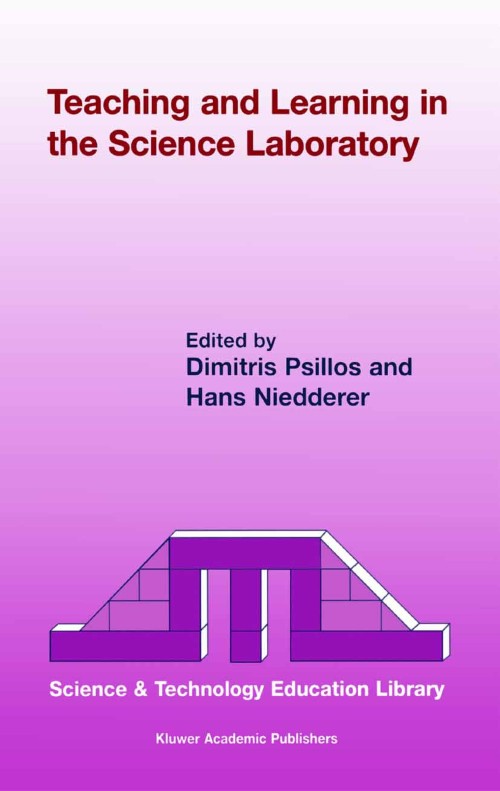
Teaching and Learning in the Science Laboratory [electronic resource] / edited by Dimitris Psillos, H. Niedderer.
Erişim Adresi
ISBN
9780306481963
Dil Kodu
İngilizce
Yer Numarası
DK/12183
Basım Bildirimi
1st ed. 2002.
Yayın Bilgisi
Dordrecht : Springer Netherlands : Imprint: Springer, 2002.
Fiziksel Niteleme
X, 270 p. online resource.
Dizi
Contemporary Trends and Issues in Science Education, 1878-0784 ; 16
İçindekiler Notu
General Introduction -- General Introduction -- Approaching Labwork: Frames and Tools -- Varieties of Labwork: A Way of Profiling Labwork Tasks -- Issues and Questions Regarding the Effectiveness of Labwork -- Talking Physics in Labwork Contexts - A Category Based Analysis of Videotapes -- Students’ Understanding of the Nature of Science and its Influence on Labwork -- Standard Labwork Based on Hands-on Experiments -- Modelling Activities of Students During a Traditional Labwork -- Students’ Intellectual Activities During Standard Labwork at Undergraduate Level -- A Laboratory-based Teaching Learning Sequence on Fluids: Developing Primary Student Teachers’ Conceptual and Procedural Knowledge -- Development and Evaluation of a Laboratory Course in Physics for Medical Students -- The Biology Textbook as a Source of Ideas about Scientific Knowledge and Experimental Activity -- Open-Ended Labwork -- The Role of Epistemological Information in Open-ended Investigative Labwork -- The Effectiveness of Mini-projects as a Preparation for Open-ended Investigations -- Data Interpretation Activities and Students’ Views of the Epistemology of Science during a University Earth Sciences Field Study Course -- Labwork and Data Handling -- The Use of Secondary Data in Teaching about Data Analysis in a First Year Undergraduate Biochemistry Course -- An Investigation of Teaching and Learning about Measurement Data and their Treatment in the Introductory Physics Laboratory -- Labwork Based on Integrated Use of New Information Technology -- Enhancing the Linking of theoretical Knowledge to Physical Phenomena by Real-time Graphing -- The Link of Theory and Practice in Traditional and in Computer-based University Laboratory Experiments -- Computer Tools in the Lab - Effects Linking Theory and Experiment.-Modelling in Geometrical Optics Using a Microcomputer -- Evolution of Students’ Reasoning about Microscopic Processes in Electrostatics under the Influence of Interactive Simulations.
Özet, vb.
Scope of the book There is an on-going debate regarding the role of labwork in science education, which dates back several decades and which illustrates the conviction and interest of teachers, researchers and policy-makers world-wide in the value of laboratory work for understanding science. This is evident in more recent books and studies regarding the laboratory, which mainly refer to countries with a considerable tradition in practical work in science education (Woolnough & Alsop 1985, Hodson 1993, Hegarthy-Hazel 1990, Wellington 2000). Yet in discussing research studies on labwork, several authors express their concern about its effectiveness in facilitating students' understanding of various aspects of scientific inquiry. They point out a comprehensive re-conceptualisation of the aims of labwork and, as a consequence, of investigating what the students actually learn in different contexts (Lazarowitz & Tamir 1994, Tobin & Tippins 1993, Lunetta 1998). It has also been argued that the relationship between instructional activities and student learning in labwork needs more attention than it has been given in science education research (Leach & Paulsen 1999). It appears that the case for research-based labwork emerges in several quarters in science education, particularly among researchers. This book presents and discusses a variety of laboratory practices and their effectiveness. The studies take into account recent theoretical developments and empirical results concerning students' understanding of scientific inquiry. A whole chapter is devoted to technological advances offering new learning opportunities for the students and teaching facilities for the teacher.
Konu
Science __ Study and teaching.
Learning, Psychology of.
Educational technology.
Physics.
Astronomy.
Chemistry.
Science Education.
Instructional Psychology.
Digital Education and Educational Technology.
Physics and Astronomy.
Chemistry.
Learning, Psychology of.
Educational technology.
Physics.
Astronomy.
Chemistry.
Science Education.
Instructional Psychology.
Digital Education and Educational Technology.
Physics and Astronomy.
Chemistry.
Diğer Yazarlar
Kurum Adı
Eseri Alıntıla
Referansları kullanmadan önce gözden geçirmeniz ve varsa gerekli düzeltmeleri yapmanız önerilir.
Dijital Kaynak
MARC Görünümü
LEADER 05902nam a22006255i 4500
001 810917
003 TR_AnAIT
005 20260131013145
007 cr nn 008mamaa
008 100301s2002 ne | s |||| 0|eng d
020 |a9780306481963|9978-0-306-48196-3
024 7 |a10.1007/0-306-48196-0|2doi
041 |aeng
049 |aTürk Tarih Kurumu Kütüphanesi
050 4|aQ181-183.4
072 7|aJNU|2bicssc
072 7|aPD|2bicssc
072 7|aSCI063000|2bisacsh
072 7|aJNU|2thema
072 7|aPD|2thema
082 04|a507.1|223
090 |aDK/12183
245 10|aTeaching and Learning in the Science Laboratory|h[electronic resource] /|cedited by Dimitris Psillos, H. Niedderer.
250 |a1st ed. 2002.
264 1|aDordrecht :|bSpringer Netherlands :|bImprint: Springer,|c2002.
300 |aX, 270 p.|bonline resource.
336 |atext|btxt|2rdacontent
337 |acomputer|bc|2rdamedia
338 |aonline resource|bcr|2rdacarrier
347 |atext file|bPDF|2rda
490 1 |aContemporary Trends and Issues in Science Education,|x1878-0784 ;|v16
505 0 |aGeneral Introduction -- General Introduction -- Approaching Labwork: Frames and Tools -- Varieties of Labwork: A Way of Profiling Labwork Tasks -- Issues and Questions Regarding the Effectiveness of Labwork -- Talking Physics in Labwork Contexts - A Category Based Analysis of Videotapes -- Students’ Understanding of the Nature of Science and its Influence on Labwork -- Standard Labwork Based on Hands-on Experiments -- Modelling Activities of Students During a Traditional Labwork -- Students’ Intellectual Activities During Standard Labwork at Undergraduate Level -- A Laboratory-based Teaching Learning Sequence on Fluids: Developing Primary Student Teachers’ Conceptual and Procedural Knowledge -- Development and Evaluation of a Laboratory Course in Physics for Medical Students -- The Biology Textbook as a Source of Ideas about Scientific Knowledge and Experimental Activity -- Open-Ended Labwork -- The Role of Epistemological Information in Open-ended Investigative Labwork -- The Effectiveness of Mini-projects as a Preparation for Open-ended Investigations -- Data Interpretation Activities and Students’ Views of the Epistemology of Science during a University Earth Sciences Field Study Course -- Labwork and Data Handling -- The Use of Secondary Data in Teaching about Data Analysis in a First Year Undergraduate Biochemistry Course -- An Investigation of Teaching and Learning about Measurement Data and their Treatment in the Introductory Physics Laboratory -- Labwork Based on Integrated Use of New Information Technology -- Enhancing the Linking of theoretical Knowledge to Physical Phenomena by Real-time Graphing -- The Link of Theory and Practice in Traditional and in Computer-based University Laboratory Experiments -- Computer Tools in the Lab - Effects Linking Theory and Experiment.-Modelling in Geometrical Optics Using a Microcomputer -- Evolution of Students’ Reasoning about Microscopic Processes in Electrostatics under the Influence of Interactive Simulations.
520 |aScope of the book There is an on-going debate regarding the role of labwork in science education, which dates back several decades and which illustrates the conviction and interest of teachers, researchers and policy-makers world-wide in the value of laboratory work for understanding science. This is evident in more recent books and studies regarding the laboratory, which mainly refer to countries with a considerable tradition in practical work in science education (Woolnough & Alsop 1985, Hodson 1993, Hegarthy-Hazel 1990, Wellington 2000). Yet in discussing research studies on labwork, several authors express their concern about its effectiveness in facilitating students' understanding of various aspects of scientific inquiry. They point out a comprehensive re-conceptualisation of the aims of labwork and, as a consequence, of investigating what the students actually learn in different contexts (Lazarowitz & Tamir 1994, Tobin & Tippins 1993, Lunetta 1998). It has also been argued that the relationship between instructional activities and student learning in labwork needs more attention than it has been given in science education research (Leach & Paulsen 1999). It appears that the case for research-based labwork emerges in several quarters in science education, particularly among researchers. This book presents and discusses a variety of laboratory practices and their effectiveness. The studies take into account recent theoretical developments and empirical results concerning students' understanding of scientific inquiry. A whole chapter is devoted to technological advances offering new learning opportunities for the students and teaching facilities for the teacher.
650 0|aScience|xStudy and teaching.
650 0|aLearning, Psychology of.
650 0|aEducational technology.
650 0|aPhysics.
650 0|aAstronomy.
650 0|aChemistry.
650 14|aScience Education.
650 24|aInstructional Psychology.
650 24|aDigital Education and Educational Technology.
650 24|aPhysics and Astronomy.
650 24|aChemistry.
700 1 |aPsillos, Dimitris.|eeditor.|4edt|4http://id.loc.gov/vocabulary/relators/edt
700 1 |aNiedderer, H.|eeditor.|4edt|4http://id.loc.gov/vocabulary/relators/edt
710 2 |aSpringerLink (Online service)
773 0 |tSpringer Nature eBook
776 08|iPrinted edition:|z9781402010187
776 08|iPrinted edition:|z9789048161713
776 08|iPrinted edition:|z9789401742573
830 0|aContemporary Trends and Issues in Science Education,|x1878-0784 ;|v16
856 40|uhttps://doi.org/10.1007/0-306-48196-0
912 |aZDB-2-SHU
912 |aZDB-2-SXED
912 |aZDB-2-BAE
950 |aHumanities, Social Sciences and Law (SpringerNature-11648)
950 |aEducation (R0) (SpringerNature-43721)
001 810917
003 TR_AnAIT
005 20260131013145
007 cr nn 008mamaa
008 100301s2002 ne | s |||| 0|eng d
020 |a9780306481963|9978-0-306-48196-3
024 7 |a10.1007/0-306-48196-0|2doi
041 |aeng
049 |aTürk Tarih Kurumu Kütüphanesi
050 4|aQ181-183.4
072 7|aJNU|2bicssc
072 7|aPD|2bicssc
072 7|aSCI063000|2bisacsh
072 7|aJNU|2thema
072 7|aPD|2thema
082 04|a507.1|223
090 |aDK/12183
245 10|aTeaching and Learning in the Science Laboratory|h[electronic resource] /|cedited by Dimitris Psillos, H. Niedderer.
250 |a1st ed. 2002.
264 1|aDordrecht :|bSpringer Netherlands :|bImprint: Springer,|c2002.
300 |aX, 270 p.|bonline resource.
336 |atext|btxt|2rdacontent
337 |acomputer|bc|2rdamedia
338 |aonline resource|bcr|2rdacarrier
347 |atext file|bPDF|2rda
490 1 |aContemporary Trends and Issues in Science Education,|x1878-0784 ;|v16
505 0 |aGeneral Introduction -- General Introduction -- Approaching Labwork: Frames and Tools -- Varieties of Labwork: A Way of Profiling Labwork Tasks -- Issues and Questions Regarding the Effectiveness of Labwork -- Talking Physics in Labwork Contexts - A Category Based Analysis of Videotapes -- Students’ Understanding of the Nature of Science and its Influence on Labwork -- Standard Labwork Based on Hands-on Experiments -- Modelling Activities of Students During a Traditional Labwork -- Students’ Intellectual Activities During Standard Labwork at Undergraduate Level -- A Laboratory-based Teaching Learning Sequence on Fluids: Developing Primary Student Teachers’ Conceptual and Procedural Knowledge -- Development and Evaluation of a Laboratory Course in Physics for Medical Students -- The Biology Textbook as a Source of Ideas about Scientific Knowledge and Experimental Activity -- Open-Ended Labwork -- The Role of Epistemological Information in Open-ended Investigative Labwork -- The Effectiveness of Mini-projects as a Preparation for Open-ended Investigations -- Data Interpretation Activities and Students’ Views of the Epistemology of Science during a University Earth Sciences Field Study Course -- Labwork and Data Handling -- The Use of Secondary Data in Teaching about Data Analysis in a First Year Undergraduate Biochemistry Course -- An Investigation of Teaching and Learning about Measurement Data and their Treatment in the Introductory Physics Laboratory -- Labwork Based on Integrated Use of New Information Technology -- Enhancing the Linking of theoretical Knowledge to Physical Phenomena by Real-time Graphing -- The Link of Theory and Practice in Traditional and in Computer-based University Laboratory Experiments -- Computer Tools in the Lab - Effects Linking Theory and Experiment.-Modelling in Geometrical Optics Using a Microcomputer -- Evolution of Students’ Reasoning about Microscopic Processes in Electrostatics under the Influence of Interactive Simulations.
520 |aScope of the book There is an on-going debate regarding the role of labwork in science education, which dates back several decades and which illustrates the conviction and interest of teachers, researchers and policy-makers world-wide in the value of laboratory work for understanding science. This is evident in more recent books and studies regarding the laboratory, which mainly refer to countries with a considerable tradition in practical work in science education (Woolnough & Alsop 1985, Hodson 1993, Hegarthy-Hazel 1990, Wellington 2000). Yet in discussing research studies on labwork, several authors express their concern about its effectiveness in facilitating students' understanding of various aspects of scientific inquiry. They point out a comprehensive re-conceptualisation of the aims of labwork and, as a consequence, of investigating what the students actually learn in different contexts (Lazarowitz & Tamir 1994, Tobin & Tippins 1993, Lunetta 1998). It has also been argued that the relationship between instructional activities and student learning in labwork needs more attention than it has been given in science education research (Leach & Paulsen 1999). It appears that the case for research-based labwork emerges in several quarters in science education, particularly among researchers. This book presents and discusses a variety of laboratory practices and their effectiveness. The studies take into account recent theoretical developments and empirical results concerning students' understanding of scientific inquiry. A whole chapter is devoted to technological advances offering new learning opportunities for the students and teaching facilities for the teacher.
650 0|aScience|xStudy and teaching.
650 0|aLearning, Psychology of.
650 0|aEducational technology.
650 0|aPhysics.
650 0|aAstronomy.
650 0|aChemistry.
650 14|aScience Education.
650 24|aInstructional Psychology.
650 24|aDigital Education and Educational Technology.
650 24|aPhysics and Astronomy.
650 24|aChemistry.
700 1 |aPsillos, Dimitris.|eeditor.|4edt|4http://id.loc.gov/vocabulary/relators/edt
700 1 |aNiedderer, H.|eeditor.|4edt|4http://id.loc.gov/vocabulary/relators/edt
710 2 |aSpringerLink (Online service)
773 0 |tSpringer Nature eBook
776 08|iPrinted edition:|z9781402010187
776 08|iPrinted edition:|z9789048161713
776 08|iPrinted edition:|z9789401742573
830 0|aContemporary Trends and Issues in Science Education,|x1878-0784 ;|v16
856 40|uhttps://doi.org/10.1007/0-306-48196-0
912 |aZDB-2-SHU
912 |aZDB-2-SXED
912 |aZDB-2-BAE
950 |aHumanities, Social Sciences and Law (SpringerNature-11648)
950 |aEducation (R0) (SpringerNature-43721)
Materyaller
Depodan talep edilen materyal sadece kütüphane içerisinde kullanılmaktadır.
Materyal dışarıya ödünç verilmemektedir.
Materyal dışarıya ödünç verilmemektedir.
