

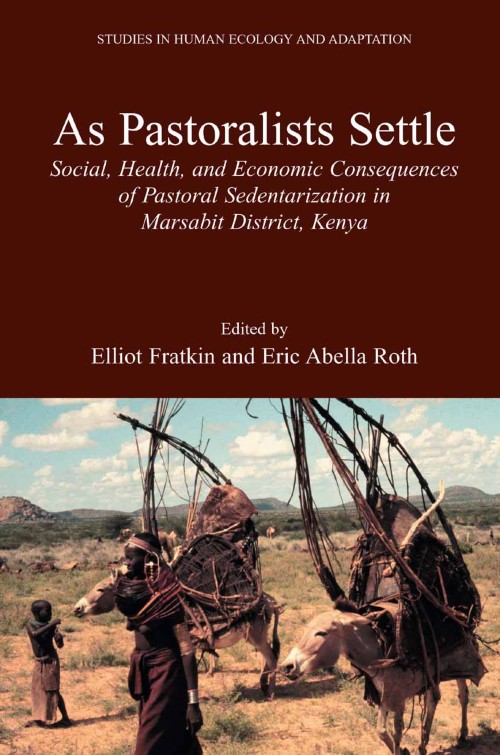
As Pastoralists Settle [electronic resource] : Social, Health, and Economic Consequences of the Pastoral Sedentarization in Marsabit District, Kenya / edited by Elliot Fratkin, Eric Abella Roth.
Erişim Adresi
ISBN
9780306485954
Dil Kodu
İngilizce
Yer Numarası
DK/12189
Basım Bildirimi
1st ed. 2005.
Yayın Bilgisi
New York, NY : Springer US : Imprint: Springer, 2005.
Fiziksel Niteleme
X, 280 p. online resource.
Dizi
Studies in Human Ecology and Adaptation ; 1
İçindekiler Notu
Introduction: The Social, Health, and Economic Consequences of Pastoral Sedentarization in Marsabit District, Northern Kenya -- The Setting: Pastoral Sedentarization in Marsabit District, Northern Kenya -- Time, Terror, and Pastoral Inertia: Sedentarization and Conflict in Northern Kenya -- Ecological and Economic Consequences of Reduced Mobility in Pastoral Livestock Production Systems -- Cursed if you do, Cursed if You Don’t: The contradictory Processes of Pastoral Sedentarization in Northern Kenya -- Once Nomads Settle: Assessing the Process, Motives, and Welfare Changes of Settlements on Mount Marsabit -- From Milk to Maize: The Transition to Agriculture for Rendille and Ariaal Pastoralists -- Women’s Changing Economic Roles with Pastoral Sedentarization: Varying Strategies in Alternate Rendille Communities -- The Effects of Pastoral Sedentarization on Children’s Growth and Nutrition among Ariaal and Rendille in Northern Kenya -- Health and Morbidity among Rendille Pastoralist Children: Effects of Sedentarization -- Sedentarization and Seasonality: Maternal Dietary and Health Consequences in Ariaal and Rendille Communities in Northern Kenya -- Development, Modernization, and Medicalization: Influences on the Changing Nature of Female "Circumcision" in Rendille Society -- Female Education in a Sedentary Ariaal Rendille Community: Paternal Decision-Making and Biosocial Pathways.
Özet, vb.
The Social, Health, and Economic Consequences of Pastoral Sedentarization in Marsabit District, Northern Kenya ERICABELLA ROTH AND ELLIOT FRATKIN 1. INTRODUCTION Formerly nomadic livestock-keeping pastoralists have settled in many regions of the world in the past century. Some groups, including those in the former Soviet Union, Iran, and Israel, have settled in response to state-enforced measures; others including Saami in Norway or Bedouins in Saudi Arabia, in response to changing economic opportunities. East Africa, home to many cattle- and camel-keeping pastoral societies, has been among the most recent to change. The shift to sedentism by East African pastoralists increased d- matically in the late 20th century as a result of sharp economic, political, demographic, and environmental changes. Prolonged drought, population growth, increased reliance on ag- culture, and political insecurities including civil war and ethnic conflict have all affected the ability of pastoralists to keep their herds. Still, the majority of pastoralist households in Kenya, Ethiopia, Somalia, and Tanzania remain committed to raising livestock, even as they adapt to farming or urban residence. Pastoral production remains a major economic focus in the savannas and scrub deserts of Africa, due to both its ecological adaptability and the economic incentive to market livestock and their products (Fratkin, 2001). Pastoralists settle for a variety of reasons, some in response to ‘pushes’away from the pastoral economy, others to the ‘pulls’of urban or agricultural life.
Konu
Anthropology.
Population __ Economic aspects.
Environmental management.
Public health.
Anthropology.
Population Economics.
Environmental Management.
Public Health.
Population __ Economic aspects.
Environmental management.
Public health.
Anthropology.
Population Economics.
Environmental Management.
Public Health.
Diğer Yazarlar
Kurum Adı
Eseri Alıntıla
Referansları kullanmadan önce gözden geçirmeniz ve varsa gerekli düzeltmeleri yapmanız önerilir.
Dijital Kaynak
MARC Görünümü
LEADER 05001nam a22005535i 4500
001 810923
003 TR_AnAIT
005 20260131013140
007 cr nn 008mamaa
008 100301s2005 xxu| s |||| 0|eng d
020 |a9780306485954|9978-0-306-48595-4
024 7 |a10.1007/b107561|2doi
041 |aeng
049 |aTürk Tarih Kurumu Kütüphanesi
050 4|aGN
072 7|aJHM|2bicssc
072 7|aSOC002000|2bisacsh
072 7|aJHM|2thema
082 04|a301|223
090 |aDK/12189
245 10|aAs Pastoralists Settle|h[electronic resource] :|bSocial, Health, and Economic Consequences of the Pastoral Sedentarization in Marsabit District, Kenya /|cedited by Elliot Fratkin, Eric Abella Roth.
250 |a1st ed. 2005.
264 1|aNew York, NY :|bSpringer US :|bImprint: Springer,|c2005.
300 |aX, 280 p.|bonline resource.
336 |atext|btxt|2rdacontent
337 |acomputer|bc|2rdamedia
338 |aonline resource|bcr|2rdacarrier
347 |atext file|bPDF|2rda
490 1 |aStudies in Human Ecology and Adaptation ;|v1
505 0 |aIntroduction: The Social, Health, and Economic Consequences of Pastoral Sedentarization in Marsabit District, Northern Kenya -- The Setting: Pastoral Sedentarization in Marsabit District, Northern Kenya -- Time, Terror, and Pastoral Inertia: Sedentarization and Conflict in Northern Kenya -- Ecological and Economic Consequences of Reduced Mobility in Pastoral Livestock Production Systems -- Cursed if you do, Cursed if You Don’t: The contradictory Processes of Pastoral Sedentarization in Northern Kenya -- Once Nomads Settle: Assessing the Process, Motives, and Welfare Changes of Settlements on Mount Marsabit -- From Milk to Maize: The Transition to Agriculture for Rendille and Ariaal Pastoralists -- Women’s Changing Economic Roles with Pastoral Sedentarization: Varying Strategies in Alternate Rendille Communities -- The Effects of Pastoral Sedentarization on Children’s Growth and Nutrition among Ariaal and Rendille in Northern Kenya -- Health and Morbidity among Rendille Pastoralist Children: Effects of Sedentarization -- Sedentarization and Seasonality: Maternal Dietary and Health Consequences in Ariaal and Rendille Communities in Northern Kenya -- Development, Modernization, and Medicalization: Influences on the Changing Nature of Female "Circumcision" in Rendille Society -- Female Education in a Sedentary Ariaal Rendille Community: Paternal Decision-Making and Biosocial Pathways.
520 |aThe Social, Health, and Economic Consequences of Pastoral Sedentarization in Marsabit District, Northern Kenya ERICABELLA ROTH AND ELLIOT FRATKIN 1. INTRODUCTION Formerly nomadic livestock-keeping pastoralists have settled in many regions of the world in the past century. Some groups, including those in the former Soviet Union, Iran, and Israel, have settled in response to state-enforced measures; others including Saami in Norway or Bedouins in Saudi Arabia, in response to changing economic opportunities. East Africa, home to many cattle- and camel-keeping pastoral societies, has been among the most recent to change. The shift to sedentism by East African pastoralists increased d- matically in the late 20th century as a result of sharp economic, political, demographic, and environmental changes. Prolonged drought, population growth, increased reliance on ag- culture, and political insecurities including civil war and ethnic conflict have all affected the ability of pastoralists to keep their herds. Still, the majority of pastoralist households in Kenya, Ethiopia, Somalia, and Tanzania remain committed to raising livestock, even as they adapt to farming or urban residence. Pastoral production remains a major economic focus in the savannas and scrub deserts of Africa, due to both its ecological adaptability and the economic incentive to market livestock and their products (Fratkin, 2001). Pastoralists settle for a variety of reasons, some in response to ‘pushes’away from the pastoral economy, others to the ‘pulls’of urban or agricultural life.
650 0|aAnthropology.
650 0|aPopulation|xEconomic aspects.
650 0|aEnvironmental management.
650 0|aPublic health.
650 14|aAnthropology.
650 24|aPopulation Economics.
650 24|aEnvironmental Management.
650 24|aPublic Health.
700 1 |aFratkin, Elliot.|eeditor.|4edt|4http://id.loc.gov/vocabulary/relators/edt
700 1 |aRoth, Eric Abella.|eeditor.|4edt|4http://id.loc.gov/vocabulary/relators/edt
710 2 |aSpringerLink (Online service)
773 0 |tSpringer Nature eBook
776 08|iPrinted edition:|z9780306485947
776 08|iPrinted edition:|z9780387500454
776 08|iPrinted edition:|z9781441934628
830 0|aStudies in Human Ecology and Adaptation ;|v1
856 40|uhttps://doi.org/10.1007/b107561
912 |aZDB-2-SHU
912 |aZDB-2-SXS
950 |aHumanities, Social Sciences and Law (SpringerNature-11648)
950 |aSocial Sciences (R0) (SpringerNature-43726)
001 810923
003 TR_AnAIT
005 20260131013140
007 cr nn 008mamaa
008 100301s2005 xxu| s |||| 0|eng d
020 |a9780306485954|9978-0-306-48595-4
024 7 |a10.1007/b107561|2doi
041 |aeng
049 |aTürk Tarih Kurumu Kütüphanesi
050 4|aGN
072 7|aJHM|2bicssc
072 7|aSOC002000|2bisacsh
072 7|aJHM|2thema
082 04|a301|223
090 |aDK/12189
245 10|aAs Pastoralists Settle|h[electronic resource] :|bSocial, Health, and Economic Consequences of the Pastoral Sedentarization in Marsabit District, Kenya /|cedited by Elliot Fratkin, Eric Abella Roth.
250 |a1st ed. 2005.
264 1|aNew York, NY :|bSpringer US :|bImprint: Springer,|c2005.
300 |aX, 280 p.|bonline resource.
336 |atext|btxt|2rdacontent
337 |acomputer|bc|2rdamedia
338 |aonline resource|bcr|2rdacarrier
347 |atext file|bPDF|2rda
490 1 |aStudies in Human Ecology and Adaptation ;|v1
505 0 |aIntroduction: The Social, Health, and Economic Consequences of Pastoral Sedentarization in Marsabit District, Northern Kenya -- The Setting: Pastoral Sedentarization in Marsabit District, Northern Kenya -- Time, Terror, and Pastoral Inertia: Sedentarization and Conflict in Northern Kenya -- Ecological and Economic Consequences of Reduced Mobility in Pastoral Livestock Production Systems -- Cursed if you do, Cursed if You Don’t: The contradictory Processes of Pastoral Sedentarization in Northern Kenya -- Once Nomads Settle: Assessing the Process, Motives, and Welfare Changes of Settlements on Mount Marsabit -- From Milk to Maize: The Transition to Agriculture for Rendille and Ariaal Pastoralists -- Women’s Changing Economic Roles with Pastoral Sedentarization: Varying Strategies in Alternate Rendille Communities -- The Effects of Pastoral Sedentarization on Children’s Growth and Nutrition among Ariaal and Rendille in Northern Kenya -- Health and Morbidity among Rendille Pastoralist Children: Effects of Sedentarization -- Sedentarization and Seasonality: Maternal Dietary and Health Consequences in Ariaal and Rendille Communities in Northern Kenya -- Development, Modernization, and Medicalization: Influences on the Changing Nature of Female "Circumcision" in Rendille Society -- Female Education in a Sedentary Ariaal Rendille Community: Paternal Decision-Making and Biosocial Pathways.
520 |aThe Social, Health, and Economic Consequences of Pastoral Sedentarization in Marsabit District, Northern Kenya ERICABELLA ROTH AND ELLIOT FRATKIN 1. INTRODUCTION Formerly nomadic livestock-keeping pastoralists have settled in many regions of the world in the past century. Some groups, including those in the former Soviet Union, Iran, and Israel, have settled in response to state-enforced measures; others including Saami in Norway or Bedouins in Saudi Arabia, in response to changing economic opportunities. East Africa, home to many cattle- and camel-keeping pastoral societies, has been among the most recent to change. The shift to sedentism by East African pastoralists increased d- matically in the late 20th century as a result of sharp economic, political, demographic, and environmental changes. Prolonged drought, population growth, increased reliance on ag- culture, and political insecurities including civil war and ethnic conflict have all affected the ability of pastoralists to keep their herds. Still, the majority of pastoralist households in Kenya, Ethiopia, Somalia, and Tanzania remain committed to raising livestock, even as they adapt to farming or urban residence. Pastoral production remains a major economic focus in the savannas and scrub deserts of Africa, due to both its ecological adaptability and the economic incentive to market livestock and their products (Fratkin, 2001). Pastoralists settle for a variety of reasons, some in response to ‘pushes’away from the pastoral economy, others to the ‘pulls’of urban or agricultural life.
650 0|aAnthropology.
650 0|aPopulation|xEconomic aspects.
650 0|aEnvironmental management.
650 0|aPublic health.
650 14|aAnthropology.
650 24|aPopulation Economics.
650 24|aEnvironmental Management.
650 24|aPublic Health.
700 1 |aFratkin, Elliot.|eeditor.|4edt|4http://id.loc.gov/vocabulary/relators/edt
700 1 |aRoth, Eric Abella.|eeditor.|4edt|4http://id.loc.gov/vocabulary/relators/edt
710 2 |aSpringerLink (Online service)
773 0 |tSpringer Nature eBook
776 08|iPrinted edition:|z9780306485947
776 08|iPrinted edition:|z9780387500454
776 08|iPrinted edition:|z9781441934628
830 0|aStudies in Human Ecology and Adaptation ;|v1
856 40|uhttps://doi.org/10.1007/b107561
912 |aZDB-2-SHU
912 |aZDB-2-SXS
950 |aHumanities, Social Sciences and Law (SpringerNature-11648)
950 |aSocial Sciences (R0) (SpringerNature-43726)
Materyaller
Depodan talep edilen materyal sadece kütüphane içerisinde kullanılmaktadır.
Materyal dışarıya ödünç verilmemektedir.
Materyal dışarıya ödünç verilmemektedir.
