

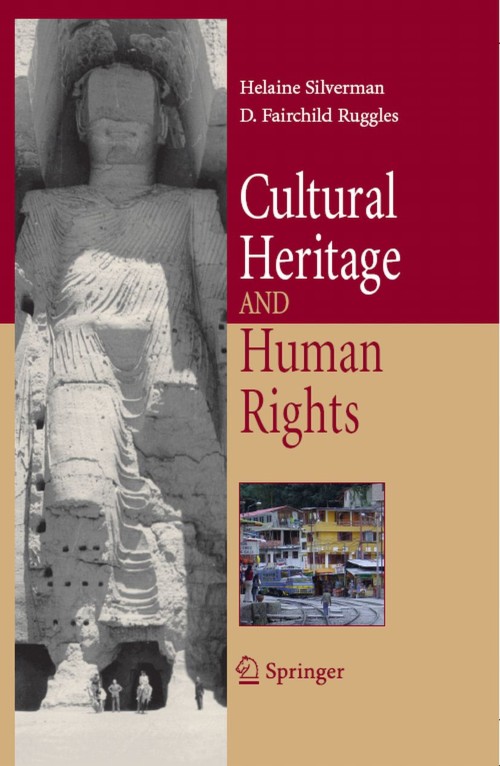
Cultural Heritage and Human Rights [electronic resource] / edited by Helaine Silverman, D. Fairchild Ruggles.
Erişim Adresi
ISBN
9780387713137
Dil Kodu
İngilizce
Yer Numarası
DK/12238
Basım Bildirimi
1st ed. 2007.
Yayın Bilgisi
New York, NY : Springer New York : Imprint: Springer, 2007.
Fiziksel Niteleme
X, 206 p. online resource.
İçindekiler Notu
Cultural Heritage and Human Rights -- Connotations, Conflicts, Conundrums, Communities -- Closing Pandora's Box: Human Rights Conundrums in Cultural Heritage Protection -- The Indo-Islamic Garden: Conflict, Conservation, and Conciliation in Gujarat, India -- Tourism, Cultural Heritage, and Human Rights in Indonesia: The Challenges of an Emerging Democratic Society -- Transnational Diaspora and Rights of Heritage -- Performing Slave Descent: Cultural Heritage and the Right to Land in Brazil -- Historical Disruptions in Ecuador: Reproducing an Indian Past in Latin America -- Plains Indians and Resistance to “Public” Heritage Commemoration of Their Pasts -- Empty Gestures? Heritage and the Politics of Recognition -- Archeology as Activism -- Genes and Burkas: Predicaments of Human Rights and Cultural Property.
Özet, vb.
In today’s world, there seems to be no corner of the world that has not been affected by globalization – for good and for bad. While the world becomes more hegemonized socially and culturally, local communities are fighting to preserve their way of life as part of their heritage. Travel and cultural institutions use this "uniqueness" to promote travel and tourism; and while this brings in revenue and exposure, cultural heritage sites that were preserved by virtue of their isolation are now being severely damaged and even destroyed. At the same time, there is a growing awareness that while this unique heritage is used to define a community, society or nation, it also can be a basis for conflict. The volume addresses a deeply political aspect of heritage preservation and management as it relates to human rights. Social and community advocates assert that heritage is necessary for the articulation and preservation of cultural identity. The display of heritage monuments and performance can be a strategy for asserting minority identity in the face of majority pressure – as well as a tool for resistance and the expression of difference. Conversely, the erasure of cultural expressions—such as buildings, monuments, language, religion, and social practices—is a powerful tool in warfare and political regulation. In the assault on human lives and political autonomy, the cultural history and values of a community are also attacked, destroying not only individuals but the very fabric of society. Is there a universal right to the free expression and preservation of cultural heritage, and if so, where is that right articulated and can it be protected? How is the notion of "heritage" used variously to unite and divide communities? Who defines cultural heritage and who should control stewardship and the benefits of cultural heritage? Cultural Heritage and Human Rights, the first volume in theCultural Heritage in a Globalized World series, use these issues and questions to contemplate cultural heritage and human rights. The cases presented are world-wide with their implications presented on a global level. This interdisciplinary volume brings together contributors from such diverse fields as: history, culture studies, anthropology, urban and regional planning, archaeology, gender studies, landscape architecture, heritage and museum studies, political economy, and legal studies. It will be of interest to scholars and practitioners in fields that are affected by heritage, globalization and social/cultural studies.
Konu
Cultural property.
Archaeology.
Cultural property __ Protection.
Ethnology.
Culture.
Cultural Heritage.
Archaeology.
Cultural Resource Management.
Regional Cultural Studies.
Archaeology.
Cultural property __ Protection.
Ethnology.
Culture.
Cultural Heritage.
Archaeology.
Cultural Resource Management.
Regional Cultural Studies.
Diğer Yazarlar
Kurum Adı
Eseri Alıntıla
Referansları kullanmadan önce gözden geçirmeniz ve varsa gerekli düzeltmeleri yapmanız önerilir.
Dijital Kaynak
MARC Görünümü
LEADER 05325nam a22005655i 4500
001 810972
003 TR_AnAIT
005 20260131012846
007 cr nn 008mamaa
008 100301s2007 xxu| s |||| 0|eng d
020 |a9780387713137|9978-0-387-71313-7
024 7 |a10.1007/978-0-387-71313-7|2doi
041 |aeng
049 |aTürk Tarih Kurumu Kütüphanesi
050 4|aD1-2027
072 7|aJFC|2bicssc
072 7|aGM|2bicssc
072 7|aSOC002010|2bisacsh
072 7|aJBCC|2thema
072 7|aGLZ|2thema
082 04|a363.69|223
090 |aDK/12238
245 10|aCultural Heritage and Human Rights|h[electronic resource] /|cedited by Helaine Silverman, D. Fairchild Ruggles.
250 |a1st ed. 2007.
264 1|aNew York, NY :|bSpringer New York :|bImprint: Springer,|c2007.
300 |aX, 206 p.|bonline resource.
336 |atext|btxt|2rdacontent
337 |acomputer|bc|2rdamedia
338 |aonline resource|bcr|2rdacarrier
347 |atext file|bPDF|2rda
505 0 |aCultural Heritage and Human Rights -- Connotations, Conflicts, Conundrums, Communities -- Closing Pandora's Box: Human Rights Conundrums in Cultural Heritage Protection -- The Indo-Islamic Garden: Conflict, Conservation, and Conciliation in Gujarat, India -- Tourism, Cultural Heritage, and Human Rights in Indonesia: The Challenges of an Emerging Democratic Society -- Transnational Diaspora and Rights of Heritage -- Performing Slave Descent: Cultural Heritage and the Right to Land in Brazil -- Historical Disruptions in Ecuador: Reproducing an Indian Past in Latin America -- Plains Indians and Resistance to “Public” Heritage Commemoration of Their Pasts -- Empty Gestures? Heritage and the Politics of Recognition -- Archeology as Activism -- Genes and Burkas: Predicaments of Human Rights and Cultural Property.
520 |aIn today’s world, there seems to be no corner of the world that has not been affected by globalization – for good and for bad. While the world becomes more hegemonized socially and culturally, local communities are fighting to preserve their way of life as part of their heritage. Travel and cultural institutions use this "uniqueness" to promote travel and tourism; and while this brings in revenue and exposure, cultural heritage sites that were preserved by virtue of their isolation are now being severely damaged and even destroyed. At the same time, there is a growing awareness that while this unique heritage is used to define a community, society or nation, it also can be a basis for conflict. The volume addresses a deeply political aspect of heritage preservation and management as it relates to human rights. Social and community advocates assert that heritage is necessary for the articulation and preservation of cultural identity. The display of heritage monuments and performance can be a strategy for asserting minority identity in the face of majority pressure – as well as a tool for resistance and the expression of difference. Conversely, the erasure of cultural expressions—such as buildings, monuments, language, religion, and social practices—is a powerful tool in warfare and political regulation. In the assault on human lives and political autonomy, the cultural history and values of a community are also attacked, destroying not only individuals but the very fabric of society. Is there a universal right to the free expression and preservation of cultural heritage, and if so, where is that right articulated and can it be protected? How is the notion of "heritage" used variously to unite and divide communities? Who defines cultural heritage and who should control stewardship and the benefits of cultural heritage? Cultural Heritage and Human Rights, the first volume in theCultural Heritage in a Globalized World series, use these issues and questions to contemplate cultural heritage and human rights. The cases presented are world-wide with their implications presented on a global level. This interdisciplinary volume brings together contributors from such diverse fields as: history, culture studies, anthropology, urban and regional planning, archaeology, gender studies, landscape architecture, heritage and museum studies, political economy, and legal studies. It will be of interest to scholars and practitioners in fields that are affected by heritage, globalization and social/cultural studies.
650 0|aCultural property.
650 0|aArchaeology.
650 0|aCultural property|xProtection.
650 0|aEthnology.
650 0|aCulture.
650 14|aCultural Heritage.
650 24|aArchaeology.
650 24|aCultural Resource Management.
650 24|aRegional Cultural Studies.
700 1 |aSilverman, Helaine.|eeditor.|4edt|4http://id.loc.gov/vocabulary/relators/edt
700 1 |aRuggles, D. Fairchild.|eeditor.|4edt|4http://id.loc.gov/vocabulary/relators/edt
710 2 |aSpringerLink (Online service)
773 0 |tSpringer Nature eBook
776 08|iPrinted edition:|z9780387713120
776 08|iPrinted edition:|z9780387765792
776 08|iPrinted edition:|z9780387518404
856 40|uhttps://doi.org/10.1007/978-0-387-71313-7
912 |aZDB-2-SHU
912 |aZDB-2-SXL
950 |aHumanities, Social Sciences and Law (SpringerNature-11648)
950 |aLiterature, Cultural and Media Studies (R0) (SpringerNature-43723)
001 810972
003 TR_AnAIT
005 20260131012846
007 cr nn 008mamaa
008 100301s2007 xxu| s |||| 0|eng d
020 |a9780387713137|9978-0-387-71313-7
024 7 |a10.1007/978-0-387-71313-7|2doi
041 |aeng
049 |aTürk Tarih Kurumu Kütüphanesi
050 4|aD1-2027
072 7|aJFC|2bicssc
072 7|aGM|2bicssc
072 7|aSOC002010|2bisacsh
072 7|aJBCC|2thema
072 7|aGLZ|2thema
082 04|a363.69|223
090 |aDK/12238
245 10|aCultural Heritage and Human Rights|h[electronic resource] /|cedited by Helaine Silverman, D. Fairchild Ruggles.
250 |a1st ed. 2007.
264 1|aNew York, NY :|bSpringer New York :|bImprint: Springer,|c2007.
300 |aX, 206 p.|bonline resource.
336 |atext|btxt|2rdacontent
337 |acomputer|bc|2rdamedia
338 |aonline resource|bcr|2rdacarrier
347 |atext file|bPDF|2rda
505 0 |aCultural Heritage and Human Rights -- Connotations, Conflicts, Conundrums, Communities -- Closing Pandora's Box: Human Rights Conundrums in Cultural Heritage Protection -- The Indo-Islamic Garden: Conflict, Conservation, and Conciliation in Gujarat, India -- Tourism, Cultural Heritage, and Human Rights in Indonesia: The Challenges of an Emerging Democratic Society -- Transnational Diaspora and Rights of Heritage -- Performing Slave Descent: Cultural Heritage and the Right to Land in Brazil -- Historical Disruptions in Ecuador: Reproducing an Indian Past in Latin America -- Plains Indians and Resistance to “Public” Heritage Commemoration of Their Pasts -- Empty Gestures? Heritage and the Politics of Recognition -- Archeology as Activism -- Genes and Burkas: Predicaments of Human Rights and Cultural Property.
520 |aIn today’s world, there seems to be no corner of the world that has not been affected by globalization – for good and for bad. While the world becomes more hegemonized socially and culturally, local communities are fighting to preserve their way of life as part of their heritage. Travel and cultural institutions use this "uniqueness" to promote travel and tourism; and while this brings in revenue and exposure, cultural heritage sites that were preserved by virtue of their isolation are now being severely damaged and even destroyed. At the same time, there is a growing awareness that while this unique heritage is used to define a community, society or nation, it also can be a basis for conflict. The volume addresses a deeply political aspect of heritage preservation and management as it relates to human rights. Social and community advocates assert that heritage is necessary for the articulation and preservation of cultural identity. The display of heritage monuments and performance can be a strategy for asserting minority identity in the face of majority pressure – as well as a tool for resistance and the expression of difference. Conversely, the erasure of cultural expressions—such as buildings, monuments, language, religion, and social practices—is a powerful tool in warfare and political regulation. In the assault on human lives and political autonomy, the cultural history and values of a community are also attacked, destroying not only individuals but the very fabric of society. Is there a universal right to the free expression and preservation of cultural heritage, and if so, where is that right articulated and can it be protected? How is the notion of "heritage" used variously to unite and divide communities? Who defines cultural heritage and who should control stewardship and the benefits of cultural heritage? Cultural Heritage and Human Rights, the first volume in theCultural Heritage in a Globalized World series, use these issues and questions to contemplate cultural heritage and human rights. The cases presented are world-wide with their implications presented on a global level. This interdisciplinary volume brings together contributors from such diverse fields as: history, culture studies, anthropology, urban and regional planning, archaeology, gender studies, landscape architecture, heritage and museum studies, political economy, and legal studies. It will be of interest to scholars and practitioners in fields that are affected by heritage, globalization and social/cultural studies.
650 0|aCultural property.
650 0|aArchaeology.
650 0|aCultural property|xProtection.
650 0|aEthnology.
650 0|aCulture.
650 14|aCultural Heritage.
650 24|aArchaeology.
650 24|aCultural Resource Management.
650 24|aRegional Cultural Studies.
700 1 |aSilverman, Helaine.|eeditor.|4edt|4http://id.loc.gov/vocabulary/relators/edt
700 1 |aRuggles, D. Fairchild.|eeditor.|4edt|4http://id.loc.gov/vocabulary/relators/edt
710 2 |aSpringerLink (Online service)
773 0 |tSpringer Nature eBook
776 08|iPrinted edition:|z9780387713120
776 08|iPrinted edition:|z9780387765792
776 08|iPrinted edition:|z9780387518404
856 40|uhttps://doi.org/10.1007/978-0-387-71313-7
912 |aZDB-2-SHU
912 |aZDB-2-SXL
950 |aHumanities, Social Sciences and Law (SpringerNature-11648)
950 |aLiterature, Cultural and Media Studies (R0) (SpringerNature-43723)
Materyaller
Depodan talep edilen materyal sadece kütüphane içerisinde kullanılmaktadır.
Materyal dışarıya ödünç verilmemektedir.
Materyal dışarıya ödünç verilmemektedir.
