

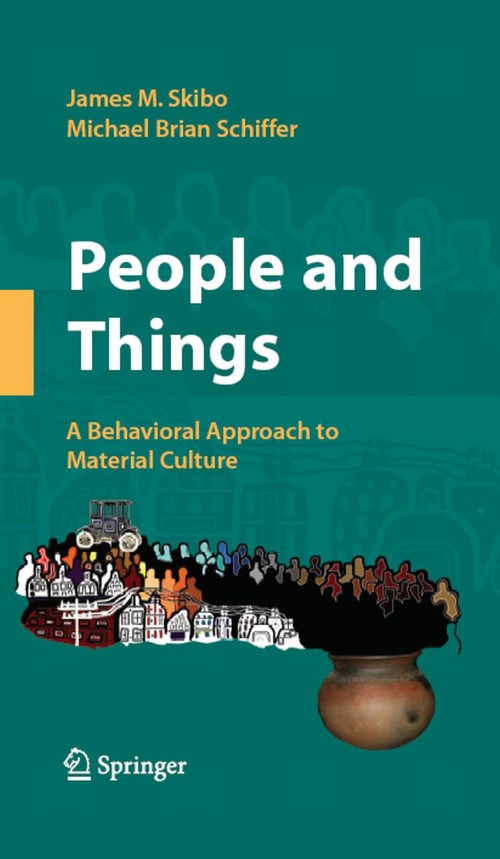
People and Things [electronic resource] : A Behavioral Approach to Material Culture / by James M. Skibo, Michael Brian Schiffer.
Erişim Adresi
ISBN
9780387765273
Dil Kodu
İngilizce
Yer Numarası
DK/12251
Yazar
Basım Bildirimi
1st ed. 2008.
Yayın Bilgisi
New York, NY : Springer New York : Imprint: Springer, 2008.
Fiziksel Niteleme
XIII, 170 p. 16 illus. online resource.
İçindekiler Notu
People and Things: A Performance-Based Theory -- Behavior, Selection, Agency, Practice, and Beyond -- The Origins of Pottery on the Colorado Plateau -- Smudge Pits and Hide Smoking -- The Devil is in the Details -- Ritual Performance: Ball Courts and Religious Interaction -- Social Theory and History in Behavioral Archaeology: Gender, Social Class, and the Demise of the Early Electric Car -- Studying Technological Differentiation.
Özet, vb.
People and Things: A Behavioral Approach to Material Culture James M. Skibo, Department of Anthropology, University of Illinois, Normal, IL Michael B. Schiffer, Department of Anthropology, University of Arizona, Tucson, AZ The core of archaeology is the relationship between people and things. Left without informants and, in many cases, textual data, archaeologists strive to reconstruct past life through the window of artifacts: things made, used, and modified by individuals while participating in the activities of everyday life. According to behavioral archaeologists, our ability to understand the relationship between people and things in the present is the foundation for archaeological reconstruction of the past. This comprehensive text sets forth a theory for understanding the relationship between people and things. Humans, whether in the distant past or in our current world, make choices while inventing, developing, replicating, adopting, and using their technologies. A wide arc of factors, from utilitarian to social and religious can affect these choices. The theoretical model presented here provides the means to understand how people, whether it be Paleolithic stone tool makers or 21st century computer designers and users, negotiate these myriad factors throughout the artifact’s life history. While setting forth a behavioral theory, the book also engages the ideas of other competing theories, focusing especially on agency, practice, and selectionism. Six case studies form the core of the book, and provide clear examples of how the theory can be applied to a range of artifacts and people from prehistoric North American ball courts and smudge pits to the first electric cars and 19th century electromagnetic telegraph technologies. This book provides the reader, for the first time between two covers, a wide array of examples that can guide their own work. Archaeology and anthropology graduate students will find this book of interest. Twenty years in the making, this work will be an essential tool for new scholars as well as experienced members in the field of archaeology or any researcher who investigates technology.
Konu
Archaeology.
Anthropology.
Life sciences.
Archaeology.
Anthropology.
Life Sciences.
Anthropology.
Life sciences.
Archaeology.
Anthropology.
Life Sciences.
Diğer Yazarlar
Kurum Adı
Eseri Alıntıla
Referansları kullanmadan önce gözden geçirmeniz ve varsa gerekli düzeltmeleri yapmanız önerilir.
Dijital Kaynak
MARC Görünümü
LEADER 04359nam a22005055i 4500
001 810986
003 TR_AnAIT
005 20260131012814
007 cr nn 008mamaa
008 100301s2008 xxu| s |||| 0|eng d
020 |a9780387765273|9978-0-387-76527-3
024 7 |a10.1007/978-0-387-76527-3|2doi
041 |aeng
049 |aTürk Tarih Kurumu Kütüphanesi
050 4|aCC1-960
072 7|aHD|2bicssc
072 7|aSOC003000|2bisacsh
072 7|aNK|2thema
082 04|a930.1|223
090 |aDK/12251
100 1 |aSkibo, James M.|eauthor.|4aut|4http://id.loc.gov/vocabulary/relators/aut
245 10|aPeople and Things|h[electronic resource] :|bA Behavioral Approach to Material Culture /|cby James M. Skibo, Michael Brian Schiffer.
250 |a1st ed. 2008.
264 1|aNew York, NY :|bSpringer New York :|bImprint: Springer,|c2008.
300 |aXIII, 170 p. 16 illus.|bonline resource.
336 |atext|btxt|2rdacontent
337 |acomputer|bc|2rdamedia
338 |aonline resource|bcr|2rdacarrier
347 |atext file|bPDF|2rda
505 0 |aPeople and Things: A Performance-Based Theory -- Behavior, Selection, Agency, Practice, and Beyond -- The Origins of Pottery on the Colorado Plateau -- Smudge Pits and Hide Smoking -- The Devil is in the Details -- Ritual Performance: Ball Courts and Religious Interaction -- Social Theory and History in Behavioral Archaeology: Gender, Social Class, and the Demise of the Early Electric Car -- Studying Technological Differentiation.
520 |aPeople and Things: A Behavioral Approach to Material Culture James M. Skibo, Department of Anthropology, University of Illinois, Normal, IL Michael B. Schiffer, Department of Anthropology, University of Arizona, Tucson, AZ The core of archaeology is the relationship between people and things. Left without informants and, in many cases, textual data, archaeologists strive to reconstruct past life through the window of artifacts: things made, used, and modified by individuals while participating in the activities of everyday life. According to behavioral archaeologists, our ability to understand the relationship between people and things in the present is the foundation for archaeological reconstruction of the past. This comprehensive text sets forth a theory for understanding the relationship between people and things. Humans, whether in the distant past or in our current world, make choices while inventing, developing, replicating, adopting, and using their technologies. A wide arc of factors, from utilitarian to social and religious can affect these choices. The theoretical model presented here provides the means to understand how people, whether it be Paleolithic stone tool makers or 21st century computer designers and users, negotiate these myriad factors throughout the artifact’s life history. While setting forth a behavioral theory, the book also engages the ideas of other competing theories, focusing especially on agency, practice, and selectionism. Six case studies form the core of the book, and provide clear examples of how the theory can be applied to a range of artifacts and people from prehistoric North American ball courts and smudge pits to the first electric cars and 19th century electromagnetic telegraph technologies. This book provides the reader, for the first time between two covers, a wide array of examples that can guide their own work. Archaeology and anthropology graduate students will find this book of interest. Twenty years in the making, this work will be an essential tool for new scholars as well as experienced members in the field of archaeology or any researcher who investigates technology.
650 0|aArchaeology.
650 0|aAnthropology.
650 0|aLife sciences.
650 14|aArchaeology.
650 24|aAnthropology.
650 24|aLife Sciences.
700 1 |aSchiffer, Michael Brian.|eauthor.|4aut|4http://id.loc.gov/vocabulary/relators/aut
710 2 |aSpringerLink (Online service)
773 0 |tSpringer Nature eBook
776 08|iPrinted edition:|z9780387765242
776 08|iPrinted edition:|z9780387771328
776 08|iPrinted edition:|z9780387521688
856 40|uhttps://doi.org/10.1007/978-0-387-76527-3
912 |aZDB-2-SHU
912 |aZDB-2-SXS
950 |aHumanities, Social Sciences and Law (SpringerNature-11648)
950 |aSocial Sciences (R0) (SpringerNature-43726)
001 810986
003 TR_AnAIT
005 20260131012814
007 cr nn 008mamaa
008 100301s2008 xxu| s |||| 0|eng d
020 |a9780387765273|9978-0-387-76527-3
024 7 |a10.1007/978-0-387-76527-3|2doi
041 |aeng
049 |aTürk Tarih Kurumu Kütüphanesi
050 4|aCC1-960
072 7|aHD|2bicssc
072 7|aSOC003000|2bisacsh
072 7|aNK|2thema
082 04|a930.1|223
090 |aDK/12251
100 1 |aSkibo, James M.|eauthor.|4aut|4http://id.loc.gov/vocabulary/relators/aut
245 10|aPeople and Things|h[electronic resource] :|bA Behavioral Approach to Material Culture /|cby James M. Skibo, Michael Brian Schiffer.
250 |a1st ed. 2008.
264 1|aNew York, NY :|bSpringer New York :|bImprint: Springer,|c2008.
300 |aXIII, 170 p. 16 illus.|bonline resource.
336 |atext|btxt|2rdacontent
337 |acomputer|bc|2rdamedia
338 |aonline resource|bcr|2rdacarrier
347 |atext file|bPDF|2rda
505 0 |aPeople and Things: A Performance-Based Theory -- Behavior, Selection, Agency, Practice, and Beyond -- The Origins of Pottery on the Colorado Plateau -- Smudge Pits and Hide Smoking -- The Devil is in the Details -- Ritual Performance: Ball Courts and Religious Interaction -- Social Theory and History in Behavioral Archaeology: Gender, Social Class, and the Demise of the Early Electric Car -- Studying Technological Differentiation.
520 |aPeople and Things: A Behavioral Approach to Material Culture James M. Skibo, Department of Anthropology, University of Illinois, Normal, IL Michael B. Schiffer, Department of Anthropology, University of Arizona, Tucson, AZ The core of archaeology is the relationship between people and things. Left without informants and, in many cases, textual data, archaeologists strive to reconstruct past life through the window of artifacts: things made, used, and modified by individuals while participating in the activities of everyday life. According to behavioral archaeologists, our ability to understand the relationship between people and things in the present is the foundation for archaeological reconstruction of the past. This comprehensive text sets forth a theory for understanding the relationship between people and things. Humans, whether in the distant past or in our current world, make choices while inventing, developing, replicating, adopting, and using their technologies. A wide arc of factors, from utilitarian to social and religious can affect these choices. The theoretical model presented here provides the means to understand how people, whether it be Paleolithic stone tool makers or 21st century computer designers and users, negotiate these myriad factors throughout the artifact’s life history. While setting forth a behavioral theory, the book also engages the ideas of other competing theories, focusing especially on agency, practice, and selectionism. Six case studies form the core of the book, and provide clear examples of how the theory can be applied to a range of artifacts and people from prehistoric North American ball courts and smudge pits to the first electric cars and 19th century electromagnetic telegraph technologies. This book provides the reader, for the first time between two covers, a wide array of examples that can guide their own work. Archaeology and anthropology graduate students will find this book of interest. Twenty years in the making, this work will be an essential tool for new scholars as well as experienced members in the field of archaeology or any researcher who investigates technology.
650 0|aArchaeology.
650 0|aAnthropology.
650 0|aLife sciences.
650 14|aArchaeology.
650 24|aAnthropology.
650 24|aLife Sciences.
700 1 |aSchiffer, Michael Brian.|eauthor.|4aut|4http://id.loc.gov/vocabulary/relators/aut
710 2 |aSpringerLink (Online service)
773 0 |tSpringer Nature eBook
776 08|iPrinted edition:|z9780387765242
776 08|iPrinted edition:|z9780387771328
776 08|iPrinted edition:|z9780387521688
856 40|uhttps://doi.org/10.1007/978-0-387-76527-3
912 |aZDB-2-SHU
912 |aZDB-2-SXS
950 |aHumanities, Social Sciences and Law (SpringerNature-11648)
950 |aSocial Sciences (R0) (SpringerNature-43726)
Materyaller
Depodan talep edilen materyal sadece kütüphane içerisinde kullanılmaktadır.
Materyal dışarıya ödünç verilmemektedir.
Materyal dışarıya ödünç verilmemektedir.
