

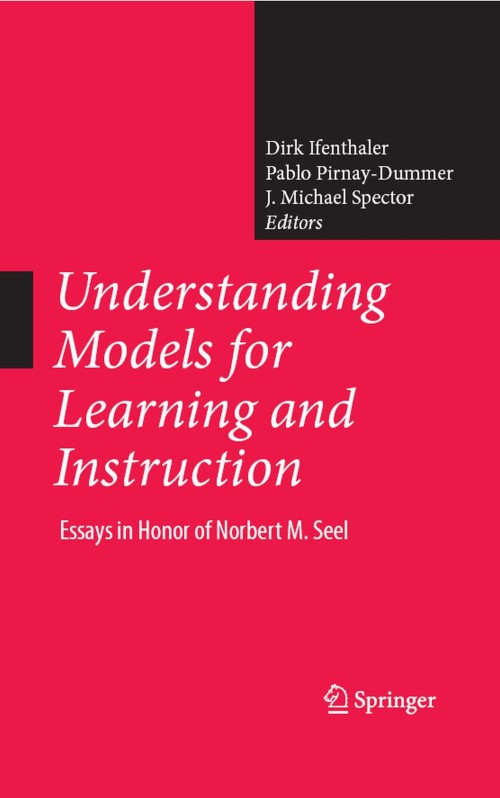
Understanding Models for Learning and Instruction: [electronic resource] : Essays in Honor of Norbert M. Seel / edited by Dirk Ifenthaler, Pablo Pirnay-Dummer, J. Michael Spector.
Erişim Adresi
ISBN
9780387768984
Dil Kodu
İngilizce
Yer Numarası
DK/12253
Basım Bildirimi
1st ed. 2008.
Yayın Bilgisi
New York, NY : Springer US : Imprint: Springer, 2008.
Fiziksel Niteleme
XVIII, 330 p. online resource.
İçindekiler Notu
Foundations and Methodologies of Mental Model Research -- The Fragmented Nature of Learning and Instruction -- Using an Evidence-Based Approach to Assess Mental Models -- Practical Solutions for the Diagnosis of Progressing Mental Models -- Constructing Mental Models during Learning from Science Text -- Progress in the Diagnostics of Mental Models -- Model-Based Theories of Instruction -- Rendezvous with a Quantum of Learning -- Externalizing Mental Models with Mindtools -- Model-Centered Instruction, the Design and the Designer -- Realizing Model-Based Instruction -- Engineering the Model Environment -- Developments in the Design of Instruction -- Bridging a Gap between Psychology and Instructional Practice -- Model-Based Learning Environments -- Model-Centered Learning and Instructional Design -- From Cognitive Theory to Instructional Practice: Technology and the Evolution of Anchored Instruction -- Complex Skills Development for Today's Workforce.
Özet, vb.
For more than 25 years, the pioneering research and theories of Norbert Seel have had a profound impact on educational thought in mathematics. In this special tribute, an international panel of researchers present the current state of model-based education: its research, methodology, and technology. Fifteen stimulating, sometimes playful chapters link the multiple ways of constructing knowledge (and domains as diverse as cognitive science, computer science, and philosophy) to the complex real world of skill development; generalize model-based theories into educational settings; and explain how to design and evaluate model-centered learning environments. Extensive reading lists, provocative graphics, and a wealth of cultural touchstones from the Bible to Bob Dylan make Understanding Models for Learning and Instruction an accessible yet thought provoking collection. A sampling of the topics covered: Evidence-based assessment of learning models Translating cognitive theory into educational practice New approaches to tracking mental change over time Applying psychoeducational theory to the hands-on classroom Using games as a strategy for constructing model-centered learning environments Externalizing mental models with Mindtools This synthesis of latest innovations and fresh perspectives on classic constructs makes Understanding Models for Learning and Instruction cutting-edge reading for the researchers and educators in mathematics instruction building the next generation of educational models.
Konu
Learning, Psychology of.
Educational technology.
Educational psychology.
Cognitive psychology.
Mathematics __ Study and teaching .
Education.
Instructional Psychology.
Digital Education and Educational Technology.
Educational Psychology.
Cognitive Psychology.
Mathematics Education.
Education.
Educational technology.
Educational psychology.
Cognitive psychology.
Mathematics __ Study and teaching .
Education.
Instructional Psychology.
Digital Education and Educational Technology.
Educational Psychology.
Cognitive Psychology.
Mathematics Education.
Education.
Diğer Yazarlar
Kurum Adı
Eseri Alıntıla
Referansları kullanmadan önce gözden geçirmeniz ve varsa gerekli düzeltmeleri yapmanız önerilir.
Dijital Kaynak
MARC Görünümü
LEADER 04818nam a22005895i 4500
001 810988
003 TR_AnAIT
005 20260131012810
007 cr nn 008mamaa
008 100301s2008 xxu| s |||| 0|eng d
020 |a9780387768984|9978-0-387-76898-4
024 7 |a10.1007/978-0-387-76898-4|2doi
041 |aeng
049 |aTürk Tarih Kurumu Kütüphanesi
050 4|aLB1060-1077
072 7|aJNC|2bicssc
072 7|aEDU009000|2bisacsh
072 7|aJNC|2thema
082 04|a370.15|223
090 |aDK/12253
245 10|aUnderstanding Models for Learning and Instruction:|h[electronic resource] :|bEssays in Honor of Norbert M. Seel /|cedited by Dirk Ifenthaler, Pablo Pirnay-Dummer, J. Michael Spector.
250 |a1st ed. 2008.
264 1|aNew York, NY :|bSpringer US :|bImprint: Springer,|c2008.
300 |aXVIII, 330 p.|bonline resource.
336 |atext|btxt|2rdacontent
337 |acomputer|bc|2rdamedia
338 |aonline resource|bcr|2rdacarrier
347 |atext file|bPDF|2rda
505 0 |aFoundations and Methodologies of Mental Model Research -- The Fragmented Nature of Learning and Instruction -- Using an Evidence-Based Approach to Assess Mental Models -- Practical Solutions for the Diagnosis of Progressing Mental Models -- Constructing Mental Models during Learning from Science Text -- Progress in the Diagnostics of Mental Models -- Model-Based Theories of Instruction -- Rendezvous with a Quantum of Learning -- Externalizing Mental Models with Mindtools -- Model-Centered Instruction, the Design and the Designer -- Realizing Model-Based Instruction -- Engineering the Model Environment -- Developments in the Design of Instruction -- Bridging a Gap between Psychology and Instructional Practice -- Model-Based Learning Environments -- Model-Centered Learning and Instructional Design -- From Cognitive Theory to Instructional Practice: Technology and the Evolution of Anchored Instruction -- Complex Skills Development for Today's Workforce.
520 |aFor more than 25 years, the pioneering research and theories of Norbert Seel have had a profound impact on educational thought in mathematics. In this special tribute, an international panel of researchers present the current state of model-based education: its research, methodology, and technology. Fifteen stimulating, sometimes playful chapters link the multiple ways of constructing knowledge (and domains as diverse as cognitive science, computer science, and philosophy) to the complex real world of skill development; generalize model-based theories into educational settings; and explain how to design and evaluate model-centered learning environments. Extensive reading lists, provocative graphics, and a wealth of cultural touchstones from the Bible to Bob Dylan make Understanding Models for Learning and Instruction an accessible yet thought provoking collection. A sampling of the topics covered: Evidence-based assessment of learning models Translating cognitive theory into educational practice New approaches to tracking mental change over time Applying psychoeducational theory to the hands-on classroom Using games as a strategy for constructing model-centered learning environments Externalizing mental models with Mindtools This synthesis of latest innovations and fresh perspectives on classic constructs makes Understanding Models for Learning and Instruction cutting-edge reading for the researchers and educators in mathematics instruction building the next generation of educational models.
650 0|aLearning, Psychology of.
650 0|aEducational technology.
650 0|aEducational psychology.
650 0|aCognitive psychology.
650 0|aMathematics|xStudy and teaching .
650 0|aEducation.
650 14|aInstructional Psychology.
650 24|aDigital Education and Educational Technology.
650 24|aEducational Psychology.
650 24|aCognitive Psychology.
650 24|aMathematics Education.
650 24|aEducation.
700 1 |aIfenthaler, Dirk.|eeditor.|0(orcid)0000-0002-2446-6548|1https://orcid.org/0000-0002-2446-6548|4edt|4http://id.loc.gov/vocabulary/relators/edt
700 1 |aPirnay-Dummer, Pablo.|eeditor.|4edt|4http://id.loc.gov/vocabulary/relators/edt
700 1 |aSpector, J. Michael.|eeditor.|0(orcid)0000-0002-6270-3073|1https://orcid.org/0000-0002-6270-3073|4edt|4http://id.loc.gov/vocabulary/relators/edt
710 2 |aSpringerLink (Online service)
773 0 |tSpringer Nature eBook
776 08|iPrinted edition:|z9780387768977
776 08|iPrinted edition:|z9780387521763
776 08|iPrinted edition:|z9781441945792
856 40|uhttps://doi.org/10.1007/978-0-387-76898-4
912 |aZDB-2-SHU
912 |aZDB-2-SXED
950 |aHumanities, Social Sciences and Law (SpringerNature-11648)
950 |aEducation (R0) (SpringerNature-43721)
001 810988
003 TR_AnAIT
005 20260131012810
007 cr nn 008mamaa
008 100301s2008 xxu| s |||| 0|eng d
020 |a9780387768984|9978-0-387-76898-4
024 7 |a10.1007/978-0-387-76898-4|2doi
041 |aeng
049 |aTürk Tarih Kurumu Kütüphanesi
050 4|aLB1060-1077
072 7|aJNC|2bicssc
072 7|aEDU009000|2bisacsh
072 7|aJNC|2thema
082 04|a370.15|223
090 |aDK/12253
245 10|aUnderstanding Models for Learning and Instruction:|h[electronic resource] :|bEssays in Honor of Norbert M. Seel /|cedited by Dirk Ifenthaler, Pablo Pirnay-Dummer, J. Michael Spector.
250 |a1st ed. 2008.
264 1|aNew York, NY :|bSpringer US :|bImprint: Springer,|c2008.
300 |aXVIII, 330 p.|bonline resource.
336 |atext|btxt|2rdacontent
337 |acomputer|bc|2rdamedia
338 |aonline resource|bcr|2rdacarrier
347 |atext file|bPDF|2rda
505 0 |aFoundations and Methodologies of Mental Model Research -- The Fragmented Nature of Learning and Instruction -- Using an Evidence-Based Approach to Assess Mental Models -- Practical Solutions for the Diagnosis of Progressing Mental Models -- Constructing Mental Models during Learning from Science Text -- Progress in the Diagnostics of Mental Models -- Model-Based Theories of Instruction -- Rendezvous with a Quantum of Learning -- Externalizing Mental Models with Mindtools -- Model-Centered Instruction, the Design and the Designer -- Realizing Model-Based Instruction -- Engineering the Model Environment -- Developments in the Design of Instruction -- Bridging a Gap between Psychology and Instructional Practice -- Model-Based Learning Environments -- Model-Centered Learning and Instructional Design -- From Cognitive Theory to Instructional Practice: Technology and the Evolution of Anchored Instruction -- Complex Skills Development for Today's Workforce.
520 |aFor more than 25 years, the pioneering research and theories of Norbert Seel have had a profound impact on educational thought in mathematics. In this special tribute, an international panel of researchers present the current state of model-based education: its research, methodology, and technology. Fifteen stimulating, sometimes playful chapters link the multiple ways of constructing knowledge (and domains as diverse as cognitive science, computer science, and philosophy) to the complex real world of skill development; generalize model-based theories into educational settings; and explain how to design and evaluate model-centered learning environments. Extensive reading lists, provocative graphics, and a wealth of cultural touchstones from the Bible to Bob Dylan make Understanding Models for Learning and Instruction an accessible yet thought provoking collection. A sampling of the topics covered: Evidence-based assessment of learning models Translating cognitive theory into educational practice New approaches to tracking mental change over time Applying psychoeducational theory to the hands-on classroom Using games as a strategy for constructing model-centered learning environments Externalizing mental models with Mindtools This synthesis of latest innovations and fresh perspectives on classic constructs makes Understanding Models for Learning and Instruction cutting-edge reading for the researchers and educators in mathematics instruction building the next generation of educational models.
650 0|aLearning, Psychology of.
650 0|aEducational technology.
650 0|aEducational psychology.
650 0|aCognitive psychology.
650 0|aMathematics|xStudy and teaching .
650 0|aEducation.
650 14|aInstructional Psychology.
650 24|aDigital Education and Educational Technology.
650 24|aEducational Psychology.
650 24|aCognitive Psychology.
650 24|aMathematics Education.
650 24|aEducation.
700 1 |aIfenthaler, Dirk.|eeditor.|0(orcid)0000-0002-2446-6548|1https://orcid.org/0000-0002-2446-6548|4edt|4http://id.loc.gov/vocabulary/relators/edt
700 1 |aPirnay-Dummer, Pablo.|eeditor.|4edt|4http://id.loc.gov/vocabulary/relators/edt
700 1 |aSpector, J. Michael.|eeditor.|0(orcid)0000-0002-6270-3073|1https://orcid.org/0000-0002-6270-3073|4edt|4http://id.loc.gov/vocabulary/relators/edt
710 2 |aSpringerLink (Online service)
773 0 |tSpringer Nature eBook
776 08|iPrinted edition:|z9780387768977
776 08|iPrinted edition:|z9780387521763
776 08|iPrinted edition:|z9781441945792
856 40|uhttps://doi.org/10.1007/978-0-387-76898-4
912 |aZDB-2-SHU
912 |aZDB-2-SXED
950 |aHumanities, Social Sciences and Law (SpringerNature-11648)
950 |aEducation (R0) (SpringerNature-43721)
Materyaller
Depodan talep edilen materyal sadece kütüphane içerisinde kullanılmaktadır.
Materyal dışarıya ödünç verilmemektedir.
Materyal dışarıya ödünç verilmemektedir.
