Concept Mapping in Mathematics [electronic resource] : Research into Practice / edited by Karoline Afamasaga-Fuata'i.
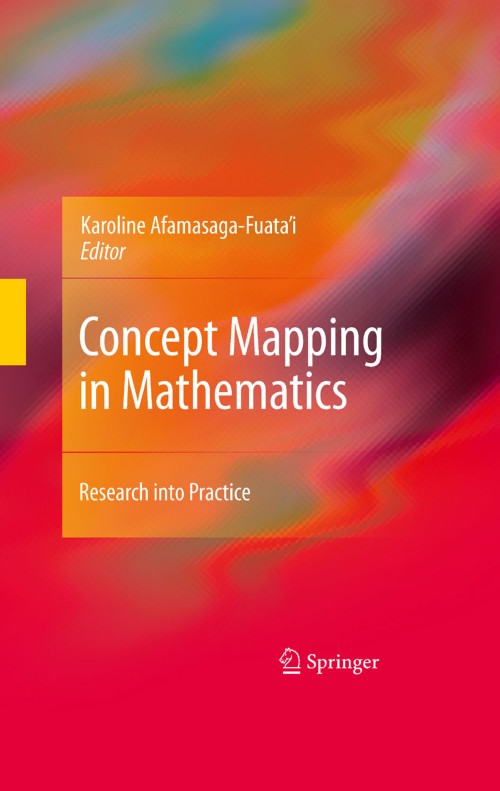
Erişim Adresi
ISBN
9780387891941
Dil Kodu
İngilizce
Yer Numarası
DK/12256
Basım Bildirimi
1st ed. 2009.
Yayın Bilgisi
New York, NY : Springer US : Imprint: Springer, 2009.
Fiziksel Niteleme
V, 220 p. 200 illus. online resource.
İçindekiler Notu
A: A Historical Overview Of Concept Mapping -- The Development and Evolution of the Concept Mapping Tool Leading to a New Model for Mathematics Education -- B: Primary Mathematics Teaching And Learning -- Analysing the “Measurement” Strand Using Concept Maps and Vee Diagrams -- Concept Mapping as a Means to Develop and Assess Conceptual Understanding in Primary Mathematics Teacher Education -- Using Concept Maps and Vee Diagrams to Analyse the “Fractions” Strand in Primary Mathematics -- Concept Maps as Innovative Learning and Assessment Tools in Primary Schools -- C: Secondary Mathematics Teaching And Learning -- Evidence of Meaningful Learning in the Topic of ‘Proportionality’ in Second Grade Secondary Education -- Concept Mapping as a Means to Develop and Assess Conceptual Understanding in Secondary Mathematics Teacher Education -- Concept Mapping a Teaching Sequence and Lesson Plan for “Derivatives” -- Curricular Implications of Concept Mapping in Secondary Mathematics Education -- Using Concept Maps and Gowin’s Vee to Understand Mathematical Models of Physical Phenomena -- Applying Concept Mapping to Algebra I -- D: University Mathematics Teaching And Learning -- Enhancing Undergraduate Mathematics Learning Using Concept Maps and Vee Diagrams -- Concept Mapping: An Important Guide for the Mathematics Teaching Process -- Concept Mapping and Vee Diagramming “Differential Equations” -- Using Concept Maps to Mediate Meaning in Undergraduate Mathematics -- E: Future Directions -- Implications and Future Research Directions.
Özet, vb.
Concept Mapping in Mathematics: Research into Practice is the first comprehensive book on concept mapping in mathematics. It provides the reader with an understanding of how the meta-cognitive tool, namely, hierarchical concept maps, and the process of concept mapping can be used innovatively and strategically to improve planning, teaching, learning, and assessment at different educational levels. This collection of research articles examines the usefulness of concept maps in the educational setting, with applications and examples ranging from primary grade classrooms through secondary mathematics to pre-service teacher education, undergraduate mathematics and post-graduate mathematics education. A second meta-cognitive tool, called vee diagrams, is also critically examined by two authors, particularly its value in improving mathematical problem solving. The theoretical underpinnings of concept mapping and of the studies in the book include Ausubel’s cognitive theory of meaningful learning, constructivist and Vygotskian psychology to name a few. There is evidence which suggests that students’ mathematical literacy and problem solving skills can be enhanced through students collaborating and interacting as they work, discuss and communicate mathematically. This book proposes the meta-cognitive strategy of concept mapping as one viable means of promoting, communicating and explicating students’ mathematical thinking and reasoning publicly in a social setting as they engage in mathematical dialogues and discussions. Concept Mapping in Mathematics: Research into Practice is of interest to researchers, graduate students, teacher educators and professionals in mathematics education.
Konu
Mathematics __ Study and teaching .
Learning, Psychology of.
Mathematics Education.
Instructional Psychology.
Learning, Psychology of.
Mathematics Education.
Instructional Psychology.
Diğer Yazarlar
Kurum Adı

Eseri Alıntıla
Referansları kullanmadan önce gözden geçirmeniz ve varsa gerekli düzeltmeleri yapmanız önerilir.
Dijital Kaynak
MARC Görünümü
LEADER 04993nam a22004935i 4500
001 810991
003 TR_AnAIT
005 20260131012805
007 cr nn 008mamaa
008 100301s2009 xxu| s |||| 0|eng d
020 |a9780387891941|9978-0-387-89194-1
024 7 |a10.1007/978-0-387-89194-1|2doi
041 |aeng
049 |aTürk Tarih Kurumu Kütüphanesi
050 4|aQA10.92-20
072 7|aJNU|2bicssc
072 7|aPB|2bicssc
072 7|aEDU029010|2bisacsh
072 7|aJNU|2thema
072 7|aPB|2thema
082 04|a510.71|223
090 |aDK/12256
245 10|aConcept Mapping in Mathematics|h[electronic resource] :|bResearch into Practice /|cedited by Karoline Afamasaga-Fuata'i.
250 |a1st ed. 2009.
264 1|aNew York, NY :|bSpringer US :|bImprint: Springer,|c2009.
300 |aV, 220 p. 200 illus.|bonline resource.
336 |atext|btxt|2rdacontent
337 |acomputer|bc|2rdamedia
338 |aonline resource|bcr|2rdacarrier
347 |atext file|bPDF|2rda
505 0 |aA: A Historical Overview Of Concept Mapping -- The Development and Evolution of the Concept Mapping Tool Leading to a New Model for Mathematics Education -- B: Primary Mathematics Teaching And Learning -- Analysing the “Measurement” Strand Using Concept Maps and Vee Diagrams -- Concept Mapping as a Means to Develop and Assess Conceptual Understanding in Primary Mathematics Teacher Education -- Using Concept Maps and Vee Diagrams to Analyse the “Fractions” Strand in Primary Mathematics -- Concept Maps as Innovative Learning and Assessment Tools in Primary Schools -- C: Secondary Mathematics Teaching And Learning -- Evidence of Meaningful Learning in the Topic of ‘Proportionality’ in Second Grade Secondary Education -- Concept Mapping as a Means to Develop and Assess Conceptual Understanding in Secondary Mathematics Teacher Education -- Concept Mapping a Teaching Sequence and Lesson Plan for “Derivatives” -- Curricular Implications of Concept Mapping in Secondary Mathematics Education -- Using Concept Maps and Gowin’s Vee to Understand Mathematical Models of Physical Phenomena -- Applying Concept Mapping to Algebra I -- D: University Mathematics Teaching And Learning -- Enhancing Undergraduate Mathematics Learning Using Concept Maps and Vee Diagrams -- Concept Mapping: An Important Guide for the Mathematics Teaching Process -- Concept Mapping and Vee Diagramming “Differential Equations” -- Using Concept Maps to Mediate Meaning in Undergraduate Mathematics -- E: Future Directions -- Implications and Future Research Directions.
520 |aConcept Mapping in Mathematics: Research into Practice is the first comprehensive book on concept mapping in mathematics. It provides the reader with an understanding of how the meta-cognitive tool, namely, hierarchical concept maps, and the process of concept mapping can be used innovatively and strategically to improve planning, teaching, learning, and assessment at different educational levels. This collection of research articles examines the usefulness of concept maps in the educational setting, with applications and examples ranging from primary grade classrooms through secondary mathematics to pre-service teacher education, undergraduate mathematics and post-graduate mathematics education. A second meta-cognitive tool, called vee diagrams, is also critically examined by two authors, particularly its value in improving mathematical problem solving. The theoretical underpinnings of concept mapping and of the studies in the book include Ausubel’s cognitive theory of meaningful learning, constructivist and Vygotskian psychology to name a few. There is evidence which suggests that students’ mathematical literacy and problem solving skills can be enhanced through students collaborating and interacting as they work, discuss and communicate mathematically. This book proposes the meta-cognitive strategy of concept mapping as one viable means of promoting, communicating and explicating students’ mathematical thinking and reasoning publicly in a social setting as they engage in mathematical dialogues and discussions. Concept Mapping in Mathematics: Research into Practice is of interest to researchers, graduate students, teacher educators and professionals in mathematics education.
650 0|aMathematics|xStudy and teaching .
650 0|aLearning, Psychology of.
650 14|aMathematics Education.
650 24|aInstructional Psychology.
700 1 |aAfamasaga-Fuata'i, Karoline.|eeditor.|4edt|4http://id.loc.gov/vocabulary/relators/edt
710 2 |aSpringerLink (Online service)
773 0 |tSpringer Nature eBook
776 08|iPrinted edition:|z9780387891934
776 08|iPrinted edition:|z9780387892566
776 08|iPrinted edition:|z9781441947055
856 40|uhttps://doi.org/10.1007/978-0-387-89194-1
912 |aZDB-2-SHU
912 |aZDB-2-SXED
950 |aHumanities, Social Sciences and Law (SpringerNature-11648)
950 |aEducation (R0) (SpringerNature-43721)
001 810991
003 TR_AnAIT
005 20260131012805
007 cr nn 008mamaa
008 100301s2009 xxu| s |||| 0|eng d
020 |a9780387891941|9978-0-387-89194-1
024 7 |a10.1007/978-0-387-89194-1|2doi
041 |aeng
049 |aTürk Tarih Kurumu Kütüphanesi
050 4|aQA10.92-20
072 7|aJNU|2bicssc
072 7|aPB|2bicssc
072 7|aEDU029010|2bisacsh
072 7|aJNU|2thema
072 7|aPB|2thema
082 04|a510.71|223
090 |aDK/12256
245 10|aConcept Mapping in Mathematics|h[electronic resource] :|bResearch into Practice /|cedited by Karoline Afamasaga-Fuata'i.
250 |a1st ed. 2009.
264 1|aNew York, NY :|bSpringer US :|bImprint: Springer,|c2009.
300 |aV, 220 p. 200 illus.|bonline resource.
336 |atext|btxt|2rdacontent
337 |acomputer|bc|2rdamedia
338 |aonline resource|bcr|2rdacarrier
347 |atext file|bPDF|2rda
505 0 |aA: A Historical Overview Of Concept Mapping -- The Development and Evolution of the Concept Mapping Tool Leading to a New Model for Mathematics Education -- B: Primary Mathematics Teaching And Learning -- Analysing the “Measurement” Strand Using Concept Maps and Vee Diagrams -- Concept Mapping as a Means to Develop and Assess Conceptual Understanding in Primary Mathematics Teacher Education -- Using Concept Maps and Vee Diagrams to Analyse the “Fractions” Strand in Primary Mathematics -- Concept Maps as Innovative Learning and Assessment Tools in Primary Schools -- C: Secondary Mathematics Teaching And Learning -- Evidence of Meaningful Learning in the Topic of ‘Proportionality’ in Second Grade Secondary Education -- Concept Mapping as a Means to Develop and Assess Conceptual Understanding in Secondary Mathematics Teacher Education -- Concept Mapping a Teaching Sequence and Lesson Plan for “Derivatives” -- Curricular Implications of Concept Mapping in Secondary Mathematics Education -- Using Concept Maps and Gowin’s Vee to Understand Mathematical Models of Physical Phenomena -- Applying Concept Mapping to Algebra I -- D: University Mathematics Teaching And Learning -- Enhancing Undergraduate Mathematics Learning Using Concept Maps and Vee Diagrams -- Concept Mapping: An Important Guide for the Mathematics Teaching Process -- Concept Mapping and Vee Diagramming “Differential Equations” -- Using Concept Maps to Mediate Meaning in Undergraduate Mathematics -- E: Future Directions -- Implications and Future Research Directions.
520 |aConcept Mapping in Mathematics: Research into Practice is the first comprehensive book on concept mapping in mathematics. It provides the reader with an understanding of how the meta-cognitive tool, namely, hierarchical concept maps, and the process of concept mapping can be used innovatively and strategically to improve planning, teaching, learning, and assessment at different educational levels. This collection of research articles examines the usefulness of concept maps in the educational setting, with applications and examples ranging from primary grade classrooms through secondary mathematics to pre-service teacher education, undergraduate mathematics and post-graduate mathematics education. A second meta-cognitive tool, called vee diagrams, is also critically examined by two authors, particularly its value in improving mathematical problem solving. The theoretical underpinnings of concept mapping and of the studies in the book include Ausubel’s cognitive theory of meaningful learning, constructivist and Vygotskian psychology to name a few. There is evidence which suggests that students’ mathematical literacy and problem solving skills can be enhanced through students collaborating and interacting as they work, discuss and communicate mathematically. This book proposes the meta-cognitive strategy of concept mapping as one viable means of promoting, communicating and explicating students’ mathematical thinking and reasoning publicly in a social setting as they engage in mathematical dialogues and discussions. Concept Mapping in Mathematics: Research into Practice is of interest to researchers, graduate students, teacher educators and professionals in mathematics education.
650 0|aMathematics|xStudy and teaching .
650 0|aLearning, Psychology of.
650 14|aMathematics Education.
650 24|aInstructional Psychology.
700 1 |aAfamasaga-Fuata'i, Karoline.|eeditor.|4edt|4http://id.loc.gov/vocabulary/relators/edt
710 2 |aSpringerLink (Online service)
773 0 |tSpringer Nature eBook
776 08|iPrinted edition:|z9780387891934
776 08|iPrinted edition:|z9780387892566
776 08|iPrinted edition:|z9781441947055
856 40|uhttps://doi.org/10.1007/978-0-387-89194-1
912 |aZDB-2-SHU
912 |aZDB-2-SXED
950 |aHumanities, Social Sciences and Law (SpringerNature-11648)
950 |aEducation (R0) (SpringerNature-43721)
Materyaller
Depodan talep edilen materyal sadece kütüphane içerisinde kullanılmaktadır.
Materyal dışarıya ödünç verilmemektedir.
