

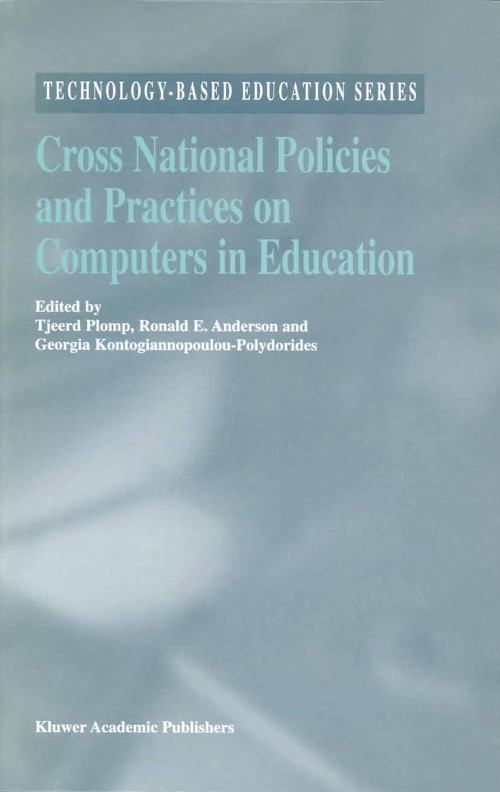
Cross National Policies and Practices on Computers in Education [electronic resource] / edited by Tjeerd Plomp, R.E. Anderson, Georgia Kontogiannopoulou-Polydorides.
Erişim Adresi
ISBN
9780585327679
Dil Kodu
İngilizce
Yer Numarası
DK/12269
Basım Bildirimi
1st ed. 1996.
Yayın Bilgisi
Dordrecht : Springer Netherlands : Imprint: Springer, 1996.
Fiziksel Niteleme
VIII, 470 p. online resource.
Dizi
Technology-Based Education Series ; 1
İçindekiler Notu
Curricular Aspects of Computers in Education -- Cross-National Perspectives on Inequity in Computer Education -- Educational Paradigms and Models of Computer Use does Technology Change Educational Practice? -- The Austrian Context of Computers in Education -- Policies and Practice in the Belgium French Community with Respect to Computers in Education -- Teaching Informatics in the Bulgarian Schools -- The Policies of China for Computers in Education -- New Information Technologies in the French Educational System -- Computers and Education in the Federal Republic of Germany -- Greek Schools and Computer Education: Socio-Cultural Interpretations -- Computers in Education: The Indian Context -- New Information Technology in the Irish School System: A Summary -- Japan’s National Policies on Computers in Education -- The Korean Context of Computers in Education -- Policies on Computers in Education in the Republic of Latvia -- The Luxembourg Context of Computers in Education -- Policies on Computers in Education in the Netherlands -- The Slovenian Context of Computers in Education -- Spanish Policies on New Technologies in Education -- Computer Education in Thailand -- New Information Technology in Schools in the United Kingdom -- The United States Context of Computers in Education.
Özet, vb.
This book presents some of the results from the second stage of lEA's study of Computers in Education (CompEd). lEA, the International Association for the Evaluation of Educational Achievement, conducts international comparative studies focussing on educational achievement, practices, and policies in various countries and education systems around the world. It has a Secretariat located in Amsterdam, the Netherlands. lEA studies have reported on a wide range of topics, each contributing to a deeper understanding of educational processes. The CompEd study is a project that sheds light on the way computers have been introduced in education and on how they are being used across the world today. The study proceeded in two stages with data collected for stage 1 in 1989 and for stage 2 in 1992. Results from both stages have been published in a variety of publications. This book reports about a special part of the study. Student achievement and school processes come into being in the context of the structure and the policies of national (or regional) education systems. The variety found in the CompEd results led us to ask how much might be explained by differences in these national or regional contexts. That is the reason the CompEd study took the initiative to invite the countries participating in the study, as well as some other countries that have had interesting developments in the domain of educational computers, to write a chapter describing their policies and practices regarding computers in education.
Konu
Educational technology.
Computer science.
Digital Education and Educational Technology.
Computer Science.
Computer science.
Digital Education and Educational Technology.
Computer Science.
Kurum Adı
Eseri Alıntıla
Referansları kullanmadan önce gözden geçirmeniz ve varsa gerekli düzeltmeleri yapmanız önerilir.
Dijital Kaynak
MARC Görünümü
LEADER 05608nam a22005775i 4500
001 811004
003 TR_AnAIT
005 20260131012739
007 cr nn 008mamaa
008 100301s1996 ne | s |||| 0|eng d
020 |a9780585327679|9978-0-585-32767-9
024 7 |a10.1007/978-0-585-32767-9|2doi
041 |aeng
049 |aTürk Tarih Kurumu Kütüphanesi
050 4|aLB1028.3
072 7|aJNV|2bicssc
072 7|aEDU000000|2bisacsh
072 7|aJNV|2thema
082 04|a371.33|223
090 |aDK/12269
245 10|aCross National Policies and Practices on Computers in Education|h[electronic resource] /|cedited by Tjeerd Plomp, R.E. Anderson, Georgia Kontogiannopoulou-Polydorides.
250 |a1st ed. 1996.
264 1|aDordrecht :|bSpringer Netherlands :|bImprint: Springer,|c1996.
300 |aVIII, 470 p.|bonline resource.
336 |atext|btxt|2rdacontent
337 |acomputer|bc|2rdamedia
338 |aonline resource|bcr|2rdacarrier
347 |atext file|bPDF|2rda
490 1 |aTechnology-Based Education Series ;|v1
505 0 |aCurricular Aspects of Computers in Education -- Cross-National Perspectives on Inequity in Computer Education -- Educational Paradigms and Models of Computer Use does Technology Change Educational Practice? -- The Austrian Context of Computers in Education -- Policies and Practice in the Belgium French Community with Respect to Computers in Education -- Teaching Informatics in the Bulgarian Schools -- The Policies of China for Computers in Education -- New Information Technologies in the French Educational System -- Computers and Education in the Federal Republic of Germany -- Greek Schools and Computer Education: Socio-Cultural Interpretations -- Computers in Education: The Indian Context -- New Information Technology in the Irish School System: A Summary -- Japan’s National Policies on Computers in Education -- The Korean Context of Computers in Education -- Policies on Computers in Education in the Republic of Latvia -- The Luxembourg Context of Computers in Education -- Policies on Computers in Education in the Netherlands -- The Slovenian Context of Computers in Education -- Spanish Policies on New Technologies in Education -- Computer Education in Thailand -- New Information Technology in Schools in the United Kingdom -- The United States Context of Computers in Education.
520 |aThis book presents some of the results from the second stage of lEA's study of Computers in Education (CompEd). lEA, the International Association for the Evaluation of Educational Achievement, conducts international comparative studies focussing on educational achievement, practices, and policies in various countries and education systems around the world. It has a Secretariat located in Amsterdam, the Netherlands. lEA studies have reported on a wide range of topics, each contributing to a deeper understanding of educational processes. The CompEd study is a project that sheds light on the way computers have been introduced in education and on how they are being used across the world today. The study proceeded in two stages with data collected for stage 1 in 1989 and for stage 2 in 1992. Results from both stages have been published in a variety of publications. This book reports about a special part of the study. Student achievement and school processes come into being in the context of the structure and the policies of national (or regional) education systems. The variety found in the CompEd results led us to ask how much might be explained by differences in these national or regional contexts. That is the reason the CompEd study took the initiative to invite the countries participating in the study, as well as some other countries that have had interesting developments in the domain of educational computers, to write a chapter describing their policies and practices regarding computers in education.
532 8 |aAccessibility summary: This PDF is not accessible. It is based on scanned pages and does not support features such as screen reader compatibility or described non-text content (images, graphs etc). However, it likely supports searchable and selectable text based on OCR (Optical Character Recognition). Users with accessibility needs may not be able to use this content effectively. Please contact us at accessibilitysupport@springernature.com if you require assistance or an alternative format.
532 8 |aInaccessible, or known limited accessibility
532 8 |aNo reading system accessibility options actively disabled
532 8 |aPublisher contact for further accessibility information: accessibilitysupport@springernature.com
650 0|aEducational technology.
650 0|aComputer science.
650 14|aDigital Education and Educational Technology.
650 24|aComputer Science.
700 1 |aPlomp, Tjeerd.|eeditor.|4edt|4http://id.loc.gov/vocabulary/relators/edt
700 1 |aAnderson, R.E.|eeditor.|4edt|4http://id.loc.gov/vocabulary/relators/edt
700 1 |aKontogiannopoulou-Polydorides, Georgia.|eeditor.|4edt|4http://id.loc.gov/vocabulary/relators/edt
710 2 |aSpringerLink (Online service)
773 0 |tSpringer Nature eBook
776 08|iPrinted edition:|z9780792342175
776 08|iPrinted edition:|z9789048147472
776 08|iPrinted edition:|z9789401737807
830 0|aTechnology-Based Education Series ;|v1
856 40|uhttps://doi.org/10.1007/978-0-585-32767-9
912 |aZDB-2-SHU
912 |aZDB-2-SXED
912 |aZDB-2-BAE
950 |aHumanities, Social Sciences and Law (SpringerNature-11648)
950 |aEducation (R0) (SpringerNature-43721)
001 811004
003 TR_AnAIT
005 20260131012739
007 cr nn 008mamaa
008 100301s1996 ne | s |||| 0|eng d
020 |a9780585327679|9978-0-585-32767-9
024 7 |a10.1007/978-0-585-32767-9|2doi
041 |aeng
049 |aTürk Tarih Kurumu Kütüphanesi
050 4|aLB1028.3
072 7|aJNV|2bicssc
072 7|aEDU000000|2bisacsh
072 7|aJNV|2thema
082 04|a371.33|223
090 |aDK/12269
245 10|aCross National Policies and Practices on Computers in Education|h[electronic resource] /|cedited by Tjeerd Plomp, R.E. Anderson, Georgia Kontogiannopoulou-Polydorides.
250 |a1st ed. 1996.
264 1|aDordrecht :|bSpringer Netherlands :|bImprint: Springer,|c1996.
300 |aVIII, 470 p.|bonline resource.
336 |atext|btxt|2rdacontent
337 |acomputer|bc|2rdamedia
338 |aonline resource|bcr|2rdacarrier
347 |atext file|bPDF|2rda
490 1 |aTechnology-Based Education Series ;|v1
505 0 |aCurricular Aspects of Computers in Education -- Cross-National Perspectives on Inequity in Computer Education -- Educational Paradigms and Models of Computer Use does Technology Change Educational Practice? -- The Austrian Context of Computers in Education -- Policies and Practice in the Belgium French Community with Respect to Computers in Education -- Teaching Informatics in the Bulgarian Schools -- The Policies of China for Computers in Education -- New Information Technologies in the French Educational System -- Computers and Education in the Federal Republic of Germany -- Greek Schools and Computer Education: Socio-Cultural Interpretations -- Computers in Education: The Indian Context -- New Information Technology in the Irish School System: A Summary -- Japan’s National Policies on Computers in Education -- The Korean Context of Computers in Education -- Policies on Computers in Education in the Republic of Latvia -- The Luxembourg Context of Computers in Education -- Policies on Computers in Education in the Netherlands -- The Slovenian Context of Computers in Education -- Spanish Policies on New Technologies in Education -- Computer Education in Thailand -- New Information Technology in Schools in the United Kingdom -- The United States Context of Computers in Education.
520 |aThis book presents some of the results from the second stage of lEA's study of Computers in Education (CompEd). lEA, the International Association for the Evaluation of Educational Achievement, conducts international comparative studies focussing on educational achievement, practices, and policies in various countries and education systems around the world. It has a Secretariat located in Amsterdam, the Netherlands. lEA studies have reported on a wide range of topics, each contributing to a deeper understanding of educational processes. The CompEd study is a project that sheds light on the way computers have been introduced in education and on how they are being used across the world today. The study proceeded in two stages with data collected for stage 1 in 1989 and for stage 2 in 1992. Results from both stages have been published in a variety of publications. This book reports about a special part of the study. Student achievement and school processes come into being in the context of the structure and the policies of national (or regional) education systems. The variety found in the CompEd results led us to ask how much might be explained by differences in these national or regional contexts. That is the reason the CompEd study took the initiative to invite the countries participating in the study, as well as some other countries that have had interesting developments in the domain of educational computers, to write a chapter describing their policies and practices regarding computers in education.
532 8 |aAccessibility summary: This PDF is not accessible. It is based on scanned pages and does not support features such as screen reader compatibility or described non-text content (images, graphs etc). However, it likely supports searchable and selectable text based on OCR (Optical Character Recognition). Users with accessibility needs may not be able to use this content effectively. Please contact us at accessibilitysupport@springernature.com if you require assistance or an alternative format.
532 8 |aInaccessible, or known limited accessibility
532 8 |aNo reading system accessibility options actively disabled
532 8 |aPublisher contact for further accessibility information: accessibilitysupport@springernature.com
650 0|aEducational technology.
650 0|aComputer science.
650 14|aDigital Education and Educational Technology.
650 24|aComputer Science.
700 1 |aPlomp, Tjeerd.|eeditor.|4edt|4http://id.loc.gov/vocabulary/relators/edt
700 1 |aAnderson, R.E.|eeditor.|4edt|4http://id.loc.gov/vocabulary/relators/edt
700 1 |aKontogiannopoulou-Polydorides, Georgia.|eeditor.|4edt|4http://id.loc.gov/vocabulary/relators/edt
710 2 |aSpringerLink (Online service)
773 0 |tSpringer Nature eBook
776 08|iPrinted edition:|z9780792342175
776 08|iPrinted edition:|z9789048147472
776 08|iPrinted edition:|z9789401737807
830 0|aTechnology-Based Education Series ;|v1
856 40|uhttps://doi.org/10.1007/978-0-585-32767-9
912 |aZDB-2-SHU
912 |aZDB-2-SXED
912 |aZDB-2-BAE
950 |aHumanities, Social Sciences and Law (SpringerNature-11648)
950 |aEducation (R0) (SpringerNature-43721)
Materyaller
Depodan talep edilen materyal sadece kütüphane içerisinde kullanılmaktadır.
Materyal dışarıya ödünç verilmemektedir.
Materyal dışarıya ödünç verilmemektedir.
