LEADER 03768nam a22005175i 4500
001 811179
003 TR_AnAIT
005 20260131011940
007 cr nn 008mamaa
008 100301s2006 ne | s |||| 0|eng d
020 |a9781402053221|9978-1-4020-5322-1
024 7 |a10.1007/1-4020-5322-3|2doi
041 |aeng
049 |aTürk Tarih Kurumu Kütüphanesi
050 4|aLC71-188
072 7|aJNF|2bicssc
072 7|aEDU034000|2bisacsh
072 7|aJNF|2thema
082 04|a379|223
090 |aDK/12443
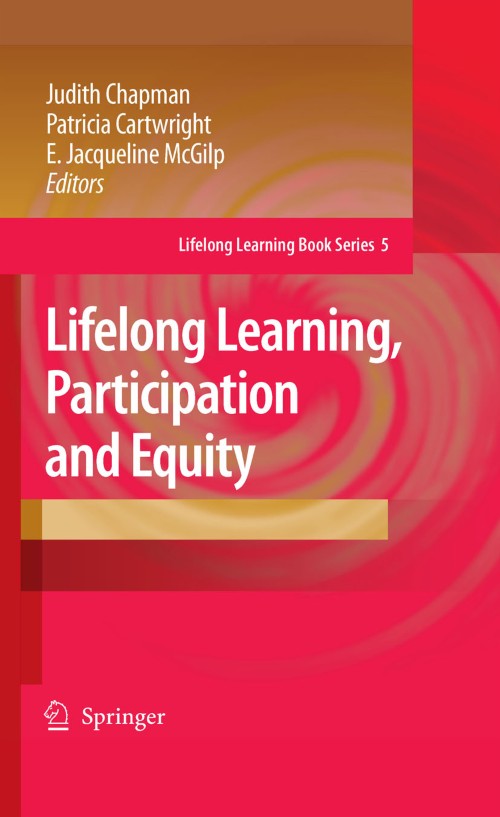
245 10|aLifelong Learning, Participation and Equity|h[electronic resource] /|cedited by Judith Chapman, Patricia Cartwright, E. Jacqueline McGilp.
250 |a1st ed. 2006.
264 1|aDordrecht :|bSpringer Netherlands :|bImprint: Springer,|c2006.
300 |aXXVI, 366 p.|bonline resource.
336 |atext|btxt|2rdacontent
337 |acomputer|bc|2rdamedia
338 |aonline resource|bcr|2rdacarrier
347 |atext file|bPDF|2rda
490 1 |aLifelong Learning Book Series,|x2730-5325 ;|v5
505 0 |aEducation and Equity: Perspectives From OECD -- Ethical Issues in Lifelong Learning and Education -- Participation in Learning: Why, What, Where and How do People Learn? -- Attracting New Groups into Learning: Lessons from Research in England -- Together for a Change: A Partnership Approach to Individual and Community Learning -- Lifelong Learning for All: The Challenge to Adults and Communities -- Older Learners and Engagement with the Labour Market -- Overcoming Barriers that Impede Participation in Lifelong Learning -- Men’s Learning in Small and Remote Towns in Australia -- The Generation In-Between: The Participation of Generation X in Lifelong Learning -- Youth Transitions to Work and Further Education in Australia -- Schools And Lifelong Learners -- Lifelong Learning: Helping Address Disadvantage Through Community-Based Learning Projects -- Lifelong Learning and the Arts: “The Arts are not the Flowers, But the Roots of Education“ -- Lifelong Learning, Family Learning and Equity -- An Analysys of Problems, Issues and Trends in the Provision of Liflong Learning: Lessons Learned.
520 |aIn many countries, schools, universities and other traditional learning institutions are not providing for the educational needs of all members of the community. In many communities, particularly in regional, rural and disadvantaged areas, there are only limited options for people to undertake learning. Limited participation in learning has the danger of reinforcing people’s alienation from mainstream education and from participation and inclusion in social institutions and economic and community life more generally. This book addresses the challenge of identifying effective ways of accommodating the learning needs of all people and in so doing achieving the goals of lifelong learning for all.
650 0|aEducation and state.
650 0|aEducational sociology.
650 14|aEducational Policy and Politics.
650 24|aSociology of Education.
700 1 |aChapman, Judith.|eeditor.|4edt|4http://id.loc.gov/vocabulary/relators/edt
700 1 |aCartwright, Patricia.|eeditor.|4edt|4http://id.loc.gov/vocabulary/relators/edt
700 1 |aMcGilp, E. Jacqueline.|eeditor.|4edt|4http://id.loc.gov/vocabulary/relators/edt
710 2 |aSpringerLink (Online service)
773 0 |tSpringer Nature eBook
776 08|iPrinted edition:|z9781402053214
776 08|iPrinted edition:|z9789048110711
776 08|iPrinted edition:|z9789048173396
830 0|aLifelong Learning Book Series,|x2730-5325 ;|v5
856 40|uhttps://doi.org/10.1007/1-4020-5322-3
912 |aZDB-2-SHU
912 |aZDB-2-SXED
950 |aHumanities, Social Sciences and Law (SpringerNature-11648)
950 |aEducation (R0) (SpringerNature-43721)