LEADER 03370nam a22005295i 4500
001 811219
003 TR_AnAIT
005 20260131011838
007 cr nn 008mamaa
008 100301s2003 ne | s |||| 0|eng d
020 |a9781402061684|9978-1-4020-6168-4
024 7 |a10.1007/978-1-4020-6168-4|2doi
041 |aeng
049 |aTürk Tarih Kurumu Kütüphanesi
050 4|aLB1-3640
050 4|aB63
072 7|aJNA|2bicssc
072 7|aEDU040000|2bisacsh
072 7|aJNA|2thema
082 04|a370.1|223
090 |aDK/12483
100 1 |aAloni, N.|eauthor.|4aut|4http://id.loc.gov/vocabulary/relators/aut
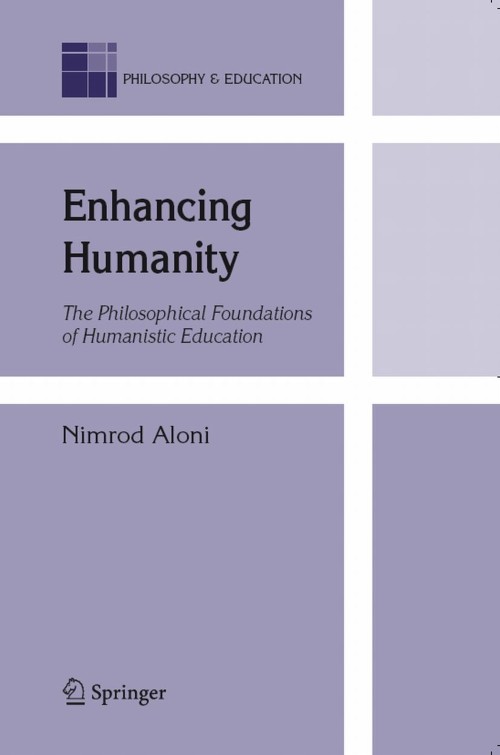
245 10|aEnhancing Humanity|h[electronic resource] :|bThe Philosophical Foundations of Humanistic Education /|cby N. Aloni.
250 |a1st ed. 2003.
264 1|aDordrecht :|bSpringer Netherlands :|bImprint: Springer,|c2003.
300 |aXIV, 230 p.|bonline resource.
336 |atext|btxt|2rdacontent
337 |acomputer|bc|2rdamedia
338 |aonline resource|bcr|2rdacarrier
347 |atext file|bPDF|2rda
490 1 |aPhilosophy and Education ;|v9
505 0 |aBetween the Classical and Post-modern: Milestones and Central Approaches in Humanistic Education -- An Integrative and Normative Model for Humanistic Education at the Advent of the 21st Century -- Education Towards Humanistic Morality in an Era of Value Crisis -- Humanistic Education in the Test of Current Events.
520 |aIn Jean PaulSartre's Nausea, Roquentin feels bound to listen to the sentimental ramblings about humanism and humanity by the Self Taught Man. "Is it my fault," muses Roquentin, "in all he tells me, I recognize the lack of the genuine article? Is it my fault if, as he speaks, I see all the humanists I have known rise up? I have known so many ofthem!" And then he lists the radical humanist, the so called"left" humanist, and Communist Humanist, the Catholic humanist, all claiming a passion for their fellow men. "But there are others, a swarm of others: the humanist philosopher who bends over his brothers like a wise older brother with a sense of his responsibility; the humanist who loves men as they are, the humanist who loves men as they ought to be, the one who wants to save them with their consent, and the one who will save them in spite of themselves. . . . " Quite naturally, the skeptical Roquentin ends by saying how "they all hate each other: as individuals, not as men. " Fully aware of the misuse and false comfort in the use of the term, Professor Aloni proceeds to restore meaning to the word as well as appropriate its educational significance. There is a freshness in this book, a restoration of a lost clarity, a regaining of authentic commitment.
650 0|aEducation|xPhilosophy.
650 0|aPhilosophy of mind.
650 0|aSelf.
650 14|aPhilosophy of Education.
650 24|aPhilosophy of the Self.
710 2 |aSpringerLink (Online service)
773 0 |tSpringer Nature eBook
776 08|iPrinted edition:|z9781402009617
776 08|iPrinted edition:|z9781402061677
776 08|iPrinted edition:|z9789401751537
830 0|aPhilosophy and Education ;|v9
856 40|uhttps://doi.org/10.1007/978-1-4020-6168-4
912 |aZDB-2-SHU
912 |aZDB-2-SXPR
912 |aZDB-2-BAE
950 |aHumanities, Social Sciences and Law (SpringerNature-11648)
950 |aPhilosophy and Religion (R0) (SpringerNature-43725)