LEADER 04280nam a22005175i 4500
001 811277
003 TR_AnAIT
005 20260131011437
007 cr nn 008mamaa
008 100301s2008 ne | s |||| 0|eng d
020 |a9781402089282|9978-1-4020-8928-2
024 7 |a10.1007/978-1-4020-8928-2|2doi
041 |aeng
049 |aTürk Tarih Kurumu Kütüphanesi
050 4|aLB1028.3
072 7|aJNV|2bicssc
072 7|aEDU000000|2bisacsh
072 7|aJNV|2thema
082 04|a371.33|223
090 |aDK/12540
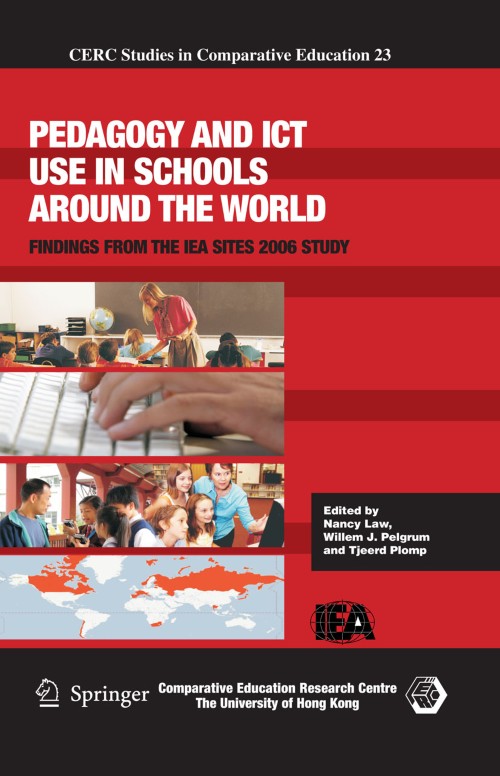
245 10|aPedagogy and ICT Use in Schools around the World|h[electronic resource] :|bFindings from the IEA SITES 2006 Study /|cedited by Nancy Law, Willem J. Pelgrum, Tjeerd Plomp.
250 |a1st ed. 2008.
264 1|aDordrecht :|bSpringer Netherlands :|bImprint: Springer,|c2008.
300 |aXXXVI, 296 p.|bonline resource.
336 |atext|btxt|2rdacontent
337 |acomputer|bc|2rdamedia
338 |aonline resource|bcr|2rdacarrier
347 |atext file|bPDF|2rda
490 1 |aCERC Studies in Comparative Education,|x2543-022X ;|v23
505 0 |ato SITES 2006 -- Study Design and Methodology -- National Contexts -- School Practices and Conditions for Pedagogy and ICT -- Pedagogical Orientations in Mathematics and Science and the Use of ICT -- Teacher Characteristics, Contextual Factors, and How These Affect the Pedagogical Use of ICT -- Satisfying Pedagogical Practices Using ICT -- In Search of Explanations -- Summary and Reflections.
520 |aThe end of the last millennium was marked by rapid technological advances and deep changes in many aspects of human activity, often taken together as indicative of a shift into a ‘knowledge era’. Such changes have stimulated much discussion about the role and processes of education, and about the role of information and communication technology (ICT) in teaching and learning in this new era. Many policy documents relating to these themes have been published by international and regional organizations such as the European Commission, the European Roundtable of Industrialists, the Organization for Economic Cooperation and Development (OECD), UNESCO and the World Bank. Numerous blueprints on education reform and on ICT in education have also been set out by various governments since the mid-1990s. These policy initiatives brought with them a variety of strategic implementation priorities that differ from country to country, depending on the socio-economic and political context. Such educational strategies may involve, amongst others, changes in curriculum and/or assessment at the system level, provision for ICT infrastructure, teacher professional development, and/or technical and pedagogical support for teachers. Given the deep technological, economic and policy changes that have taken place over the last decade, are there indications that pedagogical practices are changing as well? What impact is the pedagogical use of ICT making in schools around the world? What is the impact of the implementation of these policies on pedagogy and ICT use in classrooms? These are the questions that this book addresses through an analysis of the findings from SITES 2006, an international comparative study of pedagogy and ICT use conducted under the auspices of the International Association for the Evaluation of Educational Achievement (IEA).
650 0|aEducational technology.
650 0|aEducation|xData processing.
650 14|aDigital Education and Educational Technology.
650 24|aComputers and Education.
700 1 |aLaw, Nancy.|eeditor.|4edt|4http://id.loc.gov/vocabulary/relators/edt
700 1 |aPelgrum, Willem J.|eeditor.|4edt|4http://id.loc.gov/vocabulary/relators/edt
700 1 |aPlomp, Tjeerd.|eeditor.|4edt|4http://id.loc.gov/vocabulary/relators/edt
710 2 |aSpringerLink (Online service)
773 0 |tSpringer Nature eBook
776 08|iPrinted edition:|z9781402089275
776 08|iPrinted edition:|z9789048122134
776 08|iPrinted edition:|z9789048180301
830 0|aCERC Studies in Comparative Education,|x2543-022X ;|v23
856 40|uhttps://doi.org/10.1007/978-1-4020-8928-2
912 |aZDB-2-SHU
912 |aZDB-2-SXED
950 |aHumanities, Social Sciences and Law (SpringerNature-11648)
950 |aEducation (R0) (SpringerNature-43721)