

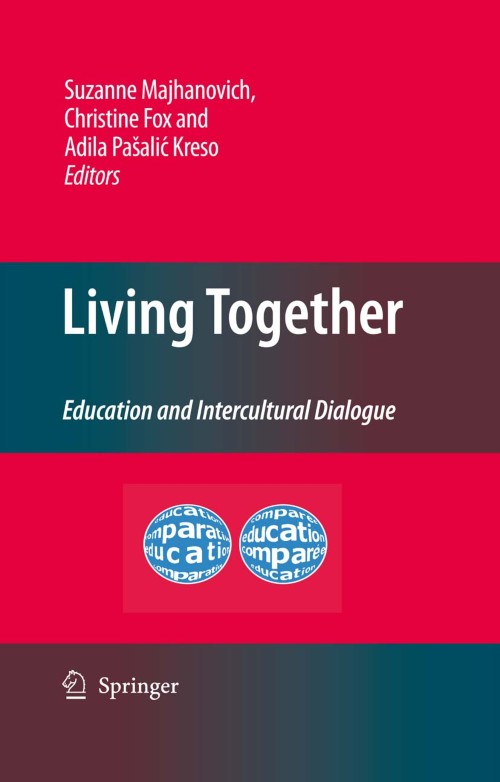
Living Together [electronic resource] : Education and Intercultural Dialogue / edited by Suzanne Majhanovich, Christine Fox, Adila Pasalic Kreso.
Erişim Adresi
ISBN
9781402098161
Dil Kodu
İngilizce
Yer Numarası
DK/12738
Basım Bildirimi
1st ed. 2009.
Yayın Bilgisi
Dordrecht : Springer Netherlands : Imprint: Springer, 2009.
Fiziksel Niteleme
VI, 230 p. online resource.
İçindekiler Notu
The WCCES and Intercultural Dialogue: Historical Perspectives and Continuing Challenges -- Bridging Cultures and Traditions for Educational and International Development: Comparative Research, Dialogue and Difference -- Complex Societies, Common Schools and Curriculum: Separate is not Equal -- The War and Post-War Impact on the Educational System of Bosnia and Herzegovina -- Engaging Youth in Community Development: Post-War Healing and Recovery in Bosnia and Herzegovina -- Le « Harcèlement Entre Pairs » À L’École Élémentaire Tchèque: Une Question D’interprétation -- Core Elements of the European (Higher) Education Policy: Market-Driven Restructuring or Impetus for Intercultural Rapprochement? -- Teacher Education and Development Policies: Critical Discourse Analysis from a Comparative Perspective -- Towards an Indigenous African Educational Discourse: a Philosophical Reflection -- Nurturing Relationships and Honouring Responsibilities: A Pacific Perspective -- Convergence of Monastic and Modern Education in Bhutan? -- Frontiers of Education: Japan As “Global Model” or “Nation At Risk”?.
Özet, vb.
The papers in this book provide international perspectives on the possibilities for and challenges facing intercultural dialogue in education. These challenges are many in a world characterized by the tensions and demands of both global and local issues as well as regional conflicts. This is especially so as post-conflict deliberations are complicated by the cultural, religious and linguistic diversity within both small and large states. The authors here analyze the interplay between intercultural dialogue, education and the state, and reveal how educational experiences are able either to exacerbate problems, or mitigate them by promoting an intercultural dialogue of reconciliation as well as recognition of shared values. The mere act of collaborating in educational endeavor can itself have a positive impact. The outcomes of attempts at intercultural understanding are examined by educational researchers from high- and low-income countries, from the east and the west, and from both northern and southern hemispheres. The authors demonstrate the value of disciplined comparison of differing education societies, and detail the international research aimed at augmenting cross- and intercultural understanding. This exciting and wide-ranging volume has been facilitated by the World Council of Comparative Education Societies and affords compelling visions of the ways in which education can be a force for good in our highly diverse societies by fostering intercultural dialogue.
Konu
Education.
Education.
Education.
Diğer Yazarlar
Kurum Adı
Eseri Alıntıla
Referansları kullanmadan önce gözden geçirmeniz ve varsa gerekli düzeltmeleri yapmanız önerilir.
Dijital Kaynak
MARC Görünümü
LEADER 04349nam a22004695i 4500
001 811477
003 TR_AnAIT
005 20260131005810
007 cr nn 008mamaa
008 100301s2009 ne | s |||| 0|eng d
020 |a9781402098161|9978-1-4020-9816-1
024 7 |a10.1007/978-1-4020-9816-1|2doi
041 |aeng
049 |aTürk Tarih Kurumu Kütüphanesi
050 4|aL1-991
072 7|aJN|2bicssc
072 7|aEDU000000|2bisacsh
072 7|aJN|2thema
082 04|a370|223
090 |aDK/12738
245 10|aLiving Together|h[electronic resource] :|bEducation and Intercultural Dialogue /|cedited by Suzanne Majhanovich, Christine Fox, Adila Pasalic Kreso.
250 |a1st ed. 2009.
264 1|aDordrecht :|bSpringer Netherlands :|bImprint: Springer,|c2009.
300 |aVI, 230 p.|bonline resource.
336 |atext|btxt|2rdacontent
337 |acomputer|bc|2rdamedia
338 |aonline resource|bcr|2rdacarrier
347 |atext file|bPDF|2rda
505 0 |aThe WCCES and Intercultural Dialogue: Historical Perspectives and Continuing Challenges -- Bridging Cultures and Traditions for Educational and International Development: Comparative Research, Dialogue and Difference -- Complex Societies, Common Schools and Curriculum: Separate is not Equal -- The War and Post-War Impact on the Educational System of Bosnia and Herzegovina -- Engaging Youth in Community Development: Post-War Healing and Recovery in Bosnia and Herzegovina -- Le « Harcèlement Entre Pairs » À L’École Élémentaire Tchèque: Une Question D’interprétation -- Core Elements of the European (Higher) Education Policy: Market-Driven Restructuring or Impetus for Intercultural Rapprochement? -- Teacher Education and Development Policies: Critical Discourse Analysis from a Comparative Perspective -- Towards an Indigenous African Educational Discourse: a Philosophical Reflection -- Nurturing Relationships and Honouring Responsibilities: A Pacific Perspective -- Convergence of Monastic and Modern Education in Bhutan? -- Frontiers of Education: Japan As “Global Model” or “Nation At Risk”?.
520 |aThe papers in this book provide international perspectives on the possibilities for and challenges facing intercultural dialogue in education. These challenges are many in a world characterized by the tensions and demands of both global and local issues as well as regional conflicts. This is especially so as post-conflict deliberations are complicated by the cultural, religious and linguistic diversity within both small and large states. The authors here analyze the interplay between intercultural dialogue, education and the state, and reveal how educational experiences are able either to exacerbate problems, or mitigate them by promoting an intercultural dialogue of reconciliation as well as recognition of shared values. The mere act of collaborating in educational endeavor can itself have a positive impact. The outcomes of attempts at intercultural understanding are examined by educational researchers from high- and low-income countries, from the east and the west, and from both northern and southern hemispheres. The authors demonstrate the value of disciplined comparison of differing education societies, and detail the international research aimed at augmenting cross- and intercultural understanding. This exciting and wide-ranging volume has been facilitated by the World Council of Comparative Education Societies and affords compelling visions of the ways in which education can be a force for good in our highly diverse societies by fostering intercultural dialogue.
650 0|aEducation.
650 14|aEducation.
700 1 |aMajhanovich, Suzanne.|eeditor.|4edt|4http://id.loc.gov/vocabulary/relators/edt
700 1 |aFox, Christine.|eeditor.|4edt|4http://id.loc.gov/vocabulary/relators/edt
700 1 |aKreso, Adila Pasalic.|eeditor.|4edt|4http://id.loc.gov/vocabulary/relators/edt
710 2 |aSpringerLink (Online service)
773 0 |tSpringer Nature eBook
776 08|iPrinted edition:|z9781402098154
776 08|iPrinted edition:|z9781402098505
776 08|iPrinted edition:|z9789048182053
856 40|uhttps://doi.org/10.1007/978-1-4020-9816-1
912 |aZDB-2-SHU
912 |aZDB-2-SXED
950 |aHumanities, Social Sciences and Law (SpringerNature-11648)
950 |aEducation (R0) (SpringerNature-43721)
001 811477
003 TR_AnAIT
005 20260131005810
007 cr nn 008mamaa
008 100301s2009 ne | s |||| 0|eng d
020 |a9781402098161|9978-1-4020-9816-1
024 7 |a10.1007/978-1-4020-9816-1|2doi
041 |aeng
049 |aTürk Tarih Kurumu Kütüphanesi
050 4|aL1-991
072 7|aJN|2bicssc
072 7|aEDU000000|2bisacsh
072 7|aJN|2thema
082 04|a370|223
090 |aDK/12738
245 10|aLiving Together|h[electronic resource] :|bEducation and Intercultural Dialogue /|cedited by Suzanne Majhanovich, Christine Fox, Adila Pasalic Kreso.
250 |a1st ed. 2009.
264 1|aDordrecht :|bSpringer Netherlands :|bImprint: Springer,|c2009.
300 |aVI, 230 p.|bonline resource.
336 |atext|btxt|2rdacontent
337 |acomputer|bc|2rdamedia
338 |aonline resource|bcr|2rdacarrier
347 |atext file|bPDF|2rda
505 0 |aThe WCCES and Intercultural Dialogue: Historical Perspectives and Continuing Challenges -- Bridging Cultures and Traditions for Educational and International Development: Comparative Research, Dialogue and Difference -- Complex Societies, Common Schools and Curriculum: Separate is not Equal -- The War and Post-War Impact on the Educational System of Bosnia and Herzegovina -- Engaging Youth in Community Development: Post-War Healing and Recovery in Bosnia and Herzegovina -- Le « Harcèlement Entre Pairs » À L’École Élémentaire Tchèque: Une Question D’interprétation -- Core Elements of the European (Higher) Education Policy: Market-Driven Restructuring or Impetus for Intercultural Rapprochement? -- Teacher Education and Development Policies: Critical Discourse Analysis from a Comparative Perspective -- Towards an Indigenous African Educational Discourse: a Philosophical Reflection -- Nurturing Relationships and Honouring Responsibilities: A Pacific Perspective -- Convergence of Monastic and Modern Education in Bhutan? -- Frontiers of Education: Japan As “Global Model” or “Nation At Risk”?.
520 |aThe papers in this book provide international perspectives on the possibilities for and challenges facing intercultural dialogue in education. These challenges are many in a world characterized by the tensions and demands of both global and local issues as well as regional conflicts. This is especially so as post-conflict deliberations are complicated by the cultural, religious and linguistic diversity within both small and large states. The authors here analyze the interplay between intercultural dialogue, education and the state, and reveal how educational experiences are able either to exacerbate problems, or mitigate them by promoting an intercultural dialogue of reconciliation as well as recognition of shared values. The mere act of collaborating in educational endeavor can itself have a positive impact. The outcomes of attempts at intercultural understanding are examined by educational researchers from high- and low-income countries, from the east and the west, and from both northern and southern hemispheres. The authors demonstrate the value of disciplined comparison of differing education societies, and detail the international research aimed at augmenting cross- and intercultural understanding. This exciting and wide-ranging volume has been facilitated by the World Council of Comparative Education Societies and affords compelling visions of the ways in which education can be a force for good in our highly diverse societies by fostering intercultural dialogue.
650 0|aEducation.
650 14|aEducation.
700 1 |aMajhanovich, Suzanne.|eeditor.|4edt|4http://id.loc.gov/vocabulary/relators/edt
700 1 |aFox, Christine.|eeditor.|4edt|4http://id.loc.gov/vocabulary/relators/edt
700 1 |aKreso, Adila Pasalic.|eeditor.|4edt|4http://id.loc.gov/vocabulary/relators/edt
710 2 |aSpringerLink (Online service)
773 0 |tSpringer Nature eBook
776 08|iPrinted edition:|z9781402098154
776 08|iPrinted edition:|z9781402098505
776 08|iPrinted edition:|z9789048182053
856 40|uhttps://doi.org/10.1007/978-1-4020-9816-1
912 |aZDB-2-SHU
912 |aZDB-2-SXED
950 |aHumanities, Social Sciences and Law (SpringerNature-11648)
950 |aEducation (R0) (SpringerNature-43721)
Materyaller
Depodan talep edilen materyal sadece kütüphane içerisinde kullanılmaktadır.
Materyal dışarıya ödünç verilmemektedir.
Materyal dışarıya ödünç verilmemektedir.
