

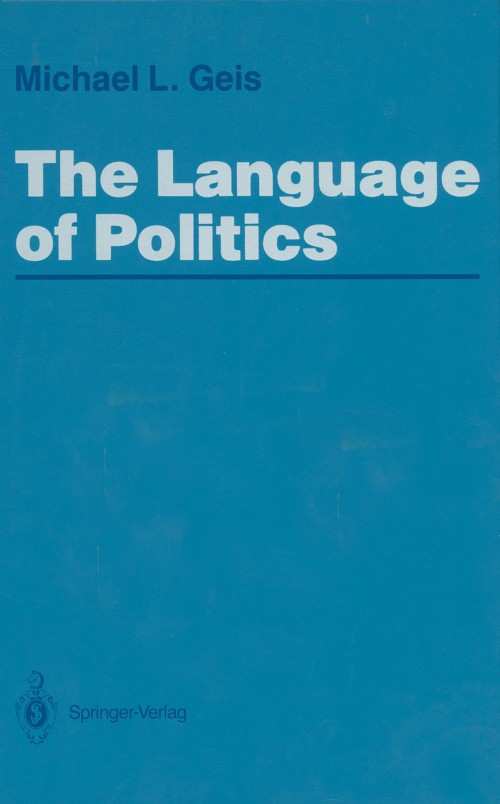
The Language of Politics [electronic resource] / by Michael L. Geis.
Erişim Adresi
ISBN
9781461247142
Dil Kodu
İngilizce
Yer Numarası
DK/12767
Yazar
Basım Bildirimi
1st ed. 1987.
Yayın Bilgisi
New York, NY : Springer New York : Imprint: Springer, 1987.
Fiziksel Niteleme
XII, 190 p. online resource.
İçindekiler Notu
1 Introduction -- Language and Politics -- Orwell’s Thesis -- A Question of Meaning -- Politics and Political Journalism -- The Role of Journalism in the Political Process -- The Question of Bias -- Conclusion -- 2 Language and Myth in American Politics -- Orwell’s Thesis -- Language and Myth -- Myths as Simple Causal Theories -- Myth and Language in American Politics -- Conclusion -- 3 The Language of American Presidents -- President John F. Kennedy -- President Lyndon Baines Johnson -- President Ronald Reagan -- Conclusion -- 4 The Problem of Bias in Political Journalism -- Review of the Recent Literature -- Nonlinguistic Bias -- Linguistic Bias -- Other Asymmetries in Political Journalism -- Charges of Bias in Political Journalism -- Conclusion -- 5 Reporting of Political Speech -- The Ingredients of Reported Speech -- The News Source -- References to News Receivers -- Reports of Null Speech Events -- The Content of Reported Speech -- Verbs -- Tense and Aspect in Reported Speech -- Conclusion -- 6 Identification of Context in News Reporting -- Specification of Context in News Reports -- Identification of Extralinguistic Context -- The Linguistic Context -- Conclusion -- 7 Political Bias in News Magazines -- Previous Studies -- The Present Study -- Results of the Study -- Conclusion -- 8 Linguistic Aspects of Television Journalism -- Introductory Remarks -- Live Broadcasts -- The Immediacy of Television Journalism -- The Structure of Television News Stories -- Types of Television News Stories -- Instant Television News Analysis -- Conclusion -- 9 A Brief Look at Presidential Press Conferences -- Implied Criticism -- The Reagan Replies -- The Great Communicator -- Conclusion -- 10 Conclusion -- References.
Özet, vb.
This study is the second of two I have done concerning how language is used to persuade others to believe things and to do things. The first, published by Aca demic Press, was The Language of Television Advertising, and was concerned with how advertisers use language in their efforts to sell products and services and how consumers could be expected to understand it. In this study, the focus is on how politicians use language to win elections and get others to accept their policies and programs and on how journalists report the suasive efforts of politicans. I combine an interest in the language of political reporting with an interest in the language of politics for a number of reasons. First, much of the suasive rhetoric of politicians is filtered through the minds of political journalists before it reaches the citizenry, and we can be reasonably sure that this rhetoric does not come out the way it went in. Second, the press plays a significant role in deter mining the nation's political agenda through its choices of what issues will be presented to the public, how these issues will be presented, and which voices will be heard speaking out on these issues. Third, political reporting can be suasive in effect, if not in intent, and it will be useful, I think, to understand how this is so.
Konu
Communication.
Journalism.
Communication in politics.
Psychology.
Media and Communication.
Journalism.
Political Communication.
Behavioral Sciences and Psychology.
Journalism.
Communication in politics.
Psychology.
Media and Communication.
Journalism.
Political Communication.
Behavioral Sciences and Psychology.
Kurum Adı
Eseri Alıntıla
Referansları kullanmadan önce gözden geçirmeniz ve varsa gerekli düzeltmeleri yapmanız önerilir.
Dijital Kaynak
MARC Görünümü
LEADER 05550nam a22005775i 4500
001 811508
003 TR_AnAIT
005 20260131005604
007 cr nn 008mamaa
008 121227s1987 xxu| s |||| 0|eng d
020 |a9781461247142|9978-1-4612-4714-2
024 7 |a10.1007/978-1-4612-4714-2|2doi
041 |aeng
049 |aTürk Tarih Kurumu Kütüphanesi
050 4|aP87-96
072 7|aJFD|2bicssc
072 7|aSOC052000|2bisacsh
072 7|aJBCT|2thema
082 04|a302.2|223
090 |aDK/12767
100 1 |aGeis, Michael L.|eauthor.|4aut|4http://id.loc.gov/vocabulary/relators/aut
245 14|aThe Language of Politics|h[electronic resource] /|cby Michael L. Geis.
250 |a1st ed. 1987.
264 1|aNew York, NY :|bSpringer New York :|bImprint: Springer,|c1987.
300 |aXII, 190 p.|bonline resource.
336 |atext|btxt|2rdacontent
337 |acomputer|bc|2rdamedia
338 |aonline resource|bcr|2rdacarrier
347 |atext file|bPDF|2rda
505 0 |a1 Introduction -- Language and Politics -- Orwell’s Thesis -- A Question of Meaning -- Politics and Political Journalism -- The Role of Journalism in the Political Process -- The Question of Bias -- Conclusion -- 2 Language and Myth in American Politics -- Orwell’s Thesis -- Language and Myth -- Myths as Simple Causal Theories -- Myth and Language in American Politics -- Conclusion -- 3 The Language of American Presidents -- President John F. Kennedy -- President Lyndon Baines Johnson -- President Ronald Reagan -- Conclusion -- 4 The Problem of Bias in Political Journalism -- Review of the Recent Literature -- Nonlinguistic Bias -- Linguistic Bias -- Other Asymmetries in Political Journalism -- Charges of Bias in Political Journalism -- Conclusion -- 5 Reporting of Political Speech -- The Ingredients of Reported Speech -- The News Source -- References to News Receivers -- Reports of Null Speech Events -- The Content of Reported Speech -- Verbs -- Tense and Aspect in Reported Speech -- Conclusion -- 6 Identification of Context in News Reporting -- Specification of Context in News Reports -- Identification of Extralinguistic Context -- The Linguistic Context -- Conclusion -- 7 Political Bias in News Magazines -- Previous Studies -- The Present Study -- Results of the Study -- Conclusion -- 8 Linguistic Aspects of Television Journalism -- Introductory Remarks -- Live Broadcasts -- The Immediacy of Television Journalism -- The Structure of Television News Stories -- Types of Television News Stories -- Instant Television News Analysis -- Conclusion -- 9 A Brief Look at Presidential Press Conferences -- Implied Criticism -- The Reagan Replies -- The Great Communicator -- Conclusion -- 10 Conclusion -- References.
520 |aThis study is the second of two I have done concerning how language is used to persuade others to believe things and to do things. The first, published by Aca demic Press, was The Language of Television Advertising, and was concerned with how advertisers use language in their efforts to sell products and services and how consumers could be expected to understand it. In this study, the focus is on how politicians use language to win elections and get others to accept their policies and programs and on how journalists report the suasive efforts of politicans. I combine an interest in the language of political reporting with an interest in the language of politics for a number of reasons. First, much of the suasive rhetoric of politicians is filtered through the minds of political journalists before it reaches the citizenry, and we can be reasonably sure that this rhetoric does not come out the way it went in. Second, the press plays a significant role in deter mining the nation's political agenda through its choices of what issues will be presented to the public, how these issues will be presented, and which voices will be heard speaking out on these issues. Third, political reporting can be suasive in effect, if not in intent, and it will be useful, I think, to understand how this is so.
532 8 |aAccessibility summary: This PDF is not accessible. It is based on scanned pages and does not support features such as screen reader compatibility or described non-text content (images, graphs etc). However, it likely supports searchable and selectable text based on OCR (Optical Character Recognition). Users with accessibility needs may not be able to use this content effectively. Please contact us at accessibilitysupport@springernature.com if you require assistance or an alternative format.
532 8 |aInaccessible, or known limited accessibility
532 8 |aNo reading system accessibility options actively disabled
532 8 |aPublisher contact for further accessibility information: accessibilitysupport@springernature.com
650 0|aCommunication.
650 0|aJournalism.
650 0|aCommunication in politics.
650 0|aPsychology.
650 14|aMedia and Communication.
650 24|aJournalism.
650 24|aPolitical Communication.
650 24|aBehavioral Sciences and Psychology.
710 2 |aSpringerLink (Online service)
773 0 |tSpringer Nature eBook
776 08|iPrinted edition:|z9780387964652
776 08|iPrinted edition:|z9781461247159
776 08|iPrinted edition:|z9781461291275
856 40|uhttps://doi.org/10.1007/978-1-4612-4714-2
912 |aZDB-2-SHU
912 |aZDB-2-SXS
912 |aZDB-2-BAE
950 |aHumanities, Social Sciences and Law (SpringerNature-11648)
950 |aSocial Sciences (R0) (SpringerNature-43726)
001 811508
003 TR_AnAIT
005 20260131005604
007 cr nn 008mamaa
008 121227s1987 xxu| s |||| 0|eng d
020 |a9781461247142|9978-1-4612-4714-2
024 7 |a10.1007/978-1-4612-4714-2|2doi
041 |aeng
049 |aTürk Tarih Kurumu Kütüphanesi
050 4|aP87-96
072 7|aJFD|2bicssc
072 7|aSOC052000|2bisacsh
072 7|aJBCT|2thema
082 04|a302.2|223
090 |aDK/12767
100 1 |aGeis, Michael L.|eauthor.|4aut|4http://id.loc.gov/vocabulary/relators/aut
245 14|aThe Language of Politics|h[electronic resource] /|cby Michael L. Geis.
250 |a1st ed. 1987.
264 1|aNew York, NY :|bSpringer New York :|bImprint: Springer,|c1987.
300 |aXII, 190 p.|bonline resource.
336 |atext|btxt|2rdacontent
337 |acomputer|bc|2rdamedia
338 |aonline resource|bcr|2rdacarrier
347 |atext file|bPDF|2rda
505 0 |a1 Introduction -- Language and Politics -- Orwell’s Thesis -- A Question of Meaning -- Politics and Political Journalism -- The Role of Journalism in the Political Process -- The Question of Bias -- Conclusion -- 2 Language and Myth in American Politics -- Orwell’s Thesis -- Language and Myth -- Myths as Simple Causal Theories -- Myth and Language in American Politics -- Conclusion -- 3 The Language of American Presidents -- President John F. Kennedy -- President Lyndon Baines Johnson -- President Ronald Reagan -- Conclusion -- 4 The Problem of Bias in Political Journalism -- Review of the Recent Literature -- Nonlinguistic Bias -- Linguistic Bias -- Other Asymmetries in Political Journalism -- Charges of Bias in Political Journalism -- Conclusion -- 5 Reporting of Political Speech -- The Ingredients of Reported Speech -- The News Source -- References to News Receivers -- Reports of Null Speech Events -- The Content of Reported Speech -- Verbs -- Tense and Aspect in Reported Speech -- Conclusion -- 6 Identification of Context in News Reporting -- Specification of Context in News Reports -- Identification of Extralinguistic Context -- The Linguistic Context -- Conclusion -- 7 Political Bias in News Magazines -- Previous Studies -- The Present Study -- Results of the Study -- Conclusion -- 8 Linguistic Aspects of Television Journalism -- Introductory Remarks -- Live Broadcasts -- The Immediacy of Television Journalism -- The Structure of Television News Stories -- Types of Television News Stories -- Instant Television News Analysis -- Conclusion -- 9 A Brief Look at Presidential Press Conferences -- Implied Criticism -- The Reagan Replies -- The Great Communicator -- Conclusion -- 10 Conclusion -- References.
520 |aThis study is the second of two I have done concerning how language is used to persuade others to believe things and to do things. The first, published by Aca demic Press, was The Language of Television Advertising, and was concerned with how advertisers use language in their efforts to sell products and services and how consumers could be expected to understand it. In this study, the focus is on how politicians use language to win elections and get others to accept their policies and programs and on how journalists report the suasive efforts of politicans. I combine an interest in the language of political reporting with an interest in the language of politics for a number of reasons. First, much of the suasive rhetoric of politicians is filtered through the minds of political journalists before it reaches the citizenry, and we can be reasonably sure that this rhetoric does not come out the way it went in. Second, the press plays a significant role in deter mining the nation's political agenda through its choices of what issues will be presented to the public, how these issues will be presented, and which voices will be heard speaking out on these issues. Third, political reporting can be suasive in effect, if not in intent, and it will be useful, I think, to understand how this is so.
532 8 |aAccessibility summary: This PDF is not accessible. It is based on scanned pages and does not support features such as screen reader compatibility or described non-text content (images, graphs etc). However, it likely supports searchable and selectable text based on OCR (Optical Character Recognition). Users with accessibility needs may not be able to use this content effectively. Please contact us at accessibilitysupport@springernature.com if you require assistance or an alternative format.
532 8 |aInaccessible, or known limited accessibility
532 8 |aNo reading system accessibility options actively disabled
532 8 |aPublisher contact for further accessibility information: accessibilitysupport@springernature.com
650 0|aCommunication.
650 0|aJournalism.
650 0|aCommunication in politics.
650 0|aPsychology.
650 14|aMedia and Communication.
650 24|aJournalism.
650 24|aPolitical Communication.
650 24|aBehavioral Sciences and Psychology.
710 2 |aSpringerLink (Online service)
773 0 |tSpringer Nature eBook
776 08|iPrinted edition:|z9780387964652
776 08|iPrinted edition:|z9781461247159
776 08|iPrinted edition:|z9781461291275
856 40|uhttps://doi.org/10.1007/978-1-4612-4714-2
912 |aZDB-2-SHU
912 |aZDB-2-SXS
912 |aZDB-2-BAE
950 |aHumanities, Social Sciences and Law (SpringerNature-11648)
950 |aSocial Sciences (R0) (SpringerNature-43726)
Materyaller
Depodan talep edilen materyal sadece kütüphane içerisinde kullanılmaktadır.
Materyal dışarıya ödünç verilmemektedir.
Materyal dışarıya ödünç verilmemektedir.
