

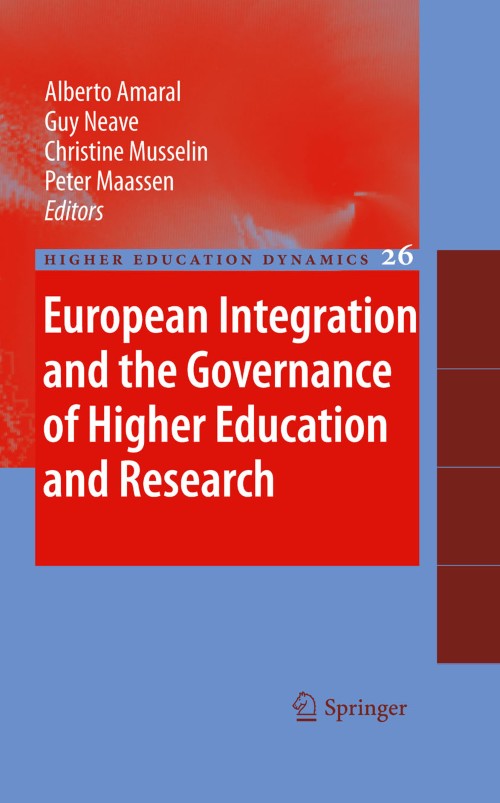
European Integration and the Governance of Higher Education and Research [electronic resource] / edited by Alberto Amaral, Guy Neave, Christine Musselin, Peter Maassen.
Erişim Adresi
ISBN
9781402095054
Dil Kodu
İngilizce
Yer Numarası
DK/12813
Basım Bildirimi
1st ed. 2009.
Yayın Bilgisi
Dordrecht : Springer Netherlands : Imprint: Springer, 2009.
Fiziksel Niteleme
XI, 309 p. online resource.
Dizi
Higher Education Dynamics, 2215-1923 ; 26
İçindekiler Notu
European Integration and the Europeanisation of Higher Education -- THE MANY FACES AND LEVELS OF HIGHER EDUCATION POLICY MAKING IN THE EUROPEAN UNION -- The Bologna Process as Alpha or Omega, or, on Interpreting History and Context as Inputs to Bologna, Prague, Berlin and Beyond -- Process, Persistence and Pragmatism: Reconstructing the Creation of the European University Institute and the Erasmus Programme, 1955–1989 -- Boomerangs and Trojan Horses: The Unintended Consequences of Internationalising Education Policy Through the EU and the OECD -- Networking Administration in Areas of National Sensitivity: The Commission and European Higher Education -- Policy Implementation Tools and European Governance -- The Mission Impossible of the European University: Institutional Confusion and Institutional Diversity -- BENEATH THE ARROW: THE RESPONSE OF HIGHER EDUCATION SYSTEMS AT THE NATIONAL LEVEL -- The Side Effects of the Bologna Process on National Institutional Settings: The Case of France -- The Implementation of the Bologna Process in Italy -- Parallel Universes and Common Themes: Reforms of Curricular Governance in The Bologna Context -- Europeanisation of Higher Education Governance in the Post-Communist Context: The Case of the Czech Republic -- CONCLUSIONS -- On Bologna, Weasels and Creeping Competence.
Özet, vb.
Given the overall ambitions and goals of the Lisbon agenda and the Bologna process, and other relevant supranational and intergovernmental European integration processes, it is obvious that these processes are intended to affect the university in all its basic structural features, including the way it performs its basic activities. However, the European Commission does not have formal authority with respect to the university, nor did the governments that signed the Bologna process develop an executive administrative capacity for implementing the Bologna Declaration. As a consequence, whether and how the supranational and intergovernmental European integration processes actually affect university governance and the university as a social institution is far from clear. The authors of this volume have dedicated considerable effort to the analysis of the Bologna process implementation. They offer a unique and critical view of the nature and possible effects of these very complex processes.
Konu
Education and state.
International relations.
School management and organization.
School administration.
Education, Higher.
Educational Policy and Politics.
International Relations.
Organization and Leadership.
Higher Education.
International relations.
School management and organization.
School administration.
Education, Higher.
Educational Policy and Politics.
International Relations.
Organization and Leadership.
Higher Education.
Kurum Adı
Eseri Alıntıla
Referansları kullanmadan önce gözden geçirmeniz ve varsa gerekli düzeltmeleri yapmanız önerilir.
Dijital Kaynak
MARC Görünümü
LEADER 04604nam a22005895i 4500
001 811554
003 TR_AnAIT
005 20260131005402
007 cr nn 008mamaa
008 100301s2009 ne | s |||| 0|eng d
020 |a9781402095054|9978-1-4020-9505-4
024 7 |a10.1007/978-1-4020-9505-4|2doi
041 |aeng
049 |aTürk Tarih Kurumu Kütüphanesi
050 4|aLC71-188
072 7|aJNF|2bicssc
072 7|aEDU034000|2bisacsh
072 7|aJNF|2thema
082 04|a379|223
090 |aDK/12813
245 10|aEuropean Integration and the Governance of Higher Education and Research|h[electronic resource] /|cedited by Alberto Amaral, Guy Neave, Christine Musselin, Peter Maassen.
250 |a1st ed. 2009.
264 1|aDordrecht :|bSpringer Netherlands :|bImprint: Springer,|c2009.
300 |aXI, 309 p.|bonline resource.
336 |atext|btxt|2rdacontent
337 |acomputer|bc|2rdamedia
338 |aonline resource|bcr|2rdacarrier
347 |atext file|bPDF|2rda
490 1 |aHigher Education Dynamics,|x2215-1923 ;|v26
505 0 |aEuropean Integration and the Europeanisation of Higher Education -- THE MANY FACES AND LEVELS OF HIGHER EDUCATION POLICY MAKING IN THE EUROPEAN UNION -- The Bologna Process as Alpha or Omega, or, on Interpreting History and Context as Inputs to Bologna, Prague, Berlin and Beyond -- Process, Persistence and Pragmatism: Reconstructing the Creation of the European University Institute and the Erasmus Programme, 1955–1989 -- Boomerangs and Trojan Horses: The Unintended Consequences of Internationalising Education Policy Through the EU and the OECD -- Networking Administration in Areas of National Sensitivity: The Commission and European Higher Education -- Policy Implementation Tools and European Governance -- The Mission Impossible of the European University: Institutional Confusion and Institutional Diversity -- BENEATH THE ARROW: THE RESPONSE OF HIGHER EDUCATION SYSTEMS AT THE NATIONAL LEVEL -- The Side Effects of the Bologna Process on National Institutional Settings: The Case of France -- The Implementation of the Bologna Process in Italy -- Parallel Universes and Common Themes: Reforms of Curricular Governance in The Bologna Context -- Europeanisation of Higher Education Governance in the Post-Communist Context: The Case of the Czech Republic -- CONCLUSIONS -- On Bologna, Weasels and Creeping Competence.
520 |aGiven the overall ambitions and goals of the Lisbon agenda and the Bologna process, and other relevant supranational and intergovernmental European integration processes, it is obvious that these processes are intended to affect the university in all its basic structural features, including the way it performs its basic activities. However, the European Commission does not have formal authority with respect to the university, nor did the governments that signed the Bologna process develop an executive administrative capacity for implementing the Bologna Declaration. As a consequence, whether and how the supranational and intergovernmental European integration processes actually affect university governance and the university as a social institution is far from clear. The authors of this volume have dedicated considerable effort to the analysis of the Bologna process implementation. They offer a unique and critical view of the nature and possible effects of these very complex processes.
650 0|aEducation and state.
650 0|aInternational relations.
650 0|aSchool management and organization.
650 0|aSchool administration.
650 0|aEducation, Higher.
650 14|aEducational Policy and Politics.
650 24|aInternational Relations.
650 24|aOrganization and Leadership.
650 24|aHigher Education.
700 1 |aAmaral, Alberto.|eeditor.|4edt|4http://id.loc.gov/vocabulary/relators/edt
700 1 |aNeave, Guy.|eeditor.|4edt|4http://id.loc.gov/vocabulary/relators/edt
700 1 |aMusselin, Christine.|eeditor.|4edt|4http://id.loc.gov/vocabulary/relators/edt
700 1 |aMaassen, Peter.|eeditor.|4edt|4http://id.loc.gov/vocabulary/relators/edt
710 2 |aSpringerLink (Online service)
773 0 |tSpringer Nature eBook
776 08|iPrinted edition:|z9781402095047
776 08|iPrinted edition:|z9781402095061
776 08|iPrinted edition:|z9789400730571
830 0|aHigher Education Dynamics,|x2215-1923 ;|v26
856 40|uhttps://doi.org/10.1007/978-1-4020-9505-4
912 |aZDB-2-SHU
912 |aZDB-2-SXED
950 |aHumanities, Social Sciences and Law (SpringerNature-11648)
950 |aEducation (R0) (SpringerNature-43721)
001 811554
003 TR_AnAIT
005 20260131005402
007 cr nn 008mamaa
008 100301s2009 ne | s |||| 0|eng d
020 |a9781402095054|9978-1-4020-9505-4
024 7 |a10.1007/978-1-4020-9505-4|2doi
041 |aeng
049 |aTürk Tarih Kurumu Kütüphanesi
050 4|aLC71-188
072 7|aJNF|2bicssc
072 7|aEDU034000|2bisacsh
072 7|aJNF|2thema
082 04|a379|223
090 |aDK/12813
245 10|aEuropean Integration and the Governance of Higher Education and Research|h[electronic resource] /|cedited by Alberto Amaral, Guy Neave, Christine Musselin, Peter Maassen.
250 |a1st ed. 2009.
264 1|aDordrecht :|bSpringer Netherlands :|bImprint: Springer,|c2009.
300 |aXI, 309 p.|bonline resource.
336 |atext|btxt|2rdacontent
337 |acomputer|bc|2rdamedia
338 |aonline resource|bcr|2rdacarrier
347 |atext file|bPDF|2rda
490 1 |aHigher Education Dynamics,|x2215-1923 ;|v26
505 0 |aEuropean Integration and the Europeanisation of Higher Education -- THE MANY FACES AND LEVELS OF HIGHER EDUCATION POLICY MAKING IN THE EUROPEAN UNION -- The Bologna Process as Alpha or Omega, or, on Interpreting History and Context as Inputs to Bologna, Prague, Berlin and Beyond -- Process, Persistence and Pragmatism: Reconstructing the Creation of the European University Institute and the Erasmus Programme, 1955–1989 -- Boomerangs and Trojan Horses: The Unintended Consequences of Internationalising Education Policy Through the EU and the OECD -- Networking Administration in Areas of National Sensitivity: The Commission and European Higher Education -- Policy Implementation Tools and European Governance -- The Mission Impossible of the European University: Institutional Confusion and Institutional Diversity -- BENEATH THE ARROW: THE RESPONSE OF HIGHER EDUCATION SYSTEMS AT THE NATIONAL LEVEL -- The Side Effects of the Bologna Process on National Institutional Settings: The Case of France -- The Implementation of the Bologna Process in Italy -- Parallel Universes and Common Themes: Reforms of Curricular Governance in The Bologna Context -- Europeanisation of Higher Education Governance in the Post-Communist Context: The Case of the Czech Republic -- CONCLUSIONS -- On Bologna, Weasels and Creeping Competence.
520 |aGiven the overall ambitions and goals of the Lisbon agenda and the Bologna process, and other relevant supranational and intergovernmental European integration processes, it is obvious that these processes are intended to affect the university in all its basic structural features, including the way it performs its basic activities. However, the European Commission does not have formal authority with respect to the university, nor did the governments that signed the Bologna process develop an executive administrative capacity for implementing the Bologna Declaration. As a consequence, whether and how the supranational and intergovernmental European integration processes actually affect university governance and the university as a social institution is far from clear. The authors of this volume have dedicated considerable effort to the analysis of the Bologna process implementation. They offer a unique and critical view of the nature and possible effects of these very complex processes.
650 0|aEducation and state.
650 0|aInternational relations.
650 0|aSchool management and organization.
650 0|aSchool administration.
650 0|aEducation, Higher.
650 14|aEducational Policy and Politics.
650 24|aInternational Relations.
650 24|aOrganization and Leadership.
650 24|aHigher Education.
700 1 |aAmaral, Alberto.|eeditor.|4edt|4http://id.loc.gov/vocabulary/relators/edt
700 1 |aNeave, Guy.|eeditor.|4edt|4http://id.loc.gov/vocabulary/relators/edt
700 1 |aMusselin, Christine.|eeditor.|4edt|4http://id.loc.gov/vocabulary/relators/edt
700 1 |aMaassen, Peter.|eeditor.|4edt|4http://id.loc.gov/vocabulary/relators/edt
710 2 |aSpringerLink (Online service)
773 0 |tSpringer Nature eBook
776 08|iPrinted edition:|z9781402095047
776 08|iPrinted edition:|z9781402095061
776 08|iPrinted edition:|z9789400730571
830 0|aHigher Education Dynamics,|x2215-1923 ;|v26
856 40|uhttps://doi.org/10.1007/978-1-4020-9505-4
912 |aZDB-2-SHU
912 |aZDB-2-SXED
950 |aHumanities, Social Sciences and Law (SpringerNature-11648)
950 |aEducation (R0) (SpringerNature-43721)
Materyaller
Depodan talep edilen materyal sadece kütüphane içerisinde kullanılmaktadır.
Materyal dışarıya ödünç verilmemektedir.
Materyal dışarıya ödünç verilmemektedir.
