

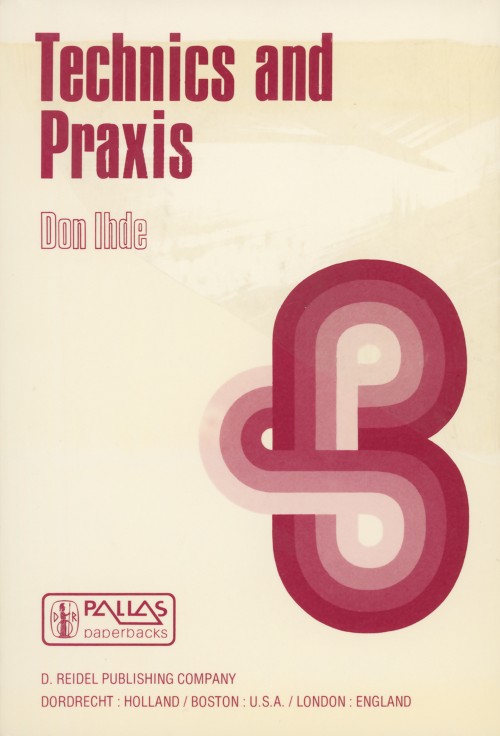
Technics and Praxis [electronic resource] : A Philosophy of Technology / by D. Ihde.
Erişim Adresi
ISBN
9789400999008
Dil Kodu
İngilizce
Yer Numarası
DK/12859
Yazar
Basım Bildirimi
1st ed. 1979.
Yayın Bilgisi
Dordrecht : Springer Netherlands : Imprint: Springer, 1979.
Fiziksel Niteleme
XXVIII, 163 p. online resource.
Dizi
Boston Studies in the Philosophy and History of Science, 2214-7942 ; 24
İçindekiler Notu
Division One / A Program in the Philosophy of Technology -- 1. The Experience of Technology: Human-Machine Relations -- 2. A Phenomenology of Instrumentation: Perception Transformed -- 3. A Phenomenology of Instrumentation: The Instrument as Mediator -- 4. A Phenomenology of Instrumentation: Technics and Telos -- Division Two / Implications of Technology -- 5. The Existential Import of Computer Technology -- 6. Technology and the Transformation of Experience -- 7. Vision and Objectification -- 8. Bach to Rock, a Musical Odyssey -- Division Three / Pioneers in the Philosophy of Technology -- 9. Heidegger’s Philosophy of Technology -- 10. Technology and the Human: Hans Jonas -- 11. The Secular City and the Existentialists -- Index of Names.
Özet, vb.
Depending on how one construes the kinship relations, technology has been either the stepchild of philosophy or its grandfather. In either case, technology has not been taken into the bosom of the family, but has had to wait for attention, care and feeding, while the more unclear elements - science, art, politics, ethics - were being nurtured (or cleaned up). Don Ihde puts technology in the middle of things, and develops a philosophy of technology that is at once distinctive, revealing and thought provoking. Typically, philosophy of technology has existed at, or beyond, the margins of the philosophy of science, and therefore the question of technology has come to be posed (when it is) either by historians of technology or by social critics. The philosophy of technology, as analysis and critique of the concepts, methodologies, implicit epistemologies and ontologies of technological praxis and thought, has remained underdeveloped. When philosophy does turn its attention to the insistent presence of technology, it inevitably casts the question in one or another of the dominant modes of philosophical interpretation and reconstruction. Thus, the logic of technological thinking and practice has been a subject of some systematic work (e. g. , in the Praxiology of Kotarbinski and Kotarbinska, among others). And the question of technology's relation to science has been posed in the framework of the nomological model of explanation in the sciences - e. g.
Konu
Science __ Philosophy.
Technology __ Philosophy.
Philosophy of Science.
Philosophy of Technology.
Technology __ Philosophy.
Philosophy of Science.
Philosophy of Technology.
Kurum Adı
Eseri Alıntıla
Referansları kullanmadan önce gözden geçirmeniz ve varsa gerekli düzeltmeleri yapmanız önerilir.
Dijital Kaynak
MARC Görünümü
LEADER 04808nam a22005655i 4500
001 811600
003 TR_AnAIT
005 20260131005134
007 cr nn 008mamaa
008 121227s1979 ne | s |||| 0|eng d
020 |a9789400999008|9978-94-009-9900-8
024 7 |a10.1007/978-94-009-9900-8|2doi
041 |aeng
049 |aTürk Tarih Kurumu Kütüphanesi
050 4|aQ174-175.3
050 4|aB67
072 7|aPDA|2bicssc
072 7|aSCI075000|2bisacsh
072 7|aPDA|2thema
082 04|a501|223
090 |aDK/12859
100 1 |aIhde, D.|eauthor.|4aut|4http://id.loc.gov/vocabulary/relators/aut
245 10|aTechnics and Praxis|h[electronic resource] :|bA Philosophy of Technology /|cby D. Ihde.
250 |a1st ed. 1979.
264 1|aDordrecht :|bSpringer Netherlands :|bImprint: Springer,|c1979.
300 |aXXVIII, 163 p.|bonline resource.
336 |atext|btxt|2rdacontent
337 |acomputer|bc|2rdamedia
338 |aonline resource|bcr|2rdacarrier
347 |atext file|bPDF|2rda
490 1 |aBoston Studies in the Philosophy and History of Science,|x2214-7942 ;|v24
505 0 |aDivision One / A Program in the Philosophy of Technology -- 1. The Experience of Technology: Human-Machine Relations -- 2. A Phenomenology of Instrumentation: Perception Transformed -- 3. A Phenomenology of Instrumentation: The Instrument as Mediator -- 4. A Phenomenology of Instrumentation: Technics and Telos -- Division Two / Implications of Technology -- 5. The Existential Import of Computer Technology -- 6. Technology and the Transformation of Experience -- 7. Vision and Objectification -- 8. Bach to Rock, a Musical Odyssey -- Division Three / Pioneers in the Philosophy of Technology -- 9. Heidegger’s Philosophy of Technology -- 10. Technology and the Human: Hans Jonas -- 11. The Secular City and the Existentialists -- Index of Names.
520 |aDepending on how one construes the kinship relations, technology has been either the stepchild of philosophy or its grandfather. In either case, technology has not been taken into the bosom of the family, but has had to wait for attention, care and feeding, while the more unclear elements - science, art, politics, ethics - were being nurtured (or cleaned up). Don Ihde puts technology in the middle of things, and develops a philosophy of technology that is at once distinctive, revealing and thought provoking. Typically, philosophy of technology has existed at, or beyond, the margins of the philosophy of science, and therefore the question of technology has come to be posed (when it is) either by historians of technology or by social critics. The philosophy of technology, as analysis and critique of the concepts, methodologies, implicit epistemologies and ontologies of technological praxis and thought, has remained underdeveloped. When philosophy does turn its attention to the insistent presence of technology, it inevitably casts the question in one or another of the dominant modes of philosophical interpretation and reconstruction. Thus, the logic of technological thinking and practice has been a subject of some systematic work (e. g. , in the Praxiology of Kotarbinski and Kotarbinska, among others). And the question of technology's relation to science has been posed in the framework of the nomological model of explanation in the sciences - e. g.
532 8 |aAccessibility summary: This PDF is not accessible. It is based on scanned pages and does not support features such as screen reader compatibility or described non-text content (images, graphs etc). However, it likely supports searchable and selectable text based on OCR (Optical Character Recognition). Users with accessibility needs may not be able to use this content effectively. Please contact us at accessibilitysupport@springernature.com if you require assistance or an alternative format.
532 8 |aInaccessible, or known limited accessibility
532 8 |aNo reading system accessibility options actively disabled
532 8 |aPublisher contact for further accessibility information: accessibilitysupport@springernature.com
650 0|aScience|xPhilosophy.
650 0|aTechnology|xPhilosophy.
650 14|aPhilosophy of Science.
650 24|aPhilosophy of Technology.
710 2 |aSpringerLink (Online service)
773 0 |tSpringer Nature eBook
776 08|iPrinted edition:|z9789027709530
776 08|iPrinted edition:|z9789027709547
776 08|iPrinted edition:|z9789400999015
830 0|aBoston Studies in the Philosophy and History of Science,|x2214-7942 ;|v24
856 40|uhttps://doi.org/10.1007/978-94-009-9900-8
912 |aZDB-2-SHU
912 |aZDB-2-SXPR
912 |aZDB-2-BAE
950 |aHumanities, Social Sciences and Law (SpringerNature-11648)
950 |aPhilosophy and Religion (R0) (SpringerNature-43725)
001 811600
003 TR_AnAIT
005 20260131005134
007 cr nn 008mamaa
008 121227s1979 ne | s |||| 0|eng d
020 |a9789400999008|9978-94-009-9900-8
024 7 |a10.1007/978-94-009-9900-8|2doi
041 |aeng
049 |aTürk Tarih Kurumu Kütüphanesi
050 4|aQ174-175.3
050 4|aB67
072 7|aPDA|2bicssc
072 7|aSCI075000|2bisacsh
072 7|aPDA|2thema
082 04|a501|223
090 |aDK/12859
100 1 |aIhde, D.|eauthor.|4aut|4http://id.loc.gov/vocabulary/relators/aut
245 10|aTechnics and Praxis|h[electronic resource] :|bA Philosophy of Technology /|cby D. Ihde.
250 |a1st ed. 1979.
264 1|aDordrecht :|bSpringer Netherlands :|bImprint: Springer,|c1979.
300 |aXXVIII, 163 p.|bonline resource.
336 |atext|btxt|2rdacontent
337 |acomputer|bc|2rdamedia
338 |aonline resource|bcr|2rdacarrier
347 |atext file|bPDF|2rda
490 1 |aBoston Studies in the Philosophy and History of Science,|x2214-7942 ;|v24
505 0 |aDivision One / A Program in the Philosophy of Technology -- 1. The Experience of Technology: Human-Machine Relations -- 2. A Phenomenology of Instrumentation: Perception Transformed -- 3. A Phenomenology of Instrumentation: The Instrument as Mediator -- 4. A Phenomenology of Instrumentation: Technics and Telos -- Division Two / Implications of Technology -- 5. The Existential Import of Computer Technology -- 6. Technology and the Transformation of Experience -- 7. Vision and Objectification -- 8. Bach to Rock, a Musical Odyssey -- Division Three / Pioneers in the Philosophy of Technology -- 9. Heidegger’s Philosophy of Technology -- 10. Technology and the Human: Hans Jonas -- 11. The Secular City and the Existentialists -- Index of Names.
520 |aDepending on how one construes the kinship relations, technology has been either the stepchild of philosophy or its grandfather. In either case, technology has not been taken into the bosom of the family, but has had to wait for attention, care and feeding, while the more unclear elements - science, art, politics, ethics - were being nurtured (or cleaned up). Don Ihde puts technology in the middle of things, and develops a philosophy of technology that is at once distinctive, revealing and thought provoking. Typically, philosophy of technology has existed at, or beyond, the margins of the philosophy of science, and therefore the question of technology has come to be posed (when it is) either by historians of technology or by social critics. The philosophy of technology, as analysis and critique of the concepts, methodologies, implicit epistemologies and ontologies of technological praxis and thought, has remained underdeveloped. When philosophy does turn its attention to the insistent presence of technology, it inevitably casts the question in one or another of the dominant modes of philosophical interpretation and reconstruction. Thus, the logic of technological thinking and practice has been a subject of some systematic work (e. g. , in the Praxiology of Kotarbinski and Kotarbinska, among others). And the question of technology's relation to science has been posed in the framework of the nomological model of explanation in the sciences - e. g.
532 8 |aAccessibility summary: This PDF is not accessible. It is based on scanned pages and does not support features such as screen reader compatibility or described non-text content (images, graphs etc). However, it likely supports searchable and selectable text based on OCR (Optical Character Recognition). Users with accessibility needs may not be able to use this content effectively. Please contact us at accessibilitysupport@springernature.com if you require assistance or an alternative format.
532 8 |aInaccessible, or known limited accessibility
532 8 |aNo reading system accessibility options actively disabled
532 8 |aPublisher contact for further accessibility information: accessibilitysupport@springernature.com
650 0|aScience|xPhilosophy.
650 0|aTechnology|xPhilosophy.
650 14|aPhilosophy of Science.
650 24|aPhilosophy of Technology.
710 2 |aSpringerLink (Online service)
773 0 |tSpringer Nature eBook
776 08|iPrinted edition:|z9789027709530
776 08|iPrinted edition:|z9789027709547
776 08|iPrinted edition:|z9789400999015
830 0|aBoston Studies in the Philosophy and History of Science,|x2214-7942 ;|v24
856 40|uhttps://doi.org/10.1007/978-94-009-9900-8
912 |aZDB-2-SHU
912 |aZDB-2-SXPR
912 |aZDB-2-BAE
950 |aHumanities, Social Sciences and Law (SpringerNature-11648)
950 |aPhilosophy and Religion (R0) (SpringerNature-43725)
Materyaller
Depodan talep edilen materyal sadece kütüphane içerisinde kullanılmaktadır.
Materyal dışarıya ödünç verilmemektedir.
Materyal dışarıya ödünç verilmemektedir.
