

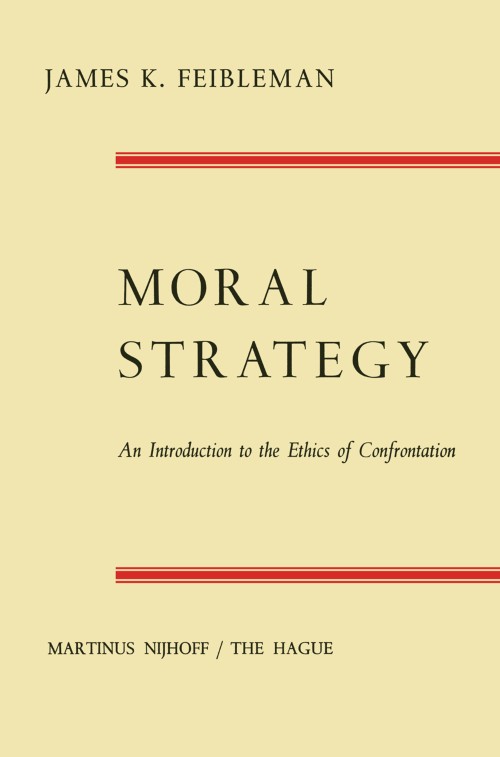
Moral Strategy [electronic resource] : An Introduction to the Ethics of Confrontation / by James K. Feibleman.
Erişim Adresi
ISBN
9789401193214
Dil Kodu
İngilizce
Yer Numarası
DK/12897
Yazar
Basım Bildirimi
1st ed. 1967.
Yayın Bilgisi
Dordrecht : Springer Netherlands : Imprint: Springer, 1967.
Fiziksel Niteleme
XII, 325 p. 1 illus. online resource.
İçindekiler Notu
Book One — Introduction -- I — The Approach to Ethics and Morality -- 1. Methodological Considerations -- 2. Moral Integrative Levels -- 3. A Summary Perspective -- Book Two — The Ethical Integrative Series -- II — The Ethics of the Individual -- 1. The Individual Good -- 2. Approaches to the Good -- 3. The Pursuit of the Good -- III — The Ethics of Society -- 1. Morality as Social Structure -- 2. The Covert Moral Structure -- 3. The Overt Moral Structure -- 4. Rights and Duties -- 5. The Law and Legal Procedures -- IV — The Ethics of the Human Species -- 1. From Society to Humanity -- 2. Characteristics of the Human Species -- 3. The Morality of the Human Species -- 4. Moral Encounters with Near-by Species -- V — The Ethics of the Cosmos -- 1. The Cosmic Perspective -- 2. The Cosmic Good -- 3. Truth and Value -- 4. Cosmic Type Responsibility -- 5. Cosmic Confrontation -- 6. Normative Cosmic Ethics -- 7. The Ethics of Man in Relation to the Cosmos -- Book Three — The Moral Situation and Its Outcome -- VI — Ideal Morality -- 1. The Choice of Ideals -- 2. Individual Ideals -- 3. Social Ideals -- 4. Human Ideals -- 5. Cosmic Ideals -- VII — Concrete Morality -- 1. Bad Behavior and Immorality -- 2. Bad Individual Behavior -- 3. Bad Social Behavior -- 4. Bad Species Behavior -- 5. Bad Cosmic Behavior -- VIII — Moral Strategy -- 1. The Uses of Strategy -- 2. The Strategy of Individual Obligation -- 3. The Strategy of Social Obligation -- 4. The Strategy of Human Obligation -- 5. The Strategy of Cosmic Obligation -- Name Index -- Topic Index.
Özet, vb.
No statement, except one, can be made with which all philosophers would agree. The exception is this statement itself. The disagreement has the advantage that it gets all the proposals out into the open where they can be examined, but it has the dis advantage that the cogency of any one philosophy must rely entirely upon that wide public which is unprepared to deal with it. Fortunately, ethics has a more immediate appeal than some other branches of philosophy; yet the history of the topic gives no indication that this circumstance has had the happy results we might have expected. One peculiarity of ethics is that its problems are rarely settled on its own grounds. Ethical problems are for the most part referred to socially established moralities, and moralities are socially established not on the basis of philosophy but rather by some sponsoring insti or politics. Such establishments, however, tution, usually religion depend on the prior preparation of ethical proposals by philosophers. For it stands to reason that an ethics cannot be socially established if there is no ethics to establish. Thus philosophers provide the justifi cation for socially-established moralities while seeming not to do so.
Konu
Ethics.
Moral Philosophy and Applied Ethics.
Moral Philosophy and Applied Ethics.
Kurum Adı
Eseri Alıntıla
Referansları kullanmadan önce gözden geçirmeniz ve varsa gerekli düzeltmeleri yapmanız önerilir.
Dijital Kaynak
MARC Görünümü
LEADER 05103nam a22004935i 4500
001 811638
003 TR_AnAIT
005 20260131005028
007 cr nn 008mamaa
008 121227s1967 ne | s |||| 0|eng d
020 |a9789401193214|9978-94-011-9321-4
024 7 |a10.1007/978-94-011-9321-4|2doi
041 |aeng
049 |aTürk Tarih Kurumu Kütüphanesi
050 4|aBJ1-1725
072 7|aHPQ|2bicssc
072 7|aPHI005000|2bisacsh
072 7|aQDTQ|2thema
082 04|a170|223
090 |aDK/12897
100 1 |aFeibleman, James K.|eauthor.|4aut|4http://id.loc.gov/vocabulary/relators/aut
245 10|aMoral Strategy|h[electronic resource] :|bAn Introduction to the Ethics of Confrontation /|cby James K. Feibleman.
250 |a1st ed. 1967.
264 1|aDordrecht :|bSpringer Netherlands :|bImprint: Springer,|c1967.
300 |aXII, 325 p. 1 illus.|bonline resource.
336 |atext|btxt|2rdacontent
337 |acomputer|bc|2rdamedia
338 |aonline resource|bcr|2rdacarrier
347 |atext file|bPDF|2rda
505 0 |aBook One — Introduction -- I — The Approach to Ethics and Morality -- 1. Methodological Considerations -- 2. Moral Integrative Levels -- 3. A Summary Perspective -- Book Two — The Ethical Integrative Series -- II — The Ethics of the Individual -- 1. The Individual Good -- 2. Approaches to the Good -- 3. The Pursuit of the Good -- III — The Ethics of Society -- 1. Morality as Social Structure -- 2. The Covert Moral Structure -- 3. The Overt Moral Structure -- 4. Rights and Duties -- 5. The Law and Legal Procedures -- IV — The Ethics of the Human Species -- 1. From Society to Humanity -- 2. Characteristics of the Human Species -- 3. The Morality of the Human Species -- 4. Moral Encounters with Near-by Species -- V — The Ethics of the Cosmos -- 1. The Cosmic Perspective -- 2. The Cosmic Good -- 3. Truth and Value -- 4. Cosmic Type Responsibility -- 5. Cosmic Confrontation -- 6. Normative Cosmic Ethics -- 7. The Ethics of Man in Relation to the Cosmos -- Book Three — The Moral Situation and Its Outcome -- VI — Ideal Morality -- 1. The Choice of Ideals -- 2. Individual Ideals -- 3. Social Ideals -- 4. Human Ideals -- 5. Cosmic Ideals -- VII — Concrete Morality -- 1. Bad Behavior and Immorality -- 2. Bad Individual Behavior -- 3. Bad Social Behavior -- 4. Bad Species Behavior -- 5. Bad Cosmic Behavior -- VIII — Moral Strategy -- 1. The Uses of Strategy -- 2. The Strategy of Individual Obligation -- 3. The Strategy of Social Obligation -- 4. The Strategy of Human Obligation -- 5. The Strategy of Cosmic Obligation -- Name Index -- Topic Index.
520 |aNo statement, except one, can be made with which all philosophers would agree. The exception is this statement itself. The disagreement has the advantage that it gets all the proposals out into the open where they can be examined, but it has the dis advantage that the cogency of any one philosophy must rely entirely upon that wide public which is unprepared to deal with it. Fortunately, ethics has a more immediate appeal than some other branches of philosophy; yet the history of the topic gives no indication that this circumstance has had the happy results we might have expected. One peculiarity of ethics is that its problems are rarely settled on its own grounds. Ethical problems are for the most part referred to socially established moralities, and moralities are socially established not on the basis of philosophy but rather by some sponsoring insti or politics. Such establishments, however, tution, usually religion depend on the prior preparation of ethical proposals by philosophers. For it stands to reason that an ethics cannot be socially established if there is no ethics to establish. Thus philosophers provide the justifi cation for socially-established moralities while seeming not to do so.
532 8 |aAccessibility summary: This PDF is not accessible. It is based on scanned pages and does not support features such as screen reader compatibility or described non-text content (images, graphs etc). However, it likely supports searchable and selectable text based on OCR (Optical Character Recognition). Users with accessibility needs may not be able to use this content effectively. Please contact us at accessibilitysupport@springernature.com if you require assistance or an alternative format.
532 8 |aInaccessible, or known limited accessibility
532 8 |aNo reading system accessibility options actively disabled
532 8 |aPublisher contact for further accessibility information: accessibilitysupport@springernature.com
650 0|aEthics.
650 14|aMoral Philosophy and Applied Ethics.
710 2 |aSpringerLink (Online service)
773 0 |tSpringer Nature eBook
776 08|iPrinted edition:|z9789401185592
776 08|iPrinted edition:|z9789401193221
856 40|uhttps://doi.org/10.1007/978-94-011-9321-4
912 |aZDB-2-SHU
912 |aZDB-2-SXPR
912 |aZDB-2-BAE
950 |aHumanities, Social Sciences and Law (SpringerNature-11648)
950 |aPhilosophy and Religion (R0) (SpringerNature-43725)
001 811638
003 TR_AnAIT
005 20260131005028
007 cr nn 008mamaa
008 121227s1967 ne | s |||| 0|eng d
020 |a9789401193214|9978-94-011-9321-4
024 7 |a10.1007/978-94-011-9321-4|2doi
041 |aeng
049 |aTürk Tarih Kurumu Kütüphanesi
050 4|aBJ1-1725
072 7|aHPQ|2bicssc
072 7|aPHI005000|2bisacsh
072 7|aQDTQ|2thema
082 04|a170|223
090 |aDK/12897
100 1 |aFeibleman, James K.|eauthor.|4aut|4http://id.loc.gov/vocabulary/relators/aut
245 10|aMoral Strategy|h[electronic resource] :|bAn Introduction to the Ethics of Confrontation /|cby James K. Feibleman.
250 |a1st ed. 1967.
264 1|aDordrecht :|bSpringer Netherlands :|bImprint: Springer,|c1967.
300 |aXII, 325 p. 1 illus.|bonline resource.
336 |atext|btxt|2rdacontent
337 |acomputer|bc|2rdamedia
338 |aonline resource|bcr|2rdacarrier
347 |atext file|bPDF|2rda
505 0 |aBook One — Introduction -- I — The Approach to Ethics and Morality -- 1. Methodological Considerations -- 2. Moral Integrative Levels -- 3. A Summary Perspective -- Book Two — The Ethical Integrative Series -- II — The Ethics of the Individual -- 1. The Individual Good -- 2. Approaches to the Good -- 3. The Pursuit of the Good -- III — The Ethics of Society -- 1. Morality as Social Structure -- 2. The Covert Moral Structure -- 3. The Overt Moral Structure -- 4. Rights and Duties -- 5. The Law and Legal Procedures -- IV — The Ethics of the Human Species -- 1. From Society to Humanity -- 2. Characteristics of the Human Species -- 3. The Morality of the Human Species -- 4. Moral Encounters with Near-by Species -- V — The Ethics of the Cosmos -- 1. The Cosmic Perspective -- 2. The Cosmic Good -- 3. Truth and Value -- 4. Cosmic Type Responsibility -- 5. Cosmic Confrontation -- 6. Normative Cosmic Ethics -- 7. The Ethics of Man in Relation to the Cosmos -- Book Three — The Moral Situation and Its Outcome -- VI — Ideal Morality -- 1. The Choice of Ideals -- 2. Individual Ideals -- 3. Social Ideals -- 4. Human Ideals -- 5. Cosmic Ideals -- VII — Concrete Morality -- 1. Bad Behavior and Immorality -- 2. Bad Individual Behavior -- 3. Bad Social Behavior -- 4. Bad Species Behavior -- 5. Bad Cosmic Behavior -- VIII — Moral Strategy -- 1. The Uses of Strategy -- 2. The Strategy of Individual Obligation -- 3. The Strategy of Social Obligation -- 4. The Strategy of Human Obligation -- 5. The Strategy of Cosmic Obligation -- Name Index -- Topic Index.
520 |aNo statement, except one, can be made with which all philosophers would agree. The exception is this statement itself. The disagreement has the advantage that it gets all the proposals out into the open where they can be examined, but it has the dis advantage that the cogency of any one philosophy must rely entirely upon that wide public which is unprepared to deal with it. Fortunately, ethics has a more immediate appeal than some other branches of philosophy; yet the history of the topic gives no indication that this circumstance has had the happy results we might have expected. One peculiarity of ethics is that its problems are rarely settled on its own grounds. Ethical problems are for the most part referred to socially established moralities, and moralities are socially established not on the basis of philosophy but rather by some sponsoring insti or politics. Such establishments, however, tution, usually religion depend on the prior preparation of ethical proposals by philosophers. For it stands to reason that an ethics cannot be socially established if there is no ethics to establish. Thus philosophers provide the justifi cation for socially-established moralities while seeming not to do so.
532 8 |aAccessibility summary: This PDF is not accessible. It is based on scanned pages and does not support features such as screen reader compatibility or described non-text content (images, graphs etc). However, it likely supports searchable and selectable text based on OCR (Optical Character Recognition). Users with accessibility needs may not be able to use this content effectively. Please contact us at accessibilitysupport@springernature.com if you require assistance or an alternative format.
532 8 |aInaccessible, or known limited accessibility
532 8 |aNo reading system accessibility options actively disabled
532 8 |aPublisher contact for further accessibility information: accessibilitysupport@springernature.com
650 0|aEthics.
650 14|aMoral Philosophy and Applied Ethics.
710 2 |aSpringerLink (Online service)
773 0 |tSpringer Nature eBook
776 08|iPrinted edition:|z9789401185592
776 08|iPrinted edition:|z9789401193221
856 40|uhttps://doi.org/10.1007/978-94-011-9321-4
912 |aZDB-2-SHU
912 |aZDB-2-SXPR
912 |aZDB-2-BAE
950 |aHumanities, Social Sciences and Law (SpringerNature-11648)
950 |aPhilosophy and Religion (R0) (SpringerNature-43725)
Materyaller
Depodan talep edilen materyal sadece kütüphane içerisinde kullanılmaktadır.
Materyal dışarıya ödünç verilmemektedir.
Materyal dışarıya ödünç verilmemektedir.
