

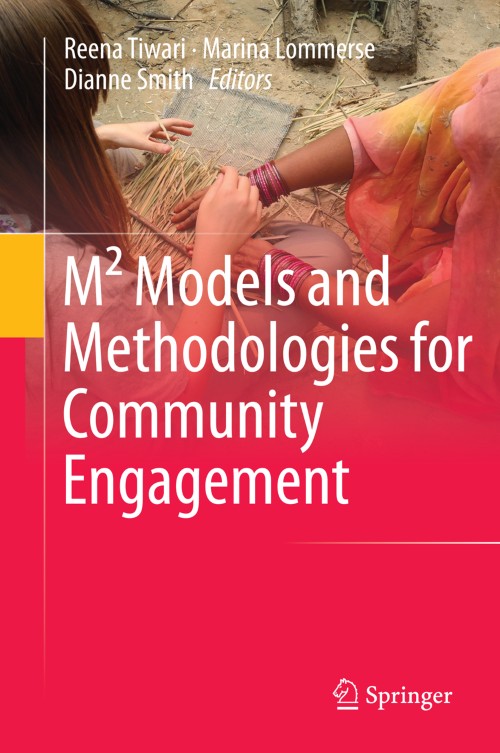
M² Models and Methodologies for Community Engagement [electronic resource] / edited by Reena Tiwari, Marina Lommerse, Dianne Smith.
Erişim Adresi
ISBN
9789814585118
Dil Kodu
İngilizce
Yer Numarası
DK/12918
Basım Bildirimi
1st ed. 2014.
Yayın Bilgisi
Singapore : Springer Nature Singapore : Imprint: Springer, 2014.
Fiziksel Niteleme
XXIII, 284 p. 81 illus. online resource.
İçindekiler Notu
1 Navigating Community Engagement -- Part I: Narratives on Models, Methodologies and Methods -- 2 An Ethnographic and Collaborative Model of Inquiry: Activity Centre Project in India -- 3 Capacity Building and Community Development: a Community Dialogue on Equality in Rural Uganda -- 4 Urban Neighbourhood Regeneration and Community Participation: an Unresolved Issue in the Barcelona Experience -- 5 The Port Resolution Project: Developing Community Built and Managed Visitor Accommodation Typologies -- 6 Applying a Practical, Participatory Action Research Framework for Producing Knowledge, Action and Change in Communities: a Health Case Study from Gujarat, Western India -- 7 Inspired by Nature: Building Community Capacity Through Creative Leadership -- 8 Connections: Academics, Architects and Community Pro-Bono Projects -- 9 Fremantle on the Edge: a Community Collaboration -- 10 Transparency and Interdependence -- Part II: Unfolding Challenges and Removing Barriers in the Community Engagement Process: Opportunities for Transdisciplinary and Translocational Applications -- 11 Capturing the Diversity and Commonalities of Community Engagement -- 12 Joining Communities: A Role for Reflection -- 13 Reflections on Working with Communities and Community-based Projects in Bangladesh -- 14 Action Preparedness Tool for Community Engagement -- Part III: Community Engagement and Capacity Building: a Transdisciplinary Perspective -- 15 Transforming Community: Opportunities for Transdisciplinary Application.
Özet, vb.
How can we engage communities? What is empowerment? To what extent should the project process be participatory? How is an outsider-insider relationship handled? How do researchers negotiate with the hegemony of western cultural interpretations? How are organizational and contextual influences handled in a project? What leadership demands do such projects place on researchers? What is capacity building? What are creative leaders and creative communities? How does the researcher journey from their studio to the situation? M² Models and Methodologies for Community Engagement discusses key theoretical constructs — community engagement, capacity building, and community empowerment — in order to demonstrate how theory and practice are relevant to the development of forms of community involvement. The book maps the attributes of community based projects by moving beyond simply bringing people together from a variety of disciplines, and taking an approach which is transdisciplinary and applicable across cultures and genres. Here, all people — including the community — are ongoing contributors, and can freely move between their own and others’ discipline-specific arenas. M² differs from and extends on other works in this field of practice and research, in that its transdisciplinary, collaborative approach positions the community as a particular kind of discipline to create real changein diverse locations and fields of experience. The book is in itself a model of community engagement, as the researchers have formed a community of research and practice for change, and have developed a transformative model for community engagement that is greater than the sum of its parts – hence M². M² offers a valuable resource for students, researchers, academics, practitioners, policy developers and volunteers from the fields of architecture, interior architecture, health, planning, anthropology, education, home economics, communication, political studies and development studies.
Konu
Social structure.
Equality.
Human geography.
Community psychology.
Biotic communities.
Population biology.
Social Structure.
Human Geography.
Community Psychology.
Community and Population Ecology.
Equality.
Human geography.
Community psychology.
Biotic communities.
Population biology.
Social Structure.
Human Geography.
Community Psychology.
Community and Population Ecology.
Diğer Yazarlar
Kurum Adı
Eseri Alıntıla
Referansları kullanmadan önce gözden geçirmeniz ve varsa gerekli düzeltmeleri yapmanız önerilir.
Dijital Kaynak
MARC Görünümü
LEADER 05586nam a22005775i 4500
001 811660
003 TR_AnAIT
005 20260131004951
007 cr nn 008mamaa
008 140310s2014 si | s |||| 0|eng d
020 |a9789814585118|9978-981-4585-11-8
024 7 |a10.1007/978-981-4585-11-8|2doi
041 |aeng
049 |aTürk Tarih Kurumu Kütüphanesi
050 4|aHM706
050 4|aHM821-821.17
072 7|aJFS|2bicssc
072 7|aSOC050000|2bisacsh
072 7|aJBS|2thema
082 04|a305.5|223
090 |aDK/12918
245 10|aM² Models and Methodologies for Community Engagement|h[electronic resource] /|cedited by Reena Tiwari, Marina Lommerse, Dianne Smith.
250 |a1st ed. 2014.
264 1|aSingapore :|bSpringer Nature Singapore :|bImprint: Springer,|c2014.
300 |aXXIII, 284 p. 81 illus.|bonline resource.
336 |atext|btxt|2rdacontent
337 |acomputer|bc|2rdamedia
338 |aonline resource|bcr|2rdacarrier
347 |atext file|bPDF|2rda
505 0 |a1 Navigating Community Engagement -- Part I: Narratives on Models, Methodologies and Methods -- 2 An Ethnographic and Collaborative Model of Inquiry: Activity Centre Project in India -- 3 Capacity Building and Community Development: a Community Dialogue on Equality in Rural Uganda -- 4 Urban Neighbourhood Regeneration and Community Participation: an Unresolved Issue in the Barcelona Experience -- 5 The Port Resolution Project: Developing Community Built and Managed Visitor Accommodation Typologies -- 6 Applying a Practical, Participatory Action Research Framework for Producing Knowledge, Action and Change in Communities: a Health Case Study from Gujarat, Western India -- 7 Inspired by Nature: Building Community Capacity Through Creative Leadership -- 8 Connections: Academics, Architects and Community Pro-Bono Projects -- 9 Fremantle on the Edge: a Community Collaboration -- 10 Transparency and Interdependence -- Part II: Unfolding Challenges and Removing Barriers in the Community Engagement Process: Opportunities for Transdisciplinary and Translocational Applications -- 11 Capturing the Diversity and Commonalities of Community Engagement -- 12 Joining Communities: A Role for Reflection -- 13 Reflections on Working with Communities and Community-based Projects in Bangladesh -- 14 Action Preparedness Tool for Community Engagement -- Part III: Community Engagement and Capacity Building: a Transdisciplinary Perspective -- 15 Transforming Community: Opportunities for Transdisciplinary Application.
520 |aHow can we engage communities? What is empowerment? To what extent should the project process be participatory? How is an outsider-insider relationship handled? How do researchers negotiate with the hegemony of western cultural interpretations? How are organizational and contextual influences handled in a project? What leadership demands do such projects place on researchers? What is capacity building? What are creative leaders and creative communities? How does the researcher journey from their studio to the situation? M² Models and Methodologies for Community Engagement discusses key theoretical constructs — community engagement, capacity building, and community empowerment — in order to demonstrate how theory and practice are relevant to the development of forms of community involvement. The book maps the attributes of community based projects by moving beyond simply bringing people together from a variety of disciplines, and taking an approach which is transdisciplinary and applicable across cultures and genres. Here, all people — including the community — are ongoing contributors, and can freely move between their own and others’ discipline-specific arenas. M² differs from and extends on other works in this field of practice and research, in that its transdisciplinary, collaborative approach positions the community as a particular kind of discipline to create real changein diverse locations and fields of experience. The book is in itself a model of community engagement, as the researchers have formed a community of research and practice for change, and have developed a transformative model for community engagement that is greater than the sum of its parts – hence M². M² offers a valuable resource for students, researchers, academics, practitioners, policy developers and volunteers from the fields of architecture, interior architecture, health, planning, anthropology, education, home economics, communication, political studies and development studies.
650 0|aSocial structure.
650 0|aEquality.
650 0|aHuman geography.
650 0|aCommunity psychology.
650 0|aBiotic communities.
650 0|aPopulation biology.
650 14|aSocial Structure.
650 24|aHuman Geography.
650 24|aCommunity Psychology.
650 24|aCommunity and Population Ecology.
700 1 |aTiwari, Reena.|eeditor.|4edt|4http://id.loc.gov/vocabulary/relators/edt
700 1 |aLommerse, Marina.|eeditor.|4edt|4http://id.loc.gov/vocabulary/relators/edt
700 1 |aSmith, Dianne.|eeditor.|4edt|4http://id.loc.gov/vocabulary/relators/edt
710 2 |aSpringerLink (Online service)
773 0 |tSpringer Nature eBook
776 08|iPrinted edition:|z9789814585101
776 08|iPrinted edition:|z9789814585125
776 08|iPrinted edition:|z9789811011795
856 40|uhttps://doi.org/10.1007/978-981-4585-11-8
912 |aZDB-2-SHU
912 |aZDB-2-SXS
950 |aHumanities, Social Sciences and Law (SpringerNature-11648)
950 |aSocial Sciences (R0) (SpringerNature-43726)
001 811660
003 TR_AnAIT
005 20260131004951
007 cr nn 008mamaa
008 140310s2014 si | s |||| 0|eng d
020 |a9789814585118|9978-981-4585-11-8
024 7 |a10.1007/978-981-4585-11-8|2doi
041 |aeng
049 |aTürk Tarih Kurumu Kütüphanesi
050 4|aHM706
050 4|aHM821-821.17
072 7|aJFS|2bicssc
072 7|aSOC050000|2bisacsh
072 7|aJBS|2thema
082 04|a305.5|223
090 |aDK/12918
245 10|aM² Models and Methodologies for Community Engagement|h[electronic resource] /|cedited by Reena Tiwari, Marina Lommerse, Dianne Smith.
250 |a1st ed. 2014.
264 1|aSingapore :|bSpringer Nature Singapore :|bImprint: Springer,|c2014.
300 |aXXIII, 284 p. 81 illus.|bonline resource.
336 |atext|btxt|2rdacontent
337 |acomputer|bc|2rdamedia
338 |aonline resource|bcr|2rdacarrier
347 |atext file|bPDF|2rda
505 0 |a1 Navigating Community Engagement -- Part I: Narratives on Models, Methodologies and Methods -- 2 An Ethnographic and Collaborative Model of Inquiry: Activity Centre Project in India -- 3 Capacity Building and Community Development: a Community Dialogue on Equality in Rural Uganda -- 4 Urban Neighbourhood Regeneration and Community Participation: an Unresolved Issue in the Barcelona Experience -- 5 The Port Resolution Project: Developing Community Built and Managed Visitor Accommodation Typologies -- 6 Applying a Practical, Participatory Action Research Framework for Producing Knowledge, Action and Change in Communities: a Health Case Study from Gujarat, Western India -- 7 Inspired by Nature: Building Community Capacity Through Creative Leadership -- 8 Connections: Academics, Architects and Community Pro-Bono Projects -- 9 Fremantle on the Edge: a Community Collaboration -- 10 Transparency and Interdependence -- Part II: Unfolding Challenges and Removing Barriers in the Community Engagement Process: Opportunities for Transdisciplinary and Translocational Applications -- 11 Capturing the Diversity and Commonalities of Community Engagement -- 12 Joining Communities: A Role for Reflection -- 13 Reflections on Working with Communities and Community-based Projects in Bangladesh -- 14 Action Preparedness Tool for Community Engagement -- Part III: Community Engagement and Capacity Building: a Transdisciplinary Perspective -- 15 Transforming Community: Opportunities for Transdisciplinary Application.
520 |aHow can we engage communities? What is empowerment? To what extent should the project process be participatory? How is an outsider-insider relationship handled? How do researchers negotiate with the hegemony of western cultural interpretations? How are organizational and contextual influences handled in a project? What leadership demands do such projects place on researchers? What is capacity building? What are creative leaders and creative communities? How does the researcher journey from their studio to the situation? M² Models and Methodologies for Community Engagement discusses key theoretical constructs — community engagement, capacity building, and community empowerment — in order to demonstrate how theory and practice are relevant to the development of forms of community involvement. The book maps the attributes of community based projects by moving beyond simply bringing people together from a variety of disciplines, and taking an approach which is transdisciplinary and applicable across cultures and genres. Here, all people — including the community — are ongoing contributors, and can freely move between their own and others’ discipline-specific arenas. M² differs from and extends on other works in this field of practice and research, in that its transdisciplinary, collaborative approach positions the community as a particular kind of discipline to create real changein diverse locations and fields of experience. The book is in itself a model of community engagement, as the researchers have formed a community of research and practice for change, and have developed a transformative model for community engagement that is greater than the sum of its parts – hence M². M² offers a valuable resource for students, researchers, academics, practitioners, policy developers and volunteers from the fields of architecture, interior architecture, health, planning, anthropology, education, home economics, communication, political studies and development studies.
650 0|aSocial structure.
650 0|aEquality.
650 0|aHuman geography.
650 0|aCommunity psychology.
650 0|aBiotic communities.
650 0|aPopulation biology.
650 14|aSocial Structure.
650 24|aHuman Geography.
650 24|aCommunity Psychology.
650 24|aCommunity and Population Ecology.
700 1 |aTiwari, Reena.|eeditor.|4edt|4http://id.loc.gov/vocabulary/relators/edt
700 1 |aLommerse, Marina.|eeditor.|4edt|4http://id.loc.gov/vocabulary/relators/edt
700 1 |aSmith, Dianne.|eeditor.|4edt|4http://id.loc.gov/vocabulary/relators/edt
710 2 |aSpringerLink (Online service)
773 0 |tSpringer Nature eBook
776 08|iPrinted edition:|z9789814585101
776 08|iPrinted edition:|z9789814585125
776 08|iPrinted edition:|z9789811011795
856 40|uhttps://doi.org/10.1007/978-981-4585-11-8
912 |aZDB-2-SHU
912 |aZDB-2-SXS
950 |aHumanities, Social Sciences and Law (SpringerNature-11648)
950 |aSocial Sciences (R0) (SpringerNature-43726)
Materyaller
Depodan talep edilen materyal sadece kütüphane içerisinde kullanılmaktadır.
Materyal dışarıya ödünç verilmemektedir.
Materyal dışarıya ödünç verilmemektedir.
