

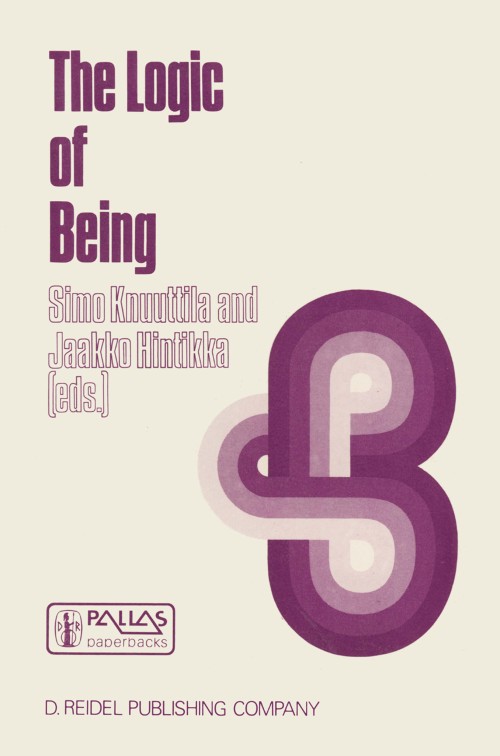
The Logic of Being [electronic resource] : Historical Studies / edited by Simo Knuuttila, Jaakko Hintikka.
Erişim Adresi
ISBN
9789400947801
Dil Kodu
İngilizce
Yer Numarası
DK/12940
Basım Bildirimi
1st ed. 1986.
Yayın Bilgisi
Dordrecht : Springer Netherlands : Imprint: Springer, 1986.
Fiziksel Niteleme
316 p. 2 illus. online resource.
Dizi
Synthese Historical Library ; 28
İçindekiler Notu
Retrospect on the Verb ‘To Be’ and the Concept of Being -- Identity and Predication in Plato -- Aristotle and Existence -- The Varieties of Being in Aristotle -- The Chimera’s Diary -- Peter Abelard’s Investigations into the Meaning and Functions of the Speech Sign ‘Est’ -- The Logic of Being in Thomas Aquinas -- Being qua Being in Thomas Aquinas and John Duns Scotus -- On Descartes’s Argument for Dualism and the Distinction Between Different Kinds of Beings -- Kant on Existence, Predication, and the Ontological Argument -- On Frege’s Concept of Being -- Index of Names -- Index of Subjects.
Özet, vb.
The last twenty years have seen remarkable developments in our understanding of how the ancient Greek thinkers handled the general concept of being and its several varieties. The most general examination of the meaning of the Greek verb 'esti'/'einai'/'on' both in common usage and in the philosophical literature has been presented by Charles H. Kahn, most extensively in his 1973 book The Verb 'Be' in Ancient Greek. These discussions are summarized in Kahn's contribution to this volume. By and large, they show that conceptual schemes by means of which philosophers have recently approached Greek thought have not been very well suited to the way the concept of being was actually used by the ancients. For one thing, being in the sense of existence played a very small role in Greek thinking according to Kahn. Even more importantly, Kahn has argued that Frege and Russell's thesis that verbs for being, such as 'esti', are multiply ambiguous is ill suited for the purpose of appreciating the actual conceptual assumptions of the Greek thinkers. Frege and Russell claimed that a verb like 'is' or'esti' is ambiguous between the 'is' of identity, the 'is' of existence, the copulative 'is', and the generic 'is' (the 'is' of class-inclusion). At least a couple of generations of scholars have relied on this thesis and fre quently criticized sundry ancients for confusing these different senses of 'esti' with each other.
Konu
Philosophy, Medieval.
Philosophy __ History.
Medieval Philosophy.
History of Philosophy.
Philosophy __ History.
Medieval Philosophy.
History of Philosophy.
Diğer Yazarlar
Kurum Adı
Eseri Alıntıla
Referansları kullanmadan önce gözden geçirmeniz ve varsa gerekli düzeltmeleri yapmanız önerilir.
Dijital Kaynak
MARC Görünümü
LEADER 04642nam a22005655i 4500
001 811682
003 TR_AnAIT
005 20260131004856
007 cr nn 008mamaa
008 121227s1986 ne | s |||| 0|eng d
020 |a9789400947801|9978-94-009-4780-1
024 7 |a10.1007/978-94-009-4780-1|2doi
041 |aeng
049 |aTürk Tarih Kurumu Kütüphanesi
050 4|aB720-765
072 7|aHPCB|2bicssc
072 7|aPHI012000|2bisacsh
072 7|aQDHF|2thema
082 04|a189|223
090 |aDK/12940
245 14|aThe Logic of Being|h[electronic resource] :|bHistorical Studies /|cedited by Simo Knuuttila, Jaakko Hintikka.
250 |a1st ed. 1986.
264 1|aDordrecht :|bSpringer Netherlands :|bImprint: Springer,|c1986.
300 |a316 p. 2 illus.|bonline resource.
336 |atext|btxt|2rdacontent
337 |acomputer|bc|2rdamedia
338 |aonline resource|bcr|2rdacarrier
347 |atext file|bPDF|2rda
490 1 |aSynthese Historical Library ;|v28
505 0 |aRetrospect on the Verb ‘To Be’ and the Concept of Being -- Identity and Predication in Plato -- Aristotle and Existence -- The Varieties of Being in Aristotle -- The Chimera’s Diary -- Peter Abelard’s Investigations into the Meaning and Functions of the Speech Sign ‘Est’ -- The Logic of Being in Thomas Aquinas -- Being qua Being in Thomas Aquinas and John Duns Scotus -- On Descartes’s Argument for Dualism and the Distinction Between Different Kinds of Beings -- Kant on Existence, Predication, and the Ontological Argument -- On Frege’s Concept of Being -- Index of Names -- Index of Subjects.
520 |aThe last twenty years have seen remarkable developments in our understanding of how the ancient Greek thinkers handled the general concept of being and its several varieties. The most general examination of the meaning of the Greek verb 'esti'/'einai'/'on' both in common usage and in the philosophical literature has been presented by Charles H. Kahn, most extensively in his 1973 book The Verb 'Be' in Ancient Greek. These discussions are summarized in Kahn's contribution to this volume. By and large, they show that conceptual schemes by means of which philosophers have recently approached Greek thought have not been very well suited to the way the concept of being was actually used by the ancients. For one thing, being in the sense of existence played a very small role in Greek thinking according to Kahn. Even more importantly, Kahn has argued that Frege and Russell's thesis that verbs for being, such as 'esti', are multiply ambiguous is ill suited for the purpose of appreciating the actual conceptual assumptions of the Greek thinkers. Frege and Russell claimed that a verb like 'is' or'esti' is ambiguous between the 'is' of identity, the 'is' of existence, the copulative 'is', and the generic 'is' (the 'is' of class-inclusion). At least a couple of generations of scholars have relied on this thesis and fre quently criticized sundry ancients for confusing these different senses of 'esti' with each other.
532 8 |aAccessibility summary: This PDF is not accessible. It is based on scanned pages and does not support features such as screen reader compatibility or described non-text content (images, graphs etc). However, it likely supports searchable and selectable text based on OCR (Optical Character Recognition). Users with accessibility needs may not be able to use this content effectively. Please contact us at accessibilitysupport@springernature.com if you require assistance or an alternative format.
532 8 |aInaccessible, or known limited accessibility
532 8 |aNo reading system accessibility options actively disabled
532 8 |aPublisher contact for further accessibility information: accessibilitysupport@springernature.com
650 0|aPhilosophy, Medieval.
650 0|aPhilosophy|xHistory.
650 14|aMedieval Philosophy.
650 24|aHistory of Philosophy.
700 1 |aKnuuttila, Simo.|eeditor.|4edt|4http://id.loc.gov/vocabulary/relators/edt
700 1 |aHintikka, Jaakko.|eeditor.|4edt|4http://id.loc.gov/vocabulary/relators/edt
710 2 |aSpringerLink (Online service)
773 0 |tSpringer Nature eBook
776 08|iPrinted edition:|z9789027720191
776 08|iPrinted edition:|z9789027723710
776 08|iPrinted edition:|z9789400947818
830 0|aSynthese Historical Library ;|v28
856 40|uhttps://doi.org/10.1007/978-94-009-4780-1
912 |aZDB-2-SHU
912 |aZDB-2-SXPR
912 |aZDB-2-BAE
950 |aHumanities, Social Sciences and Law (SpringerNature-11648)
950 |aPhilosophy and Religion (R0) (SpringerNature-43725)
001 811682
003 TR_AnAIT
005 20260131004856
007 cr nn 008mamaa
008 121227s1986 ne | s |||| 0|eng d
020 |a9789400947801|9978-94-009-4780-1
024 7 |a10.1007/978-94-009-4780-1|2doi
041 |aeng
049 |aTürk Tarih Kurumu Kütüphanesi
050 4|aB720-765
072 7|aHPCB|2bicssc
072 7|aPHI012000|2bisacsh
072 7|aQDHF|2thema
082 04|a189|223
090 |aDK/12940
245 14|aThe Logic of Being|h[electronic resource] :|bHistorical Studies /|cedited by Simo Knuuttila, Jaakko Hintikka.
250 |a1st ed. 1986.
264 1|aDordrecht :|bSpringer Netherlands :|bImprint: Springer,|c1986.
300 |a316 p. 2 illus.|bonline resource.
336 |atext|btxt|2rdacontent
337 |acomputer|bc|2rdamedia
338 |aonline resource|bcr|2rdacarrier
347 |atext file|bPDF|2rda
490 1 |aSynthese Historical Library ;|v28
505 0 |aRetrospect on the Verb ‘To Be’ and the Concept of Being -- Identity and Predication in Plato -- Aristotle and Existence -- The Varieties of Being in Aristotle -- The Chimera’s Diary -- Peter Abelard’s Investigations into the Meaning and Functions of the Speech Sign ‘Est’ -- The Logic of Being in Thomas Aquinas -- Being qua Being in Thomas Aquinas and John Duns Scotus -- On Descartes’s Argument for Dualism and the Distinction Between Different Kinds of Beings -- Kant on Existence, Predication, and the Ontological Argument -- On Frege’s Concept of Being -- Index of Names -- Index of Subjects.
520 |aThe last twenty years have seen remarkable developments in our understanding of how the ancient Greek thinkers handled the general concept of being and its several varieties. The most general examination of the meaning of the Greek verb 'esti'/'einai'/'on' both in common usage and in the philosophical literature has been presented by Charles H. Kahn, most extensively in his 1973 book The Verb 'Be' in Ancient Greek. These discussions are summarized in Kahn's contribution to this volume. By and large, they show that conceptual schemes by means of which philosophers have recently approached Greek thought have not been very well suited to the way the concept of being was actually used by the ancients. For one thing, being in the sense of existence played a very small role in Greek thinking according to Kahn. Even more importantly, Kahn has argued that Frege and Russell's thesis that verbs for being, such as 'esti', are multiply ambiguous is ill suited for the purpose of appreciating the actual conceptual assumptions of the Greek thinkers. Frege and Russell claimed that a verb like 'is' or'esti' is ambiguous between the 'is' of identity, the 'is' of existence, the copulative 'is', and the generic 'is' (the 'is' of class-inclusion). At least a couple of generations of scholars have relied on this thesis and fre quently criticized sundry ancients for confusing these different senses of 'esti' with each other.
532 8 |aAccessibility summary: This PDF is not accessible. It is based on scanned pages and does not support features such as screen reader compatibility or described non-text content (images, graphs etc). However, it likely supports searchable and selectable text based on OCR (Optical Character Recognition). Users with accessibility needs may not be able to use this content effectively. Please contact us at accessibilitysupport@springernature.com if you require assistance or an alternative format.
532 8 |aInaccessible, or known limited accessibility
532 8 |aNo reading system accessibility options actively disabled
532 8 |aPublisher contact for further accessibility information: accessibilitysupport@springernature.com
650 0|aPhilosophy, Medieval.
650 0|aPhilosophy|xHistory.
650 14|aMedieval Philosophy.
650 24|aHistory of Philosophy.
700 1 |aKnuuttila, Simo.|eeditor.|4edt|4http://id.loc.gov/vocabulary/relators/edt
700 1 |aHintikka, Jaakko.|eeditor.|4edt|4http://id.loc.gov/vocabulary/relators/edt
710 2 |aSpringerLink (Online service)
773 0 |tSpringer Nature eBook
776 08|iPrinted edition:|z9789027720191
776 08|iPrinted edition:|z9789027723710
776 08|iPrinted edition:|z9789400947818
830 0|aSynthese Historical Library ;|v28
856 40|uhttps://doi.org/10.1007/978-94-009-4780-1
912 |aZDB-2-SHU
912 |aZDB-2-SXPR
912 |aZDB-2-BAE
950 |aHumanities, Social Sciences and Law (SpringerNature-11648)
950 |aPhilosophy and Religion (R0) (SpringerNature-43725)
Materyaller
Depodan talep edilen materyal sadece kütüphane içerisinde kullanılmaktadır.
Materyal dışarıya ödünç verilmemektedir.
Materyal dışarıya ödünç verilmemektedir.
