LEADER 04147nam a22006015i 4500
001 811757
003 TR_AnAIT
005 20260131004647
007 cr nn 008mamaa
008 130322s2001 ne | s |||| 0|eng d
020 |a9789401597715|9978-94-015-9771-5
024 7 |a10.1007/978-94-015-9771-5|2doi
041 |aeng
049 |aTürk Tarih Kurumu Kütüphanesi
050 4|aB720-765
072 7|aHPCB|2bicssc
072 7|aPHI012000|2bisacsh
072 7|aQDHF|2thema
082 04|a189|223
090 |aDK/13015
100 1 |aDoig, J.C.|eauthor.|4aut|4http://id.loc.gov/vocabulary/relators/aut
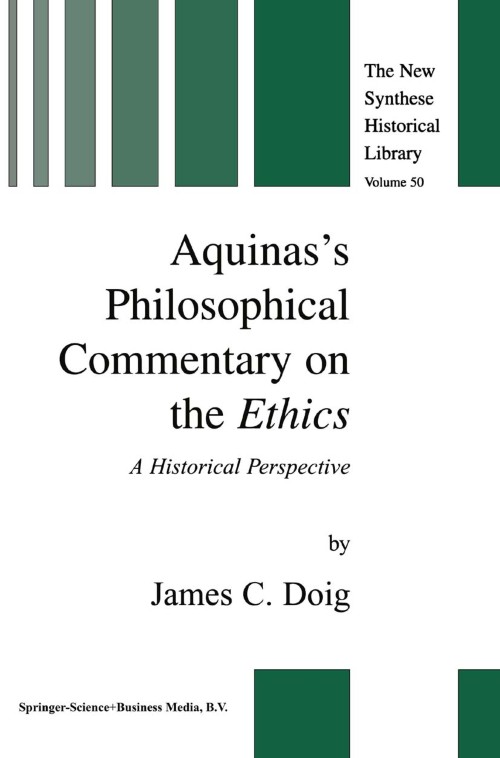
245 10|aAquinas’s Philosophical Commentary on the Ethics|h[electronic resource] :|bA Historical Perspective /|cby J.C. Doig.
250 |a1st ed. 2001.
264 1|aDordrecht :|bSpringer Netherlands :|bImprint: Springer,|c2001.
300 |aXVIII, 316 p.|bonline resource.
336 |atext|btxt|2rdacontent
337 |acomputer|bc|2rdamedia
338 |aonline resource|bcr|2rdacarrier
347 |atext file|bPDF|2rda
490 1 |aThe New Synthese Historical Library, Texts and Studies in the History of Philosophy,|x2352-2585 ;|v50
505 0 |a1: Aquinas’s SLE and its 13th Century Predecessors -- 2: Aquinas and his Predecessors: Some Further Differences -- 3: Aspects of Philosophy in Paris: 1215–1283 -- 4: The SLE: Philosophy or Theology? -- 5: Dating the SLE -- 6: The SLE in its Historical Context -- Index of Texts -- Index of Subjects and Names.
520 |aIs Aquinas's Sententia libri Ethicorum an interpretation of Aristotle based on `principles of Christian ethics'? Or do we have in that work a presentation of the foundation of Aquinas's moral philosophy? Professor Doig answers these questions through an examination of the historical context within which the Sententia was composed. In Chapters 1-2, the work's role as a corrective of earlier commentaries is established. Chapter 3, by examining philosophy at Paris between 1215 and 1283, reveals that the proposal by Aquinas of a moral philosophy would have been unexceptional. Chapter 4's investigation of the principles underlying the moral theory of the Sententia makes apparent that they were regarded by Aquinas as both philosophical and Aristotelian. The date to be assigned the composition of the Sententia is studied in Chapter 5, and the conclusion is drawn, that with some probability, the Sententia is its author's final proposal of moral doctrines. The closing Chapter offers a summary of that moral philosophy against the historical background brought out earlier.
532 8 |aAccessibility summary: This PDF is not accessible. It is based on scanned pages and does not support features such as screen reader compatibility or described non-text content (images, graphs etc). However, it likely supports searchable and selectable text based on OCR (Optical Character Recognition). Users with accessibility needs may not be able to use this content effectively. Please contact us at accessibilitysupport@springernature.com if you require assistance or an alternative format.
532 8 |aInaccessible, or known limited accessibility
532 8 |aNo reading system accessibility options actively disabled
532 8 |aPublisher contact for further accessibility information: accessibilitysupport@springernature.com
650 0|aPhilosophy, Medieval.
650 0|aPhilosophy|xHistory.
650 0|aOntology.
650 0|aPhilosophy.
650 14|aMedieval Philosophy.
650 24|aHistory of Philosophy.
650 24|aOntology.
650 24|aPhilosophy.
710 2 |aSpringerLink (Online service)
773 0 |tSpringer Nature eBook
776 08|iPrinted edition:|z9780792369547
776 08|iPrinted edition:|z9789048156986
776 08|iPrinted edition:|z9789401597722
830 0|aThe New Synthese Historical Library, Texts and Studies in the History of Philosophy,|x2352-2585 ;|v50
856 40|uhttps://doi.org/10.1007/978-94-015-9771-5
912 |aZDB-2-SHU
912 |aZDB-2-SXPR
912 |aZDB-2-BAE
950 |aHumanities, Social Sciences and Law (SpringerNature-11648)
950 |aPhilosophy and Religion (R0) (SpringerNature-43725)