

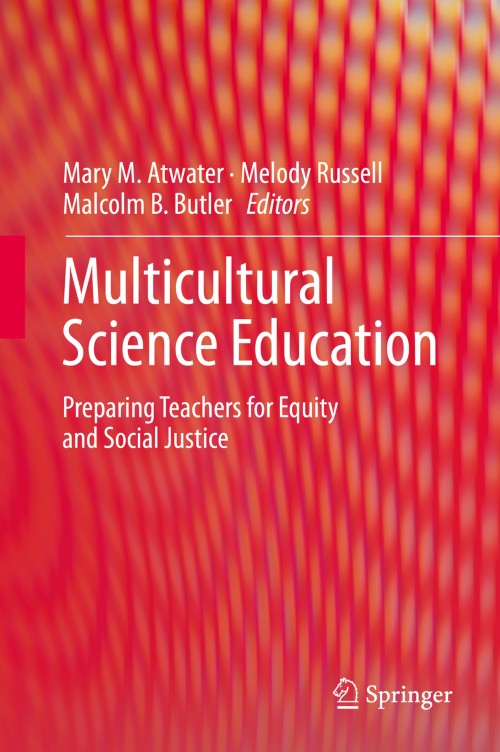
Multicultural Science Education [electronic resource] : Preparing Teachers for Equity and Social Justice / edited by Mary M. Atwater, Melody Russell, Malcolm B. Butler.
Erişim Adresi
ISBN
9789400776517
Dil Kodu
İngilizce
Yer Numarası
DK/13083
Basım Bildirimi
1st ed. 2014.
Yayın Bilgisi
Dordrecht : Springer Netherlands : Imprint: Springer, 2014.
Fiziksel Niteleme
XXI, 295 p. 2 illus. in color. online resource.
İçindekiler Notu
Foreword, Jane Butler Kahle -- Preface, Mary M. Atwater, Melody Russell, and Malcolm B. Butler.-Acknowledgements, Mary M. Atwater, Melody Russell, and Malcolm B. Butler -- Chapter 1. Introduction: Culture, Equity, and Social Justice for Science Teacher Educators, Malcolm B. Butler, Mary M. Atwater, and Melody Russell -- Part I. Historical and Sociocultural Perspectives on Science Teacher Education -- Chapter 2. The Systematic Misuse of Science - Andre Green -- Chapter 3. Second Class Citizens, First Class Scientists: Using Sociocultural Perspectives to Highlight the Successes and Challenges of African American Scientists during Jim Crow, Malcolm B. Butler -- Chapter 4. Science Education and Females of Color – The Play within a Play, Leon Walls -- Chapter 5. Sociocultural Consciousness and Science Teacher Education, Brenda Brand -- Part II. Foundations of Science Teacher Education -- Chapter 6. The Impact of Beliefs and Actions on the Infusion of Culturally Relevant Pedagogy in Science Teacher Education, Natasha Johnson and Mary M. Atwater -- Chapter 7. Motivation in the Science Classroom: Through the Lens for Equity and Social Justice, Melody Russell -- Part III. Pedagogical and Curricular Issues in Science Teacher Education -- Chapter 8. Negotiating Science Content: A Structural Barrier in Science Academic Performance, Barbara Rascoe -- Chapter 9. Internationally-Inclusive Science Education: Addressing the Needs of Migrants and International Students in the Era of Globalization, Charles B. Hutchison -- Chapter 10. Using Problem-Based Learning to Contextualize the Science Experiences of Urban Teachers and Students - Neporcha Cone -- Part IV. Equity, multiculturalism, and Social Justice in Diversity Issues in Science Teaching -- Chapter 11. African American and Other Traditionally Underrepresented Students in School STEM: The Historical Legacy and Strategies for Moving from Stigmatization to Motivation, Obed Norman -- Chapter 12. Preparing Science Teachers for Diversity: Integratingthe Contributions of Scientists from Underrepresented Groups in the Middle Grades Science Curriculum, Rose M. Pringle and Cheryl McLaughlin -- Chapter 13. The Triangulation of the Science, English, and Spanish Languages in the Classroom: Challenges for Preparing Science Teachers of English Language Learners, Regina L. Suriel -- Part V. Policy Reform for Science Teacher Education -- Chapter 14. STEM-based Professional Development and Policy: Key Factors Worth Considering, Celeste Pea -- Chapter 15. Policy Issues, Equity, Multicultural Science Education, and Local School District Support of In-service Science Teachers, Bongani D. Bantwini -- Chapter 16. Policy Issues in Science Education: The Importance of Science Teacher Education, Equity, and Social Justice, Sheneka Williams and Mary M. Atwater -- Chapter 17. Conclusion and Next Steps for Science Teacher Educators, Melody, Russell, Malcolm B. Butler, and Mary M. Atwater.
Özet, vb.
This book offers valuable guidance for science teacher educators looking for ways to facilitate preservice and inservice teachers’ pedagogy relative to teaching students from underrepresented and underserved populations in the science classroom. It also provides solutions that will better equip science teachers of underrepresented student populations with effective strategies that challenge the status quo, and foster classrooms environment that promotes equity and social justice for all of their science students. Multicultural Science Education illuminates historically persistent, yet unresolved issues in science teacher education from the perspectives of a remarkable group of science teacher educators and presents research that has been done to address these issues. It centers on research findings on underserved and underrepresented groups of students and presents frameworks, perspectives, and paradigms that have implications for transforming science teacher education. In addition, the chapters provide an analysis of the socio-cultural-political consequences in the ways in which science teacher education is theoretically conceptualized and operationalized in the United States. The book provides teacher educators with a framework for teaching through a lens of equity and social justice, one that may very well help teachers enhance the participation of students from traditionally underrepresented and underserved groups in science, technology, engineering, and mathematics (STEM) areas and help them realize their full potential in science. Moreover, science educators will find this book useful for professional development workshops and seminars for both novice and veteran science teachers. .
Konu
Science __ Study and teaching.
Teachers __ Training of.
Learning, Psychology of.
Educational tests and measurements.
Education and state.
Science Education.
Teaching and Teacher Education.
Instructional Psychology.
Assessment and Testing.
Educational Policy and Politics.
Teachers __ Training of.
Learning, Psychology of.
Educational tests and measurements.
Education and state.
Science Education.
Teaching and Teacher Education.
Instructional Psychology.
Assessment and Testing.
Educational Policy and Politics.
Diğer Yazarlar
Kurum Adı
Eseri Alıntıla
Referansları kullanmadan önce gözden geçirmeniz ve varsa gerekli düzeltmeleri yapmanız önerilir.
Dijital Kaynak
MARC Görünümü
LEADER 06881nam a22005895i 4500
001 811825
003 TR_AnAIT
005 20260131004450
007 cr nn 008mamaa
008 131114s2014 ne | s |||| 0|eng d
020 |a9789400776517|9978-94-007-7651-7
024 7 |a10.1007/978-94-007-7651-7|2doi
041 |aeng
049 |aTürk Tarih Kurumu Kütüphanesi
050 4|aQ181-183.4
072 7|aJNU|2bicssc
072 7|aPD|2bicssc
072 7|aSCI063000|2bisacsh
072 7|aJNU|2thema
072 7|aPD|2thema
082 04|a507.1|223
090 |aDK/13083
245 10|aMulticultural Science Education|h[electronic resource] :|bPreparing Teachers for Equity and Social Justice /|cedited by Mary M. Atwater, Melody Russell, Malcolm B. Butler.
250 |a1st ed. 2014.
264 1|aDordrecht :|bSpringer Netherlands :|bImprint: Springer,|c2014.
300 |aXXI, 295 p. 2 illus. in color.|bonline resource.
336 |atext|btxt|2rdacontent
337 |acomputer|bc|2rdamedia
338 |aonline resource|bcr|2rdacarrier
347 |atext file|bPDF|2rda
505 0 |aForeword, Jane Butler Kahle -- Preface, Mary M. Atwater, Melody Russell, and Malcolm B. Butler.-Acknowledgements, Mary M. Atwater, Melody Russell, and Malcolm B. Butler -- Chapter 1. Introduction: Culture, Equity, and Social Justice for Science Teacher Educators, Malcolm B. Butler, Mary M. Atwater, and Melody Russell -- Part I. Historical and Sociocultural Perspectives on Science Teacher Education -- Chapter 2. The Systematic Misuse of Science - Andre Green -- Chapter 3. Second Class Citizens, First Class Scientists: Using Sociocultural Perspectives to Highlight the Successes and Challenges of African American Scientists during Jim Crow, Malcolm B. Butler -- Chapter 4. Science Education and Females of Color – The Play within a Play, Leon Walls -- Chapter 5. Sociocultural Consciousness and Science Teacher Education, Brenda Brand -- Part II. Foundations of Science Teacher Education -- Chapter 6. The Impact of Beliefs and Actions on the Infusion of Culturally Relevant Pedagogy in Science Teacher Education, Natasha Johnson and Mary M. Atwater -- Chapter 7. Motivation in the Science Classroom: Through the Lens for Equity and Social Justice, Melody Russell -- Part III. Pedagogical and Curricular Issues in Science Teacher Education -- Chapter 8. Negotiating Science Content: A Structural Barrier in Science Academic Performance, Barbara Rascoe -- Chapter 9. Internationally-Inclusive Science Education: Addressing the Needs of Migrants and International Students in the Era of Globalization, Charles B. Hutchison -- Chapter 10. Using Problem-Based Learning to Contextualize the Science Experiences of Urban Teachers and Students - Neporcha Cone -- Part IV. Equity, multiculturalism, and Social Justice in Diversity Issues in Science Teaching -- Chapter 11. African American and Other Traditionally Underrepresented Students in School STEM: The Historical Legacy and Strategies for Moving from Stigmatization to Motivation, Obed Norman -- Chapter 12. Preparing Science Teachers for Diversity: Integratingthe Contributions of Scientists from Underrepresented Groups in the Middle Grades Science Curriculum, Rose M. Pringle and Cheryl McLaughlin -- Chapter 13. The Triangulation of the Science, English, and Spanish Languages in the Classroom: Challenges for Preparing Science Teachers of English Language Learners, Regina L. Suriel -- Part V. Policy Reform for Science Teacher Education -- Chapter 14. STEM-based Professional Development and Policy: Key Factors Worth Considering, Celeste Pea -- Chapter 15. Policy Issues, Equity, Multicultural Science Education, and Local School District Support of In-service Science Teachers, Bongani D. Bantwini -- Chapter 16. Policy Issues in Science Education: The Importance of Science Teacher Education, Equity, and Social Justice, Sheneka Williams and Mary M. Atwater -- Chapter 17. Conclusion and Next Steps for Science Teacher Educators, Melody, Russell, Malcolm B. Butler, and Mary M. Atwater.
520 |aThis book offers valuable guidance for science teacher educators looking for ways to facilitate preservice and inservice teachers’ pedagogy relative to teaching students from underrepresented and underserved populations in the science classroom. It also provides solutions that will better equip science teachers of underrepresented student populations with effective strategies that challenge the status quo, and foster classrooms environment that promotes equity and social justice for all of their science students. Multicultural Science Education illuminates historically persistent, yet unresolved issues in science teacher education from the perspectives of a remarkable group of science teacher educators and presents research that has been done to address these issues. It centers on research findings on underserved and underrepresented groups of students and presents frameworks, perspectives, and paradigms that have implications for transforming science teacher education. In addition, the chapters provide an analysis of the socio-cultural-political consequences in the ways in which science teacher education is theoretically conceptualized and operationalized in the United States. The book provides teacher educators with a framework for teaching through a lens of equity and social justice, one that may very well help teachers enhance the participation of students from traditionally underrepresented and underserved groups in science, technology, engineering, and mathematics (STEM) areas and help them realize their full potential in science. Moreover, science educators will find this book useful for professional development workshops and seminars for both novice and veteran science teachers. .
650 0|aScience|xStudy and teaching.
650 0|aTeachers|xTraining of.
650 0|aLearning, Psychology of.
650 0|aEducational tests and measurements.
650 0|aEducation and state.
650 14|aScience Education.
650 24|aTeaching and Teacher Education.
650 24|aInstructional Psychology.
650 24|aAssessment and Testing.
650 24|aEducational Policy and Politics.
700 1 |aAtwater, Mary M.|eeditor.|4edt|4http://id.loc.gov/vocabulary/relators/edt
700 1 |aRussell, Melody.|eeditor.|4edt|4http://id.loc.gov/vocabulary/relators/edt
700 1 |aButler, Malcolm B.|eeditor.|4edt|4http://id.loc.gov/vocabulary/relators/edt
710 2 |aSpringerLink (Online service)
773 0 |tSpringer Nature eBook
776 08|iPrinted edition:|z9789400776500
776 08|iPrinted edition:|z9789400776524
776 08|iPrinted edition:|z9789402402841
856 40|uhttps://doi.org/10.1007/978-94-007-7651-7
912 |aZDB-2-SHU
912 |aZDB-2-SXED
950 |aHumanities, Social Sciences and Law (SpringerNature-11648)
950 |aEducation (R0) (SpringerNature-43721)
001 811825
003 TR_AnAIT
005 20260131004450
007 cr nn 008mamaa
008 131114s2014 ne | s |||| 0|eng d
020 |a9789400776517|9978-94-007-7651-7
024 7 |a10.1007/978-94-007-7651-7|2doi
041 |aeng
049 |aTürk Tarih Kurumu Kütüphanesi
050 4|aQ181-183.4
072 7|aJNU|2bicssc
072 7|aPD|2bicssc
072 7|aSCI063000|2bisacsh
072 7|aJNU|2thema
072 7|aPD|2thema
082 04|a507.1|223
090 |aDK/13083
245 10|aMulticultural Science Education|h[electronic resource] :|bPreparing Teachers for Equity and Social Justice /|cedited by Mary M. Atwater, Melody Russell, Malcolm B. Butler.
250 |a1st ed. 2014.
264 1|aDordrecht :|bSpringer Netherlands :|bImprint: Springer,|c2014.
300 |aXXI, 295 p. 2 illus. in color.|bonline resource.
336 |atext|btxt|2rdacontent
337 |acomputer|bc|2rdamedia
338 |aonline resource|bcr|2rdacarrier
347 |atext file|bPDF|2rda
505 0 |aForeword, Jane Butler Kahle -- Preface, Mary M. Atwater, Melody Russell, and Malcolm B. Butler.-Acknowledgements, Mary M. Atwater, Melody Russell, and Malcolm B. Butler -- Chapter 1. Introduction: Culture, Equity, and Social Justice for Science Teacher Educators, Malcolm B. Butler, Mary M. Atwater, and Melody Russell -- Part I. Historical and Sociocultural Perspectives on Science Teacher Education -- Chapter 2. The Systematic Misuse of Science - Andre Green -- Chapter 3. Second Class Citizens, First Class Scientists: Using Sociocultural Perspectives to Highlight the Successes and Challenges of African American Scientists during Jim Crow, Malcolm B. Butler -- Chapter 4. Science Education and Females of Color – The Play within a Play, Leon Walls -- Chapter 5. Sociocultural Consciousness and Science Teacher Education, Brenda Brand -- Part II. Foundations of Science Teacher Education -- Chapter 6. The Impact of Beliefs and Actions on the Infusion of Culturally Relevant Pedagogy in Science Teacher Education, Natasha Johnson and Mary M. Atwater -- Chapter 7. Motivation in the Science Classroom: Through the Lens for Equity and Social Justice, Melody Russell -- Part III. Pedagogical and Curricular Issues in Science Teacher Education -- Chapter 8. Negotiating Science Content: A Structural Barrier in Science Academic Performance, Barbara Rascoe -- Chapter 9. Internationally-Inclusive Science Education: Addressing the Needs of Migrants and International Students in the Era of Globalization, Charles B. Hutchison -- Chapter 10. Using Problem-Based Learning to Contextualize the Science Experiences of Urban Teachers and Students - Neporcha Cone -- Part IV. Equity, multiculturalism, and Social Justice in Diversity Issues in Science Teaching -- Chapter 11. African American and Other Traditionally Underrepresented Students in School STEM: The Historical Legacy and Strategies for Moving from Stigmatization to Motivation, Obed Norman -- Chapter 12. Preparing Science Teachers for Diversity: Integratingthe Contributions of Scientists from Underrepresented Groups in the Middle Grades Science Curriculum, Rose M. Pringle and Cheryl McLaughlin -- Chapter 13. The Triangulation of the Science, English, and Spanish Languages in the Classroom: Challenges for Preparing Science Teachers of English Language Learners, Regina L. Suriel -- Part V. Policy Reform for Science Teacher Education -- Chapter 14. STEM-based Professional Development and Policy: Key Factors Worth Considering, Celeste Pea -- Chapter 15. Policy Issues, Equity, Multicultural Science Education, and Local School District Support of In-service Science Teachers, Bongani D. Bantwini -- Chapter 16. Policy Issues in Science Education: The Importance of Science Teacher Education, Equity, and Social Justice, Sheneka Williams and Mary M. Atwater -- Chapter 17. Conclusion and Next Steps for Science Teacher Educators, Melody, Russell, Malcolm B. Butler, and Mary M. Atwater.
520 |aThis book offers valuable guidance for science teacher educators looking for ways to facilitate preservice and inservice teachers’ pedagogy relative to teaching students from underrepresented and underserved populations in the science classroom. It also provides solutions that will better equip science teachers of underrepresented student populations with effective strategies that challenge the status quo, and foster classrooms environment that promotes equity and social justice for all of their science students. Multicultural Science Education illuminates historically persistent, yet unresolved issues in science teacher education from the perspectives of a remarkable group of science teacher educators and presents research that has been done to address these issues. It centers on research findings on underserved and underrepresented groups of students and presents frameworks, perspectives, and paradigms that have implications for transforming science teacher education. In addition, the chapters provide an analysis of the socio-cultural-political consequences in the ways in which science teacher education is theoretically conceptualized and operationalized in the United States. The book provides teacher educators with a framework for teaching through a lens of equity and social justice, one that may very well help teachers enhance the participation of students from traditionally underrepresented and underserved groups in science, technology, engineering, and mathematics (STEM) areas and help them realize their full potential in science. Moreover, science educators will find this book useful for professional development workshops and seminars for both novice and veteran science teachers. .
650 0|aScience|xStudy and teaching.
650 0|aTeachers|xTraining of.
650 0|aLearning, Psychology of.
650 0|aEducational tests and measurements.
650 0|aEducation and state.
650 14|aScience Education.
650 24|aTeaching and Teacher Education.
650 24|aInstructional Psychology.
650 24|aAssessment and Testing.
650 24|aEducational Policy and Politics.
700 1 |aAtwater, Mary M.|eeditor.|4edt|4http://id.loc.gov/vocabulary/relators/edt
700 1 |aRussell, Melody.|eeditor.|4edt|4http://id.loc.gov/vocabulary/relators/edt
700 1 |aButler, Malcolm B.|eeditor.|4edt|4http://id.loc.gov/vocabulary/relators/edt
710 2 |aSpringerLink (Online service)
773 0 |tSpringer Nature eBook
776 08|iPrinted edition:|z9789400776500
776 08|iPrinted edition:|z9789400776524
776 08|iPrinted edition:|z9789402402841
856 40|uhttps://doi.org/10.1007/978-94-007-7651-7
912 |aZDB-2-SHU
912 |aZDB-2-SXED
950 |aHumanities, Social Sciences and Law (SpringerNature-11648)
950 |aEducation (R0) (SpringerNature-43721)
Materyaller
Depodan talep edilen materyal sadece kütüphane içerisinde kullanılmaktadır.
Materyal dışarıya ödünç verilmemektedir.
Materyal dışarıya ödünç verilmemektedir.
